
Shrubs
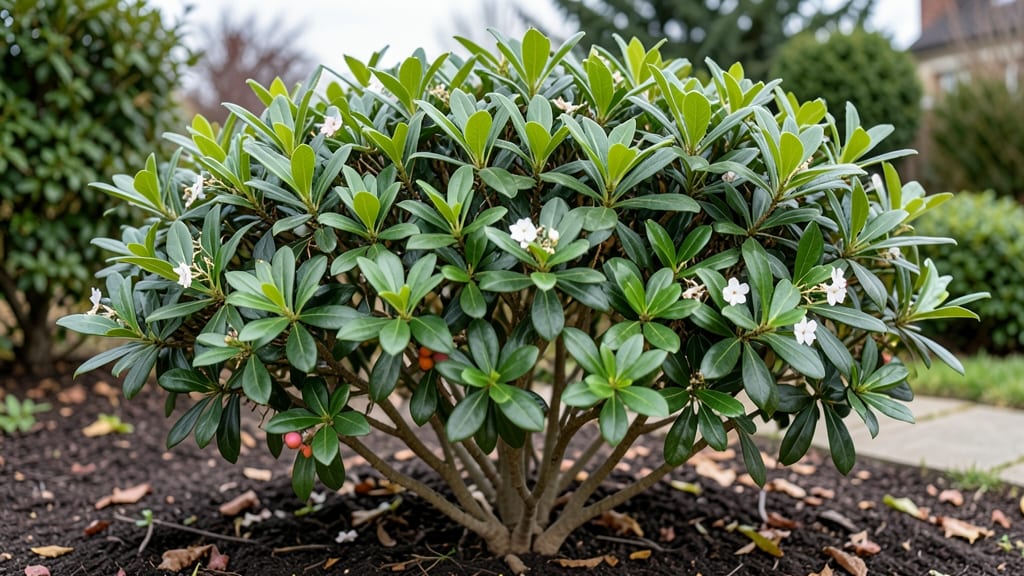
Growing Japanese spindle shrubs (Euonymus japonicus) means adding a fragrant, evergreen backbone to your landscape that thrives in cold winters and blooms all year. 🌿 I’ve watched mine stand tall through snowstorms while still producing tiny, sweet-smelling flowers—something most shrubs can’t do.
The key lies in its adaptability: it handles shade, poor soil, and even urban pollution better than many ornamentals.
This shrub’s real magic comes from its versatile foliage—glossy green leaves turn brilliant red in fall, and the pink berries add winter interest. But it’s not just pretty: Japanese spindle is drought-tolerant once established, making it a low-maintenance star for hedges, screens, or even container growing.
The catch? It needs well-draining soil and morning sun to prevent fungal issues, which I’ll show you how to avoid.
With the right care, you’ll end up with a nearly indestructible shrub that outshines fussy alternatives. Prune lightly after flowering to maintain shape, and watch it fill in gaps faster than most broadleaf evergreens. The only real challenge? Keeping deer away—though even that’s manageable with the right barriers.
Perfect for urban gardens, foundation plantings, or even as a bonsai subject. Let’s get into the specifics so yours becomes the envy of the neighborhood—without the fuss of high-maintenance shrubs.
📚 In This Guide
- What you need
- Instructions
- Tips and common mistakes
- Wrapping up and next steps
What you need
- ● Japanese spindle shrub: Choose between seeds (slower but rewarding), cuttings (moderate effort), or a nursery-grown plant (fastest option).
- ● Well-draining soil: Mix 2 parts garden soil, 1 part compost, and 1 part perlite or sand (improves aeration).
- ● Sunlight: A location with full sun to partial shade (6+ hours of sunlight daily).
- ● Watering can or hose: For consistent moisture (avoid waterlogging!).
- ○ Fertilizer (optional but helpful): Balanced 10-10-10 fertilizer (spring/fall) or
- ● Slow-release organic compost (spring only).
- ● Garden trowel or shovel (for transplanting).
- ● Pruning shears (sterilized with rubbing alcohol).
- ○ Mulch (optional but recommended): 2–3 inches of wood chips or pine straw to retain moisture.
- ● Rooting hormone (for cuttings) (e.g., clonex powder).
- ● Planting hole: Twice as wide as the root ball, with loose soil at the bottom.
- ● 💡 Test your soil’s pH: Japanese spindle thrives in slightly acidic to neutral (6.0–7.0). Adjust with lime or sulfur if needed.
- ● 🌡️ Hardiness zone: Plant in USDA zones 6–9—this shrub loves cold winters!
- ● 🎯 Spacing: Leave 3–5 feet between plants for optimal airflow and growth.
How to plant and maintain a thriving Japanese spindle shrub
Here's the straightforward method I've used to establish healthy, fragrant Japanese spindle shrubs that thrive in cold climates.
🌱 Step 1: Select the Perfect Planting Location and Prepare the Soil
Japanese spindle (Euonymus japonicus) thrives in full sun to partial shade, with at least 4-6 hours of direct sunlight daily. I always choose a spot with morning sun and afternoon shade for optimal growth—this prevents leaf scorch while ensuring enough light for flowering. The shrub tolerates a wide range of soil types but performs best in well-draining, slightly acidic soil with a pH between 5.0-6.5.
Before planting, loosen the soil to a depth of 12-18 inches using a garden fork. Amend the area with 2-3 inches of organic compost to improve drainage and fertility. Avoid heavy clay soils unless you mix in generous amounts of sand or perlite—Japanese spindle roots need oxygen, and compacted soil will stunt growth. Test your soil's drainage by digging a hole, filling it with water, and watching how quickly it drains: if water remains after 30 minutes, amend with more organic matter.
🪴 Step 2: Plant at the Correct Depth and Spacing
Dig a hole twice as wide as the root ball but only as deep as the container—planting too deep can suffocate the roots. Gently remove the shrub from its container and tease the roots outward if they're circling. Place the plant in the hole so the top of the root ball sits 1 inch above ground level—this prevents soil from settling and burying the stem over time.
For four shrubs, space them 6-8 feet apart to allow for mature spread. Japanese spindle grows in a rounded, multi-stemmed form, so proper spacing ensures good airflow and reduces disease risk. Backfill the hole with native soil, firming it gently around the roots to eliminate air pockets. Water deeply to settle the soil and encourage root contact with the surrounding earth. You'll know it's properly settled when the surface looks firm and no air gaps remain.
☀️ Step 3: Water Deeply and Establish a Consistent Care Routine
Water newly planted Japanese spindle shrubs once every 3-4 days for the first 2-3 weeks, providing 1-2 gallons per shrub each time. After the initial establishment period, reduce watering to once per week during dry spells, but always check the soil first—water when the top 2-3 inches feel dry to the touch. Overwatering is the fastest way to kill these shrubs, so resist the urge to water on a strict schedule without checking moisture levels.
Mulch around the base with 2-3 inches of organic mulch, such as shredded bark or wood chips, keeping it 3-4 inches away from the trunk to prevent rot. The mulch helps retain moisture, regulate soil temperature, and suppress weeds. In the first growing season, apply a balanced, slow-release fertilizer (10-10-10) in early spring to encourage strong root development. You'll see new growth within 3-4 weeks if the plant is happy—look for vibrant, dark green leaves and sturdy stems.
✂️ Step 4: Prune for Shape and Encourage Blooms
Japanese spindle blooms on old wood, so I avoid heavy pruning in late winter or early spring. Instead, I prune immediately after flowering to shape the shrub and remove any dead, diseased, or crossing branches. Use clean, sharp pruners to make cuts just above a leaf node or bud, angled slightly away from the growth point. Remove no more than 25% of the plant's foliage in any single pruning session to avoid stressing the shrub.
For a fuller, bushier appearance, pinch back new growth in early summer by cutting just above a set of leaves. This encourages branching and denser foliage. Avoid pruning in fall, as new growth won't harden off before winter. You'll notice fragrant, pinkish-white flowers in late spring to early summer—these are your reward for proper care. After flowering, trim back any leggy or overgrown branches to maintain the shrub's natural shape and encourage next year's blooms.
Tips & tricks for perfect Japanese spindle shrub establishment
These practical insights will help you avoid common pitfalls and maximize your Japanese spindle's potential for fragrant, cold-hardy growth.
Soil Preparation Secret: The 30-minute drainage test in Step 1 is your best friend—don't skip it! If water lingers beyond that time, mix in additional perlite or coarse sand until you achieve proper drainage. Compacted soil suffocates roots, and Japanese spindle simply won't thrive in soggy conditions. I've seen plants struggle for years in heavy clay until I amended it properly—don't make that mistake.
Root Ball Placement: That 1-inch elevation above ground level in Step 2 isn't just arbitrary—it accounts for soil settling after watering. If you plant too deep, the stem can rot. Mark the container's top with a pencil before removing the plant, then use that as your reference point when placing it in the hole. This small detail prevents years of frustration with poor establishment.
Watering Wisdom: The 3-4 week watering schedule in Step 3 is crucial, but timing matters more than the calendar. Water when the top 2-3 inches feel dry—this prevents overwatering while ensuring roots establish properly. I've seen many gardeners drown these shrubs by sticking to rigid schedules. Use your finger as a moisture gauge rather than a timer.
Pruning Precision: When you're shaping your shrub in Step 4, remember that 25% pruning limit is firm. Removing more stresses the plant and can reduce flowering. Make cuts just above a leaf node—this encourages new growth from the right spot. I've had to explain to frustrated gardeners why their spindles didn't bloom after aggressive pruning—don't let that be you.
Pro Tips for Japanese Spindle Shrub
- These practical insights will help you avoid common pitfalls and maximize your Japanese spindle's potential for fragr...
- Soil Preparation Secret: The 30-minute drainage test in Step 1 is your best friend—don't skip it! If water lingers be...
- Root Ball Placement: That 1-inch elevation above ground level in Step 2 isn't just arbitrary—it accounts for soil set...
Frequently asked questions
Got questions about growing and caring for your Euonymus japonicus?
Here are some of the most common concerns—plus straightforward answers to help you keep your Japanese spindle shrub thriving!
How fast does a Japanese spindle shrub grow?
The growth rate is moderate—expect about 12–24 inches per year under ideal conditions. With proper pruning and sunlight, it can reach 10–15 feet tall and wide over time. Patience pays off, as its dense canopy develops gradually but beautifully!
Is this shrub truly cold-hardy? What zones does it tolerate?
The Japanese spindle shrub thrives in USDA Zones 6–9, making it one of the toughest choices for northern climates. It handles frost, snow, and even urban pollution—just ensure well-draining soil to prevent winter rot.
Why aren’t my blooms as fragrant as I expected?
Fragrance fades if the shrub is stressed (underwatered, over-fertilized, or in poor soil). Ensure it gets morning sun and afternoon shade—this balances blooms and scent. Prune in late winter to encourage fresh, fragrant flowers!
Can I prune this shrub year-round?
Nope! Best time: Late winter or early spring (before new growth). Avoid heavy pruning in fall—it can stimulate tender growth that won’t survive winter. Light shaping is fine, but major cuts wait until dormancy.
What’s a good alternative if I want a fragrant, evergreen shrub?
Try these low-maintenance, fragrant evergreens:
- Dwarf Gardenia ( Zones 7–10, needs acid soil)
- Sweetbox (Sarcococca) ( Zones 6–9, thrives in shade)
- Boxwood ( Zones 5–9, drought-tolerant)
Wrapping up and next steps
The Japanese spindle shrub is a true gem for gardeners—offering year-round interest with its fragrant blooms, glossy foliage, and cold-hardy resilience. Whether you're a beginner or a seasoned gardener, its low-maintenance charm makes it a standout choice for hedges, borders, or even as a focal point. 🌿
Ready to transform your outdoor space? Start small—plant one this season and watch it thrive! For even more inspiration, explore cultivar options or share your progress with fellow plant lovers online. Happy gardening! 🌸