
Pruning
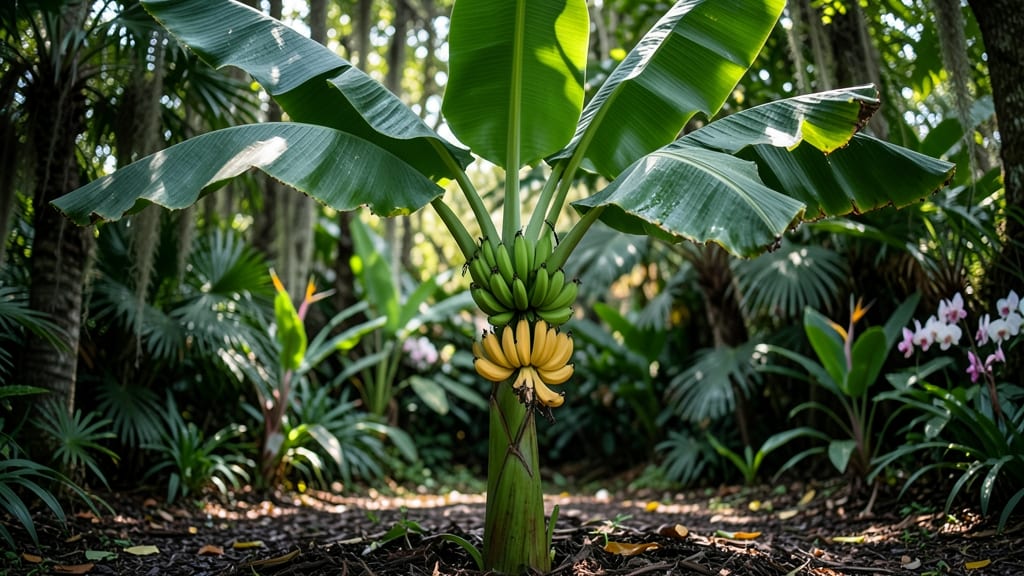
Pruning your banana shrub tree isn't just about shaping—it's about unlocking year-round fragrance and lush growth. 🌿 I learned this the hard way after my first overgrown Musa basjoo looked more like a tangled mess than the elegant shrub I'd envisioned.
The secret lies in three strategic cuts that keep it blooming and healthy all season long.
You'll need sharp pruners, a clean workspace, and about 30 minutes of focused time. The magic happens in late winter (before new growth starts), mid-summer (after flowering), and fall cleanup.
Each cut serves a purpose: winter shapes the structure, summer encourages more blooms, and fall removes dead growth for next year's success.
By following these three cuts, you'll transform your banana shrub into a fragrant, flowering powerhouse. The air will fill with its intoxicating scent, and those striking orange blooms will appear earlier and more abundantly than ever before. Plus, your plant will stay compact and manageable—no more wrestling with unruly branches.
This method works for both container-grown shrubs and in-ground plants, making it perfect for urban patios or country gardens. The best part? You'll see results in just one growing season if you start now. Let's get those pruners ready!
📚 In This Guide
- What you need
- Instructions
- Tips and common mistakes
- Wrapping up and next steps
What you need
- ● Pruning shears: Bypass pruners (sharp, 6–8" blades) for clean cuts on small to medium stems.
- ● Loppers: Bypass or anvil type (18–24" blades) for thicker branches (½"–1.5" diameter).
- ● Hand saw: Pruning saw with curved blade for stubborn, woody stems (>1.5" thick).
- ● Gloves: Heavy-duty, cut-resistant (e.g., leather or reinforced fabric) to protect hands from thorns.
- ● Disinfectant: 70% isopropyl alcohol or pruning sealant (1–2 oz) to sterilize tools between cuts.
- ● Trash bags: Heavy-duty, 30–50 gallon (2–3 bags) for debris disposal.
- ● Pruning rope or twine: Jute or plastic-coated (50–100 ft) for temporary support if needed.
- ● Pruning paint: Water-based sealant (small bottle) to coat large cuts (>2" diameter).
- ● Ladder: Lightweight, extendable (6–8 ft) for high branches.
- ● Notebook & pen: To sketch your shrub’s shape or track pruning dates.
- ● Mulch: Organic mulch (pine straw, wood chips) (5–10 sq ft) to protect roots post-pruning.
- ● Safety glasses: For protection against debris or sap splashes.
How to prune your banana shrub tree for continuous blooms
Here's the three-cut system I use to keep my banana shrub flowering nonstop—no dead branches, no guesswork.
✂️ Step 1: Late-Winter Cleanup Cut (Before Bud Break)
Start in late February or early March when the plant is still dormant but before you see any new growth. Grab your clean, sharp pruners and remove all dead, diseased, or crossing branches first. These are the ones that look brown, brittle, or tangled with others—cut them back to the main stem or to a healthy outward-facing bud.
Next, thin out overcrowded stems to improve airflow. Aim to leave 3-5 strong branches per section of the shrub. You'll see the plant's natural structure more clearly once you remove the clutter. This first cut sets the stage for healthy spring growth and prevents fungal issues later.
☀️ Step 2: Post-Bloom Summer Pruning (After Flowering)
Once your banana shrub finishes blooming—usually late spring to early summer—it's time for the second cut. Look for spent flower clusters and leggy stems that have lost their vigor. Cut these back by one-third to encourage bushier growth. Always make cuts just above a leaf node or outward-facing bud to promote new shoots.
Here's the thing—I never cut more than one-third of the plant's total foliage at once. The banana shrub is resilient, but it needs enough leaves to photosynthesize and support its next round of blooms. After pruning, give the plant a light fertilizer application to replenish nutrients lost during flowering.
✂️ Step 3: Light Fall Renewal Cut (Preparing for Winter)
In October or November, do a final light pruning to shape the shrub and remove any weak or misplaced growth. Focus on tidy up the edges and open the center of the plant for better air circulation. This cut is more about aesthetics than growth—think of it as a haircut to keep the shrub looking polished while still allowing it to harden off for winter.
After this cut, reduce watering by half and stop fertilizing entirely. The banana shrub will enter a semi-dormant state, and this final pruning helps it conserve energy. You'll notice new buds forming along the stems in early spring—proof that your cuts are working.
🌿 Step 4: Year-Round Maintenance Checks (Optional but Helpful)
Throughout the year, keep an eye out for suckers—those small shoots growing at the base of the plant. These can be pinched off or transplanted to create new banana shrubs. Also, remove any suckers growing from the main stem unless you want to encourage a thicker, bushier plant. I like to do this every 4-6 weeks during the growing season to keep the plant in check.
If you notice yellowing leaves, it’s usually a sign of overwatering or poor drainage. Adjust your watering schedule—banana shrubs prefer deep watering once a week rather than frequent shallow watering. A mulch layer of 2-3 inches** around the base helps retain moisture and regulate soil temperature, reducing stress on the plant.
Tips & tricks for pruning your banana shrub tree
Mastering these pruning techniques will transform your banana shrub from a struggling plant to a fragrant, blooming powerhouse year after year.
Timing is Everything: The late-winter cleanup in late February or early March is critical because it removes winter-damaged branches before new growth begins. I've seen plants with fungal issues after skipping this step—always prioritize removing dead, diseased, or crossing branches first. These branches compete with healthy growth for nutrients and can harbor pests. After cutting, sterilize your pruners with rubbing alcohol to prevent spreading disease between cuts.
The One-Third Rule: During the post-bloom summer pruning, never remove more than one-third of the plant's total foliage at once. This rule prevents shock and maintains the shrub's ability to photosynthesize. I've learned this the hard way—after removing too much foliage in one session, my plant took months to recover. Look for spent flower clusters and leggy stems that have lost vigor, cutting just above a leaf node or outward-facing bud to encourage new growth.
Fall Pruning for Winter Readiness: The light fall renewal cut in October or November isn't just about aesthetics—it's about preparing your plant for winter. Focus on tidying up edges and opening the center for better air circulation, which reduces fungal risks. After pruning, reduce watering by half and stop fertilizing entirely. This mimics the plant's natural semi-dormant state and helps it conserve energy for spring blooms. I've noticed plants that skip this step often have weaker growth in the following season.
Year-Round Maintenance Secret: Throughout the growing season, keep an eye out for suckers—those small shoots at the base. These can be pinched off or transplanted to create new plants, but only remove those growing from the main stem if you want to maintain the current shape. I do this every 4-6 weeks during the growing season to keep my plants in check. A mulch layer of 2-3 inches around the base helps retain moisture and regulate soil temperature, which is especially important during hot summers or cold winters.
Pro Tips for Banana Shrub Or Tree
- Mastering these pruning techniques will transform your banana shrub from a struggling plant to a fragrant, blooming p...
- Timing is Everything: The late-winter cleanup in late February or early March is critical because it removes winter-d...
- The One-Third Rule: During the post-bloom summer pruning, never remove more than one-third of the plant's total folia...
Frequently asked questions
Got questions about pruning your banana shrub (or Michelia figo) to keep it blooming and fragrant year-round? Here are some common ones—and their answers!
When is the best time to prune my banana shrub?
The ideal time is late winter or early spring (just before new growth starts). This helps shape the plant while avoiding disrupting its blooming cycle. Light trimming can also be done after flowering to encourage bushier growth. Avoid heavy pruning in fall—it can stress the shrub before winter.
How much can I trim back my banana shrub without harming it?
You can safely remove up to one-third of the plant’s height in a single session. Focus on dead, crossing, or overcrowded branches first. For mature shrubs, thinning out older wood (especially near the base) promotes airflow and new blooms. Never cut into old wood—it won’t regrow!
Why isn’t my banana shrub blooming after pruning?
If your shrub skips blooms, it might be over-pruned or lacking sunlight. Ensure it gets at least 6 hours of sun daily and avoid cutting back flowering stems too aggressively. Fertilize lightly in spring with acidic, phosphorus-rich soil to encourage blooms. Patience is key—some varieties take 2–3 years to rebound.
Can I prune my banana shrub in hot or cold weather?
Avoid pruning during heatwaves (above 90°F) or freezing temps (below 32°F). Stress from extreme weather slows healing, making the shrub susceptible to disease. If you must prune in summer, do it early morning or late evening to reduce sun stress on fresh cuts.
What if my banana shrub looks leggy after pruning?
Leggy growth often means it needs more light or a softer pruning approach. Next time, pinch back tips of new growth to encourage bushiness. Also, fertilize with a balanced, slow-release formula to support compact growth. Mulching around the base retains moisture and reduces stress.
Wrapping up and next steps
Pruning your banana shrub tree is the secret to unlocking its full potential—year-round fragrance, lush growth, and even better fruit (if edible!). By mastering the three smart cuts—spring shaping, summer thinning, and fall cleanup—you’re not just tidying up; you’re investing in a thriving, fragrant garden star. 🌿✨
Ready to transform your space? Grab your pruners, pick a sunny day, and start small—even a single cut can make a difference. Your banana shrub tree will thank you with blooms, scent, and maybe even a tasty surprise! 🍌💚