
Companion Plants
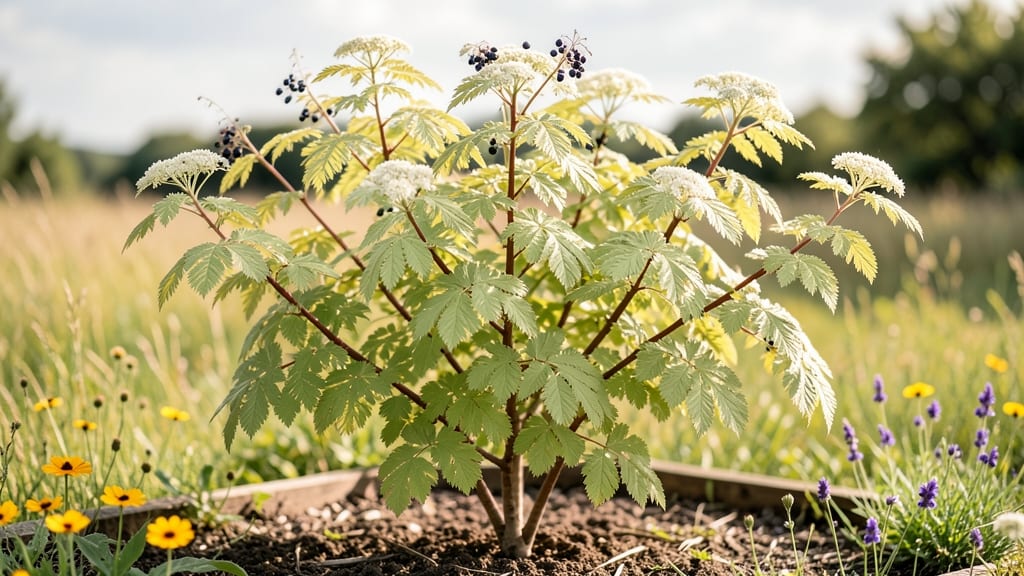
Growing the Lemony Lace elderberry shrub feels like cultivating a fragrant, edible treasure chest. 🌿 This unique variety isn’t just about the deep purple berries—its lemon-scented foliage transforms your garden into a zesty paradise, perfect for syrups, cocktails, or desserts.
Unlike regular elderberries, this shrub doubles as a sensory delight, with leaves that smell like sunshine and berries packed with flavor. The secret to success starts with the right spot: full sun to partial shade and well-draining soil that’s slightly acidic.
Plant in early spring or fall, spacing shrubs 6-8 feet apart to give them room to spread. Water deeply once established, but avoid soggy roots—this shrub thrives on consistency, not excess. Prune in late winter to shape it and encourage bushier growth, but leave some branches to bear fruit.
By mid-summer, you’ll be harvesting berries for homemade syrup that tastes like a vacation in a bottle. The shrub’s fragrant leaves can even be used in teas, and the berries attract pollinators while keeping pests at bay. It’s a low-maintenance, high-reward plant that pays dividends in flavor and fragrance.
Common challenges? Watch for aphids or powdery mildew—neem oil or a strong spray of water usually does the trick. With proper care, this shrub will reward you for years, turning your garden into a fragrant, fruiting oasis. Ready to grow your own zesty syrup stash?
📚 In This Guide
- What you need
- Instructions
- Tips and common mistakes
- Wrapping up and next steps
What you need
- ● Elderberries: 1 cup fresh or ½ cup dried (organic preferred for best flavor)
- ● Lemons: 2 medium (organic, unsprayed for vibrant flavor)
- ● Granulated sugar: 1 cup (adjust to taste for sweetness)
- ● Water: 1 cup (filtered or distilled for clarity)
- ○ Fresh herbs (optional but recommended): 1 sprig fresh rosemary or thyme (for depth)
- ● 1 cinnamon stick or ½ tsp ground cinnamon (for warmth)
- ● Heavy-bottomed saucepan: 2–3 quart capacity (for even heating)
- ● Wooden spoon or silicone spatula: For stirring without scratching
- ● Fine-mesh strainer or cheesecloth: For filtering out solids
- ● Clean glass jars: 8–16 oz size (sterilized for storage)
- ● Funnel: To avoid spills when pouring
- ● Measuring cups/spoons: For precision
- ● Citrus zester or peeler: To maximize lemon flavor and aroma
- ● Vanilla bean (split and scraped) for a floral twist
- ● Star anise or clove (1–2 pods) for a spiced depth
- ● Honey or agave (replace ¼ cup sugar for a vegan option)
- ● Edible flowers (like lavender or violets) for garnish and elegance
Step-by-Step guide to growing lemony Lace elderberry shrubs
Here's how to cultivate this fragrant, dual-purpose elderberry variety that thrives in both garden and kitchen.
🌱 Step 1: Select the Perfect Planting Site
Choose a location with full sun exposure (6-8 hours daily) and well-draining soil. Lemony Lace elderberries tolerate a range of soil types but perform best in slightly acidic conditions (pH 5.5-6.5). I always test soil pH before planting—you can adjust with sulfur if needed, but most garden soils are naturally suitable.
Dig a hole twice as wide as the root ball but only as deep. The top of the root ball should sit 1-2 inches above ground level—this prevents waterlogging and encourages strong root development. If your soil drains poorly, amend with 2-3 inches of compost mixed into the bottom of the hole.
🌿 Step 2: Plant and Establish the Shrub
Remove the shrub from its container and gently loosen the roots if they're circling. Position it in the hole so the graft union (visible bump near the base) remains above soil level. This ensures the plant grows true to its variety. Backfill with native soil, pressing lightly to eliminate air pockets but not compacting too firmly.
Water deeply immediately after planting to settle the soil and encourage root contact. You'll know it's right when water drains freely from the bottom of the hole without pooling. Mulch with 2-3 inches of organic mulch (like shredded bark) around the base, keeping it 6 inches away from the stem to prevent rot.
☀️ Step 3: Maintain Through the Growing Season
Water 1-2 inches per week, adjusting for rain. Elderberries are drought-tolerant once established, but young plants need consistent moisture. You'll see new growth emerge in 4-6 weeks—this is your signal that roots are settling in properly.
Fertilize lightly in early spring with a balanced 10-10-10 fertilizer (about ¼ cup per shrub). Avoid heavy nitrogen—it encourages leafy growth at the expense of fruit production. Prune in late winter or early spring to remove dead wood and shape the shrub, cutting back to the main stem or outward-facing buds.
✂️ Step 4: Harvest and Prepare for Syrup Making
Lemony Lace elderberries ripen in late summer to early fall (typically August-September), turning deep purple-black. Harvest when they're fully colored and slightly soft to the touch—this ensures peak flavor. I pick clusters by hand, leaving a short stem attached to prevent bruising.
For syrup, combine 1 pound of berries with 2 cups water and 1 cup sugar in a saucepan. Simmer for 20-30 minutes until the mixture reduces and thickens. Strain through cheesecloth, then bottle. The citrusy aroma of Lemony Lace makes this syrup perfect for cocktails, desserts, or drizzling over pancakes.
Tips & tricks for perfect lemony Lace elderberry syrup
Between us, the secret to that signature citrusy brightness in your syrup starts long before the syrup pot even hits the stove. These little adjustments make all the difference between good and extraordinary.
Sunlight Strategy: That 6-8 hours of daily sun in Step 1 isn't just about growth—it's about flavor development. I've found that planting on the south side of structures (in northern hemispheres) gives you an extra 1-2 hours of direct sunlight, which intensifies the natural citrus notes in the berries. If your garden gets afternoon shade, consider a reflective surface like a white wall or gravel to bounce extra light onto the shrub.
Soil Science: The pH 5.5-6.5 range is critical for unlocking the lemony flavor profile. I always do a quick test with a home pH kit before planting—if your soil tests above 7, mix in elemental sulfur at planting time (about 1 pound per 100 square feet). The slightly acidic environment helps the plant produce those signature citrus compounds that make the syrup so special.
Harvest Timing: Those August-September ripening dates are your flavor window, but don't wait until the berries are completely black. The perfect moment is when they're deep purple with just a hint of black—this is when the citrusy oils peak. I test by gently squeezing a few berries; they should yield slightly but not squish completely. This timing ensures your syrup has that bright, zesty character that sets it apart.
Syrup Simmer: The 20-30 minute simmer range in Step 4 is where the magic happens, but here's what nobody tells you—the first 10 minutes are the most critical. That's when the citrus compounds infuse most aggressively. I keep the heat at a steady simmer (small bubbles breaking the surface) and stir every 2 minutes during this initial phase to prevent scorching. After 10 minutes, you can reduce the heat slightly and let it bubble gently for the remaining time.
Pro Tips for Lemony Lace Elderberry Shrub
- Between us, the secret to that signature citrusy brightness in your syrup starts long before the syrup pot even hits ...
- Sunlight Strategy: That 6-8 hours of daily sun in Step 1 isn't just about growth—it's about flavor development. I've ...
- Soil Science: The pH 5.5-6.5 range is critical for unlocking the lemony flavor profile. I always do a quick test with...
Frequently asked questions
Got questions about crafting your own Lemony Lace Elderberry Shrub? We’ve got answers!
Whether you’re a syrup novice or a seasoned mixologist, these FAQs will help you troubleshoot, optimize, and enjoy your zesty creation to the fullest.
What’s the best time of year to harvest elderberries for this shrub?
The ideal time is late summer to early fall (August–September), when elderberries turn deep purple-black and are plump but not mushy. Harvest on a dry morning after the dew has evaporated for the best flavor and sugar content. Pro tip: Wear gloves—elderberries can stain!
Can I substitute honey or agave for the sugar in the recipe?
Honey adds floral notes and natural antibacterial properties, while agave keeps it vegan-friendly. Use a 1:1 ratio by volume, but reduce the liquid slightly (e.g., 1 cup honey = ¾ cup water) to avoid dilution. Taste as you go—honey may require less steeping time (try 24 hours instead of 48).
How do I store my shrub to keep it fresh for months?
Transfer the syrup to a sterilized glass jar with an airtight seal. Store in the fridge for up to 6 months or freeze for 1 year. For long-term shelf life, add a splash of vodka or rum (1 oz per cup of shrub) to preserve it like a liqueur. Label with the date!
Why did my shrub turn cloudy or separate? How do I fix it?
Cloudiness often means fermentation started—add ½ tsp citric acid or a splash of lemon juice to brighten it. If it separates, gently reheat the syrup (don’t boil!) and stir until smooth. Prevent it next time: Use filtered water and sterilize jars/utensils to avoid contaminants.
Can I grow my own elderberries to make this shrub?
Yes! Elderberries thrive in zones 3–8 with full sun and moist, well-drained soil. Plant male and female bushes (or self-pollinating varieties like ‘York’) for fruit. Prune in late winter to encourage bushy growth. Bonus: Companion plants like thyme or lavender deter pests!
Wrapping up and next steps
Creating your own lemony lace elderberry shrub is a rewarding journey that blends bold flavors with natural elegance—perfect for elevating cocktails, desserts, or even morning tea! 🍋✨ With just a few simple steps and the right companion plants, you’ve unlocked a versatile, homemade treasure that’s far fresher (and tastier) than store-bought alternatives.
Whether you’re a mixologist, baker, or just a syrup enthusiast, this zesty creation is your new kitchen MVP.
Ready to level up your pantry game? Start by experimenting with small batches—adjust sweetness or herb ratios to suit your taste. Then, share your creations with friends (or treat yourself to a well-deserved cocktail break!). Cheers to flavorful adventures! 🥂