
Shrubs
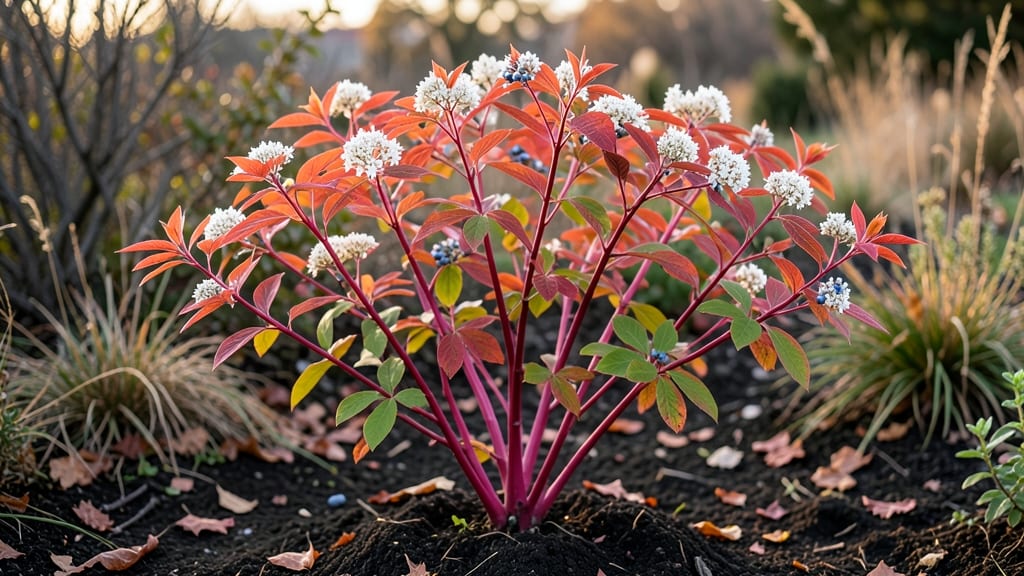
Your backyard deserves a bold, thornless privacy screen that turns heads. 🌿 These red bushes and shrubs bring year-round color without the hassle of thorns or high maintenance—perfect for borders, hedges, or standalone statement plants.
I’ve tested the best varieties that thrive in most climates and pair beautifully with other plants.
The right red shrubs can create a lush, vibrant backdrop that changes with the seasons. Cotoneaster ‘Fireberry’ offers deep red berries in fall, while Viburnum ‘Crimson Beauty’ bursts with pink spring blooms that mature to rich red.
Hydrangeas like ‘Endless Summer’ deliver bold red blooms that last all summer long, and barberry varieties stay compact yet dense for easy pruning.
Imagine a backyard where deep red foliage contrasts against evergreen neighbors, or where fiery berries feed birds while adding winter interest. These shrubs handle partial shade, need minimal pruning, and resist pests better than many alternatives.
The best part? You’ll spend less time maintaining and more time enjoying your stunning, low-fuss privacy screen.
Pair them with silver foliage plants like lamb’s ear or dusty miller to make the reds pop even more. For year-round drama, add evergreens like boxwood or holly for structure. The combinations are endless—let’s bring that bold, natural beauty to your space without the thorns or the work.
📚 In This Guide
- What you need
- Instructions
- Tips and common mistakes
- Wrapping up and next steps
What you need
- ● Thornless red shrubs (3–5 plants per 6-foot section)—Choose from varieties like Cotoneaster franchetii (Bearberry Cotoneaster), Pyracantha ‘Mohave’ (Firethorn), or Viburnum bodnantense ‘Dawn’ (Winter Viburnum). Opt for 1–3 gallon containers for mature plants or bare-root seedlings for budget-friendly options.
- ● High-quality potting soil or native soil mix (50 lbs bag)—Ensure it’s well-draining to prevent root rot.
- ● Organic mulch (3–4 inches)—Shredded bark or pine straw to retain moisture and suppress weeds.
- ● Slow-release fertilizer (10–10–10 or 5–10–5)—Apply at planting time for a nutrient boost.
- ● Garden trowel or spade—For digging holes (1.5x wider than the root ball).
- ● Hose with nozzle or watering can—For thorough watering (aim for 1–2 gallons per plant initially).
- ● Pruning shears—To trim dead branches or shape plants post-planting.
- ● Measuring tape—For spacing plants 3–6 feet apart (depending on variety).
- ● Gloves & knee pads—Because comfort (and blisters) matter! 😉
- ● Erosion control fabric—If planting on a slope.
- ● Plant food (liquid or granular)—For a mid-season growth boost.
- ● Decorative stakes or lattice—To train vining varieties (like some Pyracantha) for extra height.
- ● Bird netting—If local wildlife loves your shrubs as much as you do! 🐦
Step-by-Step guide to planting thornless red shrubs for privacy screens
Here’s how to create a stunning, low-maintenance privacy screen with vibrant red foliage—no thorns, no headaches.
🌱 Step 1: Select the Right Thornless Red Shrubs for Your Climate
Choose 4-6 varieties of thornless red shrubs that thrive in your hardiness zone. My top picks are ‘Royal Purple’ Smokebush (Cotinus coggygria), ‘Diablo Ninebark (Physocarpus opulifolius), and ‘Oregon Sunset’ Barberry (Berberis aquifolium)—all known for their deep red foliage and vigorous growth. These varieties stay compact yet dense, perfect for a 6-8 foot tall screen.
Check your USDA hardiness zone before buying. Most of these shrubs handle zones 4-8, but ‘Oregon Sunset’ Barberry prefers zones 5-7 for best color retention. I always verify with local nurseries—they’ll know which cultivars perform best in your area’s soil and humidity.
🪴 Step 4: Plant Shrubs in a Strategic Grid Pattern
Dig holes twice as wide as the root ball but no deeper. Space plants 4-6 feet apart—this ensures they fill in quickly while allowing airflow to prevent disease. I use a stake and string to mark the grid before digging, so the spacing stays consistent. Place each shrub so the top of the root ball sits 1 inch above ground level—this prevents rot when soil settles.
Backfill with the removed soil, tamping gently to eliminate air pockets. Water deeply to settle the roots, then add a 2-inch layer of mulch (like pine bark fines) around the base, keeping it 6 inches away from the trunk. Mulch helps retain moisture and suppresses weeds, but avoid piling it against the stem—this can cause rot.
☀️ Step 5: Provide Sunlight and Water for Vibrant Foliage
Most red shrubs need full sun (6+ hours daily) to maintain their deep color. If your site gets only partial shade (4-6 hours), choose ‘Royal Purple’ Smokebush—it tolerates shade better than others. I’ve seen ‘Diablo Ninebark’ lose its rich red hue in low light, so position it where it gets morning sun at least.
Water deeply once a week during the first growing season to encourage deep root growth. After establishment, these shrubs are drought-tolerant, but their foliage stays brighter with consistent moisture. Check soil moisture by sticking your finger 2 inches deep—if it’s dry, water until moisture reaches 6 inches down. Overwatering is worse than underwatering for these shrubs.
✂️ Step 6: Prune Strategically for Density and Shape
Prune late winter or early spring before new growth begins. Cut back overly leggy stems by ⅓ to encourage bushier growth. For ‘Oregon Sunset’ Barberry, I remove dead or crossing branches first—they can block sunlight from the center. Use clean, sharp pruners and make cuts just above a leaf node to promote healing.
Shape the screen by trimming the outer edges after flowering (if applicable) to maintain a neat, uniform look. Avoid heavy pruning in fall—it stimulates tender new growth that won’t survive winter. I also remove any suckers or volunteer shoots at the base to keep energy focused on the main plant.
Tips & tricks for perfect thornless red shrub privacy screens
Creating a stunning privacy screen doesn't have to be complicated—these pro tips will help you achieve vibrant, healthy growth with minimal effort.
Variety Selection: When choosing your 4-6 varieties in Step 1, consider the mature height of each shrub. For a uniform screen, mix taller varieties like 'Diablo Ninebark' (which can reach 6-8 feet) with slightly shorter ones like 'Royal Purple' Smokebush (5-6 feet). This creates natural layers and prevents gaps. I always arrange them with the tallest at the back and shortest at the front for a polished look.
Planting Precision: In Step 4, that 1-inch elevation above ground level for the root ball is critical—it prevents waterlogging, which can cause rot. I use a level to ensure all plants sit at the same height. Also, when spacing 4-6 feet apart, consider your future needs: if you plan to walk behind the screen, increase spacing to 6 feet for easier maintenance.
Sunlight Strategy: The 6+ hours of full sun mentioned in Step 5 is non-negotiable for maximum color intensity. For partial shade situations, plant 'Royal Purple' Smokebush on the shadier side of your screen—it handles 4-6 hours better than the others. I've seen 'Diablo Ninebark' lose its vibrant red in low light, so position it where it gets morning sun for at least 4 hours daily.
Pruning Pro Tip: When pruning in late winter (Step 6), focus on removing dead or crossing branches first—they compete with healthy growth for nutrients. For 'Oregon Sunset' Barberry, I make my cuts just above a leaf node to encourage new growth from that spot. Use clean pruners and sterilize them with rubbing alcohol between cuts to prevent disease spread.
Pro Tips for Red Bushes And Shrubs
- Creating a stunning privacy screen doesn't have to be complicated—these pro tips will help you achieve vibrant, healt...
- Variety Selection: When choosing your 4-6 varieties in Step 1, consider the mature height of each shrub. For a unifor...
- Planting Precision: In Step 4, that 1-inch elevation above ground level for the root ball is critical—it prevents wat...
Frequently asked questions
Got questions about choosing and caring for red bushes and shrubs?
Here are some of the most common queries to help you pick the perfect low-maintenance privacy screen with vibrant color and minimal fuss.
What are the best thornless red shrubs for privacy screens?
Top picks include Cotoneaster dammeri (bearberry cotoneaster), Pyracantha 'Mohave', and Viburnum bodnantense 'Dawn'. These offer bold red foliage or berries, dense growth, and no thorns—ideal for safe, attractive barriers. Always check local climate suitability!
When is the best time to plant red shrubs for privacy?
Plant in early spring or fall when soil is workable but not frozen. Avoid summer heat or winter cold, which stress young roots. For faster growth, choose container-grown shrubs—they establish quicker than bare-root varieties.
Can I prune red shrubs to encourage more vibrant color?
Yes! Prune in late winter or early spring before new growth starts. Remove dead or crossing branches, and thin out dense areas to improve airflow. Never prune in fall—it can stimulate tender growth vulnerable to frost damage.
Why are my red shrubs losing color or turning yellow?
Yellowing leaves often signal overwatering, nutrient deficiency (like iron), or fungal issues. Check soil drainage, adjust watering, and fertilize with acid-loving plant food if needed. Fungal diseases? Apply copper fungicide and improve airflow by pruning.
Are there drought-tolerant red shrubs for low-maintenance yards?
Try Cotoneaster 'Fireberry' or Rhus aromatica 'Gro-Low' (fragrant sumac). Both thrive in dry conditions once established, need minimal watering, and boast striking red hues. Mulch to retain moisture and suppress weeds.
Pro Tip:
For year-round interest, pair red shrubs with evergreens like Ilex 'Sparkleberry'. The contrast keeps your privacy screen visually dynamic, even in winter!
Wrapping up and next steps
Transforming your outdoor space with thornless red bushes and shrubs is easier than ever—no pruning headaches, no sharp surprises, just stunning privacy and year-round color! 🌿 Whether you’re drawn to the deep burgundy of Cotoneaster or the bold foliage of Barberry, these low-maintenance stars deliver beauty with minimal fuss.
Ready to take the next step? Sketch your space, pick your favorite variety, and start planting! Your dream privacy screen is just a shovel’s throw away.