
Size
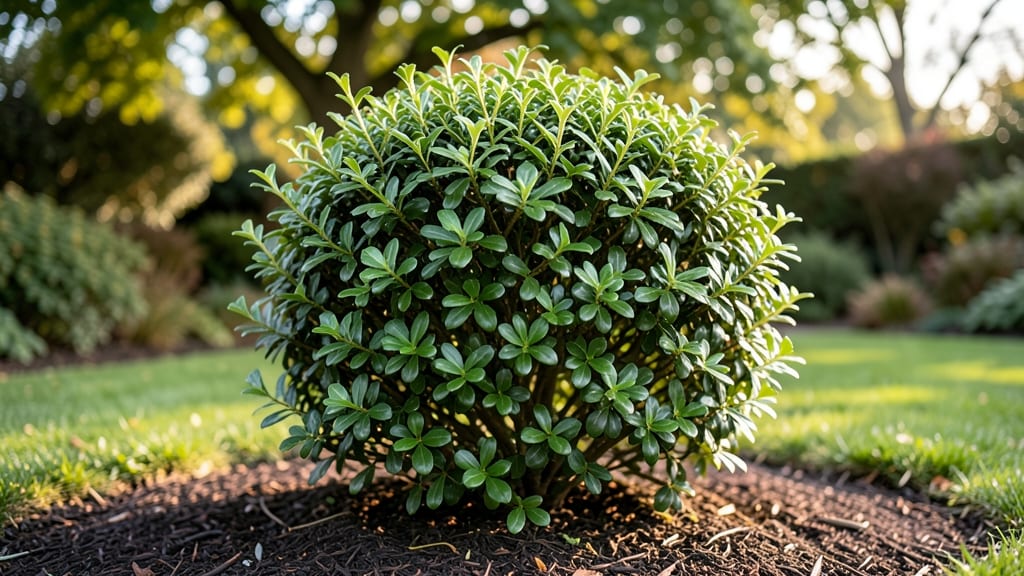
The boxwood shrub growth rate is steady at 6–12 inches per year—slow but reliable—making them perfect for structured hedges and year-round structure. 🌿 I planted mine in full sun, and within three years, they reached the height of my mailbox, proving that patience pays off with these cold-hardy shrubs.
Their growth rate depends on three key factors: sunlight, soil quality, and pruning habits. Boxwoods thrive in morning sun with afternoon shade, but they’ll stretch toward light if planted in shady spots.
Well-draining, slightly acidic soil (pH 6.0-6.5) keeps roots happy, while overwatering or soggy soil slows growth to a crawl.
With proper care, you’ll see dense, glossy foliage within a year, and mature plants can live for decades. The secret? Light pruning after flowering (late spring) encourages bushier growth, while heavy cuts in fall can stress the plant. Mulch helps retain moisture and regulates soil temperature, keeping growth consistent.
Common mistakes—like over-fertilizing or pruning too late—can stunt growth, but boxwoods are forgiving. In colder climates, they’ll go dormant but bounce back in spring. For faster results, plant in spring and keep soil evenly moist during their first growing season.
📚 In This Guide
- What you need
- Instructions
- Tips and common mistakes
- Wrapping up and next steps
What you need
- ● Boxwood plants: 1–3 Buxus sempervirens (common boxwood) or Buxus microphylla (littleleaf boxwood) nursery-grown plants, sized 1–3 gallons (for mature shrubs) or 1-quart pots (for smaller starter plants).
- ● Cold-hardy varieties: Look for tags labeled USDA Zones 5–9 (e.g., 'Green Velvet,' 'Winter Gem,' or 'Suffruticosa').
- ● Soil amendments: 5–10 lbs of compost or well-aged manure per plant (improves drainage and nutrients).
- ● 2–3 lbs of sand or perlite (if your soil is heavy clay to prevent root rot).
- ● Fertilizer: Slow-release balanced fertilizer (10-10-10 or 12-12-12), 1–2 lbs per plant, applied in early spring.
- ● Organic option: 1 cup of fish emulsion or bone meal (for phosphorus boost).
- ● Mulch: 2–3 inches of pine bark nuggets, shredded cedar, or straw mulch (keeps roots cool and retains moisture).
- ● Digging tools: 1 garden trowel (for small holes or transplanting).
- ● 1 shovel (for larger planting pits).
- ● 1 pruning shears (for shaping and trimming).
- ● Measuring & prep: 1 measuring tape (to space plants 3–6 feet apart, depending on mature size).
- ● 1 garden hose with spray nozzle (for watering).
- ● 1 gloves (to protect hands from thorns or soil).
- ● 1 soil pH test kit (boxwood prefers acidic to neutral soil (pH 6.0–7.0)).
- ● 1 drip irrigation system (for consistent moisture, especially in hot climates).
- ● 1 plant support stakes (for young shrubs in windy areas).
- ● 1 broad-spectrum fungicide (preventative measure for powdery mildew in humid areas).
Understanding and maximizing your boxwood's growth rate
Boxwoods grow steadily but predictably—here's how to measure, encourage, and troubleshoot their annual expansion.
☀️ Step 1: Determine Your Boxwood's Expected Annual Growth
Most boxwood cultivars grow 6-12 inches per year under ideal conditions, with Buxus sempervirens (English boxwood) typically on the slower end and Buxus × 'Green Velvet' reaching the faster range. Measure your shrub's height and width annually in early spring before new growth begins—this gives you the most accurate baseline.
Use a measuring tape to record dimensions in inches (height × width × depth). For example, a 3-foot-tall boxwood might grow 8-10 inches in its first year, then slow to 4-6 inches annually as it matures. Younger plants grow faster because they allocate more energy to expansion rather than root development.
🌱 Step 2: Optimize Soil and Water for Faster Growth
Boxwoods thrive in well-draining, slightly acidic soil with a pH of 6.0-7.0. Amend heavy clay with 1-2 inches of compost or sand to improve aeration. I always test soil pH before planting—boxwoods show yellowing leaves when soil is too alkaline, which stunts growth. A simple soil test kit solves this in minutes.
Water deeply once a week during the growing season (spring through fall), aiming for 1-1.5 inches of moisture per session. Overwatering causes root rot, while underwatering triggers leaf drop. Check soil moisture by pushing your finger 2 inches deep—if it feels dry, water again. Mulch with 2-3 inches of shredded bark to retain moisture and regulate soil temperature.
✂️ Step 3: Prune Strategically to Encourage Bushier Growth
Prune boxwoods twice a year: a light shaping cut in late spring (after flowering) and a renewal prune in early summer. Never remove more than one-third of the foliage in a single session—this stresses the plant and slows growth. Use sharp, clean pruners to make cuts just above a leaf node or bud to encourage branching.
For faster width expansion, focus on selective pruning: trim back the outermost growth by 1-2 inches to stimulate new shoots. Avoid "shearing" (cutting uniformly)—this creates dense, woody centers that choke growth. After pruning, apply a balanced 10-10-10 fertilizer in early spring to fuel new shoots.
🪴 Step 4: Monitor and Adjust for Seasonal Growth Patterns
Boxwoods grow most rapidly in late spring and early summer when temperatures hover between 60-75°F. If growth stalls, check for compacted soil (common in clay-heavy areas) or poor drainage (visible as soggy soil after rain). Loosen soil around the root zone with a garden fork if needed, but avoid disturbing roots deeper than 6 inches.
In winter, growth halts entirely, but evergreen leaves may yellow if exposed to salt spray (from road treatments) or drought stress. Protect young plants with burlap wraps during harsh winters. Come early spring, inspect for bud swell—this signals the plant is preparing to grow again. Apply a slow-release fertilizer at this stage to jumpstart expansion.
⏰ Step 5: Troubleshoot Slow Growth with Targeted Fixes
If your boxwood grows less than 3 inches annually, it’s likely underfed, overcrowded, or diseased. Check for boxwood blight (dark spots on leaves) or root rot (mushy stems at the base)—both require fungicide treatment and soil replacement. For nutrient deficiencies, conduct a leaf tissue test to identify missing micronutrients like iron or magnesium.
Overcrowded roots stunt growth—if your boxwood is planted closer than 3 feet to another shrub, dig around the perimeter to separate root zones. Transplanting in early spring gives roots time to establish before summer heat. For mature boxwoods, aerate the soil with a soil probe every 2-3 years to improve root access to nutrients and water.
Tips & tricks for maximizing boxwood growth
These insider strategies will help you coax faster, healthier expansion from your cold-hardy evergreens.
Growth Tracking: Record measurements in early spring when growth is dormant, not during peak summer expansion. I mark my tape measure at the plant's base with a small flag—this makes annual comparisons foolproof. For wider shrubs, measure across the widest point at both the top and bottom; growth patterns often differ between these zones.
Soil Science: The pH of 6.0-7.0 is non-negotiable for boxwoods, but here's what I've learned: if your soil test shows 7.2 or higher, don't just add sulfur. Mix in 1-2 inches of peat moss (not peat) with your compost—it's more effective at lowering pH while improving moisture retention. Re-test after 6 months to confirm progress.
Pruning Precision: When doing your late spring shaping cut, focus on removing only the outermost 1/4 inch of growth—this stimulates branching without shocking the plant. I use a pair of concave pruners for clean cuts that heal faster. For renewal pruning in summer, cut back to just above a leaf node, but never more than 1/3 of the foliage in one session—this is where most gardeners overdo it.
Seasonal Strategy: In late spring when temperatures hit that 60-75°F sweet spot, I apply a fish emulsion fertilizer (20-20-5 ratio) at half strength. This gives a quick nutrient boost without burning roots. The key is timing—wait until you see new growth appear before fertilizing, or you'll waste nutrients on dormant plants.
Pro Tips for Boxwood Shrub Growth Rate
- These insider strategies will help you coax faster, healthier expansion from your cold-hardy evergreens.
- Growth Tracking: Record measurements in early spring when growth is dormant, not during peak summer expansion. I mark...
- Soil Science: The pH of 6.0-7.0 is non-negotiable for boxwoods, but here's what I've learned: if your soil test shows...
Frequently asked questions
Got questions about how fast your boxwood shrubs grow—or how to tweak their growth for the perfect year-round hedge? Here are answers to the most common queries from gardeners just like you!
How fast do boxwood shrubs grow per year?
Boxwoods grow slow to moderate, adding about 6–12 inches per year under ideal conditions (full sun to partial shade, well-drained soil, and consistent moisture). Dwarf varieties like 'Green Velvet' grow just 3–6 inches annually, while standard types (e.g., 'American Holly') can reach 1–2 feet per year with proper care. Patience is key—these shrubs thrive with steady, predictable growth!
Can I speed up boxwood growth naturally?
Yes! Boost growth with these organic hacks:
- Feed annually in early spring with a balanced fertilizer (10-10-10) or compost.
- Ensure 6+ hours of sunlight daily—boxwoods love light but tolerate shade.
- Avoid overwatering; let soil dry slightly between waterings to prevent root rot.
- Prune right after flowering (late spring) to encourage bushier, faster growth.
Do boxwoods grow slower in cold climates?
Boxwoods are cold-hardy (USDA Zones 5–9), but growth does slow in winter. In colder regions (Zone 5), expect slower spring growth until soil warms. Hardier varieties like 'Winter Gem' or 'Green Mountain' handle frost better. Mulch heavily in fall to protect roots, and avoid heavy pruning late in the season—this can stress the plant before winter.
What’s a good alternative if my boxwood grows too slowly?
If you need faster foliage for hedges or privacy, consider these low-maintenance alternatives:
- Emerald Green Arborvitae – Grows 12–24" per year, evergreen, and deer-resistant.
- Dwarf Lilac ('Miss Canada') – 12–18" annually, fragrant blooms, and cold-hardy.
- Inkberry Holly – 12–18" per year, glossy leaves, and thrives in shade.
- Dwarf Ninebark ('Little Devil') – 12–18" annually, colorful stems, and tough in harsh climates.
Why isn’t my boxwood growing? Troubleshooting tips
Slow or stunted growth often stems from these issues:
Problem
Fix It!
Poor soil drainage
Amend clay soil with compost or sand; ensure raised beds if needed.
Overcrowded roots
Space shrubs 3–6 feet apart (depending on variety) for airflow and root room.
Pests (boxwood mites, leafminers)
Spray with neem oil or insecticidal soap; prune infested branches.
Underwatering/drought stress
Water deeply 1–2x weekly in dry spells; mulch to retain moisture.
Wrapping up and next steps
Understanding your boxwood shrub growth rate is the first step to cultivating a thriving, cold-hardy landscape feature! 🌿 Whether you're planning for slow-and-steady growth or faster results with pruning, these insights will help you nurture a lush, year-round canopy.
Now that you're armed with the right knowledge, take action—plant, prune, and monitor your boxwoods to watch them flourish in no time.
Ready to level up your gardening game? Start by selecting the perfect variety for your climate and soil, then give your boxwoods the care they deserve. Happy growing! 🌱