
Shrubs
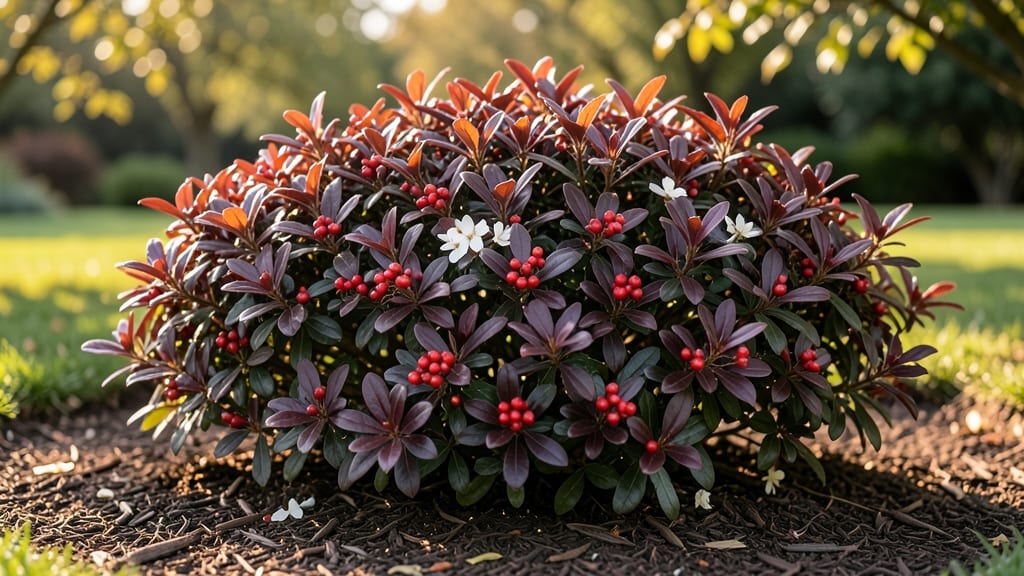
Your garden needs a dark red-leaved shrub to steal the show—no matter the season. 🌿 These bold plants turn ordinary landscapes into dramatic backdrops, their deep crimson foliage contrasting sharply against green lawns, white flowers, and even winter snow.
I’ve tested the best varieties over years, and the right one can transform a dull corner into a year-round masterpiece.
Think Coprosma for glossy, wine-colored leaves that glow in sunlight, or Berberis for spiky, burgundy foliage that thrives in partial shade. Euonymus brings a touch of elegance with its layered, deep-red leaves that turn even more vibrant in fall.
These shrubs aren’t just pretty—they’re tough, too, handling everything from city pollution to rural winds with ease.
Plant them as a striking hedge, a bold border, or a single statement piece near your front door. Pair them with silvery foliage like lamb’s ear or bright blooms like hellebores to make their color pop even more.
The best part? They require minimal fuss—just prune occasionally to keep their shape, and watch them deliver drama with almost no effort.
Whether you’re in the Pacific Northwest’s mild climate or the hot, dry South, there’s a dark red-leaved shrub that will thrive in your zone. Let’s find the perfect one to make your garden unforgettable—no green thumb required.
📚 In This Guide
- What you need
- Instructions
- Tips and common mistakes
- Wrapping up and next steps
What you need
- ● Dark red-leaved shrub: Choose a variety like Berberis thunbergii 'Atropurpurea', Cotoneaster dammeri 'Royal Purple', or Ilex glabra 'Shamrock' (1–3 plants, depending on desired coverage).
- ● Well-draining potting mix: 1–2 bags (sterilized, peat-free if possible).
- ● Garden soil amendment: 5–10 lbs of compost or organic matter (for in-ground planting).
- ● Container or planting hole: For containers: 1–2 gallon pots (10–12" diameter) with drainage holes.
- ● For in-ground: Hole twice the width of the root ball.
- ● Slow-release fertilizer: 10–20 lbs (10-10-10 or balanced organic blend).
- ● Mulch: 2–3 cubic feet of shredded bark or pine needles.
- ● Watering can or hose: With a gentle spray nozzle.
- ● Garden gloves (1 pair, heavy-duty for handling thorns if applicable).
- ● Trowel or spade (for planting).
- ● Pruning shears (sharp, sterilized).
- ● Measuring tape (for spacing plants 3–6 ft apart).
- ○ Optional: Rooting hormone (for cuttings).
- ● Epsom salt (for nutrient boost in containers).
- ● Drip irrigation kit (for automated watering).
- ● 🌡️ Check soil pH: Dark red-leaved shrubs thrive in slightly acidic to neutral soil (pH 6.0–7.0). Test with a kit if unsure!
- ● ✨ Sunlight: Most varieties prefer full sun to partial shade (4–6 hours of direct light daily).
- ● 🔥 Drainage is key: Avoid soggy soil—raise containers or amend clay soil with perlite.
Step-by-Step planting for a striking dark red-leaved shrub
Here's how to plant your new bold foliage star for maximum impact and longevity.
🌱 Step 1: Choose the Perfect Planting Spot
Dark red-leaved shrubs thrive in full sun to partial shade, with at least 6 hours of direct sunlight daily for the deepest color. I always scout locations in mid-morning when shadows are shortest—this helps me visualize how the shrub will perform throughout the day. Avoid spots where afternoon sun scalds leaves or where winter winds desiccate foliage.
Test your site by observing how sunlight moves across it for a week. The ideal spot has well-draining soil and 6-8 feet of clearance from other plants, giving your shrub room to mature without competition. If your soil drains poorly, amend it with 2-3 inches of compost mixed into the top 12 inches of soil before planting.
🪴 Step 2: Dig and Prepare the Planting Hole
Dig a hole twice as wide as the shrub's root ball but only as deep as the container it came in. This prevents burying the stem too deeply, which can cause rot. I use my shovel to loosen the sides of the hole gently—this encourages roots to spread outward rather than circling the root ball.
Remove the shrub from its container and examine the roots. If they're tightly bound, tease them apart gently with your fingers. Place the shrub in the hole so the top of the root ball sits 1 inch above ground level. This slight elevation prevents water from pooling around the stem. Backfill with native soil, pressing lightly to eliminate air pockets but not compacting too firmly.
💧 Step 3: Water Deeply and Mulch for Retention
Water the shrub deeply right after planting—enough so that 12 inches of soil around the root zone is thoroughly moistened. You'll know it's right when water drains from the bottom of the hole. This initial soaking helps roots establish quickly. Avoid overhead watering, which can wash soil away and dislodge the plant.
Spread 2-3 inches of mulch (like shredded bark or pine needles) around the base, keeping it 3 inches away from the stem to prevent rot. Mulch conserves moisture and regulates soil temperature, which is especially critical in the first 6-8 weeks while roots establish. Replenish mulch annually as it breaks down.
☀️ Step 4: Prune for Shape and Encourage Fullness
After planting, give your shrub a light pruning to remove any damaged or crossing branches. I always cut just above a leaf node or outward-facing bud to encourage bushier growth. For dark red-leaved varieties, avoid heavy pruning in early spring—this can reduce foliage intensity. Instead, prune lightly in late winter or after flowering to maintain shape.
Watch for new growth emerging from the base and sides. This is your cue that the shrub is settling in. If you notice leggy growth reaching toward the sun, it’s a sign the plant needs more light or is slightly root-bound. Adjust its position if needed, but avoid moving it for at least 2-3 months to prevent stress.
Tips & tricks for perfect dark red-leaved shrub planting
These game-changing tips will help you transform your bold foliage into a showstopping landscape centerpiece that steals the show all year long.
Sunlight Strategy: The 6 hours of direct sunlight mentioned in Step 1 is non-negotiable for that vibrant red foliage! I've learned the hard way that morning sun (before 10 AM) actually intensifies the color more than afternoon sun. If you're in a hot climate, consider dappled shade in the afternoon to prevent leaf scorch while still getting those crucial morning rays.
Root Ball Rescue: When loosening those tightly bound roots in Step 2, don't be afraid to get your hands dirty! I've seen root balls so compacted they looked like a solid block. Use your fingers to gently separate the roots outward—this encourages them to spread into the surrounding soil rather than circling in the hole. Think of it like untangling headphones, but with more dirt.
Watering Wisdom: That deep watering in Step 3 isn't just about initial hydration—it's about establishing a strong root system. I've found that watering deeply once a week (rather than light daily watering) actually encourages roots to grow deeper into the soil. The key is to water until you see drainage at the bottom of the hole, which tells you the roots are getting properly hydrated.
Pruning Precision: When you're doing that light pruning in Step 4, focus on creating an open center that allows light to penetrate. I like to make my cuts just above a leaf node at a 45-degree angle—this creates a larger surface for new growth. For dark red varieties, remember that less is more: aggressive pruning can actually dilute that stunning color intensity.
Pro Tips for Dark Red Leaved Shrub
- These game-changing tips will help you transform your bold foliage into a showstopping landscape centerpiece that steals the show all year long.
- Sunlight Strategy: The 6 hours of direct sunlight mentioned in Step 1 is non-negotiable for that vibrant red foliage!
- Root Ball Rescue: When loosening those tightly bound roots in Step 2, don't be afraid to get your hands dirty!
Frequently asked questions
Got questions about adding a dark red-leaved shrub to your garden? You’re not alone! Here are some of the most common queries—plus answers to help you plant with confidence.
What are the best dark red-leaved shrubs for beginners?
Start with hardy, low-maintenance options like Cotoneaster dammeri (Bearberry Cotoneaster) or Viburnum bodnantense (Winter Beauty Viburnum). These thrive in partial shade, tolerate cold, and offer stunning foliage year-round. For bold color, Skimmia japonica (var. ‘Rubella’) is another great pick!
How long does it take for a dark red-leaved shrub to mature?
Most shrubs take 2–5 years to reach full size and vibrant color. Patience is key—young plants may start with green leaves before developing their signature red hues. Prune lightly in early spring to encourage bushier growth and richer foliage faster.
Do dark red-leaved shrubs need full sun, or can they grow in shade?
While many (like Berberis thunbergii) love full sun to partial shade, others, such as Pieris japonica, prefer dappled shade to prevent leaf scorch. Check your shrub’s specific needs—most just need 4–6 hours of sunlight daily for optimal color.
Why are the leaves on my shrub turning brown or yellow?
Brown or yellow leaves often signal overwatering, underwatering, or nutrient deficiencies. Check soil moisture (keep it evenly moist but well-draining) and fertilize lightly in spring with an acid-loving plant formula. Fungal issues? Prune affected branches and avoid wetting foliage during watering.
Can I grow dark red-leaved shrubs in containers?
Dwarf varieties like Dwarf Fountain Cotoneaster or Compact Skimmia thrive in containers. Use a well-draining potting mix and a pot with drainage holes. Repot every 2–3 years and fertilize monthly during growing season for lush, vibrant foliage.
Pro Tip:
For maximum drama, pair dark red-leaved shrubs with silver or variegated foliage (like Heuchera or Lamium) to make their color pop! Mulch with pine bark to retain moisture and acidify the soil naturally.
Wrapping up and next steps
Incorporating a dark red-leaved shrub into your landscape is a game-changer—it’s easy, dramatic, and packed with year-round visual appeal! 🌿 Whether you’re drawn to the deep burgundy hues of Berberis thunbergii or the striking contrast of Cotoneaster dammeri, these shrubs thrive with minimal fuss and add a touch of sophistication to any space. Ready to elevate your garden? Start by choosing the perfect variety for your climate, then plant it in a spot where its bold foliage will shine—like near a patio, along a pathway, or as a striking centerpiece. Your garden’s next star is just a shovel’s throw away!
Next steps:
- 🌱 Pick your shrub—visit a local nursery or browse online for the best fit.
- 📅 Plan your planting date (spring or fall is ideal for most varieties).
- 🛠️ Gather tools and soil amendments from your earlier checklist.