
Succulent
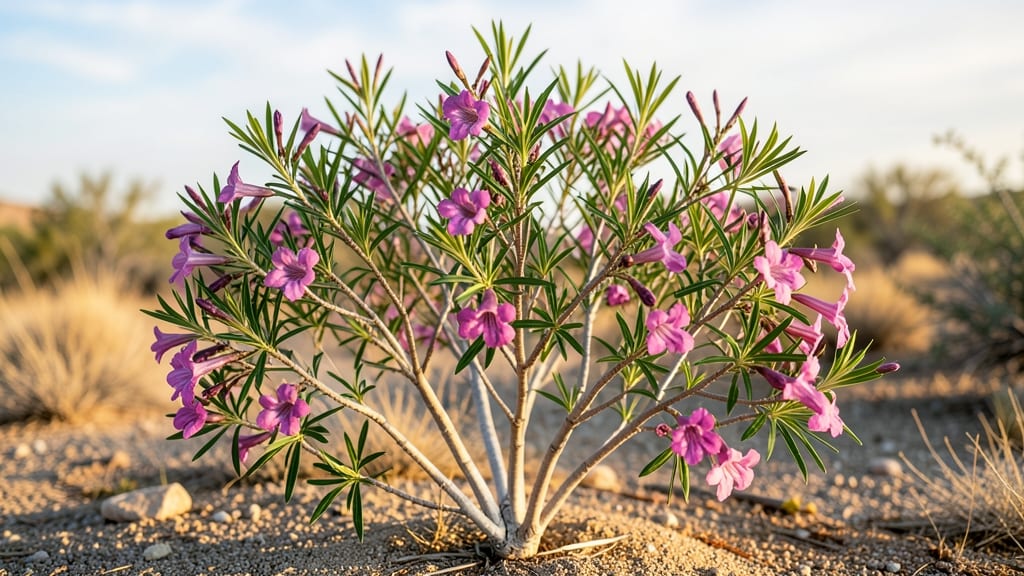
Growing a desert willow shrub turns your yard into a fragrant desert oasis that thrives where others fail. 🌵 The secret lies in mimicking its native habitat—dry soil, intense sun, and minimal fuss. My first one surprised me by blooming within months of planting, proving this isn't just drought-tolerant—it's drought-loving.
This shrub demands full sun (at least 6 hours daily) and well-draining soil—think gravelly or sandy mixes. Overwatering is the #1 killer, so let the soil dry completely between drinks.
The fragrant yellow blooms arrive in spring, but the real magic is how it stays lush through summer heat without extra care.
Prune lightly after flowering to shape it, and watch as it grows 3-5 feet tall with a spread of 6-10 feet. The silvery foliage adds texture year-round, while hummingbirds adore the blooms. Even in Zone 7-11, it handles heat and occasional drought like a champ.
Watch for spider mites in dry spells (hose them off!) and root rot if soil stays soggy. With proper placement, this shrub rewards you with low-maintenance beauty that outshines most desert plants. Ready to grow yours?
📚 In This Guide
- What you need
- Instructions
- Tips and common mistakes
- Wrapping up and next steps
What you need
- ● Desert willow shrub: 1 nursery-grown plant (3–5 gallons) or seeds (if starting from scratch). Pro tip: 💡 Opt for a well-established plant for faster blooms!
- ● Well-draining soil: 5–10 bags (20 lbs each) of cactus/succulent mix or amended native soil (50% sand, 30% native soil, 20% compost).
- ● Container (if potted): 1 large pot (15+ gallons) with drainage holes or a raised bed (minimum 12" depth).
- ● Organic fertilizer: 1 slow-release 10-10-10 or a balanced granular fertilizer (e.g., Dr. Earth or Espoma).
- ● Mulch: 2–3 bags of gravel or coarse bark (to retain moisture and deter weeds).
- ● Garden trowel or shovel (for transplanting).
- ● Pruning shears (sterilized, for shaping).
- ● Watering can or hose with a gentle nozzle (avoid overwatering!).
- ○ Gloves (optional, for handling thorns or soil).
- ○ pH testing kit (optional, to check soil acidity—ideal range: 6.0–7.5).
- ● Sunlight: A spot with full sun (6+ hours/day) or light shade in extreme heat.
- ● Climate: USDA Zones 7–11 (or container-grown in cooler zones).
- ● Water access: Drought-tolerant once established, but needs deep watering 1–2x/week for the first year.
- ● Patience: Desert willows grow 1–2 feet/year—blooms may take 2–3 years!
Step-by-Step instructions for planting and cultivating desert willow shrubs
Here's how to establish a thriving desert willow with minimal fuss and maximum fragrance.
🪴 Step 1: Select the Perfect Planting Site
Desert willows demand full sun exposure—at least 6 hours daily—but they'll tolerate partial shade in extreme heat zones. I always choose a location with well-draining soil, as these shrubs despise soggy roots. Avoid low spots where water pools after rain, even in desert climates.
Test your site by digging a 12-inch deep hole. If water doesn't drain within 30 minutes, amend the soil with 20% coarse sand or gravel to improve drainage. The ideal spot also offers some wind protection—desert willows can get leggy when buffeted constantly.
🌱 Step 2: Plant at the Right Time and Depth
Fall or early spring planting gives roots time to establish before summer's intensity. Dig a hole twice as wide as the root ball but only as deep as the container—burying too deep suffocates the plant. Gently loosen the root ball if it's circling tightly in the pot.
Place the shrub in the hole and backfill with native soil, tamping lightly every 2 inches to eliminate air pockets. Water deeply immediately after planting to settle the soil and encourage root contact. You'll know it's right when the soil surface looks settled and the plant sits level with the surrounding ground.
☀️ Step 3: Establish a Watering Routine for the First Year
New desert willows need deep watering twice weekly during their first growing season. I use a soaker hose to deliver water slowly at the base, avoiding wetting the foliage—which can promote fungal issues. Let the top 4-6 inches of soil dry out between waterings to prevent root rot.
After the first year, reduce watering to once every 2-3 weeks unless your region experiences extreme heat. Mature desert willows are remarkably drought-tolerant once established, but they'll reward you with lush foliage and fragrance if given consistent moisture during their critical growth phase.
✂️ Step 4: Prune for Shape and Health
Light pruning in late winter or early spring encourages bushier growth. Remove any dead, diseased, or crossing branches first—these compete for energy and can invite pests. Cut back any leggy growth by one-third to encourage denser branching.
Never prune more than 30% of the plant at once, as desert willows respond poorly to aggressive cuts. I also trim back any overly long branches that spoil the natural shape. The goal is to maintain an open, airy canopy that allows light to penetrate to the lower branches.
🌿 Step 5: Maintain Soil and Fertilize Strategically
Desert willows thrive in lean soil, so I avoid heavy fertilization. In early spring, apply a balanced 10-10-10 fertilizer at half-strength to encourage new growth. Work it into the top 4 inches of soil around the drip line, not directly against the trunk.
Mulch with 2-3 inches of gravel or coarse bark to retain moisture and regulate soil temperature. Keep the mulch 6 inches away from the trunk to prevent rot. This shrub's natural beauty lies in its minimal care requirements—over-fertilizing leads to weak, floppy growth and fewer flowers.
Tips & tricks for perfect desert willow cultivation
Mastering desert willow care means understanding these subtle details that make all the difference between a struggling shrub and a fragrant, thriving canopy.
Site Selection Insight: That 6-hour daily sun requirement is non-negotiable for desert willows, but here's what I've learned about the "partial shade" tolerance: In extreme heat zones (think 110°F+ summers), they can handle 4-5 hours of direct sun with 1-2 hours of afternoon shade. The key is avoiding midday sun during peak heat—morning sun is always better. Also, test that drainage hole thoroughly: If water pools after 30 minutes, you're looking at root rot risk, and no amount of sand will fix compacted clay soil.
Planting Depth Secret: When checking depth in Step 2, use your fingers to feel the soil level around the trunk—it should sit just slightly above the surrounding ground. I've seen gardeners bury these too deep, and the roots literally suffocate. Pro tip: Mark the container's depth with a pencil before removing the plant, then use that as your reference point when backfilling. That 2-inch tamping rule is crucial too—pack too tightly and you'll restrict root expansion.
Watering Wisdom: The twice-weekly deep watering in the first year isn't just about quantity—it's about technique. I use a soaker hose for 20-30 minutes at the base, not overhead watering. The 4-6 inch soil dry-out guideline means sticking your finger down: If it feels damp below 4 inches, wait another day. Overwatering in the first year is the #1 reason these shrubs fail—desert willows hate wet feet just as much as they love sun.
Pruning Precision: That one-third cut for leggy growth might seem aggressive, but here's the breakthrough: Make your cuts just above a leaf node where new growth can emerge. I time my pruning for late winter when the plant's dormant—this gives it maximum energy to regrow. And never prune more than 30% at once, or you'll shock the plant into producing fewer flowers that season. Think of it as a haircut—you wouldn't shave your head in one visit!
Pro Tips for Desert Willow Shrub
- Mastering desert willow care means understanding these subtle details that make all the difference between a struggling shrub and a fragrant, thriving canopy.
- The key is avoiding midday sun during peak heat—morning sun is always better.
- Planting Depth Secret: When checking depth in Step 2, use your fingers to feel the soil level around the trunk—it should sit just slightly above the surrounding ground.
Frequently asked questions
Got questions about nurturing your desert willow shrub? You’re not alone! Here are some of the most common queries—plus quick answers to keep your fragrant beauty thriving.
How fast does a desert willow grow?
A healthy desert willow can grow 1-2 feet per year under ideal conditions (full sun, well-draining soil, and consistent watering). With patience, it’ll reach its mature height of 6-10 feet in 3-5 years. Prune in late winter to encourage bushier growth!
Can desert willows survive winter?
Most desert willows are semi-deciduous and tolerate light frosts (20-25°F). In colder zones (USDA 7-10), mulch the base with 3-4 inches of organic matter (like bark or straw) to protect roots. Young plants may need winter wraps in harsh climates.
How often should I water a desert willow?
Water deeply once a week during the first year to establish roots, then taper to every 2-3 weeks once mature. Overwatering causes root rot—always check soil moisture before watering. Drought-tolerant once established!
What’s the best alternative if I can’t grow a desert willow?
Try these fragrant, drought-resistant swaps:
- Texas Ranger (Leucophyllum frutescens) – Purple blooms after rain!
- Anise Hyssop (Agastache foeniculum) – Edible flowers, pollinator magnet.
- Jojoba Shrub (Simmondsia chinensis) – Low-water, silvery foliage.
Why are my desert willow leaves turning yellow?
Yellowing leaves usually signal overwatering or fungal issues. Check for:
- Mushy stems → Root rot (reduce water, improve drainage).
- Black spots → Powdery mildew (prune affected areas, space plants for airflow).
- Curling edges → Underwatering or pests (spider mites? Spray with neem oil).
Wrapping up and next steps
The desert willow shrub is a stunning, low-maintenance addition to any landscape, offering year-round beauty with its fragrant blooms and silvery foliage. Whether you're a seasoned gardener or just starting out, its adaptability and resilience make it a perfect choice for sunny, arid spaces.
Ready to transform your outdoor space? Start by selecting the ideal spot, gathering your supplies, and planting with confidence! 🌵✨
- Next Step: Pick a sunny location, prep your soil, and watch your desert willow thrive!