
Shrubs
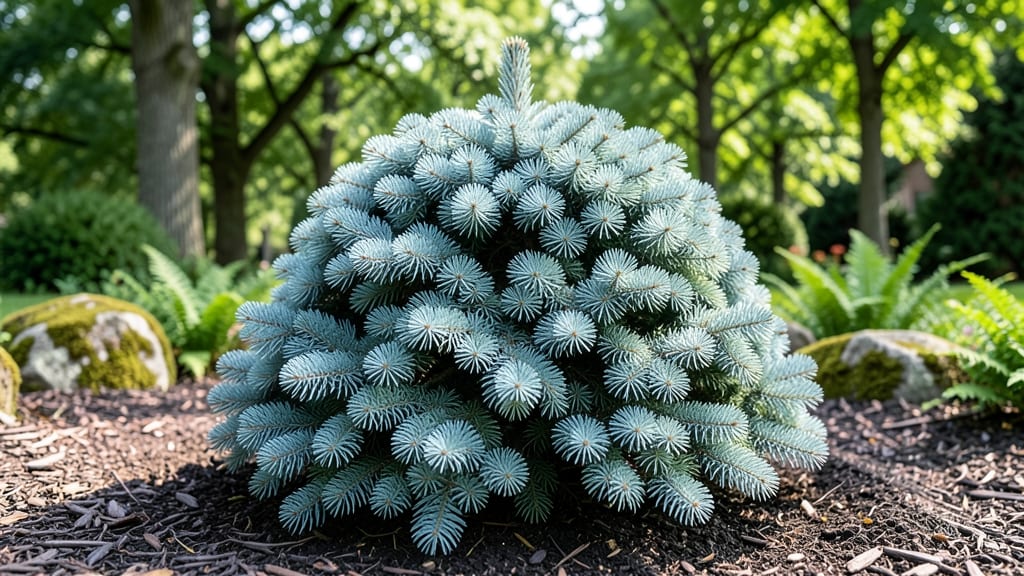
That dwarf blue spruce shrub brings year-round color and texture to gardens where space is tight or views need softening. 🌿 I’ve used these compact evergreens to create living room dividers, dramatic focal points, and even container gardens that stay lush through winter’s worst.
Their silvery-blue needles create a dreamy contrast against snow or dark evergreens, while their slow, rounded growth keeps them manageable without pruning.
Their 3- to 5-foot height makes them perfect for borders, entryways, or mixed containers where you want structure without bulk. Plant them in full sun with well-draining soil, and space them 3 to 4 feet apart for that "planted-on-purpose" look.
Pair them with heuchera, boxwood, or ornamental grasses to highlight their soft, feathery texture—it’s like having a cloud-shaped accent in your landscape.
What you’ll love most is how they stay vibrant all year, even when other plants fade. Their glauca foliage glows in winter sunlight, and their dense growth habit naturally repels pests.
Whether you’re framing a patio, anchoring a perennial bed, or adding height to a container, these shrubs deliver effortless elegance with almost no upkeep.
Bonus: They thrive in USDA Zones 2-7, so if you’re in a cold climate, you’ll have a low-maintenance, evergreen solution that outlasts seasonal plants. The key is choosing the right spot—sunlight and airflow are the only design rules you need to follow. Let’s get planting!
📚 In This Guide
- What you need
- Instructions
- Tips and common mistakes
- Wrapping up and next steps
What you need
- ● Dwarf Blue Spruce Shrubs: 1–3 plants (depending on spacing and desired coverage). Look for Picea pungens 'Glauca Globosa' or similar cultivars.
- ● Well-draining soil: Mix of native soil, compost, and perlite (or sand) for aeration. Aim for a pH of 5.5–7.0.
- ● Organic mulch: 2–3 inches of pine bark, cedar chips, or shredded leaves to retain moisture and suppress weeds.
- ● Slow-release fertilizer: Balanced 10-10-10 or acidic fertilizer (e.g., Osmocote) for evergreens.
- ● Watering can or hose: With a gentle spray nozzle for post-planting hydration.
- ● Garden gloves: A sturdy pair to protect your hands while handling soil and plants.
- ● Hand trowel or spade: For digging holes (1.5x wider than the root ball).
- ● Measuring tape: To ensure proper spacing (3–5 feet apart for mature shrubs).
- ○ Pruning shears: Sharp, clean shears for trimming (optional but helpful for shaping).
- ● Stakes & twine: Only needed if your area is windy (to support young plants temporarily).
- ● Epsom salt: 1 tablespoon mixed into planting hole for magnesium boost (great for blue foliage!).
- ● Plant support cages: For extra stability in high-traffic or exposed areas.
- ● Soil moisture meter: To monitor watering needs during the first year.
- ● Deer repellent spray: If local wildlife is a concern (dwarf spruces are deer-resistant but not foolproof!).
Step-by-Step guide to planting and caring for dwarf blue spruce shrubs
These cold-hardy beauties thrive with minimal fuss—here's how to plant them for maximum privacy and texture.
🪴 Step 1: Select and Prepare the Planting Site
Dwarf blue spruce (Picea pungens 'Glauca Globosa') thrives in full sun to partial shade with 6+ hours of direct light daily. Choose a location sheltered from harsh winter winds, as their soft needles can get damaged. The soil should be well-draining—these conifers hate soggy roots. If your yard has heavy clay, amend with 2-3 inches of compost mixed into the top 12 inches of soil.
Dig a hole twice as wide and only slightly deeper than the root ball to encourage outward root growth. Gently loosen the edges of the root ball with your fingers before placing it in the hole—this prevents root circling, which stunts growth. Space multiple shrubs 3-5 feet apart for a natural, dense look without overcrowding.
☀️ Step 2: Plant with Proper Spacing and Orientation
Place the shrub in the hole so the top of the root ball sits 1-2 inches above ground level. This prevents soil from settling and suffocating the stem. Backfill with native soil, tamping lightly every 2-3 inches to remove air pockets. Water deeply to settle the soil and eliminate gaps.
Orient the shrub so its most attractive side faces the view—typically the side with the densest blue foliage. Avoid planting too deep; the root flare (where roots meet the trunk) should remain visible after settling. Mulch with 2-3 inches of organic mulch (like pine bark or shredded leaves) in a 3-inch-wide ring around the base, keeping it 6 inches away from the trunk to prevent rot.
💧 Step 3: Water and Monitor for Establishment
Water immediately after planting to soak the root ball thoroughly, then water deeply 2-3 times per week for the first 6-8 weeks to encourage root growth. Let the top 2-3 inches of soil dry slightly between waterings—overwatering is the #1 killer of young conifers. You’ll know it’s right when the soil feels like a damp sponge, not mud.
Dwarf blue spruce are drought-tolerant once established, but young plants need consistent moisture. Avoid wetting the needles—water at the base to prevent fungal diseases like needle cast. If your area experiences hot, dry winds, provide afternoon shade for the first growing season to reduce stress.
✂️ Step 4: Prune and Maintain for Long-Term Health
Prune only to remove dead, damaged, or crossing branches—these shrubs have a naturally compact form and rarely need shaping. Use clean, sharp pruners to make cuts just outside the branch collar (the swollen area where the branch meets the trunk). Prune in late winter or early spring before new growth begins, but avoid heavy pruning, as it can reduce the shrub’s cold hardiness.
Fertilize lightly in early spring with a balanced, slow-release fertilizer (10-10-10) if your soil is poor. Over-fertilizing encourages fast, weak growth that’s more susceptible to winter burn. Monitor for pests like spider mites or bagworms—spray with neem oil if you spot webbing or discolored needles. These shrubs are generally pest-resistant, but stress invites problems.
⏰ Step 5: Winter Care for Cold-Hardy Resilience
Dwarf blue spruce are USDA zones 2-7 hardy, but young plants (3 years old) benefit from winter protection. Apply 2-3 inches of mulch around the base in late fall to insulate roots. If your area gets heavy, wet snow, gently brush it off branches to prevent breakage—accumulated weight can snap tender growth.
Watch for winter burn (brown needle tips) in early spring. This is normal and usually recovers with new growth. Avoid pruning until you see fresh green needles emerging. Once established, these shrubs require almost no maintenance—just occasional watering in prolonged dry spells and an annual check for pests. Their soft blue needles will provide year-round privacy and texture with almost no effort.
Tips & tricks for perfect dwarf blue spruce planting
Between us, these little powerhouses are the unsung heroes of low-maintenance landscaping. Here's what nobody tells you about making them thrive.
Soil Prep Secret: The 2-3 inches of compost you mix into the top 12 inches of soil isn't just about drainage—it's about creating a microbial party in the root zone. These blue spruces love mycorrhizal fungi that form symbiotic relationships with their roots. If your soil tests acidic (below pH 6.0), add a handful of lime to the planting hole to keep the soil slightly acidic (pH 5.0-6.5), which these conifers prefer.
Root Ball Handling: When you loosen those root edges in Step 1, don't just poke around—gently tease them apart with your fingers to encourage outward growth. I learned this the hard way after planting three shrubs with tightly bound roots that just sat there for years instead of spreading. Think of it like giving the roots a spa treatment to relax before their new home.
Winter Wind Strategy: For young plants in exposed areas, I recommend installing a temporary windbreak (like a lattice fence) during their first winter. The goal is to reduce wind speeds by 30-50%—this prevents needle desiccation and stem damage. You can remove it in early spring once new growth appears. This simple protection often makes the difference between a thriving shrub and one struggling to recover.
Mulch Placement Precision: That 3-inch ring of mulch around the base might seem small, but it's intentional. Keeping it 6 inches away from the trunk prevents moisture buildup that leads to rot. I've seen many gardeners create mulch volcanoes right up against the trunk, which actually suffocates the plant. Think of it as creating a donut of protection rather than a full blanket.
Pro Tips for Dwarf Blue Spruce Shrub
- Between us, these little powerhouses are the unsung heroes of low-maintenance landscaping. Here's what nobody tells y...
- Soil Prep Secret: The 2-3 inches of compost you mix into the top 12 inches of soil isn't just about drainage—it's abo...
- Root Ball Handling: When you loosen those root edges in Step 1, don't just poke around—gently tease them apart with y...
Frequently asked questions
Got questions about dwarf blue spruce shrubs? You’re not alone! Here are some of the most common queries—and their answers—to help you grow a stunning, low-maintenance privacy screen with ease.
How fast do dwarf blue spruce shrubs grow?
These shrubs grow slowly—typically 6 to 12 inches per year—so they’re perfect for long-term privacy without rapid overgrowth. Expect to wait 5–10 years for a dense, 3–5-foot-tall hedge. Patience pays off with their striking blue-green needles!
Are dwarf blue spruce shrubs truly cold-hardy?
They thrive in USDA Zones 3–7 (as low as -40°F) and handle snow, wind, and frost like a champ. Just avoid planting in hot, dry climates—they prefer cooler, moist conditions. Mulch in winter for extra protection.
Can I prune a dwarf blue spruce shrub to keep it smaller?
Yes, but lightly! Prune only to shape (never to reduce size drastically) in late winter or early spring before new growth starts. Use clean, sharp shears to avoid damaging branches. Over-pruning can stress the shrub—think of it as a gentle haircut, not a buzz cut!
What’s the best alternative if I need faster privacy?
If you want quicker results, consider Emerald Green Arborvitae (faster growth) or Thuja ‘Golden Globe’ (compact and golden). For a blue alternative, try Blue Star Juniper—it’s drought-tolerant but slightly less cold-hardy than spruce.
Why are my dwarf blue spruce needles turning brown?
Brown needles usually mean drought stress, sunburn, or pests (like spider mites). Check soil moisture, provide afternoon shade in hot climates, and inspect for tiny webs. A light spray of water can deter mites, or use neem oil for organic treatment.
How far apart should I space dwarf blue spruce shrubs for a hedge?
Plant them 3–4 feet apart for a dense hedge over time. If you want a tighter look sooner, space them 2–3 feet apart but expect slower initial growth. Mulch around the base to retain moisture and suppress weeds!
Wrapping up and next steps
The dwarf blue spruce shrub is a stunning, low-maintenance choice for adding year-round privacy, texture, and color to your landscape—even in harsh winters! 🌲 With its soft, silvery-blue needles and compact size, it’s perfect for small spaces, borders, or as a focal point.
Whether you’re a seasoned gardener or just starting, its cold-hardy nature and adaptability make it a winner.
Ready to transform your outdoor space? Start by selecting the perfect spot—whether it’s a sunny garden bed or a windy corner—and watch your dwarf blue spruce thrive with minimal effort. Happy planting! 🌱