
Shrubs
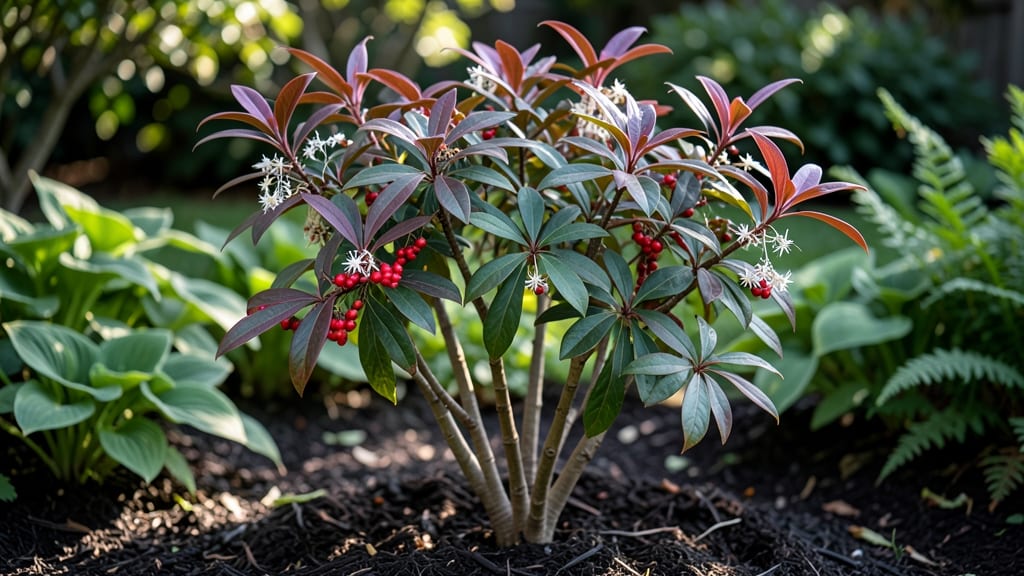
The Flirt Nandina shrub turns any garden into a fragrant, evergreen masterpiece with minimal effort. 🌿 Its delicate, arching branches and tiny white flowers create a dreamy canopy that stays lush year-round, while the scent lingers like a whisper of spring—even in winter.
Unlike other nandinas, this variety blooms prolifically and holds its berries longer, giving you six months of color from late spring through fall.
This shrub thrives in partial shade, making it perfect for under trees or along north-facing walls where other plants struggle. I planted mine near my patio, and now it frames the seating area like a living sculpture—low-maintenance yet impossibly elegant.
The berries transition from red to deep purple, adding seasonal drama without needing deadheading.
Pair it with hostas for shade-loving companions or place it as a focal point in a mixed border. In containers, it becomes a stunning accent plant for patios, while in the ground, it mass-planted creates a textured hedge.
The fragrance alone makes it worth growing, but the year-round structure is the real game-changer.
Works equally well in modern, cottage, or woodland gardens—just give it well-draining soil and occasional pruning to shape. Once established, it’s drought-tolerant and pest-resistant, so you’ll spend more time admiring it than fussing over it. Let’s make your garden the envy of the neighborhood!
📚 In This Guide
- What you need
- Instructions
- Tips and common mistakes
- Wrapping up and next steps
What you need
- ● Flirt Nandina shrub: 1-3 plants (depending on desired coverage; spacing ~3-5 feet apart). Choose healthy, well-rooted nursery stock.
- ● Well-draining soil: Native soil amended with compost (2-3 parts soil to 1 part compost) or a garden loam mix (5 gallons per plant).
- ● Organic mulch: 3-4 inches of pine bark, cedar chips, or shredded leaves (1 bag covers ~10 sq. ft.).
- ● Slow-release fertilizer: 10-10-10 or 12-12-12 (1 lb. per 100 sq. ft.) or a balanced organic fertilizer (e.g., fish emulsion).
- ● Watering can or hose with nozzle: 1-2 gallons per plant for initial watering.
- ● Garden gloves (1 pair, heavy-duty for protection).
- ● Trowel or hand shovel (for digging small holes).
- ● Garden fork or spade (for amending soil in larger areas).
- ● Measuring tape or ruler (to ensure proper spacing).
- ● Pruning shears (for trimming dead foliage or shaping).
- ● Soil pH tester (to check acidity; Nandinas prefer pH 5.0-6.0).
- ● Epsom salt (magnesium sulfate) (1 tbsp. per plant if soil is deficient).
- ● Plant support stakes (for young shrubs in windy areas).
- ● Drip irrigation kit (for consistent moisture in dry climates).
- ● Decorative rocks or edging (to enhance garden aesthetics).
Step-by-Step guide to planting and caring for Flirt Nandina shrubs
This fragrant, evergreen beauty thrives with the right approach—here’s how to plant and nurture it for years of vibrant foliage.
🌱 Step 1: Choose the Perfect Planting Location
The Flirt Nandina thrives in partial shade to full sun, but the key is avoiding harsh afternoon rays in hot climates. I always scout the site first—look for dappled sunlight or morning sun with afternoon shade, especially in zones with intense summer heat. The shrub’s delicate foliage can scorch if exposed to direct midday sun for more than 4-6 hours daily.
Test the spot by observing how sunlight shifts throughout the day. A location near a building’s east side or under the canopy of taller trees works beautifully. Flirt Nandinas also tolerate urban pollution, making them ideal for city gardens. Just avoid low-lying areas where cold air pools in winter—this shrub prefers well-drained soil and can suffer from root rot if waterlogged.
🪴 Step 2: Prepare the Soil and Plant Your Shrub
Flirt Nandinas adapt to a range of soil types but perform best in loamy, well-draining soil with a pH between 5.0 and 7.0. Before planting, amend heavy clay soil with 2-3 inches of compost or organic matter to improve drainage. I like to dig a hole twice as wide as the root ball but only as deep—planting too deep suffocates the roots and can lead to poor establishment.
Gently remove the shrub from its container and loosen any circling roots with your fingers. Place it in the hole so the top of the root ball sits level with the surrounding soil—never bury the stem. Backfill with native soil mixed with compost, pressing lightly to eliminate air pockets. Water deeply to settle the soil and encourage root contact.
☀️ Step 3: Water and Mulch for Optimal Growth
After planting, water your Flirt Nandina deeply once a week for the first 4-6 weeks to help roots establish. You’ll know it’s getting enough moisture when the top 2-3 inches of soil feel slightly damp but not soggy. Overwatering is the biggest mistake—these shrubs are drought-tolerant once established, so resist the urge to water lightly daily.
Spread 2-3 inches of mulch around the base, keeping it 3-4 inches away from the stem to prevent rot. I use pine bark or shredded leaves because they break down slowly and improve soil structure over time. Mulch also helps regulate soil temperature, protecting roots during heatwaves and cold snaps.
✂️ Step 4: Prune for Shape and Fragrance
The Flirt Nandina’s signature fragrance comes from its new growth, so pruning at the right time maximizes its appeal. I prune in late winter or early spring before new shoots emerge, removing dead, damaged, or crossing branches first. For shaping, cut back one-third of the oldest stems to encourage bushier growth and more fragrant foliage.
Avoid heavy pruning in fall—this shrub needs time to harden off before winter. Use clean, sharp pruners to make cuts just above a leaf node or bud. You’ll notice a flush of vibrant new growth within 4-6 weeks, signaling the plant is responding well. Regular pruning also prevents the shrub from becoming leggy, keeping its elegant, compact form.
🌿 Step 5: Fertilize and Monitor for Pests
Flirt Nandinas are lightweight feeders, so I apply a balanced, slow-release fertilizer (10-10-10) in early spring at half the recommended rate. Over-fertilizing leads to weak growth and fewer fragrant blooms. Water the soil thoroughly after applying fertilizer to help it dissolve and reach the roots.
Keep an eye out for scale insects or spider mites, which occasionally target stressed shrubs. I treat infestations with a horticultural oil spray applied in early morning or late evening to avoid harming beneficial insects. Healthy Flirt Nandinas rarely have pest issues, so proper watering, mulching, and pruning usually keep them thriving without intervention.
Tips & tricks for perfect Flirt Nandina cultivation
These subtle but essential insights will help your fragrant shrub thrive for years to come.
Sunlight Strategy: Pay close attention to the 4-6 hour sunlight rule mentioned in Step 1. I’ve seen beautiful Flirt Nandinas thrive in morning sun with afternoon shade—this mimics their natural habitat in wooded understories. If your location gets intense afternoon sun, consider temporary shade cloth during peak hours until the shrub establishes its root system. The delicate foliage can develop brown patches if exposed too long.
Soil Preparation Secret: When amending heavy clay soil in Step 2, I recommend adding a handful of perlite or coarse sand to the compost mixture. This creates tiny air pockets that improve drainage without altering the soil structure too dramatically. The goal is to mimic loamy soil’s natural balance—Flirt Nandinas hate soggy roots but also don’t tolerate overly dry conditions once established.
Watering Wisdom: Those first 4-6 weeks of weekly deep watering are critical for root development. I use a rain gauge to track exactly 1 inch of water per week—this ensures consistent moisture without overwatering. A simple trick: insert a screwdriver into the soil after watering. If it goes in easily up to 2 inches, you’ve hit the right moisture level. If it feels dry at that depth, water again.
Pruning Precision: When cutting back one-third of oldest stems in Step 4, I always make my cuts at a 45-degree angle just above a leaf node or outward-facing bud. This creates a larger surface area for water absorption and directs new growth outward rather than inward. The 4-6 week recovery period is real—don’t be tempted to prune again until you see fresh green growth emerging from those cut stems.
Pro Tips for Flirt Nandina Shrub
- These subtle but essential insights will help your fragrant shrub thrive for years to come.
- Sunlight Strategy: Pay close attention to the 4-6 hour sunlight rule mentioned in Step 1.
- Soil Preparation Secret: When amending heavy clay soil in Step 2, I recommend adding a handful of perlite or coarse sand to the compost mixture.
Frequently asked questions
Got questions about the Flirt Nandina shrub? You’re not alone! Here are some of the most common inquiries—and their answers—to help you grow this fragrant, evergreen beauty with confidence.
What makes the Flirt Nandina different from other nandina varieties?
The Flirt Nandina stands out for its compact, mounding habit (reaching 2–3 feet tall and wide) and its highly fragrant white flowers in late spring. Unlike traditional nandinas, it’s sterile (no berries), making it ideal for low-maintenance gardens. Plus, its glossy, burgundy-tinged foliage adds year-round color!
When is the best time to plant or prune a Flirt Nandina?
Plant your Flirt Nandina in early spring or fall for optimal root establishment. For pruning, late winter or early spring (before new growth) is best—just trim back any leggy stems or spent blooms. Avoid heavy pruning in summer, as it may stress the plant.
Does the Flirt Nandina attract pollinators or wildlife?
Yes! Its fragrant flowers draw in bees and butterflies, making it a pollinator-friendly pick. However, since it’s sterile, it won’t produce berries that birds rely on. For wildlife diversity, pair it with native flowering shrubs like butterfly bush or elderberry.
Why are my Flirt Nandina leaves turning yellow or brown?
Yellowing leaves often signal overwatering or poor drainage, while brown edges can mean underwatering or sunburn. Check soil moisture (it should be dry to the touch 1–2 inches down) and ensure it’s planted in well-draining soil. If in hot, direct sun, provide afternoon shade to protect foliage.
Can I grow Flirt Nandina in containers, or is it strictly for gardens?
This shrub thrives in containers 12–18 inches wide with drainage holes. Use a lightweight potting mix and repot every 2–3 years to refresh nutrients. Just ensure it gets at least 4–6 hours of sunlight daily—it’s adaptable but loves brightness!
Wrapping up and next steps
The Flirt Nandina shrub is a stunning, low-maintenance addition to any garden, offering year-round beauty with its fragrant blooms and vibrant foliage. Whether you're drawn to its evergreen elegance, drought tolerance, or wildlife-friendly appeal, this shrub delivers effortless charm with minimal fuss.
Ready to transform your outdoor space? Start by selecting the perfect spot—whether in full sun or partial shade—and watch your garden thrive with this fragrant, resilient favorite!