
Flowers
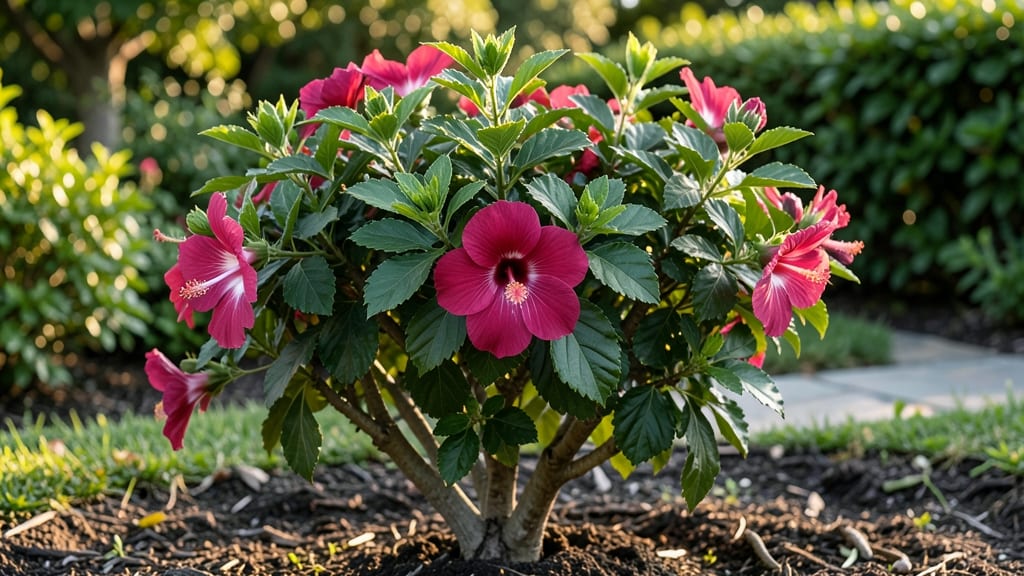
Transforming your yard into a lush, thornless privacy screen with hibiscus perennial shrubs starts with the right variety and placement. 🌿 I’ve grown these vibrant plants for years, and the key to their success lies in mimicking their natural tropical habitat—warmth, moisture, and plenty of sunlight.
What makes them perfect for privacy isn’t just their size, but their ability to grow 6-10 feet tall in just three seasons with minimal fuss.
The soil needs to be rich and well-draining, almost like a mix of garden soil and compost, while the location should get at least 6-8 hours of sunlight daily. In cooler climates, treat them as tender perennials—bring them indoors or protect them during frost.
Watering is the secret weapon: keep the soil consistently moist but never soggy, especially during their first year when roots establish. By late summer, you’ll see those dramatic blooms—deep red, pink, or white—appearing regularly, and the foliage will fill in to create a dense, living barrier.
The best part? These shrubs stay lush all season long, offering year-round privacy without the hassle of thorns or invasive roots. For those in USDA zones 7-11, this is a foolproof way to add both beauty and function to your landscape.
Let’s get those roots in the ground and watch them grow!
📚 In This Guide
- What you need
- Instructions
- Tips and common mistakes
- Wrapping up and next steps
What you need
- ● Hibiscus plants: 3–5 Hibiscus syriacus (thornless variety) nursery-grown shrubs, 1–2 feet tall (check local climate hardiness zones: 5–9).
- ● Well-draining soil: 50% native soil + 50% compost or aged manure (avoid clay-heavy soil).
- ● Organic mulch: 2–3 inches of wood chips or shredded bark (retains moisture and suppresses weeds).
- ● Slow-release fertilizer: 10-10-10 or 5-10-10 (granular, 1 lb per plant).
- ● Watering can or hose: With a gentle spray nozzle (1–2 gallons per plant, 2–3x/week).
- ● Pruning shears: Sharp, bypass-style (sterilized with rubbing alcohol).
- ● Garden gloves: Heavy-duty (hibiscus can have thorns in some varieties—opt for thorn-proof if needed!).
- ○ Support stakes (optional but helpful): 6-foot wooden or metal stakes (1 per plant for young shrubs).
- ● Soil pH test kit: Aim for 6.1–7.0 (hibiscus loves slightly acidic to neutral soil).
- ● Trellis or lattice panel: 6–8 feet tall (for faster, denser growth—install after planting).
- ○ Drip irrigation system: (Optional but highly recommended for large screens—saves time!).
- ● Epsom salt: 1 tablespoon per plant (monthly in bloom season for magnesium boost).
- ● Plant tags: To track varieties and pruning schedules.
Step-by-step instructions for planting a thornless hibiscus privacy screen
Here’s how to establish a lush, thorn-free hibiscus hedge that delivers year-round privacy in just three growing seasons.
🌱 Step 1: Choose the Right Location and Prepare the Soil
Thornless hibiscus thrives in full sun—select a spot that gets at least 6-8 hours of direct sunlight daily. Avoid areas with afternoon shade, which weakens growth and reduces flowering. I always check the site in late afternoon to confirm sunlight exposure, especially in summer when shadows shift.
Dig a hole twice as wide as the root ball but no deeper. Work in 2-3 inches of compost into the native soil to improve drainage and fertility. Hibiscus hates soggy roots, so if your soil drains poorly, mix in a handful of perlite or coarse sand. Test the soil by squeezing a handful—it should crumble easily when dry but hold moisture without dripping.
🪴 Step 2: Plant at the Correct Depth and Spacing
Position your 4 plants in a straight line, spaced 4-5 feet apart. This spacing ensures they’ll fill in quickly without overcrowding. Dig the hole and gently loosen the roots of each plant before placing it in the ground. The top of the root ball should sit 1 inch above soil level—burying too deep suffocates the plant.
Backfill with native soil mixed with compost, tamping lightly around the base to remove air pockets. Water deeply to settle the soil, then add 2-3 inches of mulch (like pine bark or shredded leaves) to retain moisture and regulate temperature. Keep mulch 6 inches away from the stem to prevent rot.
☀️ Step 3: Water Deeply and Monitor Growth
Water each plant with 1-2 gallons of water immediately after planting, then again every 2-3 days until established. You’ll know they’re getting enough moisture when the soil feels damp 2 inches below the surface. Overwatering is the fastest way to kill hibiscus—yellowing leaves or wilting despite wet soil means you’re drowning the roots.
Fertilize lightly with a balanced 10-10-10 formula 4-6 weeks after planting, then switch to a low-nitrogen, high-phosphorus fertilizer (like 5-10-10) in spring to encourage blooms. Watch for new growth—strong stems with deep green leaves mean your plants are thriving. If leaves yellow between veins, that’s a classic sign of iron deficiency, which hibiscus commonly develops in alkaline soil.
✂️ Step 4: Prune for Shape and Encourage Bushiness
Prune in late winter or early spring before new growth begins. Cut back any dead or crossing branches first, then trim the remaining stems by one-third to encourage bushier growth. I always use clean, sharp shears to make cuts just above a leaf node—this prevents disease and promotes faster healing.
For a privacy screen, shape the plants by trimming the tops first, then the sides. Aim for a tapered shape—wider at the base and narrower at the top—to let light reach lower branches. Avoid heavy pruning in fall, as new growth won’t harden off before winter. After pruning, fertilize again to support regrowth.
⏰ Step 5: Winter Care and Long-Term Maintenance
In colder climates (below 20°F), protect young plants with burlap wraps or a thick layer of mulch. Mature hibiscus can handle 10-15°F, but first-year plants are vulnerable. Watch for frost damage—brown, crispy leaves mean you’ll need to prune back affected branches in spring.
Every 2-3 years, thin out older stems to improve airflow and reduce disease risk. Replace any plants that fail to thrive with new stock. With consistent care, your thornless hibiscus screen will reach 8-10 feet tall in 3 years, providing lush, low-maintenance privacy year-round.
Tips & tricks for perfect thornless hibiscus privacy screens
These simple tricks will help your thornless hibiscus grow into a lush, private oasis without the common pitfalls.
Sunlight Strategy: Those 6-8 hours of sunlight are non-negotiable, but here's the thing—morning sun is gentler than afternoon heat. If you're in a hot climate, I recommend planting on the north or east side of your property to give roots a break from midday intensity. You'll notice faster leaf development and more blooms when plants aren't struggling to recover from afternoon heat stress.
Soil Test Tip: Before amending your soil, grab a small sample and squeeze it—if it forms a tight ball that won't crumble, you definitely need that perlite or sand. I keep a bag of perlite on hand specifically for hibiscus because their roots are so sensitive to waterlogging. Think of it as insurance against root rot, which is the silent killer of these plants.
Watering Wisdom: The 2-3 day watering schedule works best when you water deeply each time. I use a rain gauge to measure my watering—aim for about 1 inch of water per week. The key is getting that moisture down to 2 inches below the surface. You can test this by inserting a screwdriver—if it comes out clean, you need more water; if it's wet, you're good.
Fertilizer Timing: That 4-6 week mark for your first fertilizer application is crucial, but don't rush it. Young roots are still establishing, and too much fertilizer too soon can burn them. I like to mix a slow-release fertilizer into the planting hole at the start—this gives a gentle boost without overwhelming the plants. Then follow up with the liquid fertilizer as specified for those beautiful blooms.
Pro Tips for Hibiscus Perennial Shrub
- These simple tricks will help your thornless hibiscus grow into a lush, private oasis without the common pitfalls.
- Sunlight Strategy: Those 6-8 hours of sunlight are non-negotiable, but here's the thing—morning sun is gentler than afternoon heat.
- Soil Test Tip: Before amending your soil, grab a small sample and squeeze it—if it forms a tight ball that won't crumble, you definitely need that perlite or sand.
Frequently asked questions
Got questions about growing a hibiscus perennial shrub as your privacy screen? You’re not alone! Here are answers to the most common queries—from planting tips to troubleshooting—so you can confidently cultivate your lush, thornless hedge.
How fast does a hibiscus perennial shrub grow?
A well-cared-for hibiscus syriacus (hardy hibiscus) can grow 2–3 feet per year under ideal conditions. With proper pruning and sunlight, you’ll achieve a 6–10-foot-tall privacy screen in 3–4 years. Patience pays off—these shrubs reward consistency with rapid, dense growth!
Is hibiscus perennial shrub cold-hardy?
Yes! Most hibiscus syriacus varieties thrive in USDA Zones 5–9, surviving winters as low as -20°F (-29°C). For extra protection, mulch the base in late fall and water deeply before the first frost. Evergreen hibiscus (like Hibiscus rosa-sinensis) needs winter care in colder zones.
How much sunlight does a hibiscus shrub need?
For optimal growth, plant your hibiscus in full sun (6+ hours daily). While it tolerates partial shade (4–6 hours), expect fewer blooms and slower growth. In hot climates, afternoon shade helps prevent leaf scorch. Monitor for yellowing leaves—this could signal too much sun or water stress!
Why aren’t my hibiscus shrubs blooming?
Lack of blooms often stems from over-fertilizing with high-nitrogen feed (promotes leaves, not flowers) or poor pruning timing. Prune after blooming (late summer/fall) and fertilize with a low-nitrogen, high-phosphorus formula in early spring. Deadheading spent flowers also encourages new blooms!
What’s a good alternative if hibiscus shrubs are too slow-growing?
If you need faster privacy, consider privet (Ligustrum) (3–4 ft/year) or ornamental grasses like Pampas grass (4+ ft/year). For flowering hedges, abelia or weigela grow quickly and handle pruning well. Hibiscus wins for low-maintenance, thornless beauty—but these alternatives offer speed!
| Quick Fixes | When to Use |
|---|---|
| Prune in late winter to shape and encourage blooms. | Every 1–2 years for dense growth. |
| Mulch with wood chips to retain moisture and deter weeds. | Spring and fall, 2–3 inches deep. |
| Fertilize in early spring with 5-10-10 or rose fertilizer. | Annually for vibrant blooms. |
Wrapping up and next steps
Growing a thornless hibiscus perennial shrub as your privacy screen is a rewarding journey—one that combines beauty, resilience, and practicality! 🌿 With the right soil, sunlight, and care, you can enjoy a lush, blooming hedge in just three years.
Whether you're a beginner or a seasoned gardener, this vibrant plant offers both privacy and stunning visual appeal.
Now that you’re armed with all the tips and tricks, it’s time to roll up your sleeves and get planting! Start by selecting the perfect spot, prep your soil, and watch your hibiscus thrive. Happy gardening—your future privacy oasis awaits! 🌸