
Watering
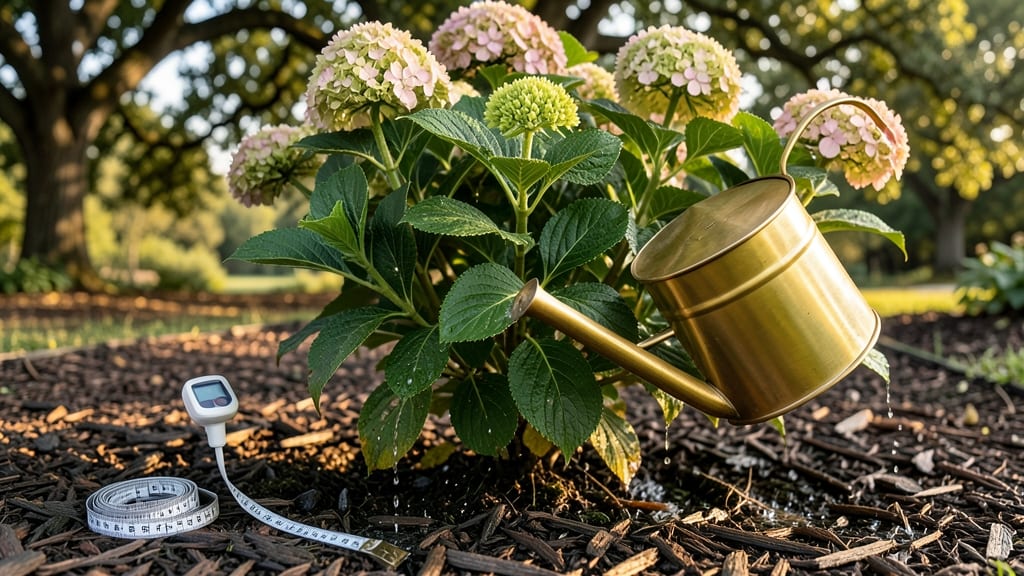
Watering newly planted shrubs the first week determines whether they thrive or wither—I’ve lost count of how many I’ve killed by guessing wrong. The rule is simple but critical: water deeply every 2-3 days for the first week, ensuring moisture reaches 12-18 inches down.
Most gardeners overdo it, drowning roots before they can establish, while others underwater, leaving plants gasping for survival. The key is checking soil moisture with your finger—damp, not soggy. Sandy soil drains fast, so you’ll water more often; clay holds moisture longer.
I test by sticking my finger in: if it’s dry past 2 inches, it’s time. Mulch helps retain moisture, but don’t pile it against the stem—keep it 2-3 inches away to prevent rot.
By the end of the week, your shrubs should look plump and perky, not wilted or yellowing. Roots will start branching out, seeking stability. This is where most mistakes happen—overwatering is the silent killer, while underwatering leaves them vulnerable to stress and pests.
Once you’ve nailed this first week, you’ll see the difference in stronger stems, fuller foliage, and plants that bounce back from droughts. Stick with this routine, and your shrubs will thank you for years to come.
📚 In This Guide
- What you need
- Instructions
- Tips and common mistakes
- Wrapping up and next steps
What you need
- ● Watering can or hose with a gentle spray nozzle – A 5-gallon capacity is ideal for most shrubs. If using a hose, opt for a low-pressure setting to avoid disturbing soil.
- ● Water – At least 1–2 gallons per shrub per watering session (adjust based on soil type and weather). Use room-temperature water to avoid shocking roots.
- ● Mulch (organic, like shredded bark or straw) – 2–3 inches deep, spread in a 3-inch ring around the base (avoid piling mulch directly against the stem).
- ● Garden trowel or small shovel – For gently loosening soil or adjusting mulch if needed.
- ○ Timer or moisture meter (optional but helpful) – To track watering frequency and soil moisture levels.
- ● Drip irrigation kit – For consistent, slow watering (especially useful in hot climates).
- ● Soil moisture sensor probes – Planted near roots to monitor hydration without guesswork.
- ● Plant-specific fertilizer (low-nitrogen, water-soluble) – Apply only after 2–3 weeks if soil is nutrient-poor.
- ● Shade cloth or temporary cover – To protect shrubs from intense sun or wind during the first week.
- ● Notebook or app (e.g., Gardenate) – To log watering dates, weather conditions, and shrub responses.
Step-by-Step watering schedule for newly planted shrubs
Here’s how to keep your new shrubs thriving during their most critical week—without drowning or dehydrating them.
Water Immediately After Planting
Give the root ball a deep soak right after transplanting to eliminate air pockets and settle soil around the roots. Use 1-2 gallons of water per shrub, applied slowly at the base until it runs out the drainage holes. This ensures roots make full contact with moist soil, which is essential for shock recovery.
Watering too lightly just wets the surface, leaving deeper roots vulnerable to stress. You’ll know you’ve done it right when the soil feels evenly damp 6 inches down—stick your finger in to check. Avoid splashing leaves to prevent fungal diseases like powdery mildew, which thrives in damp foliage.
Monitor Soil Moisture Daily
For the first 3-5 days, check the soil every morning by inserting your finger 2 inches deep. If it feels dry at that depth, water again—newly planted shrubs need consistent moisture to establish roots. Most shrubs prefer soil that stays evenly moist but not soggy during this phase.
Overwatering now is just as dangerous as underwatering. Look for signs like wilting leaves (underwatering) or yellowing foliage (overwatering). If the soil stays clinging to your finger after squeezing, hold off until it feels slightly dry at the surface.
Adjust Frequency Based on Weather
In hot, dry conditions, you may need to water every 1-2 days to prevent root desiccation. On the other hand, cool or rainy weather can stretch watering intervals to every 3-4 days. Always prioritize deep, infrequent watering over shallow, frequent sprinkles.
Mulch helps regulate moisture—apply a 2-3 inch layer of organic mulch (like shredded bark) around the base, keeping it 6 inches away from the trunk. This conserves water, suppresses weeds, and protects roots from temperature swings. Replenish mulch as it breaks down.
Transition to Weekly Watering by Week Two
By day 7, most shrubs will have begun root establishment, so you can taper off to deep watering 2-3 times per week. Water in the early morning to allow foliage to dry before evening, reducing disease risk. Use a soaker hose or drip irrigation to deliver water directly to the root zone.
Watch for leaf curl or droop—these are red flags. If leaves feel crispy, you’ve underwatered; if they’re mushy or falling off, you’ve overdone it. Shrubs like boxwoods and hydrangeas are particularly sensitive; they’ll signal stress quickly if moisture is off.
Long-Term Maintenance After the First Week
Once roots are established (typically 4-6 weeks in), reduce watering to once a week during dry spells, focusing on deep, thorough soakings. Mature shrubs develop deeper root systems and can handle slightly drier soil, but young plants still need consistent moisture for the first growing season.
Real talk: Even with perfect watering, some shrubs will struggle if planted in heavy clay or poor-draining soil. If water pools around the base after 30 minutes, amend the soil with compost or consider raised beds for future plantings.
Tips & tricks for perfect new shrub establishment
These little details make all the difference between a thriving shrub and one that struggles to take root. Let me share what I've learned after watching too many new plantings fail.
Soil Check Technique: When you're doing that initial deep soak in Step 1, don't just eyeball the watering—stick your finger 6 inches down and feel for even dampness. The key is getting moisture to that root zone where the action happens. I've seen people water for 10 minutes and think they're done, only to find the lower roots still dry. Use a long screwdriver if you have to—it's worth the effort to get this right from the start.
Weather Adaptation: The 3-5 day daily check in Step 2 assumes average conditions, but real talk: your microclimate matters more than the calendar. If you're in a windy area or have afternoon sun, you might need to water twice a day during those first critical days. I keep a small notebook by my garden hose to track when I water and how the soil feels—it becomes your personal watering guide.
Mulch Placement Matters: That 2-3 inch layer of mulch in Step 3 isn't just decoration—it's your moisture insurance policy. The critical part is keeping it 6 inches away from the trunk to prevent rot. I've made the mistake of piling mulch right against the base, and within weeks, I had fungal issues. Also, if you're using dark mulch, it can heat up the soil—consider lighter-colored options for hot climates.
Transition Timing: By day 7 when you're tapering off to weekly watering, watch for these subtle signs: new growth at the tips of branches means roots are establishing well, while yellowing leaves mean you're still overwatering. I've seen people rush this transition and end up with stressed plants that never fully recover. Give your shrubs that extra day or two if they're showing hesitation about the change.
Pro Tips for How Often To Water Newly Planted Shrubs
- These little details make all the difference between a thriving shrub and one that struggles to take root.
- Soil Check Technique: When you're doing that initial deep soak in Step 1, don't just eyeball the watering—stick your finger 6 inches down and feel for even dampness.
- Weather Adaptation: The 3-5 day daily check in Step 2 assumes average conditions, but real talk: your microclimate matters more than the calendar.
Frequently asked questions
How much water should I give a newly planted shrub in the first week?
Deep watering is key! Aim for 1–1.5 inches of water per session, applied slowly to the root zone (not just the surface). Use a hose with a gentle spray or a soaker hose to avoid runoff. Watering deeply once a day for the first week helps roots establish faster than light, frequent sprinkles.
What if I forget to water my shrub for a few days?
Don’t panic! Most shrubs can handle 2–3 days without water if the soil is moist. Check the top inch of soil—if it’s dry, give a thorough watering. Signs of stress: wilting leaves, dry soil, or a shrub pulling away from the pot. Act fast if you see these!
Can I water my shrub in the middle of the day when it’s hot?
Morning (before 10 AM) or evening (after 6 PM) is ideal to reduce evaporation and fungal risks. If you must water during the day, do it early and avoid wetting leaves to prevent sunburn. Mulch helps retain moisture if midday watering is unavoidable.
Should I water differently for container-grown vs. bare-root shrubs?
Yes! Container-grown shrubs need daily watering for the first week (soil dries faster). Bare-root shrubs should be watered immediately after planting, then kept consistently moist—like a wrung-out sponge. Both benefit from a slow, deep soak to encourage root growth.
My shrub’s leaves are yellowing—did I overwater?
Yellowing leaves can mean overwatering (especially if soil feels soggy) or underwatering (if soil is bone-dry). Check the roots: Healthy roots are white; rotten roots are mushy and brown. Adjust watering, improve drainage, and let the soil dry slightly between waterings if needed.
Wrapping up and next steps
Caring for newly planted shrubs is all about balance—keep them consistently moist but never soggy, and you’ll set them up for a thriving future! 🌱 With patience and the right watering routine, your shrubs will establish strong roots and flourish in no time. Next up? Monitor their progress, adjust as needed, and soon you’ll be enjoying a lush, healthy garden that’s the envy of the neighborhood.