
Shrubs
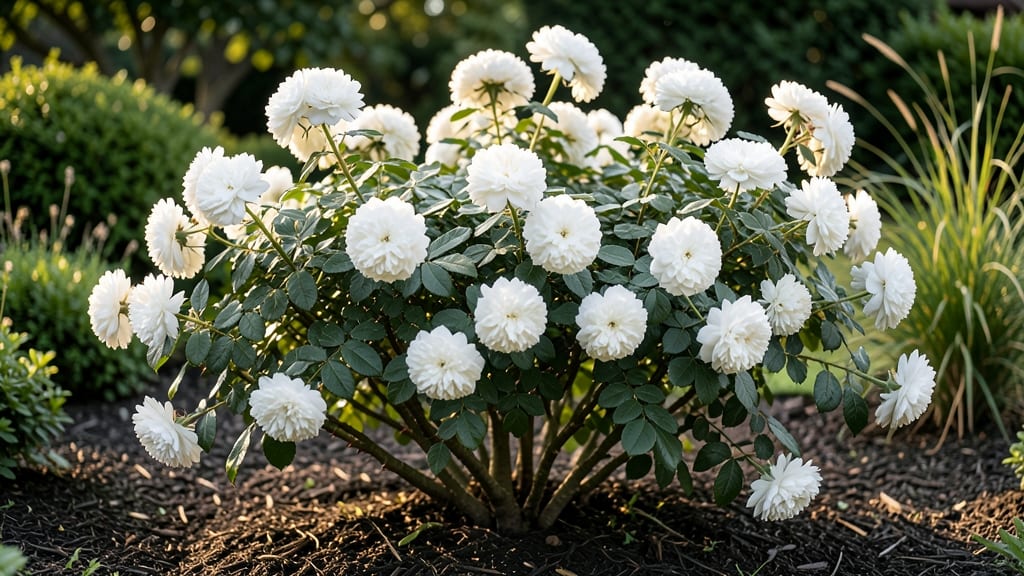
Growing Iceberg shrub roses means thorn-free blooms that last from early summer through frost—no fancy tricks, just smart care. 🌹 I’ve watched mine spread into lush, cloud-like bushes that neighbors stop to admire, and the secret isn’t in the soil but in the pruning.
These roses thrive on neglect but reward precision with vibrant white clusters that never look shop-bought. Plant them in full sun where they’ll get at least 6 hours of light daily, and don’t fuss over soil—just ensure it drains well.
Water deeply once a week (more in heatwaves), and you’ll avoid the wilting that plagues fussy roses. The real magic happens in late winter when you prune back one-third of the oldest stems to encourage fresh growth.
By mid-June, you’ll have football-sized blooms that keep coming in waves, and the fragrance—light but undeniable—lingers in the evening air. The best part? These roses outperform hybrid teas with half the fuss, and their disease resistance means fewer sprays.
For experienced gardeners, layer in companion planting (lavender repels pests) and mulch to protect roots in winter. Beginners will love how forgiving they are—just prune, feed lightly in spring, and step back. Here’s how to keep them thriving for decades.
📚 In This Guide
- What you need
- Instructions
- Tips and common mistakes
- Wrapping up and next steps
What you need
- ● Iceberg Shrub Rose Plant: 1 bare-root or potted plant (check for healthy, disease-free stems).
- ● Well-draining Soil: A mix of garden soil, compost, and perlite (or potting soil for containers).
- ● Sunlight Location: A spot with 6+ hours of full sun daily (partial shade in hot climates is okay).
- ● Pruning Tools: 1 pair of sharp, sterilized pruning shears (for clean cuts).
- ● 1 pruning saw (for thicker stems, if needed).
- ● Fertilizer: A balanced rose fertilizer (10-10-10 or 5-10-5) or organic options like composted manure.
- ● Mulch: 2–3 inches of organic mulch (e.g., wood chips or straw) to retain moisture.
- ○ Support System (Optional but Recommended): 1 rose trellis, cage, or stakes (to guide growth and prevent sprawling).
- ● Soft tying twine or plant ties (to secure stems gently).
- ● Gloves: Heavy-duty gardening gloves (to protect from thorns and debris).
- ● Watering Can or Hose: With a gentle spray nozzle for hydration.
- ○ pH Test Kit (Optional): To ensure soil pH is 6.0–6.5 (ideal for roses).
- ● Disease Prevention: Copper fungicide (for powdery mildew prevention).
- ● Neem oil (natural fungicide/insect repellent).
Step-by-Step pruning for a thriving Iceberg shrub rose
Here's how I transform tangled, thorny messes into lush, blushing shrubs—without losing a finger.
✂️ Step 1: Early Season Cleanup (Late Winter)
Prune when 50% of forsythia blooms appear—this signals your rose is waking up. I grab my bypass pruners (never dull shears) and start by removing any dead, crossing, or inward-growing canes. These compete for energy and create weak spots where pests hide. Cut at a 45-degree angle just above an outward-facing bud—this encourages growth in the right direction.
Look for canes smaller than a pencil—these are usually dead wood. Snap them between fingers; if they bend, they're alive. Remove them completely. For larger canes, cut back to a healthy bud or lateral branch. This step shapes your rose's future form, so take your time. I always step back every few cuts to visualize the new structure.
✂️ Step 2: Summer Light Pruning (After First Bloom)
After your rose finishes its first flush of blooms, it's time for a light maintenance trim. I focus on two things: deadheading and thinning. Remove spent blooms by cutting back to the first five-leaflet leaf below the bloom. This redirects energy to new growth rather than seed production. For leggy stems, cut back to a strong lateral branch—this keeps the plant compact and bushy.
Watch for canes growing toward the center of the plant. These create dense, shaded areas where diseases fester. Thin these out immediately. I make these cuts on a dry, sunny morning when the plant's defenses are strongest. After pruning, give the plant a deep watering to help it recover quickly.
✂️ Step 3: Fall Rejuvenation (Late Autumn)
When temperatures drop below 40°F at night, your Iceberg shrub rose enters dormancy—the perfect time for its final pruning of the year. I remove about one-third of the oldest canes at ground level. These are the thick, woody stems that produce fewer blooms and take up valuable space. Cutting them out encourages younger, more vigorous growth from the base.
For remaining canes, shorten them by one-third to one-half their length. This prevents them from becoming too leggy over winter. Make all cuts at a 45-degree angle above a bud that faces outward. After pruning, apply a 2-3 inch layer of mulch around the base to protect roots from freezing. This is the moment your rose prepares for winter—do it right, and you'll see stronger blooms next spring.
🌿 Step 4: Post-Pruning Care (All Seasons)
After any major pruning, your Iceberg shrub rose needs extra attention. I fertilize with a balanced rose food (10-10-10 ratio) two weeks after each pruning session. This replenishes nutrients lost during cutting. Water deeply once a week during dry spells, keeping the soil 2-3 inches moist but never soggy. Overwatering in winter causes rot, while underwatering stresses the plant.
Monitor for signs of stress: yellowing leaves, black spots, or stunted growth. These often indicate over-pruning or disease. If you see new growth emerging from the base, you've pruned correctly—this means your rose is putting energy into fresh, productive canes. I also keep an eye out for aphids or spider mites, which love fresh new growth. A spray of neem oil prevents infestations before they start.
Tips & tricks for perfect Iceberg shrub rose pruning
Transforming a tangled shrub rose into a thriving beauty takes precision—not brute force. Here's what I've learned after years of shaping these stunning plants.
Tool Selection: Your pruners make all the difference. I swear by bypass pruners—they make clean cuts without crushing stems. For thicker canes, upgrade to loppers with a bypass blade. Never use dull shears; they tear tissue, inviting disease. I also keep a small pair of hand pruners for delicate work near the center of the plant where regular pruners can't reach.
Seasonal Timing Secret: The 40°F nighttime temperature threshold in Step 3 isn't just arbitrary—it's when your rose's natural defenses kick into gear. Pruning at this exact moment triggers dormancy, helping wounds heal faster. I mark my calendar for when forsythia blooms reach 50% (Step 1) and again when nights consistently drop below 40°F (Step 3). This seasonal rhythm prevents stress responses that can weaken your plant.
Visual Pruning Cues: When cutting at a 45-degree angle in Steps 1 and 3, aim for the bud's outer edge—this creates a natural water runoff path that prevents rot. For the five-leaflet leaf reference in Step 2, count five full leaves below the bloom before making your cut. This ensures you're redirecting energy to the right growth points. I always run my fingers along the cane before cutting to feel for hidden buds that might be growing in the wrong direction.
Post-Pruning Recovery: The two-week fertilizer window in Step 4 is non-negotiable. Roses need time to recover from pruning stress before absorbing new nutrients. I mix my 10-10-10 balanced rose food with water and apply it as a slow-release drink rather than a concentrated dose. For the deep watering, I use the "finger test"—stick your finger 2-3 inches into the soil; if it's dry, water until moisture reaches that depth. This prevents both underwatering and the root rot that comes from soggy soil.
Pro Tips for Iceberg Shrub Rose
- Transforming a tangled shrub rose into a thriving beauty takes precision—not brute force. Here's what I've learned af...
- Tool Selection: Your pruners make all the difference. I swear by bypass pruners—they make clean cuts without crushing...
- Seasonal Timing Secret: The 40°F nighttime temperature threshold in Step 3 isn't just arbitrary—it's when your rose's...
Frequently asked questions
Got questions about growing and caring for your Iceberg shrub rose? You’re not alone! Here are some of the most common queries—and their answers—to help you cultivate a thriving, thorn-free beauty in your garden.
How often should I prune my Iceberg shrub rose?
Prune your Iceberg rose twice a year: once in late winter or early spring (before new growth starts) to shape and remove dead wood, and again in mid-summer to encourage bushier blooms. Avoid heavy pruning after early fall—it can stress the plant before winter. Focus on 3 strategic cuts for optimal health and flowering!
Can Iceberg shrub roses survive winter in cold climates?
Yes! These hardy roses thrive in USDA Zones 4-9, meaning they can handle winters as cold as -30°F. For extra protection in harsh climates, mulch the base with 2–3 inches of organic matter (like wood chips or straw) after the first frost. Avoid heavy mulching too early—it can trap moisture and harm roots.
Why aren’t my Iceberg roses blooming as much as expected?
Several factors could be at play: over-pruning (cutting too late or too aggressively), poor nutrition (lack of phosphorus or potassium), or shady spots. Ensure your rose gets 6+ hours of sunlight daily and fertilize in early spring with a rose-specific formula. Deadhead spent blooms too—this encourages more flowers!
Are Iceberg shrub roses deer- or rabbit-resistant?
While Iceberg roses are less appealing to deer and rabbits than tender perennials, they’re not completely resistant. Young plants or stressed bushes may still attract nibblers. Try repellents (like garlic spray) or physical barriers (chicken wire) around new growth until established. A healthy, well-pruned rose is your best defense!
What’s a good alternative if I want a thorn-free rose with fewer maintenance needs?
If Iceberg roses feel a bit high-maintenance, consider these low-thorn or thornless options:
- Knock Out® Roses: Disease-resistant, repeat-blooming, and nearly thornless.
- Dr. Huey™ Roses: Compact, fragrant, and thrive in heat/humidity.
- Earth-Kind® Roses: Native-friendly, drought-tolerant, and low-fuss.
Wrapping up and next steps
The Iceberg Shrub Rose is a stunning, low-maintenance addition to any garden—offering thorn-free beauty with minimal effort! With the right pruning techniques, you’ll enjoy its abundant blooms and lush foliage for years. 🌸
Ready to transform your outdoor space? Grab your pruners and start shaping your Iceberg Shrub Rose today—your garden will thank you! For extra confidence, revisit the FAQs or consult a local nursery for tailored advice.