
Shrubs
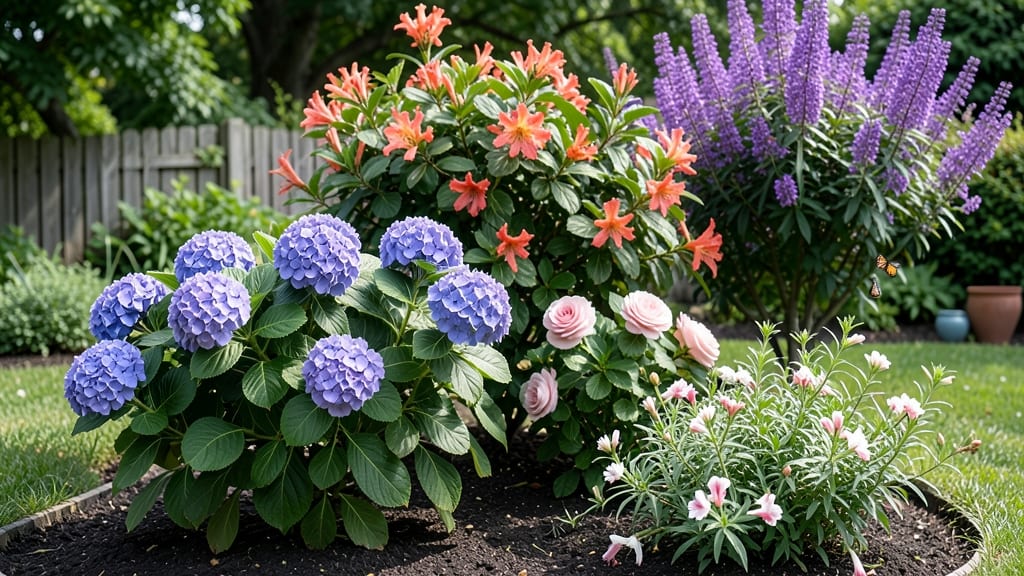
Your garden could burst with color year-round by featuring images of flowering shrubs that thrive with minimal effort. Flowering shrubs like hydrangeas, abelia, and weigela deliver months-long blooms with minimal upkeep—once you know which varieties thrive in your climate and light conditions.
The secret lies in choosing shrubs that match your garden’s style and space. A 3-foot-tall lilac adds cottage charm, while a 6-foot spirea creates modern structure. Layer them with perennials like coneflowers or ornamental grasses to extend the season and fill gaps between blooms.
Imagine your borders bursting with pinks, purples, and whites from spring through fall, then transitioning to winter interest with berries or textured bark. These shrubs stay healthy with just a light trim once a year, saving you hours of maintenance.
Perfect for hedges, focal points, or mixed borders—here’s how to pick the right shrubs for your vision and space.
📚 In This Guide
- What you need
- Instructions
- Tips and common mistakes
- Wrapping up and next steps
What you need
- ● Flowering shrubs: Choose 3–5 varieties (e.g., Hydrangea, Azalea, Butterfly Bush, or Camellia) based on your climate zone and sunlight exposure.
- ● High-quality potting soil: 1–2 bags (2–3 cubic feet each) of well-draining, organic soil mix (e.g., Miracle-Gro or Espoma).
- ● Containers or garden beds: Containers: 3–5 pots (12–18 inches in diameter) with drainage holes.
- ○ Garden beds: Shovel, rake, and compost (optional for enriching soil).
- ● Mulch: 1–2 bags of organic mulch (e.g., pine bark or shredded leaves) to retain moisture and suppress weeds.
- ● Watering can or hose: With a gentle spray nozzle for even hydration.
- ● Pruning shears: Bypass pruners (for clean cuts) or loppers (for thicker branches).
- ● Gloves: Heavy-duty gardening gloves to protect hands from thorns or sap.
- ● Trowel or spade: For planting or transplanting shrubs.
- ● Fertilizer: Slow-release granular fertilizer (e.g., Osmocote) or liquid feed (e.g., fish emulsion).
- ○ Stakes or supports (optional): For young or top-heavy shrubs (e.g., Bamboo stakes).
- ● Camera or smartphone: With a macro lens or high-resolution camera for close-up images of flowering shrubs.
- ● Tripod or stabilizer: For steady shots in low light.
- ● Natural light reflector: A white board or foam core to brighten shadows.
- ● Scissors or clippers: For trimming leaves/blooms to frame your shots.
Instructions for selecting and styling flowering shrubs for year-round visual impact
Here's how to arrange flowering shrubs for continuous seasonal interest with minimal maintenance.
Group Shrubs by Bloom Time and Seasonal Interest
Start by organizing plants into three categories: early spring bloomers (like Pieris japonica or Viburnum bodnantense), mid-season performers (such as Hydrangea macrophylla or Weigela florida), and late-season/fall interest shrubs (like Cotinus coggygria or Fothergilla gardenii). This ensures you'll always have color from late winter through frost. I like to sketch a simple garden map first—it helps visualize how blooms will transition naturally across seasons.
Place early bloomers where they'll catch morning sun, which extends their flowering window. Mid-season shrubs should get afternoon light to prevent wilting during peak heat. Late-season varieties thrive with all-day sun exposure. The key is layering heights—taller shrubs (like Deutzia) at the back, medium-height (such as Spiraea) in the middle, and low-growing (like Dwarf Fothergilla) at the front.
Incorporate Evergreen Foliage as Backdrops
Use evergreen shrubs like Ilex crenata or Juniperus horizontalis to create structured backdrops that frame your flowering plants year-round. These provide visual continuity when deciduous shrubs are dormant. I typically place evergreens along property lines or behind flowering shrubs to create depth. Their dark green or blue-green hues contrast beautifully with the bright blooms of spring and summer.
For texture variety, mix broadleaf evergreens (like Rhododendron) with needle-leaf types (such as Picea). The contrast adds visual interest even when flowering shrubs aren't in bloom. Here's the thing—don't overlook the foliage color. Variegated evergreens (like Euonymus fortunei 'Emerald Gaiety') add unexpected pops of yellow or cream that complement flowering shrubs beautifully.
Layer for Seasonal Texture and Height Variation
Create visual layers by combining flowering shrubs with different growth habits. Upright growers (such as Abelia grandiflora) should be placed at the center of groupings, while mounding shrubs (like Hydrangea paniculata) work well at the edges. I always include at least one vine (like Clematis) to climb nearby structures—it adds vertical interest without taking up ground space.
For ground coverage, incorporate plants like Ajuga reptans or Lamium maculatum to fill gaps between shrubs. These perennials provide seasonal color while suppressing weeds. The goal is to create a garden that looks full and intentional even when some shrubs aren't flowering. I measure plant heights at maturity and space them accordingly—typically 3-5 feet apart for medium-sized shrubs—to allow for proper air circulation and future growth.
Plan for Year-Round Structural Interest
Include shrubs with winter interest features like exfoliating bark (Cornus sericea), persistent seed heads (Spiraea vanhouttei), or colorful winter stems (Dogwood). These elements ensure your garden remains visually engaging when flowering shrubs are dormant. I like to place these winter-interest plants where they'll be visible from indoor windows—it creates a connection between indoor and outdoor spaces during colder months.
Consider adding a few ornamental grasses (like Miscanthus sinensis) to sway gently in the breeze and provide movement. Their airy plumes contrast nicely with the dense foliage of flowering shrubs. For fragrance, incorporate shrubs like Philadelphus or Osmanthus—their sweet scents will carry through multiple seasons. The secret is to distribute these elements evenly throughout the planting area so they're not clustered in one spot.
Implement Minimal Pruning Strategies
Adopt a "less is more" approach to pruning flowering shrubs. For spring bloomers, prune immediately after flowering to avoid cutting off next year's buds. I use sharp, clean pruners and make cuts just above a leaf node or bud. For summer/fall bloomers, prune in late winter or early spring before new growth begins. This timing ensures you don't remove potential flowering wood.
Shape shrubs gradually over several years rather than drastically reshaping them all at once. I recommend removing no more than 25% of the plant's volume in any single pruning session. For flowering shrubs, I focus on opening up the center to improve air circulation and removing any dead, diseased, or crossing branches. The result is a naturally shaped plant that continues to flower abundantly with minimal intervention.
Tips & tricks for year-round flowering shrub design
Creating a garden that thrives through every season requires thoughtful planning—and these insights will help you avoid common pitfalls while maximizing visual impact.
Seasonal Transition Planning: When mapping your garden layout in Step 1, consider creating a "color calendar" that tracks bloom times for each shrub. I keep a simple spreadsheet noting which plants will be in peak bloom during each month. This helps visualize potential gaps and ensures you've accounted for every season. For example, if your spring bloomers fade by May, make sure your mid-season performers like Hydrangea macrophylla are positioned to take center stage.
Sunlight Strategy: The sunlight recommendations in Step 1 are crucial for extending bloom windows. For early spring bloomers, position them where they'll receive morning sun but be shaded from afternoon heat to prevent premature wilting. I've found that placing these plants near north-facing walls or under deciduous trees that haven't yet leafed out works beautifully. This creates a microclimate that protects delicate blooms while still providing sufficient light.
Evergreen Placement: When incorporating evergreen backdrops in Step 2, consider their mature size and growth rate. I recommend planting slower-growing evergreens like Ilex crenata closer to the front of your shrub groupings, while faster-growing types like Juniperus horizontalis can be placed further back. This creates a natural progression where the evergreens gradually frame the flowering shrubs as they mature, maintaining visual interest throughout the plant's lifespan.
Pruning Precision: The 25% volume rule in Step 5 is non-negotiable for maintaining healthy flowering shrubs. I always mark my pruning cuts with a piece of tape before making the actual cut—this helps me visualize the final shape and ensures I'm not removing more than the recommended amount. For spring bloomers, I make a habit of taking photos immediately after flowering to remind myself which branches to preserve during next year's pruning.
Pro Tips for Images Of Flowering Shrubs
- Creating a garden that thrives through every season requires thoughtful planning—and these insights will help you avoid common pitfalls while maximizing visual impact.
- Seasonal Transition Planning: When mapping your garden layout in Step 1, consider creating a "color calendar" that tracks bloom times for each shrub.
- Sunlight Strategy: The sunlight recommendations in Step 1 are crucial for extending bloom windows.
Frequently asked questions
Got questions about choosing, caring for, or styling flowering shrubs?
Here are answers to the most common queries to help you create stunning, low-maintenance landscapes with vibrant blooms all year!
What are the best flowering shrubs for beginners?
Start with easy-care options like Hydrangeas (drought-tolerant once established), Butterfly Bush (hardy and pollinator-friendly), or Azaleas (colorful but needs acidic soil). These thrive with minimal pruning and offer seasonal blooms!
When is the best time to plant flowering shrubs?
Plant in early spring or fall (4-6 weeks before frost) for optimal root growth. Avoid extreme heat or cold—shrubs planted in mild weather establish faster. Pro tip: Water deeply after planting to reduce transplant shock!
How do I prune flowering shrubs without killing them?
Timing matters! Prune right after blooming for spring-flowering shrubs (e.g., lilacs) and late winter for summer bloomers (e.g., roses). Never prune when buds are forming—this can cut off next year’s flowers!
Can I grow flowering shrubs in containers?
Choose compact varieties like Dwarf Gardenia or Miniature Hydrangeas. Use well-draining soil, a pot with drainage holes, and fertilize monthly. Move containers to partial shade in summer to prevent wilting.
Why aren’t my flowering shrubs blooming this year?
Common causes: over-pruning (cutting back old wood), poor sunlight (most need 6+ hours/day), or nutrient deficiencies. Check soil pH (azaleas need acidic soil) and feed with a balanced fertilizer in early spring.
How can I mix flowering shrubs for year-round color?
| Season | Shrub Recommendation |
|---|---|
| Spring | Azaleas, Forsythia, or Viburnum |
| Summer | Hydrangeas, Butterfly Bush, or Rose of Sharon |
| Fall | Cleyera, Smoke Bush, or Oakleaf Hydrangea |
| Winter | Winter Jasmine or Camellia (evergreen) |
Layer heights (tall in back, short in front) for a lush, dynamic look!
Wrapping up and next steps
Transforming your outdoor space into a vibrant, low-maintenance paradise is simpler than ever with the right images of flowering shrubs as inspiration! From bold azaleas to delicate hydrangeas, these beauties bring color and charm with minimal effort—perfect for gardeners of all levels. 🌸
Ready to get started? Browse our curated gallery of flowering shrubs to find your dream plants, then sketch a layout or visit a local nursery for live samples. With a little planning, you’ll enjoy year-round blooms that turn heads—and require almost no pruning!