
Shrubs
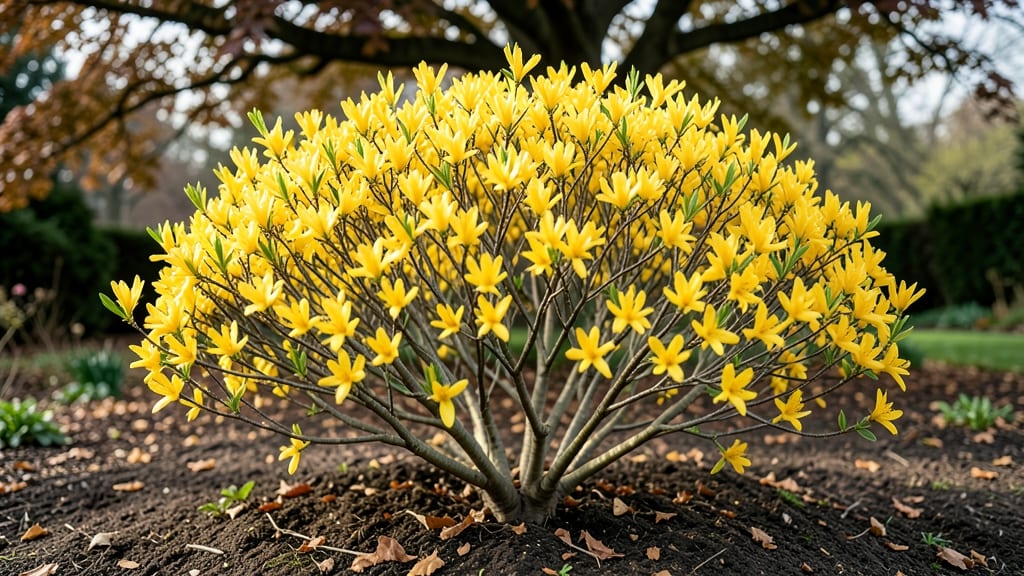
The Lynwood Gold forsythia is the shrub that turns winter's bare branches into a dazzling explosion of sunshine. 🌿 I planted mine last spring, and by late February, it was already bursting with golden-yellow blooms—long before most forsythias even think about waking up.
The secret lies in its cold-hardy nature and compact growth habit, making it perfect for small spaces or as a standout focal point in the garden.
This shrub thrives in full sun to partial shade and tolerates a wide range of soils, though it prefers well-draining conditions. Unlike other forsythias, Lynwood Gold handles pruning like a champ—you can shape it in early spring, right after blooming, or even in late summer for a third pruning season.
The key is timing: prune too early, and you risk cutting off next year’s flowers. The result? A neat, bushy shrub that keeps blooming reliably year after year.
What you’ll love most is how low-maintenance it is. Water it deeply once a week during its first year, then let it fend for itself—it’s drought-tolerant once established. Fertilize lightly in early spring, and you’ll be rewarded with vibrant blooms that last for weeks.
Plus, its compact size (6-8 feet tall and wide) means it fits almost anywhere without taking over.
If you’ve ever struggled with finicky shrubs that bloom once and then fade, Lynwood Gold changes the game. It’s the kind of plant that makes gardening feel effortless—just plant it, admire the sunshine-yellow flowers, and enjoy the compliments from neighbors. Let’s get yours growing!
📚 In This Guide
- What you need
- Instructions
- Tips and common mistakes
- Wrapping up and next steps
What you need
- ● Lynwood Gold Forsythia shrub (1-3 plants, depending on desired size; 4-6 ft mature height)
- ● Well-draining soil (amend with compost or peat moss if soil is heavy clay)
- ● Organic mulch (2-3 inches of pine bark or shredded leaves)
- ● Slow-release fertilizer (10-10-10 or balanced granular, 1 lb per shrub)
- ● Garden gloves (nitrile-coated for durability)
- ● Pruning shears (bypass-style, sharp and sterilized)
- ● Watering can or hose (with adjustable nozzle for gentle watering)
- ○ Stakes & twine (optional but helpful for young shrubs in windy areas)
- ● Soil pH tester (ideal range: 6.0–7.0; forsythia tolerates slight acidity)
- ● Epsom salt (1 tbsp per sq ft for magnesium boost, if leaves show yellowing)
- ● Plant support cage (for heavy blooms or weak stems)
- ● Drip irrigation kit (for consistent moisture, especially in drought-prone areas)
- ● Fungicide spray (copper-based, preemptive treatment for powdery mildew)
How to plant and maintain Lynwood Gold Forsythia for stunning spring color
This cold-hardy shrub delivers bright yellow blooms year after year—here's how to set it up for success.
🌱 Step 1: Choose the Perfect Planting Site
Lynwood Gold thrives in full sun with at least 6 hours of direct light daily. I always plant mine where it gets morning sun and afternoon shade in hotter climates—this prevents leaf scorch while maintaining vibrant blooms. The shrub tolerates a range of soil types but performs best in well-draining, slightly acidic soil with a pH between 5.0 and 6.5.
Dig a hole twice as wide as the root ball but only as deep. This prevents burying the trunk too deeply, which can cause rot. Gently loosen the roots if they're circling tightly in the container. The reason we avoid compacting the soil around the roots is that forsythia has a shallow root system that needs immediate access to moisture and nutrients.
☀️ Step 2: Plant and Water for Strong Establishment
Place the shrub in the hole so the top of the root ball sits 1-2 inches above ground level. Backfill with native soil mixed with a handful of compost to give it a nutrient boost. Water deeply right after planting to settle the soil and eliminate air pockets around the roots.
I like to create a small watering basin around the base to direct moisture toward the roots. Water again in 3-4 days and then weekly for the first 6 weeks to encourage strong root growth. You'll know it's established when new leaves appear along the stems—that's your signal to cut back on watering to normal levels.
✂️ Step 3: Prune for Maximum Blooms in 3 Key Seasons
Prune immediately after flowering to shape the shrub and encourage next year's blooms. Cut back old stems to 1/3 of their length using clean, sharp shears. This is the moment that matters: removing last year's growth stimulates new branches that will carry next spring's flowers.
For summer maintenance, remove any dead or crossing branches to improve airflow. In late winter or early spring, do a light pruning to remove any weak stems or water sprouts. Real talk: I used to skip the summer pruning, and my shrub got woody and sparse—now it's bushier and flowers more abundantly.
🌿 Step 4: Feed and Protect for Long-Term Health
Apply a balanced 10-10-10 fertilizer in early spring before new growth begins. I sprinkle it around the drip line and water it in thoroughly. This gives the shrub the nutrients it needs for strong stems and vibrant blooms. Avoid heavy fertilizers—they encourage leafy growth at the expense of flowers.
Mulch around the base with 2-3 inches of organic mulch to retain moisture and regulate soil temperature. Keep the mulch 3-4 inches away from the trunk to prevent rot. In winter, a light covering of mulch helps protect the roots from extreme cold, which is especially important if you're in a zone with harsh winters.
⏰ Step 5: Watch for and Address Common Issues
If you notice yellowing leaves, it's usually a sign of overwatering or poor drainage. Forsythia is quite drought-tolerant once established, so only water when the top 2 inches of soil feel dry. Brown leaf edges often mean the shrub is getting too much sun—try moving it to a slightly shadier spot or providing afternoon shade.
Watch for aphids or scale insects, which can appear on new growth. A strong spray of water usually dislodges them, but for severe infestations, I use an insecticidal soap. Prune off any heavily infested branches immediately to prevent spread. The key to keeping forsythia healthy is regular monitoring—catch problems early, and they're easy to fix.
Tips & tricks for perfect Lynwood Gold Forsythia care
Here's what nobody tells you about keeping this shrub thriving for years of vibrant color.
Sunlight Strategy: The 6 hours of daily sun is non-negotiable for those bright yellow blooms, but I've learned the hard way that afternoon shade in hot climates prevents leaf scorch. If you're in a particularly sunny area, consider planting near a building or tree that provides natural afternoon shade—this protects the delicate leaves while still giving it enough morning light to fuel those spectacular flowers.
Root System Secret: When loosening those circling roots in Step 1, I like to use my fingers rather than a knife to avoid damaging the delicate root tips. Think of it like untangling headphones—gentle but firm pressure works best. The goal is to encourage outward root growth rather than compacting them into a tight ball, which would starve the shrub of nutrients and water.
Pruning Precision: That 1/3 length cut in Step 3 is where the magic happens for next year's blooms. I mark my cuts with a piece of twine tied around the stem at the target length before making the actual cut—this prevents over-trimming. Also, always use clean, sharp shears to avoid crushing stems, which can introduce disease. I keep a small bottle of rubbing alcohol nearby to wipe down the shears between cuts.
Watering Wisdom: The 6-week weekly watering schedule in Step 2 is crucial, but don't rely solely on a calendar. Stick your finger 2 inches into the soil—if it feels dry, water deeply. I've seen many forsythias fail because people either overwatered (causing root rot) or underwatered (leading to stressed plants). The key is consistent moisture during establishment, then letting the plant's natural drought tolerance take over once established.
Pro Tips for Lynwood Gold Forsythia Shrub
- Here's what nobody tells you about keeping this shrub thriving for years of vibrant color.
- Sunlight Strategy: The 6 hours of daily sun is non-negotiable for those bright yellow blooms, but I've learned the ha...
- Root System Secret: When loosening those circling roots in Step 1, I like to use my fingers rather than a knife to av...
Frequently asked questions
Got questions about the Lynwood Gold Forsythia? You’re not alone! Here are some of the most common queries—plus straightforward answers to help you grow this stunning shrub with confidence.
When is the best time to prune Lynwood Gold Forsythia for maximum blooms?
The ideal time to prune is right after flowering (late spring to early summer), but this shrub is famously flexible! You can also prune in early spring (before buds swell) or late fall. Avoid heavy pruning in winter—it removes next year’s blooms. For best results, shape lightly in spring and prune for size in summer.
How cold-hardy is Lynwood Gold Forsythia, and does it need winter protection?
This shrub is a tough cookie! It thrives in USDA Zones 4-9, handling temps down to -30°F (-34°C). In milder zones (like Zone 9), it may bloom year-round! No winter protection is needed unless you’re in an extreme microclimate (like a windy, exposed spot). A thick layer of mulch helps roots stay cozy.
Why isn’t my Lynwood Gold Forsythia blooming as much as it should?
Few things are more frustrating than sparse blooms! Check these fixes:
- Pruning timing: Heavy pruning after summer (when buds form) can reduce flowers next year.
- Sunlight: Needs 6+ hours of sun daily—shady spots = fewer blooms.
- Soil & water: Well-draining soil + consistent moisture (but not soggy) keeps it happy.
- Age: Young shrubs (under 3 years) may bloom lightly—patience!
If the issue persists, test soil pH (6.0-7.0 is ideal) or fertilize lightly in early spring.
Can I grow Lynwood Gold Forsythia in a container, or is it better planted in the ground?
Yes! This shrub adapts well to containers if you:
- Use a large pot (20+ gallons) with drainage holes.
- Water frequently (containers dry out faster).
- Place it in full sun (even on a patio or balcony).
- Move indoors or to a garage in freezing temps (below 20°F/-7°C).
For best growth, though, in-ground planting is ideal—roots love to spread!
What are some great alternatives if Lynwood Gold Forsythia isn’t the right fit?
If you love early spring color but need other options, try:
- Dwarf Fothergilla (‘Mount Airy’) – Fragrant blooms + fiery fall foliage.
- Weigela – Long blooming seasons, cold-hardy, and deer-resistant.
- Abelia – Blooms spring to fall, thrives in partial shade.
- Japanese Andromeda – Evergreen with pink spring flowers.
All are low-maintenance and drought-tolerant once established!
Wrapping up and next steps
The Lynwood Gold Forsythia is a standout choice for gardeners seeking vibrant, cold-hardy blooms with minimal fuss—its golden-yellow flowers burst into life each spring, and its adaptability makes it perfect for nearly any landscape.
With the right pruning techniques (spring, summer, and fall!), you’ll keep it thriving for years, while its resilience ensures stunning results even in tough climates. 🌸
Ready to transform your yard? Grab your pruners, mark your calendar for those key pruning windows, and watch your Lynwood Gold Forsythia shine brighter than ever! Start small—plant one this season and enjoy the rewards of its cheerful, low-maintenance beauty.