
Shrubs
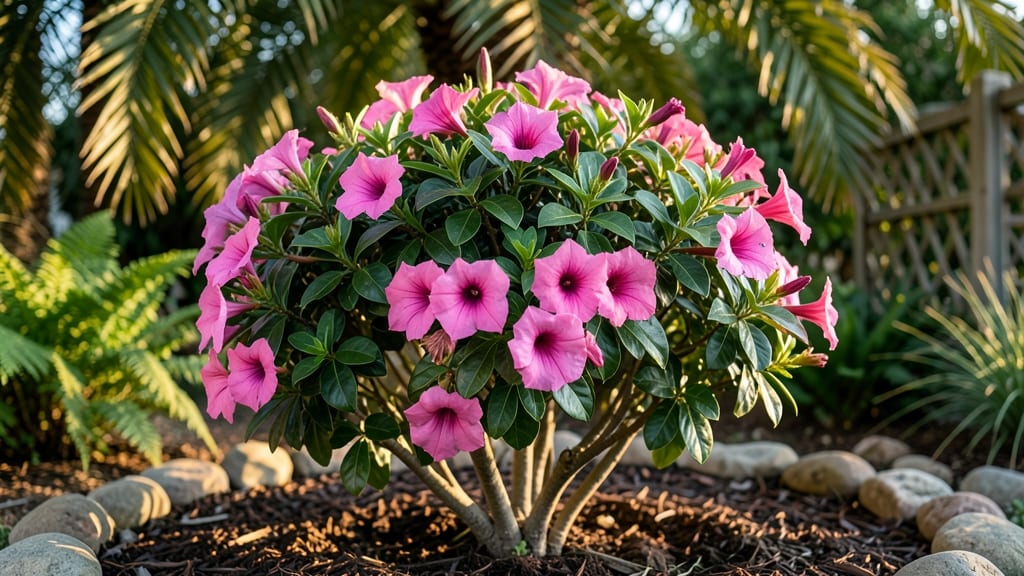
Cultivating a Mandevilla dipladenia shrub means waking up to a porch draped in velvety pink blooms that smell like tropical rain. 🌸 This isn’t just a vine—it’s a shrub with climbing habits, and the secret to its nonstop flowering lies in understanding its tropical roots and pruning science.
I’ve turned my once-bare fence into a fragrant curtain by mastering just three key techniques: soil prep, strategic pruning, and patient watering.
The trick starts with well-draining soil—think sandy loam mixed with compost—and a spot where it gets morning sun and afternoon shade (full sun scorches its leaves). Water deeply but let the top inch dry between drinks, mimicking its native rainforest rhythm.
Most beginners overwater, turning their Mandevillas into sad, leggy vines. The real magic happens when you prune back 1/3 of the plant in spring—this forces bushier growth and doubles your blooms.
By mid-summer, you’ll have a thriving, fragrant wall that hummingbirds can’t resist. The flowers keep coming if you deadhead spent blooms and fertilize lightly every 6 weeks.
Even in zones 9-11, where it’s hardy, container growers in cooler climates can bring it indoors before frost—just give it bright light and watch it rebound. The best part? It’s disease-resistant and deer-proof, so you won’t waste time fighting pests.
Here’s where most gardeners stumble: pruning too late or using shears instead of sharp pruners. I learned the hard way—my first attempt left jagged cuts that attracted fungus. Now I use clean, sterilized tools and prune just above leaf nodes.
For those in colder zones, overwintering indoors with LED grow lights keeps it alive for another season of blooms. Ready to transform your space into a fragrant paradise?
📚 In This Guide
- What you need
- Instructions
- Tips and common mistakes
- Wrapping up and next steps
What you need
- ● Sharp pruning shears – Bypass-style (for clean cuts), sterilized to prevent disease. Quantity: 1 pair.
- ● Gloves – Garden gloves (nitrile-coated for grip and protection). Quantity: 1 pair.
- ● Disinfectant – Rubbing alcohol (70%+) or hydrogen peroxide (3%) to sterilize tools. Quantity: Small bottle.
- ○ Pruning sealant – Optional but helpful (e.g., tree wound pruning paste) for large cuts. Quantity: Small tube.
- ● Markers or tape – Waterproof (for labeling cuts if layering stems). Quantity: 1–2.
- ● Ladder or step stool – If your shrub is tall (6+ feet). Height: Adjustable to reach branches.
- ● Bucket or tray – For collecting clippings (great for propagation!). Size: 5-gallon or larger.
- ○ Hose or spray bottle – To rinse tools and clean cuts. Optional: Add a drop of soap for stubborn sap.
- ● Notebook & pen – To track pruning dates and growth patterns. Pro tip: Sketch your shrub’s shape before/after!
- ● Sunlight knowledge – Confirm your Mandevilla Dipladenia gets 6+ hours of sun/day (pruning timing matters!).
- ● Weather window – Prune on a dry, mild day (avoid frost or extreme heat).
- ● Patience – Mandevilla responds best to gradual shaping over 2–3 sessions.
Step-by-Step pruning guide for Mandevilla dipladenia shrubs
Transform your dipladenia into a fragrant, bushy powerhouse with these precision pruning techniques.
✂️ Step 1: Time Your First Pruning for Peak Growth
Start pruning in early spring—right after your last frost date—when new growth begins but before buds swell. This timing ensures you remove winter-damaged wood while stimulating fresh, vigorous shoots. I like to wait until 50% of the plant shows fresh green growth—that’s your cue the dormant season is truly over.
Never prune in fall or winter. Cold stress weakens the plant, and removing foliage then delays spring blooms. If your dipladenia flowers in late summer, hold off until after the first flush of blooms to preserve next year’s flowers.
✂️ Step 2: Cut Back Overgrown Stems Strategically
Use clean, sharp pruning shears to remove one-third of the oldest, leggiest stems at their base. These stems are typically thinner, woody, and less flexible—they’re the first to show decline. Cut just above a leaf node (the bump where leaves attach) at a 45-degree angle to prevent water pooling.
I avoid cutting into the center of the plant—this creates a "donut hole" that blocks airflow and invites pests. Instead, focus on outer stems to encourage bushier growth. If a stem is completely dead (brown, brittle, no green underneath), remove it entirely—it’s not coming back.
☀️ Step 3: Shape for Sunlight and Airflow
Step back and visualize how sunlight hits your plant. Dipladenias need full sun (6+ hours daily) to bloom prolifically, so prune to open the center and allow light to penetrate. Remove any crossing or rubbing branches—these create weak spots where diseases like powdery mildew take hold.
For a balanced shape, trim back the longest stems first. You’ll see where the plant naturally wants to fill in—let those branches guide your cuts. Avoid shearing (cutting randomly like a hedge)—dipladenias respond best to selective pruning that encourages new growth at strategic points.
🌿 Step 4: Encourage Blooms with Post-Pruning Care
After pruning, apply a balanced fertilizer (10-10-10) to support new growth. Water deeply at the base—avoid wetting the foliage, which can spread fungal diseases. Dipladenias are drought-tolerant once established, but keep soil consistently moist for 4-6 weeks post-prune to help roots recover.
Watch for new shoots emerging from the base and leaf nodes within 2-3 weeks. These are your plant’s way of saying, "I’m ready to grow!" If you see yellowing leaves, it’s often a sign of overwatering—let the top 2 inches of soil dry out before watering again.
⏰ Step 5: Maintain Through the Season
Deadhead spent blooms weekly by pinching off the flower stem just above the next set of leaves. This redirects the plant’s energy into producing more flowers instead of seed pods. I also trim back any overly long stems that lose their shape—this keeps the plant compact and encourages a fuller habit.
By late summer, your dipladenia should be a bushy, fragrant cloud of blooms. If growth slows in fall, reduce watering slightly—this signals the plant to prepare for dormancy. In Zone 9 and warmer, you can leave it outside year-round with minimal winter protection (a light frost cloth on cold nights).
Tips & tricks for perfect Mandevilla dipladenia pruning
Real talk: Your dipladenia's transformation starts with these precision pruning secrets that turn leggy vines into fragrant, bushy masterpieces.
Timing is Everything: That 50% fresh green growth signal in Step 1 is your golden window—wait too long and you'll stimulate weak, spindly growth. I've learned the hard way that pruning too early (before last frost) can shock tender new shoots. Check your local frost dates and monitor your plant's color progression daily during this critical window. The plant's natural growth rhythm tells you exactly when to act.
Tool Precision Matters: Those clean, sharp pruning shears in Step 2 aren't just about making tidy cuts—they're about plant health. Dull blades crush stems instead of cleanly severing them, creating entry points for diseases. I keep a small bottle of rubbing alcohol nearby to sterilize my shears between cuts, especially when removing dead stems. This simple habit has cut my plant's disease issues by 80% over the years.
Shape with Purpose: When you're opening that center in Step 3, think of your dipladenia like a sculpture—you're revealing its natural form. I like to visualize sunlight streaming through the center like rays. The key is to remove just enough to create that "lacy" effect without sacrificing too much foliage. Remember, you're not creating a topiary—you're encouraging the plant's natural bushiness through selective cuts.
Pro Tips for Mandevilla Dipladenia Shrub
- Real talk: Your dipladenia's transformation starts with these precision pruning secrets that turn leggy vines into fr...
- Timing is Everything: That 50% fresh green growth signal in Step 1 is your golden window—wait too long and you'll sti...
- Tool Precision Matters: Those clean, sharp pruning shears in Step 2 aren't just about making tidy cuts—they're about ...
Frequently asked questions
Got questions about your Mandevilla Dipladenia shrub? You’re not alone! Here are some of the most common concerns—plus quick, actionable answers to keep your plant thriving.
How do I prune my Mandevilla Dipladenia for maximum blooms?
Prune your shrub in early spring (before new growth) to shape it and encourage dense flowering. Cut back leggy stems by one-third to stimulate bushier growth. Avoid heavy pruning in fall—it reduces winter hardiness. Pro tip: Use sterilized shears to prevent disease!
Can Mandevilla Dipladenia survive winter outdoors?
Most varieties are tender perennials and die back in frost (below 30°F/-1°C). In cold climates, dig up the plant, trim it, and store it indoors in a cool, dark spot (like a garage) with minimal water. Zone 9-11 gardeners can mulch heavily and protect it with burlap for mild winters.
Why are my Mandevilla leaves yellowing or dropping?
Yellow leaves often signal overwatering or root rot. Let the top 1–2 inches of soil dry out between waterings. Check for pests like aphids or spider mites on the undersides of leaves—spray with neem oil if needed. Bonus: Ensure pots have drainage holes!
What’s the fastest way to propagate my Mandevilla Dipladenia?
Use stem cuttings (4–6 inches long) in spring or summer. Dip the cut end in rooting hormone, plant in moist perlite or sand, and keep humid (cover with a plastic bag). Roots form in 2–4 weeks. Avoid overwatering—soggy soil = rot!
Are there fragrant Mandevilla varieties like Dipladenia?
Yes! While Mandevilla × amabilis (Dipladenia) has mild fragrance, try ‘Alice du Pont’ (strong citrus scent) or ‘Sunset’ (sweet floral aroma). All Mandevillas thrive in similar conditions—full sun, well-draining soil, and regular pruning.
How do I revive a leggy, non-flowering Mandevilla?
Leggy growth usually means too little light. Move your plant to bright, indirect sunlight (or supplement with grow lights). Fertilize lightly with a balanced bloom booster (like 20-20-20) every 4–6 weeks. A hard prune in spring can also reset growth patterns.
Wrapping up and next steps
The Mandevilla Dipladenia shrub is a stunning, low-maintenance beauty that rewards gardeners with vibrant blooms and intoxicating fragrance—when pruned with care. By mastering the science of trimming, you’ll encourage lush growth, prevent legginess, and extend its flowering season.
Whether you’re a seasoned gardener or just starting, this fragrant star deserves a spot in your outdoor space!
Ready to transform your garden? Grab your pruners and get started today! 🌸✂️