
Shrubs
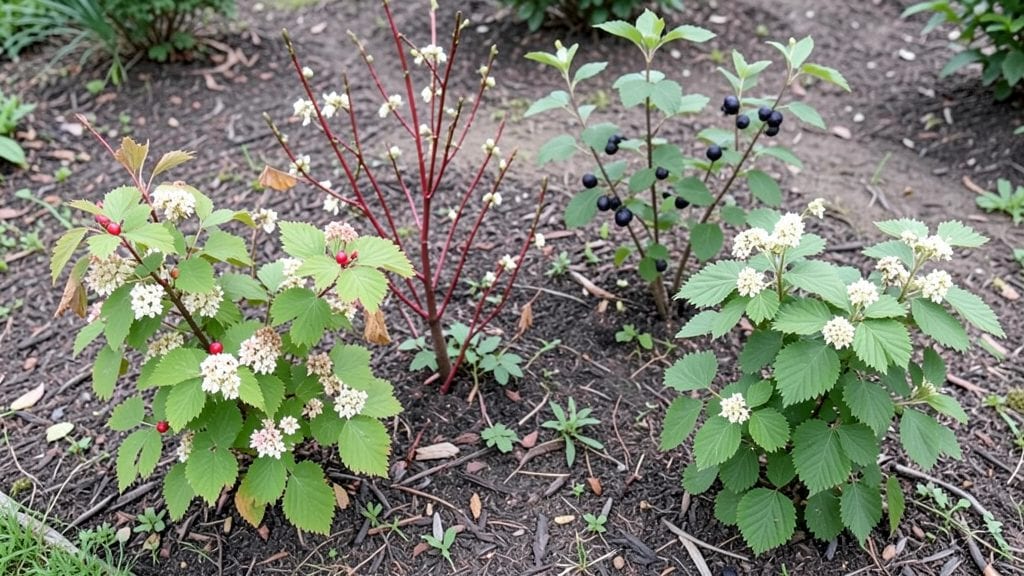
Mastering Michigan shrubs identification doesn’t have to feel like solving a botanical mystery—it’s all about learning the telltale details of each species.
I've spent years walking through Michigan's forests and meadows, and I've narrowed down the most common shrubs you'll encounter, from the fragrant leaves of spicebush to the bright red berries of winterberry. These plants aren't just pretty; they're the backbone of local ecosystems, supporting birds, butterflies, and more.
The key is focusing on three things: leaf shape and arrangement, flower or fruit characteristics, and bark texture. For example, serviceberry has white spring blooms and edible berries, while elderberry sports flat clusters of tiny white flowers and dark purple berries that birds adore.
Grab a magnifying glass or just your phone camera—close-up photos help spot subtle differences between similar-looking shrubs like dogwood and viburnum.
You'll quickly recognize these plants in your own yard or while hiking, and you'll start noticing how they change with the seasons. That fuzzy white bark on birch shrubs in winter or the glossy green leaves of witch hazel in early spring become familiar landmarks.
This knowledge turns casual walks into a game of discovery, and before you know it, you'll be spotting shrubs like a pro.
Once you've got the basics down, you can use local resources like the Michigan Flora app or the University of Michigan Herbarium's online database to double-check tricky identifications.
These tools let you verify what you see in the field, so you're always confident in your ID—whether you're planning a native garden or just enjoying Michigan's wild beauty.
📚 In This Guide
- What you need
- Instructions
- Tips and common mistakes
- Wrapping up and next steps
What you need
- ● Field Guide or App: A printed guide like Michigan Flora or a smartphone app (e.g., iNaturalist, PictureThis, or Seek by iNaturalist).
- ● Notebook & Pen: For jotting down notes, leaf shapes, or bloom colors. A waterproof version is ideal for outdoor use!
- ○ Magnifying Glass (Optional but Helpful): A 10x magnification tool to inspect fine details like bark texture or leaf veins.
- ● Camera or Smartphone: With a macro mode or high-resolution camera for close-up shots of leaves, flowers, and bark.
- ● Pruning Shears: Small, sharp shears to safely collect leaf or twig samples (avoid harming plants!).
- ○ Measuring Tape (Optional): A 6-foot tape to record shrub height or branch spacing.
- ○ Gloves (Optional): Lightweight gardening gloves to protect hands from thorns (e.g., Rhus or Rosa species).
- ● Basic Botany Knowledge: Familiarity with terms like opposite vs. alternate leaves, simple vs. compound leaves, and flower symmetry (free online courses or YouTube videos help!).
- ● Local Flora Familiarity: A quick scan of Michigan’s Department of Natural Resources or Michigan Flora to preview common shrubs.
- ● Timing: Visit shrubs during bloom season (spring/summer) or fall foliage for the best identification clues.
Quick guide to identifying Michigan native shrubs
Here’s how to spot the most common Michigan shrubs fast—no botanist degree required.
Learn the Leaf Shape and Arrangement
Start with leaves, since they’re the easiest feature to spot. Michigan’s native shrubs have distinct leaf patterns: some grow in opposite pairs (like maple leaves), while others alternate along the stem. For example, serviceberry has smooth, oval leaves with serrated edges and a fine-toothed appearance, while winterberry leaves are glossy and elliptical with a pointed tip. Memorize these shapes first—they’re your fastest clues.
Hold leaves up to light to check for veins. Many Michigan shrubs, like spicebush, have prominent veins that radiate from the midrib, while others, such as buttonbush, have simpler, less pronounced vein patterns. If you’re unsure, snap a photo and compare it later to a guide—this is the quickest way to narrow it down.
Observe Bark Texture and Color
Bark is your next best friend for identification, especially in winter when leaves are gone. Shagbark hickory has deeply furrowed, plate-like bark that peels in long strips, while red twig dogwood sports bright red stems that stand out against the snow. Even in summer, bark can give hints: ironwood has a smooth, gray bark that’s almost metallic-looking.
Run your fingers over the bark to feel its texture. Some, like black cherry, are rough and scaly, while others, such as silky dogwood, are smooth and silvery-gray. If the bark peels or flakes, note the color underneath—this can be a dead giveaway for species like paper birch, whose white, papery bark is unmistakable.
Check for Flowers, Berries, or Seed Pods
Flowers and fruit are the most exciting clues, but they’re seasonal. In spring, look for white or pink clusters on serviceberry or viburnum, while spicebush has fragrant yellow flowers. Summer brings berries: winterberry produces bright red clusters that persist into winter, while highbush cranberry has darker, translucent berries. If you see winged seed pods, it’s likely hackberry or ash.
Don’t overlook less obvious features, like buttonbush’s round, button-like flowers or sumac’s feathery seed clusters. If you’re unsure, wait until fall—many shrubs develop distinctive fruit or seed heads that make identification easier. For example, black chokeberry turns deep purple in autumn, while staghorn sumac develops fuzzy red seed heads.
Note Growth Habit and Size
Height and shape matter too. Alder grows in dense, rounded clumps, while willow stretches tall and slender, often near water. Ninebark has a multi-stemmed, rounded form with exfoliating bark, while hazelnut is low-growing with upright stems. If a shrub has thorns, it’s likely hawthorn or blackberry. Pay attention to how the branches grow—some sprawl, others stand upright.
Compare your shrub to known sizes. Serviceberry typically reaches 10–20 feet, while dwarf honeysuckle stays under 3 feet. If you’re in a forest or field, note whether the shrub grows in clusters or alone—winterberry often forms thickets, while ironwood is more solitary. This helps rule out species that don’t match the habitat.
Cross-Reference with a Field Guide
Once you’ve noted leaves, bark, flowers/fruit, and growth habit, pull out a Michigan-specific field guide or use a trusted app like iNaturalist to compare. Take photos of all key features—leaves, bark, and fruit—since one trait might not be enough. For example, spicebush and winterberry can look similar at first glance, but their leaves and berries differ.
If you’re still stuck, check the leaf arrangement and berry color—these are often the tiebreakers. For instance, highbush blueberry has alternate leaves and blue berries, while winterberry has opposite leaves and red berries. The more details you gather, the faster you’ll identify it. Over time, you’ll start recognizing patterns and spotting shrubs on sight.
Tips & tricks for quick Michigan shrub identification
Here's how to speed up your identification process without losing accuracy—these tricks will help you spot shrubs faster in the field.
Seasonal Timing Tip: Time your shrub identification carefully. Spring is ideal for checking flowers and early leaf development, while winter bark patterns become much more visible without leaves. In summer, focus on berries and seed pods, which are often the most distinctive features. I always carry a small notebook in spring to record flower colors and arrangements, then compare them to winter bark observations later.
Leaf Arrangement Shortcut: Pay special attention to how leaves attach to stems in Step 1. Opposite leaves (like on serviceberry) grow directly across from each other, while alternate leaves grow in a spiral pattern. This single observation can cut your identification time in half. I keep a quick reference card with common Michigan shrubs and their leaf arrangements in my pocket—it's saved me countless hours of confusion in the field.
Bark Texture Hack: When examining bark in Step 2, focus on three key characteristics: color, texture, and peeling pattern. Run your fingers along the bark to feel for smoothness or roughness, then check if it peels in strips (like shagbark hickory) or remains intact. I've found that bark color changes dramatically with moisture levels, so always check both wet and dry conditions if possible. This tactile approach helps even when visual clues are limited.
Photography Pro Tip: Take three photos of each shrub you're trying to identify: close-up of leaves, mid-range of bark, and wide shot of overall growth habit. Label each photo with location and date. This visual reference system has helped me identify tricky species like spicebush and winterberry, which can look similar at first glance. The key is capturing all the features mentioned in Steps 1-4 before comparing with field guides.
Pro Tips for Michigan Shrubs Identification
- Here's how to speed up your identification process without losing accuracy—these tricks will help you spot shrubs faster in the field.
- Seasonal Timing Tip: Time your shrub identification carefully.
- Leaf Arrangement Shortcut: Pay special attention to how leaves attach to stems in Step 1.
Frequently asked questions
Got questions about Michigan native shrubs?
You’re not alone! Here are answers to the most common queries to help you identify, care for, and enjoy these hardy plants with confidence.
How do I tell the difference between Michigan shrubs that look similar?
Some shrubs, like spicebush and winterberry, can be tricky! Focus on leaf shape, bark texture, and berries (if present). For example, spicebush has aromatic leaves and small yellow flowers, while winterberry produces bright red berries in winter. Use a field guide or app like iNaturalist for side-by-side comparisons.
When is the best time of year to identify Michigan shrubs?
Spring and early summer are ideal for leaf and flower identification, while winter reveals unique bark patterns. Evergreens like inkberry holly are easiest to spot year-round. Pro tip: Take photos in all seasons to build a visual library!
Are there any Michigan shrubs that tolerate full shade?
Elderberry, serviceberry, and wintergreen thrive in shady spots. These shrubs adapt well to Michigan’s wooded areas and add color even with minimal sunlight. Just ensure they get some morning sun for optimal growth.
Why are my Michigan native shrubs losing leaves early?
Early leaf drop is often caused by stress—check for pests (like spider mites), overwatering, or soil compaction. Sumac and dogwood are particularly sensitive. Improve drainage, mulch well, and inspect for chewed leaves or sticky residue. If the issue persists, test your soil pH!
Can I replace invasive shrubs like burning bush with native alternatives?
Yes! Swap burning bush (which harms local ecosystems) with sumac (vibrant fall color) or staggerbush (drought-tolerant). Native shrubs support pollinators and require less maintenance. Check with your local Michigan DNR for region-specific recommendations.
Wrapping up and next steps
Identifying Michigan’s native shrubs doesn’t have to be overwhelming—whether you’re a gardener, nature enthusiast, or just curious about your backyard! From the vibrant spicebush to the hardy winterberry, these 20 species add beauty and ecological value to your landscape. 🌿
Now that you’ve got the basics, why not take the next step? Grab a field guide or use a plant ID app to explore your local greenery, or plant a few of these natives to support pollinators and wildlife. Happy exploring—and happy gardening! 🌱