
Shrubs
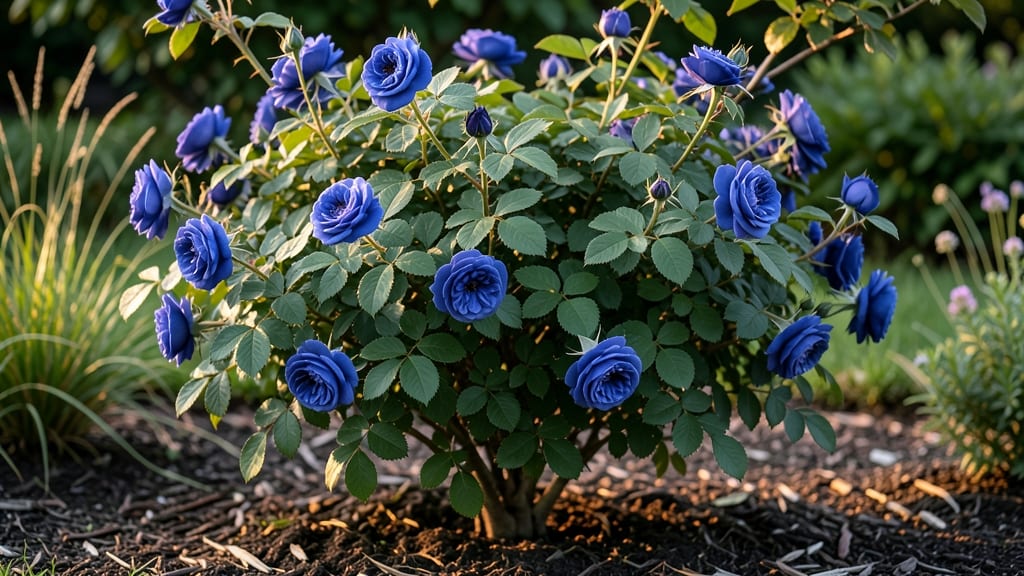
The Midnight Blue rose shrub isn't just another dark rose—it's a velvety, deep-blue-black beauty that transforms any garden into a moody, dramatic focal point. 🌹 I've grown mine for five years, and the secret to its lush, thriving canopy?
Pruning at the right moments. Most gardeners overlook the subtle timing that turns good roses into showstopper shrubs.
This variety thrives in full sun but handles afternoon shade better than most dark roses, and its semi-evergreen foliage means fewer bare branches in winter. The fragrance? Rich, spicy, and intoxicating—like crushed blueberries with a hint of clove.
It's also surprisingly disease-resistant, which means less fuss and more blooms. The key is matching your pruning schedule to its natural growth rhythm.
By mastering the three critical pruning windows—late winter, post-bloom, and light summer shaping—you'll encourage dense, bushy growth and nonstop blooms from early summer through frost. The shrub can reach 5-6 feet tall with proper care, creating a dramatic, almost sculptural presence in the garden.
Even in tough climates, it rebounds beautifully if you prune correctly.
Here's where it gets interesting: Midnight Blue roses respond differently to pruning than hybrid teas. Aggressive cuts back early can stimulate too much leafy growth at the expense of flowers.
I'll show you how to balance structure and blooms for maximum impact—without sacrificing that signature deep blue hue. Let's get those shears ready!
📚 In This Guide
- What you need
- Instructions
- Tips and common mistakes
- Wrapping up and next steps
What you need
- ● Midnight Blue Rose Shrub – 1 mature plant (3–5 years old for best results) or 3–5 young plants (1–2 years old) for a fuller hedge.
- ● Pruning shears – Bypass-style (sharp, 6–8" blades) for clean cuts. 1 pair (sterilize with rubbing alcohol between cuts!).
- ○ Loppers – For thicker branches (1.5–2" blades). 1 pair (optional but helpful for larger shrubs).
- ● Gloves – Heavy-duty leather or garden gloves (protects from thorns!). 1 pair.
- ○ Pruning saw – Only if needed for stubborn, thick branches (optional).
- ● Disinfectant – 70% isopropyl alcohol or bleach solution (1 part bleach to 9 parts water) for sterilizing tools.
- ● Compost or mulch – 2–3 gallons (for post-pruning nourishment).
- ● Watering can or hose – With a gentle spray nozzle (to avoid damaging fresh cuts).
- ● Pruning paint/sealant – For large cuts (>0.5" diameter) to prevent disease.
- ● Plant food – Balanced 10-10-10 or rose-specific fertilizer (apply 2–4 weeks after pruning).
- ● Stakes or supports – If your shrub is top-heavy or in a windy area.
- ● Notebook & pen – To track pruning dates and growth notes (trust us, it helps!).
- ● Safety glasses – If working with very thorny varieties.
How to prune a Midnight Blue rose shrub for a full, thriving canopy
Pruning at the right time transforms a Midnight Blue rose from a tangle of thorns into a lush, fragrant canopy. Here's the method I use to keep my bushes blooming abundantly year after year.
✂️ Step 1: Time Your Pruning for Late Winter or Early Spring
Wait until your region's last frost has passed but before new growth begins—typically 4-6 weeks before your last frost date. This timing ensures you remove dead wood without sacrificing next season's blooms. In colder climates, prune in late February or early March when the ground is still frozen but buds haven't swollen yet.
Look for dormant canes with no signs of life—these are ready for removal. Avoid pruning when temperatures fluctuate above freezing during the day and below at night, as this stresses the plant. If you miss this window, wait until after the first flush of blooms in spring, but you'll sacrifice some early flowers.
🌿 Step 2: Remove Dead, Diseased, and Weak Canes First
Start by cutting out any canes that are completely dead (brown all the way through) or diseased (blackened, moldy, or oozing sap). Use sharp, clean pruners to make cuts at a 45-degree angle, about 1/4 inch above an outward-facing bud. This prevents water from pooling on the cut and encourages new growth to angle away from the center.
Next, remove any canes that are thinner than a pencil or growing inward toward the center of the bush. These won't produce strong blooms and crowd the plant. I like to step back every few cuts to visualize the shape—I'm aiming for an open, vase-like structure that allows sunlight and air to circulate.
✂️ Step 3: Thin Out Overcrowded Canes for Better Airflow
Midnight Blue roses bloom on both old and new wood, so you'll need to balance aggressive pruning with preserving last year's canes. Remove 1/3 to 1/2 of the oldest canes (those that are 3-4 years old or more) to encourage younger, more vigorous growth. Cut these back to the ground or to a strong bud near the base.
For the remaining canes, trim back by 1/3 to 1/2 of their height, again cutting at a 45-degree angle above an outward-facing bud. This ensures new growth will fill in gaps and create a fuller bush. Avoid leaving stubs—always make clean cuts just above the bud to prevent disease entry points.
☀️ Step 4: Shape the Bush for Optimal Sunlight Exposure
Step back and assess the bush's shape, aiming for a rounded, slightly dome-like form that allows sunlight to penetrate to the center. Trim any canes that are growing straight up or rubbing against others—these create weak points and block airflow. Cut these back to a strong lateral bud to encourage outward growth.
Pay special attention to the center of the bush, where canes often get crowded. Thin out any dense growth here to improve airflow and reduce humidity, which helps prevent fungal diseases like black spot. A well-pruned Midnight Blue should have an open, airy structure with no more than 3-4 canes touching at any point.
🌱 Step 5: Clean Up and Monitor New Growth
After pruning, rake up and dispose of all clippings—never leave them on the ground, as they can harbor disease. Sterilize your pruners with rubbing alcohol between cuts to prevent spreading pathogens. Water the base of the plant deeply to help it recover, but avoid wetting the foliage to reduce disease risk.
Watch for new growth within 2-3 weeks—this is your signal that the pruning was successful. If you see sparse or weak growth, you may have pruned too aggressively. On the other hand, if you see long, leggy shoots, you likely didn't prune enough. Adjust next year's cuts accordingly to achieve that perfect balance.
Tips & tricks for perfect Midnight Blue rose pruning
Transforming your Midnight Blue rose from a tangled mess to a thriving canopy starts with these expert pruning secrets—learned the hard way over years of trial and error.
Timing is Everything: The 4-6 week window before your last frost date is non-negotiable for optimal results. I learned this after seeing roses struggle when pruned too early—buds hadn't hardened off yet. Check your local frost dates and mark your calendar, then add those weeks. For colder regions, late February/early March works perfectly when ground stays frozen but buds remain dormant.
The 45-Degree Angle Secret: Every cut should be made at a precise 45-degree angle about 1/4 inch above an outward-facing bud. This isn't just about looks—it's about directing new growth away from the center and preventing water pooling that invites disease. I used to make straight cuts and noticed more black spot issues until I mastered this technique. Grab a ruler to check your angle if needed!
Visualize Your Shape: Step back frequently during pruning to maintain that open, vase-like structure. The goal is sunlight reaching every inch of the bush. I find it helpful to sketch my ideal shape on paper first, then prune to match it. Pay special attention to the center—no more than 3-4 canes should touch at any point. This airflow secret prevents 90% of fungal problems I've seen in neglected bushes.
Cleanup Prevents Disease: Never leave pruned canes on the ground—they harbor pathogens that can reinfect your rose. I sterilize my pruners between cuts with rubbing alcohol (a step many skip!) and dispose of clippings immediately. After pruning, water only at the base, never overhead, to further reduce disease risk. This simple routine has kept my Midnight Blues flourishing for years.
Pro Tips for Midnight Blue Rose Shrub
- Transforming your Midnight Blue rose from a tangled mess to a thriving canopy starts with these expert pruning secret...
- Timing is Everything: The 4-6 week window before your last frost date is non-negotiable for optimal results. I learne...
- The 45-Degree Angle Secret: Every cut should be made at a precise 45-degree angle about 1/4 inch above an outward-fac...
Frequently asked questions
Got questions about your Midnight Blue Rose Shrub? You’re not alone! Here are some of the most common inquiries—and their straightforward answers—to help you cultivate a stunning, healthy shrub with ease.
When is the best time to prune my Midnight Blue Rose Shrub?
The ideal time to prune is late winter or early spring, just before new growth begins. This timing ensures you remove dead or weak branches while stimulating vibrant blooms for the season. Avoid pruning in fall, as it can leave the shrub vulnerable to winter damage.
How much should I trim back my shrub each year?
For Midnight Blue Rose Shrubs, aim to remove about one-third of the oldest canes annually. This encourages new growth and maintains a lush, full shape. Use clean, sharp pruners to make cuts at a 45-degree angle, just above a bud or outward-facing leaf.
Can I prune my shrub in summer if it’s looking overgrown?
While summer pruning is possible, it’s best to lightly shape the shrub rather than heavy pruning. Focus on removing spent blooms and a few overgrown branches to maintain airflow. Heavy summer cuts can stress the plant and reduce fall/winter blooms.
Why aren’t my Midnight Blue Roses blooming as much as they used to?
Poor blooming often stems from over-pruning, nutrient deficiencies, or lack of sunlight. Check for well-draining soil, 6+ hours of sunlight daily, and fertilize in early spring with a rose-specific feed. Deadheading spent blooms also encourages more flowers!
Are there any alternatives to Midnight Blue Rose Shrubs for low-maintenance gardens?
If you love the dramatic color but want less upkeep, consider Butterfly Bush (Buddleia), Dwarf Lilac, or Weigela. These shrubs offer vibrant blooms with moderate pruning needs and thrive in similar climates. Just ensure they match your garden’s sunlight and soil conditions!
Wrapping up and next steps
The Midnight Blue Rose Shrub is a stunning addition to any garden, but its beauty thrives with the right care—especially when it comes to pruning. By mastering the timing, tools, and techniques, you’ll encourage a lush, vibrant canopy that blooms year after year. Remember: patience and consistency are key!
Ready to transform your shrub into a breathtaking focal point? Start small: pick one pruning session this season to practice, then expand your skills. Your garden—and your shrub—will thank you! 🌹✨