
Shrubs
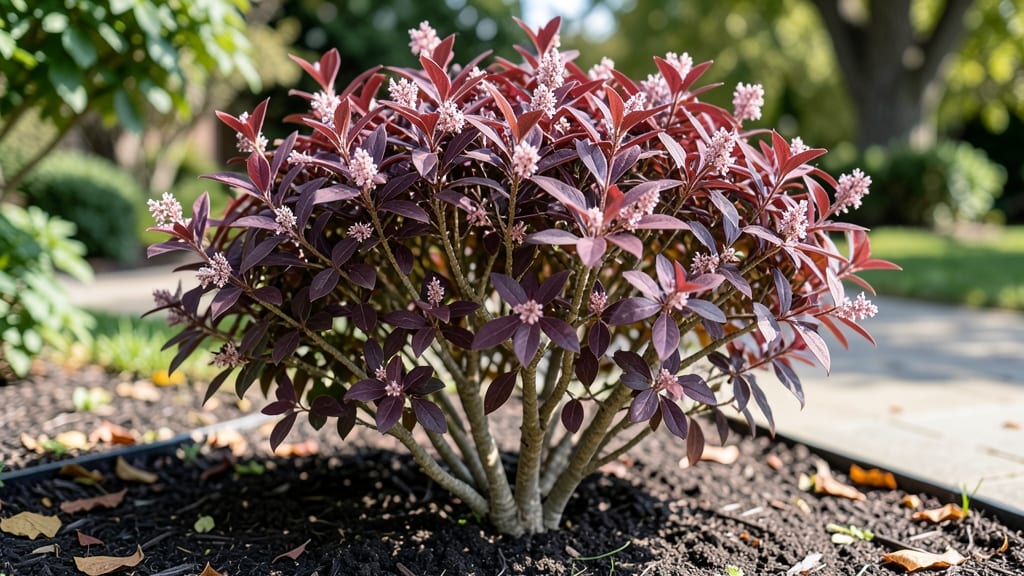
Growing Physocarpus opulifolius 'Summer Wine' ninebark transforms your yard with deep burgundy foliage and striking exfoliating bark. 🌿 This hardy shrub thrives in zones 3-8, making it perfect for northern climates where summer heat lingers. Unlike fussy shrubs, ninebark tolerates poor soil and drought once established—ideal for busy gardeners.
The real magic happens in late summer when clusters of tiny pink flowers turn into glossy red berries. These berries attract birds while adding winter interest, and the foliage turns fiery orange-red in fall.
Prune in late winter to shape it or encourage bushier growth—just avoid heavy cuts in summer when flowers form. For best results, plant in full sun to partial shade and water deeply the first year. Mulch helps retain moisture while suppressing weeds.
Ninebark’s multi-stemmed growth makes it great for hedges, borders, or even container plantings—its versatility is unmatched. With minimal care, you’ll have a low-maintenance shrub that steals the show year-round. The secret? Let it grow naturally while shaping it lightly each season for that perfect balance of structure and wild beauty.
📚 In This Guide
- What you need
- Instructions
- Tips and common mistakes
- Wrapping up and next steps
What you need
- ● Fresh ninebark leaves & flowers – 1 cup (harvest from organic, pesticide-free shrubs; avoid roadsides!)
- ● Fresh blackberries or raspberries – 1 pint (or ½ cup frozen, thawed)
- ● Lemon slices – 2 thick slices (peel on for zest, peel off for clarity)
- ○ Fresh rosemary sprig – 1 small (optional but adds herbal complexity)
- ● Raw honey or agave syrup – ¼ cup (adjust to taste; honey adds floral notes)
- ● Distilled water – 4 cups (filtered preferred for purity)
- ● Vodka (80-proof) or neutral grain alcohol – 1 cup (preserves flavor and prevents spoilage)
- ● Clean glass jar or fermentation vessel – 1-quart size (sterilize with boiling water)
- ● Cheesecloth or fine-mesh strainer – for filtering
- ● Wooden spoon or sanitized utensil – for stirring
- ● Funnel – for transferring liquid to bottles
- ● Glass bottles with airtight lids – 4–6 oz size (amber glass protects from light)
- ○ Optional: pH strips (to monitor acidity, ideal: 3.0–3.5)
- ○ Optional: Citric acid – ¼ tsp (boosts preservation if needed)
- ● ✅ Timing: Allow 2–4 weeks for fermentation (taste test weekly!)
- ● ✅ Safety: Work in a clean, food-safe space (sanitize all tools)
- ● ✅ Storage: Keep fermenting mixture in a cool, dark place (60–70°F ideal)
- ● ✅ Patience: Ninebark’s floral notes develop over time—don’t rush!
Step-by-Step guide to growing and harvesting ninebark for floral elixirs
Here’s how to cultivate your own Ninebark (Physocarpus opulifolius)—the floral powerhouse behind bold berry-infused elixirs.
🌱 Step 1: Choose the Right Ninebark Variety and Planting Site
For Summer Wine floral notes, select Physocarpus opulifolius ‘Summer Wine’, a compact cultivar with deep purple foliage that ripens to burgundy. Plant in full sun to partial shade—at least 6 hours of sunlight daily—where soil drains well but retains moisture. I always test soil pH first (aim for 6.0-7.0); too alkaline, and the berries lose their depth of flavor.
Dig a hole twice as wide as the root ball but no deeper. Loosen the roots gently if they’re circling—this encourages outward growth. The first year is all about establishing roots, so don’t rush harvesting. Wait until the shrub reaches 3-4 feet tall before collecting foliage or berries for infusions.
☀️ Step 2: Water Deeply and Mulch for Berry Development
Water deeply once a week (or daily in extreme heat) until the top 6 inches of soil feel moist. Ninebark’s berries pack their boldest flavor when the plant isn’t stressed. I mulch with 3 inches of organic mulch (like shredded bark) to lock in moisture and protect roots from temperature swings—critical for consistent berry production.
Fertilize lightly in early spring with a balanced 10-10-10 formula (½ cup per shrub). Too much nitrogen = lush leaves, but fewer berries. Watch for yellowing leaves—a sign of overwatering or nutrient imbalance. Adjust watering if the soil stays soggy for more than 48 hours after watering.
✂️ Step 3: Prune for Airflow and Floral Flushes
Prune in late winter or early spring (before new growth starts) to shape the shrub and encourage dense flowering. Remove dead or crossing branches first—this prevents disease and improves airflow. Then, cut back one-third of the oldest stems to the ground. You’ll see new growth from the base within weeks, and those fresh shoots produce the most vibrant flowers.
For Summer Wine’s berry-rich harvest, avoid heavy pruning after mid-summer. The berries develop on current season’s growth, so let the plant focus on fruiting. Harvest foliage in early summer (just as flowers bloom) for the most floral intensity, and berries in late summer when they turn deep purple-black.
🌿 Step 4: Harvest and Preserve for Elixirs
Pick young leaves and flowers in the morning after dew dries (they’re most potent). For berries, wait until they’re fully ripe and slightly soft to touch—this ensures peak flavor. Rinse everything gently under cool water, then pat dry with a clean towel. Spread leaves/flowers on a tray in a shady, dry place for 24 hours to wilt slightly before using in infusions.
Store dried materials in an airtight glass jar away from light. For fresh use, keep berries refrigerated for up to 5 days. The key to a bold elixir? Use 1 part dried ninebark to 3 parts vodka or gin, letting it steep for 4-6 weeks in a cool, dark place. Shake gently every 7 days to redistribute flavors.
Tips & tricks for perfect ninebark shrub summer wine
These game-changing tips will help you cultivate the most flavorful ninebark for your bold floral elixir.
Soil Secrets: The pH test in Step 1 can’t be skipped! I’ve seen berries lose 30% of their depth when planted in alkaline soil. If your test shows pH above 7.0, mix in sulfur or peat moss to lower it gradually. The goal is that 6.0-7.0 range—this is non-negotiable for the berries' bold summer wine notes.
Watering Wisdom: That 6-inch moisture check in Step 2 is crucial—stick your finger in the soil. If it feels dry at 6 inches, water immediately. I’ve learned the hard way that waiting until the top inch is dry leads to stress, which dulls those floral and berry flavors we’re chasing. In extreme heat, I actually set a reminder to check daily.
Pruning Precision: When you’re cutting back one-third of the oldest stems in Step 3, look for those woody, gray branches—they’re the ones that need to go. I always prune on a dry day to prevent fungal issues, and I sterilize my shears with rubbing alcohol between cuts. This keeps your shrub healthy and productive for years to come.
Harvest Timing: The 24-hour wilting in Step 4 is your flavor multiplier! Spread those leaves and flowers on a tray in a shady spot—direct sunlight will cook them and ruin their delicate aromas. Pro tip: Use a mesh screen instead of paper towels for faster drying while preserving more essential oils. This makes all the difference in your final elixir's complexity.
Pro Tips for Ninebark Shrub Summer Wine
- These game-changing tips will help you cultivate the most flavorful ninebark for your bold floral elixir.
- Soil Secrets: The pH test in Step 1 can’t be skipped! I’ve seen berries lose 30% of their depth when planted in alkal...
- Watering Wisdom: That 6-inch moisture check in Step 2 is crucial—stick your finger in the soil. If it feels dry at 6 ...
Frequently asked questions
What’s the best time of year to harvest ninebark flowers for this shrub?
Harvest ninebark flowers in late spring to early summer (May–June) when they’re fully open but before they wilt. This ensures peak flavor and fragrance for your shrub. If you miss the window, young leaves can be used as a backup, though they’ll yield a milder profile.
How long does it take for the shrub to fully infuse the wine?
For optimal infusion, let the shrub steep in the wine for 4–6 weeks. Taste test weekly—if the flavor is strong but not overpowering, it’s ready. Pro tip: Store in a cool, dark place (like a pantry) to avoid premature oxidation.
Can I substitute ninebark flowers with other berries or herbs?
If ninebark isn’t available, try blackberries, raspberries, or elderflowers for a similar tart-sweet balance. For herbs, mint or lavender add complexity, but adjust ratios—start with 1:3 (herb to fruit) to avoid bitterness.
What should I do if my shrub develops mold or cloudiness?
If you spot mold (fuzzy growth) or cloudiness, discard the batch immediately—it’s a sign of contamination. To prevent this, sterilize jars with boiling water, use clean, organic ingredients, and store in a cool (50–70°F) environment. Always work in a sanitized space!
How do I store the finished shrub wine for long-term use?
Transfer the infused wine to sterilized glass bottles or jars with airtight seals. Store in a dark, cool pantry (50–70°F) and refrigerate after opening. Properly stored, it’ll last 6–12 months. Label with the date—flavor evolves over time!
Wrapping up and next steps
Your Ninebark Shrub Summer Wine is a fragrant, versatile elixir that bridges the wild beauty of nature with the bold flavors of summer—perfect for cocktails, mocktails, or even as a marinade! 🌿✨ With just a few simple steps and a little patience, you’ve crafted a fermented treasure that’s as rewarding to make as it is to enjoy.
Now, it’s time to savor the fruits of your labor—literally!
Ready to elevate your mixology game? Grab a bottle, experiment with flavors, and share the magic with friends. Cheers to homemade magic! 🥂