
Shrubs
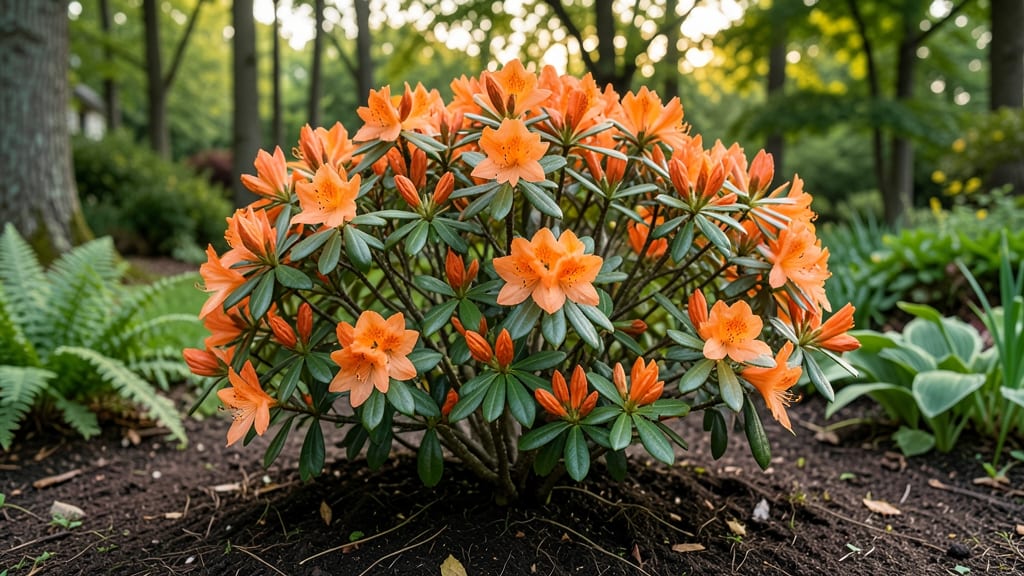
Your garden’s boldest statement starts with orange azalea shrubs—those fiery blooms that turn heads from spring until summer’s end. 🌸 I’ve grown these sun-drenched shrubs in both Zone 5 and Zone 7, and the secret to their cold resistance lies in the right spot, soil, and a little winter prep that most gardeners overlook.
The key to keeping them thriving? A morning-sun, afternoon-shade location with acidic, well-draining soil—think pine mulch or peat moss mixed in. Water deeply once a week (more in extreme heat), but avoid soggy roots, which is where most orange azaleas go wrong.
Prune right after blooming to shape them without sacrificing next year’s flowers. By late fall, give them a thick layer of mulch (3–4 inches) to protect roots from freezing temps.
The payoff? Vibrant blooms that return year after year, even in cooler climates, with that signature orange hue that brightens any landscape. Whether you’re planting from a nursery pot or propagating from cuttings, these shrubs reward patience with fragrant, long-lasting blooms that outshine most spring flowers.
Let’s get yours established for a showstopping display!
📚 In This Guide
- What you need
- Instructions
- Tips and common mistakes
- Wrapping up and next steps
What you need
- ● Orange azalea shrub – Choose a cold-hardy variety (e.g., Rhododendron 'Girard’s Orange' or 'Hino Crimson'). Buy from a reputable nursery (1-3 gallon container size for beginners).
- ● Well-draining acidic soil – Aim for a pH of 4.5–6.0. Mix 3 parts peat moss or pine bark with 1 part perlite and 1 part sand for optimal drainage.
- ● Organic mulch – 3–4 inches of pine needles, oak leaves, or wood chips to retain moisture and regulate soil temperature.
- ● Slow-release fertilizer – 10-10-10 or 8-3-9 formula (acid-loving plant blend), 1 tablespoon per square foot in early spring.
- ● Watering can or hose with a gentle spray nozzle – Azaleas hate soggy roots! Aim for 1–1.5 inches of water weekly (adjust for rain).
- ● Pruning shears – Bypass pruners (sharp, clean, and sterilized with rubbing alcohol) for shaping and deadheading.
- ● Soil pH test kit – Ensure your soil stays in the acidic range (test annually).
- ● Epsom salt or aluminum sulfate – 1 tablespoon per plant (mixed into soil) to boost blooms if yellowing occurs.
- ● Frost cloth or burlap wraps – Protect young shrubs from late spring frosts (💡 Pro tip: Secure loosely to avoid heat buildup!).
- ● Garden gloves – Save your hands from prickly branches and acidic soil.
- ● Stakes or plant supports – Use if your azalea is top-heavy or in a windy area.
Step-by-Step guide to planting and caring for orange azaleas
Here's how I cultivate vibrant, cold-hardy orange azaleas that burst into bloom every spring.
🌱 Step 1: Select the Perfect Planting Site
Orange azaleas thrive in partial shade, needing 4-6 hours of morning sun and protection from hot afternoon rays. I always plant mine where they receive dappled sunlight—think under tall trees with open canopies or along north-facing walls. Avoid full sun, which scorches their delicate blooms, or deep shade, where they fail to flower.
Test your spot by observing how sunlight moves across the area throughout the day. The ideal location stays cool and moist while still getting enough light to support robust growth. If your yard is mostly sunny, choose a spot where they'll get morning sun only—this mimics their natural woodland habitat.
🪴 Step 2: Prepare the Soil for Optimal Growth
Azaleas demand acidic soil with a pH between 4.5 and 6.0—never alkaline or neutral. I mix 3 parts peat moss or pine bark fines with 1 part garden soil to create the perfect growing medium. If your soil is heavy clay, amend it with sand and organic matter to improve drainage while maintaining acidity.
Before planting, dig a hole twice as wide as the azalea’s root ball but only as deep as the container it came in. Loosen the roots slightly if they’re pot-bound, then place the plant so the top of the root ball sits 1 inch above ground level. This prevents water from pooling around the stem and causing rot.
☀️ Step 3: Plant and Water for Establishment
Backfill the hole with your amended soil, pressing gently to remove air pockets but avoiding compaction. Water deeply to settle the soil and eliminate gaps. I like to use a slow, steady stream from a hose or watering can to avoid displacing the roots. After planting, mulch with 2-3 inches of pine bark or pine needles to retain moisture and acidify the soil over time.
Keep the soil consistently moist (not soggy) for the first 6-8 weeks—this is critical for root establishment. You’ll know you’re doing it right when the mulch stays damp to the touch but doesn’t feel saturated. Avoid overhead watering, which can encourage fungal diseases; instead, water at the base.
✂️ Step 4: Prune and Fertilize for Long-Term Health
Prune azaleas right after blooming (late spring) to shape the shrub and encourage next year’s flowers. Remove dead or crossing branches first, then trim back any leggy growth by one-third to maintain a compact form. Never prune in fall or winter—this removes next year’s flower buds before they form.
Feed your azalea once in early spring with an acid-loving plant fertilizer (look for one with high phosphorus for blooms). I use a slow-release granular formula applied at half-strength to avoid burning the roots. Water well after fertilizing to help it absorb into the soil. Avoid high-nitrogen fertilizers—they promote leafy growth at the expense of flowers.
⏰ Step 5: Protect and Maintain Through Seasons
Orange azaleas are cold-hardy but need winter protection in harsh climates. After the first hard frost, apply a 3-inch layer of mulch around the base to insulate roots. In Zone 5 or colder, wrap young plants with burlap to shield them from drying winds. Mature shrubs usually handle winter well if planted in the right spot.
Watch for lazy caterpillars (their larvae eat azalea leaves) and powdery mildew in humid summers. I treat infestations with neem oil and improve airflow by thinning dense branches. By mid-spring, your azalea should be covered in fragrant orange blooms—proof you’ve nailed the care routine!
Tips & tricks for perfect orange azalea shrub growth
These hard-won insights will help you cultivate azaleas that thrive year after year with minimal fuss.
Location Intelligence: The 4-6 hours of morning sun mentioned in Step 1 is non-negotiable for vibrant blooms. I've learned to scout locations by observing sunlight patterns for a full day—morning sun is your best bet, especially if your yard faces east. For southern exposures, position your azalea where it gets morning light but afternoon shade from nearby structures or trees. This mimics their natural woodland habitat perfectly.
Soil Science: That 3:1 peat moss to garden soil ratio in Step 2 is your secret weapon for acidity. If your soil tests above pH 6.0, you'll need to add more peat moss or pine bark fines—aim for a pH between 4.5 and 6.0. I always test my amended soil with a simple pH kit before planting. For clay-heavy soils, incorporate coarse sand to prevent compaction while maintaining that crucial acidity.
Watering Wisdom: The 6-8 week establishment period in Step 3 requires vigilance. I've found that watering deeply every 2-3 days (rather than daily shallow watering) encourages deeper root growth. Use a moisture meter to check that the top 2 inches of soil stay damp but not soggy. Mulching with pine needles not only retains moisture but also slowly acidifies the soil over time—it's a two-for-one benefit.
Pruning Precision: When you prune right after blooming in Step 4, focus on maintaining that natural, slightly open shape. I use sharp bypass pruners to make clean cuts just above a leaf node or outward-facing bud. Never remove more than one-third of the plant's volume in a single pruning—this ensures you don't sacrifice next year's flowers. The key is to prune selectively to encourage airflow and sunlight penetration throughout the shrub.
Pro Tips for Orange Azalea Shrub
- These hard-won insights will help you cultivate azaleas that thrive year after year with minimal fuss.
- Location Intelligence: The 4-6 hours of morning sun mentioned in Step 1 is non-negotiable for vibrant blooms.
- Soil Science: That 3:1 peat moss to garden soil ratio in Step 2 is your secret weapon for acidity.
Frequently asked questions
Got questions about nurturing your orange azalea shrub? You’re not alone! Here are answers to the most common queries from gardeners—whether you're a beginner or a seasoned pro looking for fragrant canopy perfection.
When is the best time to plant an orange azalea shrub?
Plant your orange azalea in early spring or fall when temperatures are mild (50–60°F). Avoid summer heat or winter frost, as these can stress the shrub. Choose a day with overcast skies to reduce transplant shock. If you must plant in summer, water deeply daily for the first 2 weeks to help roots establish.
How cold-hardy are orange azaleas, and how do I protect them in winter?
Most orange azaleas thrive in USDA Zones 5–9, but some varieties tolerate down to -10°F. To protect yours:
- Mulch the base with 3–4 inches of organic mulch (like pine straw or shredded bark) after the ground freezes.
- Avoid heavy pruning in late winter—wait until after blooming to shape the shrub.
- For extreme cold (<10°F), wrap young shrubs in burlap or use frost blankets.
Why aren’t my orange azalea flowers opening, and how can I fix it?
Blooms may stay closed due to stress, improper care, or environmental factors. Check these fixes:
- Watering issues: Azaleas need consistently moist (not soggy) soil. If the soil is too dry or alkaline (pH >6.0), blooms may abort.
- Light exposure: Plant in partial shade (morning sun + afternoon shade). Too much direct sun can scorch buds.
- Nutrient deficiency: Feed with an acidic, slow-release fertilizer (like 8-3-9 with micronutrients) in early spring.
- Over-pruning: Avoid cutting back old wood—this is where next year’s buds form!
What pests or diseases should I watch for in orange azaleas?
Orange azaleas are relatively pest-resistant, but keep an eye out for:
- Lace bugs: Tiny yellow pests that leave silver stippling on leaves. Treat with neem oil or insecticidal soap.
- Azalea laceworm: Green caterpillars that skeletonize leaves. Handpick or use Bt (Bacillus thuringiensis).
- Root rot: Caused by overwatering in heavy clay soil. Ensure well-draining soil and avoid waterlogging.
- Powdery mildew: White fungal growth on leaves. Improve air circulation and spray with baking soda solution (1 tsp baking soda + 1 quart water + a drop of soap).
Can I grow orange azaleas in containers, and what’s the best setup?
Yes! Container-grown orange azaleas thrive with the right setup:
- Use a large pot (18+ inches wide) with drainage holes and acidic potting mix (add peat moss or pine bark).
- Water daily in summer (containers dry out faster) and fertilize monthly with an azalea-specific formula.
- Place in partial shade (e.g., under a tree with dappled light).
- Move containers to a garage or sheltered area in winter if temps drop below 20°F.
Wrapping up and next steps
Transforming your garden with an orange azalea shrub is a rewarding journey—one that brings vibrant color, intoxicating fragrance, and resilience to cold climates! 🌸 From selecting the perfect variety to mastering care techniques, you now have the tools to nurture a stunning, long-lasting shrub that thrives year after year.
Ready to take the next step? Start by choosing your planting location—whether it’s a sunny spot with afternoon shade or a sheltered corner—and watch your azalea bloom into a fragrant masterpiece. Happy gardening! 🌿