
Flowers
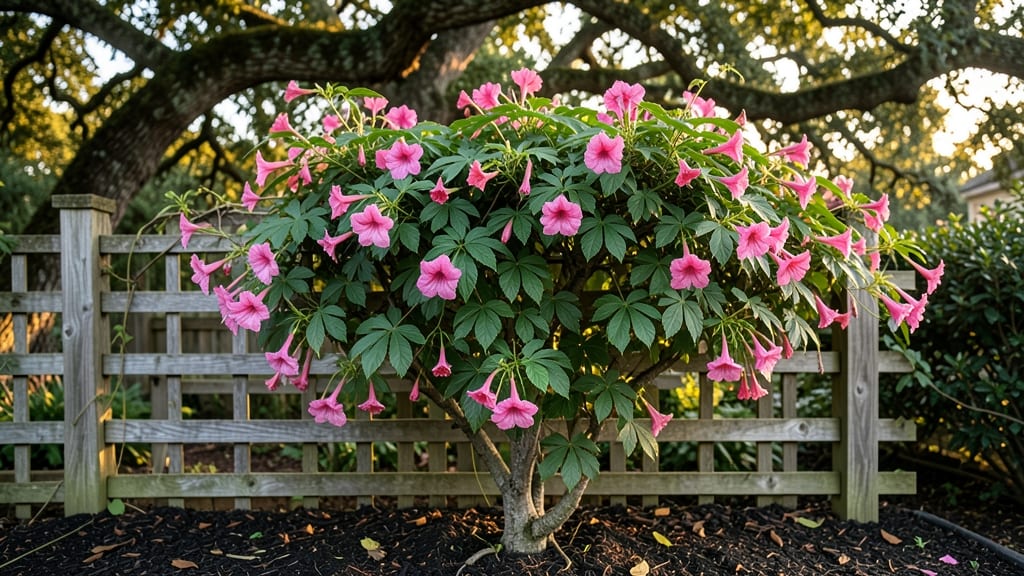
Growing a pink trumpet flower shrub means adding bold, velvety blooms that last from spring until frost—even in shady spots where most shrubs struggle. 🌿 I’ve nurtured these showstoppers for years, and the secret isn’t complicated: it’s about matching their love of partial shade and moist, well-draining soil to your garden’s conditions.
The plant thrives with minimal pruning, making it perfect for busy gardeners. You’ll spend more time admiring its trumpet-shaped flowers than fussing over maintenance. Just avoid heavy trimming after summer blooms, and you’ll encourage next year’s flush of vibrant pink blossoms.
What you’ll love most is how it softens shady corners while still making a statement. The glossy leaves add texture, and the flowers attract hummingbirds all season. By late summer, your shrub will be bursting with blooms, proving shade gardens can be just as dramatic as sunny ones.
Works beautifully as a solitary specimen, tucked into foundation plantings, or layered in mixed borders. Here’s how to get started with confidence—no green thumb required.
📚 In This Guide
- What you need
- Instructions
- Tips and common mistakes
- Wrapping up and next steps
What you need
- ● Pink trumpet flower shrub: 1–3 nursery-grown plants (3–5 ft tall, mature size 10–20 ft)
- ● OR seeds (if starting from scratch—germination can take 2–4 weeks!)
- ● Well-draining soil: Mix of garden soil + compost (or potting mix for containers)
- ● Fertilizer: Balanced 10-10-10 or slow-release granular fertilizer (1 cup per plant)
- ● Mulch: 2–3 inches of organic mulch (wood chips or shredded bark)
- ● Watering can or hose: With a gentle spray nozzle (avoid heavy pressure)
- ● Garden trowel or shovel (for digging)
- ● Pruning shears (sterilized with rubbing alcohol)
- ○ Gloves (optional but recommended—thorns!
- ● Sunlight: Partial shade to full sun (6+ hours/day for best blooms)
- ● Space: 10–15 ft apart (or 5–10 ft in containers)
- ● Trellis or arbor (for climbing varieties)
- ● Epsom salt (1 tbsp/month for magnesium boost)
- ● Slow-release plant food (for container gardening)
- ● Pest control: Neem oil or insecticidal soap (if aphids appear)
Step-by-Step instructions for planting and caring for pink trumpet flower shrubs
Here’s how to establish a thriving pink trumpet flower shrub with minimal fuss—perfect for shaded gardens where bold blooms make an impact.
🌱 Step 1: Select the Perfect Planting Site
Pink trumpet flowers (Brugmansia) thrive in partial shade to dappled sunlight, ideally 4-6 hours of filtered light daily. Avoid harsh afternoon sun, which scorches their delicate leaves. Test your spot by observing how sunlight moves through the area—look for consistent moisture retention in the soil, as these shrubs despise drying out.
Dig your planting hole twice as wide as the root ball but only as deep. Amend the native soil with 3-4 inches of compost mixed into the bottom of the hole to encourage root spread. The reason? Poor drainage is their #1 enemy—these tropical beauties wilt quickly in soggy soil. If your soil drains poorly, add a 2-inch layer of perlite to the hole’s bottom before planting.
🪴 Step 2: Plant with Care to Avoid Root Shock
Gently remove the shrub from its container and loosen any circling roots with your fingers—tangled roots strangle growth. Position the plant so the top of the root ball sits 1-2 inches below the soil line, as trumpet flowers grow taller over time. Backfill with the amended soil, pressing lightly to eliminate air pockets but not compacting.
Water deeply immediately after planting to settle the soil and encourage root contact. You’ll know it’s right when water pools slightly at the surface but drains within 10-15 minutes. Mulch with 2-3 inches of shredded bark around the base (but not touching the stem) to retain moisture and suppress weeds. Here’s the thing—mulch also keeps roots cool in summer, which is critical for these shade-loving shrubs.
☀️ Step 3: Establish a Watering Routine for First-Year Growth
Pink trumpet flowers need consistent moisture, especially in their first year. Water 2-3 times per week until the top 2 inches of soil feel dry—stick your finger in to check. Overwatering is worse than underwatering; these plants signal thirst by drooping leaves (they perk up after a drink) but yellowing leaves mean you’re overdoing it.
Use a soaker hose or drip irrigation to deliver water slowly at the base. Avoid wetting the foliage, which promotes fungal diseases like powdery mildew. In containers, you’ll need to water daily in summer—these shrubs dry out faster in pots. Watch for wilting in afternoon heat, but don’t water again until the soil dries slightly; their thick leaves store moisture well.
✂️ Step 4: Prune Strategically for Bushier Growth
Minimal pruning keeps trumpet flowers healthy and encourages bold, trumpet-shaped blooms. Prune right after flowering (late summer) to remove dead or crossing branches. Cut just above a leaf node at a 45-degree angle—this prevents water from pooling and causing rot. Never prune in fall or winter; these shrubs bloom on new growth, and late cuts delay spring flowers.
If your shrub grows leggy, pinch back the tips of new growth in spring to encourage branching. You’ll see more flowers and a fuller shape within a season. Real talk: These shrubs grow fast—up to 6 feet tall—so prune annually to maintain your desired height. And here’s a pro tip: Wear gloves when handling the leaves—they’re mildly toxic if ingested.
🌿 Step 5: Feed and Protect for Long-Term Health
Fertilize once in early spring with a balanced 10-10-10 formula (follow package rates). These shrubs don’t need much—too much nitrogen makes them leafy but flower-sparse. In fall, switch to a low-phosphorus fertilizer (like 5-10-10) to support root health over winter. Always water deeply after fertilizing to prevent root burn.
Watch for aphids or spider mites on new growth—spray with neem oil if you spot them. These pests love the tender leaves but are easy to control early. In colder climates, protect young shrubs with burlap wraps if temperatures dip below 25°F. Mature plants handle light frosts better, but new growth is frost-sensitive—so don’t rush to plant in fall.
Tips & tricks for thriving pink trumpet flower shrubs
These simple but game-changing insights will help your trumpet flowers grow lush and vibrant with minimal effort.
Light Observation: The 4-6 hours of filtered light mentioned in Step 1 is crucial—test your spot by placing a white plate in the potential location for a few hours. If the plate shows no shadows, you've got perfect dappled sunlight. Avoid spots where late afternoon sun hits directly; those can scorch leaves within weeks. I've seen trumpet flowers struggle in "partial shade" spots that were actually too bright.
Drainage Check: Before planting, do the "sponge test" on your soil: Dig a small hole, fill it with water, then wait 30 minutes. If water remains, amend with the 2-inch perlite layer as instructed. I once planted without testing and had to dig up a struggling shrub after just two weeks—don't make that mistake. The roots will thank you for proper drainage every time.
Watering Wisdom: When establishing that 2-3 times weekly watering routine in Step 3, use the "finger test" consistently—insert your index finger 2 inches deep. If it feels dry at the first knuckle, that's your cue. Morning watering is ideal because it gives leaves time to dry before evening, reducing fungal risks. I've noticed my plants perk up noticeably when watered at dawn rather than dusk.
Pruning Precision: That late-summer pruning timing in Step 4 is non-negotiable for spring blooms. Mark your calendar now! When cutting at a 45-degree angle, visualize slicing just above where leaves meet the stem—this creates a natural water runoff path. I always sanitize my pruners with rubbing alcohol between cuts to prevent disease spread, especially with these sensitive tropical plants.
Pro Tips for Pink Trumpet Flower Shrub
- These simple but game-changing insights will help your trumpet flowers grow lush and vibrant with minimal effort.
- Light Observation: The 4-6 hours of filtered light mentioned in Step 1 is crucial—test your spot by placing a white p...
- Drainage Check: Before planting, do the "sponge test" on your soil: Dig a small hole, fill it with water, then wait 3...
Frequently asked questions
Got questions about growing and caring for your pink trumpet flower shrub? You’re not alone! Here are some of the most common queries—and their straightforward answers—to help you keep your shrub thriving with ease.
How fast does a pink trumpet flower shrub grow?
The Allamanda cathartica (pink trumpet) grows at a moderate to fast pace—typically 12 to 24 inches per year under ideal conditions. With proper sunlight (even partial shade) and well-draining soil, you’ll see noticeable growth in just a few seasons. Pro tip: Fertilize lightly in spring to encourage vigorous blooms and foliage!
When is the best time to plant a pink trumpet shrub?
Plant your pink trumpet in early spring after the last frost, when soil temperatures are consistently above 60°F (15°C). This gives roots time to establish before summer heat. If you’re in a warmer climate, fall planting (3–4 weeks before the first frost) also works well. Avoid winter planting—cold-sensitive roots won’t tolerate frost.
How much water does a pink trumpet shrub need?
Keep soil consistently moist but not soggy—about 1 inch of water per week, including rainfall. Newly planted shrubs need daily watering for the first 2 weeks to help roots settle in. Once established, they’re drought-tolerant but bloom best with regular hydration. Warning: Overwatering can cause root rot, so ensure pots or garden beds have good drainage.
Do pink trumpet shrubs need a lot of pruning?
Not at all! Light pruning is all you need to shape the plant and encourage bushier growth. Trim back dead or leggy stems after flowering (late summer/fall) to promote new blooms. Pro tip: Prune just above a leaf node at a 45-degree angle for cleaner cuts and faster regrowth.
What are some shade-tolerant alternatives if my pink trumpet struggles?
If your space lacks bright indirect light, try these low-light-friendly shrubs with similar tropical vibes:
- Gardenia – Fragrant white blooms, thrives in partial shade.
- Impatiens – Bright flowers, loves dappled sunlight.
- Fuchsia – Pendulous blooms, perfect for shady spots.
- Caladium – Stunning foliage, great for deep shade.
All are low-maintenance and add color without heavy pruning!
Wrapping up and next steps
The pink trumpet flower shrub is a stunning, low-maintenance addition to any shaded garden—perfect for adding vibrant color with minimal fuss! 🌸 Whether you’re a seasoned gardener or just starting, its resilience and beauty make it a rewarding choice.
With the right soil, light, and occasional pruning, you’ll enjoy blooms that brighten up even the coziest corners of your outdoor space.
Ready to transform your garden? Start by selecting a healthy shrub (or a cutting from a friend’s plant!) and follow the steps above to give it the care it deserves. Soon, you’ll be admiring a thriving, fragrant shrub that’s as easy to grow as it is to love.