
Pruning
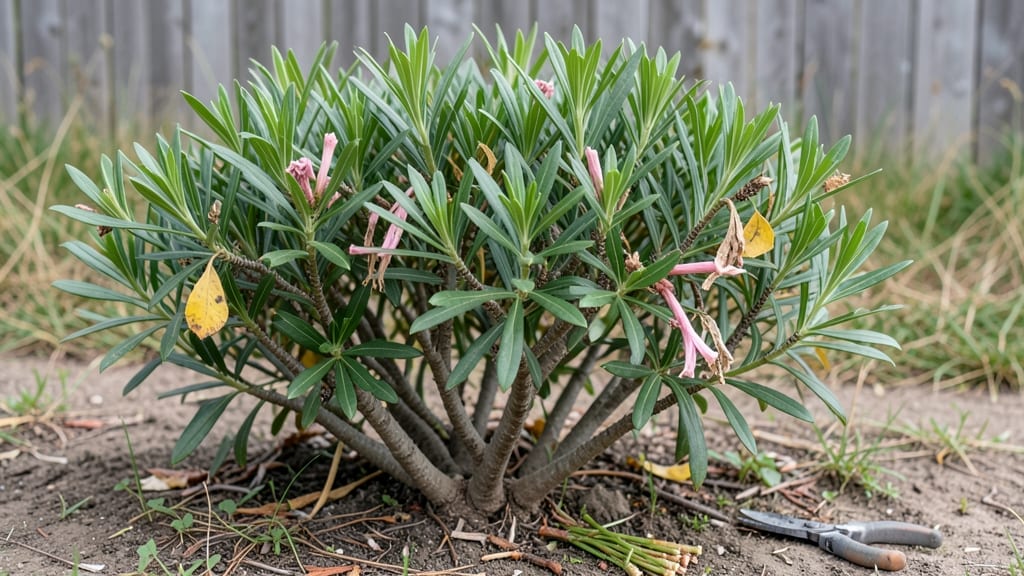
Pruning oleander shrubs keeps them lush and blooming year-round, but I’ve learned the hard way that timing and technique make all the difference. My first attempt left the plant looking like a sad, scraggly mess—until I realized I was cutting too late in the season.
The key is working with the plant’s natural rhythm, not against it, and knowing exactly where to make those sharp cuts.
You’ll need just a few tools: clean, sharp pruners (dull blades tear stems), heavy-duty gloves (oleander sap can irritate skin), and a bucket for clippings. I also recommend sanitizing your tools with rubbing alcohol between cuts—this prevents disease from spreading.
Start by removing dead or diseased branches first; they’re the easiest to spot and the most important to tackle early.
When done right, your oleander will reward you with thicker growth, more vibrant blooms, and a shape that fits your landscape perfectly. The secret is cutting just above a leaf node at a 45-degree angle—this encourages new shoots to grow where you want them.
Even my black thumb can’t mess this up once I figured out the right spots to trim.
Fair warning: oleander is toxic, so keep kids and pets away while you work. And if you’re in a hot climate, prune in early spring or late fall to avoid stressing the plant during peak heat.
The results? A shrub that stays healthy, blooms like crazy, and looks intentional—not like a botched DIY project.
📚 In This Guide
- What you need
- Instructions
- Tips and common mistakes
- Wrapping up and next steps
What you need
- ● Sharp bypass pruners – Choose high-quality, bypass-style pruners (like Felco or Fiskars) to make clean cuts without crushing stems. Size: 7-9 inches for medium branches.
- ● Loppers – For thicker branches (½ inch to 2 inches in diameter). Opt for ratcheting or bypass loppers for precision.
- ● Pruning saw – For stubborn, woody branches (2+ inches thick). A curved-tooth saw minimizes tearing.
- ● Heavy-duty gloves – Nitrile or leather gloves (rated for thorns) to protect your hands. Oleander sap can irritate skin!
- ● Safety glasses – Always wear them to shield against debris.
- ● Long-sleeved shirt and pants – Protects against sap and thorns. Lightweight, breathable fabric works best.
- ● Disinfectant (70% isopropyl alcohol or bleach solution) – Wipe tools between cuts to prevent disease spread.
- ● Rubbing alcohol or hand sanitizer – For cleaning hands after handling oleander (sap is toxic if ingested).
- ● Pruning sealant – Only needed if sealing large cuts (oleanders typically heal fine without it).
- ● Wheelbarrow or bucket – For collecting pruned branches and debris.
- ● Ladder or step stool – If your oleander is tall (4+ feet), ensure it’s stable and rated for your weight.
- ● Check the weather – Prune on a dry, calm day. Avoid windy conditions to prevent sap splatter.
- ● Know your plant’s health – Prune only dead, diseased, or overgrown branches unless doing light shaping. Over-pruning stresses oleanders.
- ● Keep kids and pets away – All parts of oleander are highly toxic. Wear gloves and wash hands thoroughly.
- ● Dispose of clippings properly – Do not compost oleander trimmings. Bag them and dispose in household trash.
Instructions for pruning oleander shrubs
Here's the straightforward approach I've used to keep oleanders lush and blooming for years.
Assess the Shrub and Gather Tools
Start by examining your oleander for dead, crossing, or overgrown branches. Look for brown, brittle stems that snap easily—these need removal first. Next, identify any branches growing inward or rubbing against others; these compete for light and air circulation. I always prune on a dry, sunny morning when the plant is fully hydrated and tools are sharp.
Grab your bypass pruners for clean cuts on smaller stems and loppers for thicker branches. A clean rag and disinfectant are essential to prevent spreading disease between cuts. Oleander sap can irritate skin, so wear gloves and long sleeves. I also keep a small bucket nearby to collect debris—oleander leaves contain toxic compounds, so dispose of clippings carefully.
Remove Dead and Problematic Growth
Begin by cutting out all dead wood first. Make your cuts just outside the branch collar—the swollen area where the branch meets the trunk. This ensures the plant can seal the wound properly. For branches that are crossing or rubbing, remove the smaller one entirely. If two branches are equal in size, cut back the one growing less upright to maintain an open center.
Watch for signs of disease like blackened stems or yellowing leaves. Any suspicious growth should be cut away and discarded. Oleanders are tough, but they won't recover from infected branches. I like to step back every few cuts to visualize the shape—I'm aiming for a naturally balanced silhouette, not a perfectly geometric hedge.
Shape for Airflow and Light
Now focus on thinning out the interior to improve airflow. Oleanders need good circulation to prevent fungal issues. Remove up to one-third of the oldest wood to encourage new growth. Cut back long, leggy branches by about one-third of their length, making the cut just above a leaf node or outward-facing bud. This encourages bushier growth and more blooms.
For formal shaping, make cuts at a 45-degree angle just above a leaf node. Avoid leaving stubs—these can rot and attract pests. If you're pruning for height control, never cut back more than one-third of the plant's height at a time. Oleanders bloom on old wood, so heavy pruning late in the season can reduce next year's flowers.
Clean Up and Monitor Recovery
After pruning, wipe your tools with the disinfectant and rag between each cut to prevent bacterial spread. Remove all debris from the base of the plant. Oleanders respond quickly to pruning, so you should see fresh growth within 2-3 weeks. Water deeply after pruning to help the plant recover, but avoid overwatering—oleanders prefer well-draining soil.
Keep an eye on the pruned areas for the first few weeks. If you notice any oozing sap or unusual discoloration, apply a pruning sealant to protect the cut. Most oleanders will reward you with vigorous new growth and even more abundant blooms next season. I prune mine lightly every 6-8 weeks throughout the growing season to maintain shape and health.
Tips & tricks for pruning oleander shrubs
Mastering the art of pruning oleanders transforms your shrubs from scraggly to stunning—here’s how to avoid common mistakes and get professional results.
Tool Prep is Critical: Before you begin, take 5 minutes to sharpen your bypass pruners and loppers. Dull tools crush stems instead of making clean cuts, which stresses the plant and invites disease. I keep a small file in my toolkit specifically for this purpose—oleander stems are tough, and sharp tools make all the difference. Also, wipe down your tools with disinfectant between each cut to prevent bacterial spread from branch to branch.
The One-Third Rule: Never remove more than one-third of the plant’s height or foliage in a single session, especially when pruning for height control. Oleanders bloom on old wood, so aggressive cuts late in the season can reduce next year’s flowers. If your shrub looks overgrown, spread the pruning over two sessions spaced 6-8 weeks apart. This gradual approach keeps the plant healthy and encourages continuous blooming throughout the season.
Branch Collar Matters: When removing branches, always cut just outside the branch collar—the swollen area where the branch meets the trunk. This ensures the plant can seal the wound properly and prevents unsightly stubs that can rot. I like to visualize the branch collar as a donut—cut just outside the outer edge. For thicker branches, use your loppers and make the cut on the underside of the branch to avoid tearing the bark.
Monitor Recovery Like a Pro: After pruning, keep an eye on the plant for the first 2-3 weeks. If you notice oozing sap or unusual discoloration on any cuts, apply a pruning sealant immediately. Most oleanders bounce back quickly, but this extra step prevents potential issues. I also recommend watering deeply after pruning to help the plant recover, but avoid overwatering—oleanders prefer well-draining soil and can suffer from root rot if soggy.
Pro Tips for Pruning Oleander Shrubs
- Mastering the art of pruning oleanders transforms your shrubs from scraggly to stunning—here’s how to avoid common mistakes and get professional results.
- Tool Prep is Critical: Before you begin, take 5 minutes to sharpen your bypass pruners and loppers.
- The One-Third Rule: Never remove more than one-third of the plant’s height or foliage in a single session, especially when pruning for height control.
Frequently asked questions
Got questions about keeping your oleander shrubs looking their best? Here are some of the most common concerns—and answers—to help you prune like a pro!
When is the best time to prune oleander shrubs?
Oleander thrives with year-round pruning, but the best times are after flowering (late spring/summer) or early spring before new growth starts. Avoid heavy pruning in winter unless you’re in a mild climate—oleander can be sensitive to cold. Light trimming to shape or remove dead branches is safe anytime.
Can I prune oleander too much?
Yes! Over-pruning—especially cutting back more than one-third of the plant at once—can stress oleander, leading to sparse growth or even death. If you’re reshaping aggressively, do it in stages over a few months. Think of it like a haircut: small adjustments keep it healthy!
Do I need to sterilize my pruners after cutting oleander?
Absolutely!
Oleander sap contains toxins that can irritate skin and harm other plants. Wipe blades with rubbing alcohol or soapy water between cuts, and avoid touching your face or other plants afterward. Wear gloves too—better safe than sorry!
What should I do if my oleander looks leggy after pruning?
Leggy growth happens when oleander doesn’t get enough light or nutrients. After pruning, fertilize lightly with a balanced, slow-release fertilizer (like 10-10-10) and ensure it gets 6+ hours of sunlight daily. Prune just above a leaf node to encourage bushier regrowth.
Can I prune oleander in winter?
In mild climates (Zones 8-11), light pruning is fine in winter to remove dead or crossing branches. But in colder areas, wait until spring—oleander is semi-dormant in winter and pruning can invite disease. If you must prune, do it on a dry day to minimize risk.
Wrapping up and next steps
Pruning your oleander shrubs doesn’t have to be intimidating—it’s all about timing, technique, and a little patience! 🌿 With the right tools and a clear plan, you’ll keep your plants thriving year-round while shaping them into stunning focal points.
Whether you’re trimming for blooms, health, or aesthetics, every snip brings you closer to a lush, vibrant garden.
Ready to take the next step? Grab your pruners, mark your calendar, and start small—your oleanders (and your green thumb) will thank you! For extra confidence, watch a quick tutorial or join a local gardening group to swap tips. Happy pruning!