
Pruning
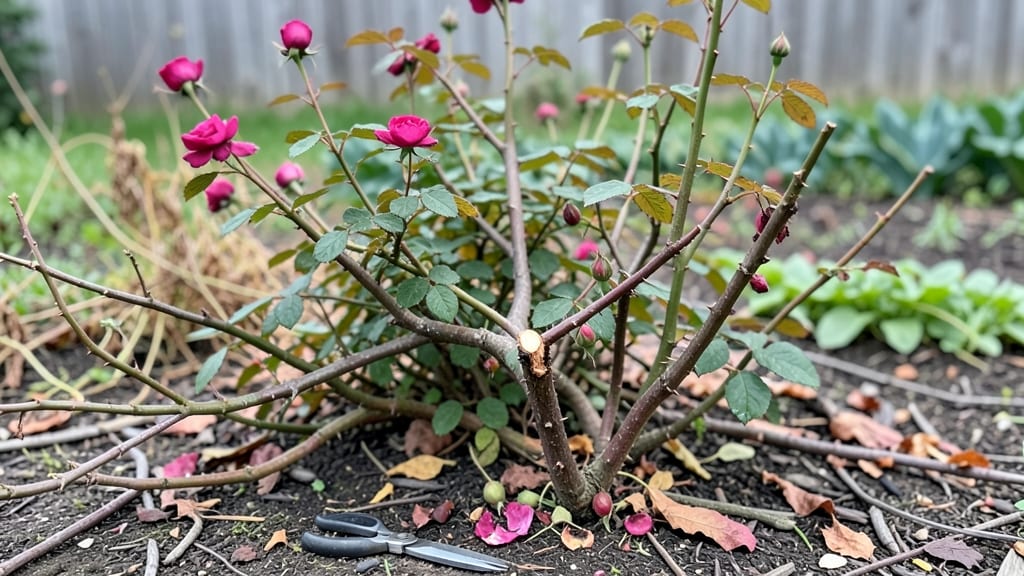
Pruning shrub roses in fall isn’t just about tidying up—it’s the secret to next year’s healthier, bushier plants with fewer dead branches and more blooms. I’ve learned the hard way that skipping this step means winter storms snap weak canes and spring blooms arrive sparse.
The right cuts now prevent disease, improve airflow, and set up your roses for a stronger start when growth resumes.
You’ll need sharp bypass pruners, rubbing alcohol for sterilizing cuts, and a clear day when temps are above 40°F—no frozen fingers here. Start by removing any dead, diseased, or crossing branches first; these are the easy wins.
Then, look for one-third of last year’s growth to trim back, focusing on outward-facing buds to encourage an open, airy shape. Think of it like giving your roses a spa day before winter’s chill sets in.
What you’ll end up with is a shrub that looks like a well-behaved hedge, not a tangled mess. The cuts you make now will translate to fewer deadheads next summer and roses that bloom earlier, harder, and with more color.
Plus, the open structure means better airflow—less fungal trouble and more energy going into new growth, not fighting off mildew. It’s the kind of prep that makes spring gardening feel like a breeze.
For those in colder zones, wait until after your first hard frost but before the ground freezes solid—usually late November or December. In milder climates, you’ve got until January.
And here’s a pro tip: after pruning, spread 2–3 inches of mulch around the base to insulate roots and keep moisture in. Your roses will thank you come spring with vibrant new shoots and a head start on blooming.
📚 In This Guide
- What you need
- Instructions
- Tips and common mistakes
- Wrapping up and next steps
What you need
- ● Bypass pruners: Sharp, high-quality pruners (e.g., Felco or Corona) to make clean cuts. Invest in a pair for small stems (10–12") and a larger pair (14–16") for thicker branches.
- ● Loppers: For branches ¾" to 2" in diameter—look for bypass or anvil-style with a long handle (24–30") for leverage.
- ● Pruning saw: For stubborn, thick stems (2" or larger). A bow saw or curved pruning saw works best.
- ● Disinfectant: Rubbing alcohol (70% or higher) or a garden disinfectant to sterilize tools between cuts and prevent disease spread.
- ● Garden gloves: Heavy-duty, cut-resistant gloves (e.g., Mechanix or Filon) to protect your hands from thorns and debris.
- ● Bucket or bag: A 5-gallon bucket or heavy-duty trash bag for collecting pruned branches.
- ● Hand pruners (for precision): Smaller, ergonomic pruners for delicate trimming near the base.
- ● Rake or leaf blower: To clear fallen leaves and debris before pruning for a cleaner workspace.
- ○ Pruning sealant: Optional for large cuts (1" or wider)—use a rose-specific sealant to prevent disease entry.
- ● Marking spray: Temporary spray paint to mark branches for removal (helpful for complex shrubs).
- ● Safety glasses: Protect your eyes from flying debris, especially when using a saw.
- ● Weather check: Prune on a dry, cool day (ideal temps: 40–60°F) to reduce stress on the plant.
- ● Research your rose: Know your shrub rose variety—some (like Knock Out® roses) need minimal pruning, while others (e.g., Floribunda) require aggressive cuts.
- ● Clean workspace: Remove dead leaves, mulch, or weeds around the base of the rose to spot pests or disease early.
Instructions for pruning shrub roses in fall
Here's the straightforward method I use every fall to keep my shrub roses healthy and blooming abundantly.
Gather Your Tools and Prepare the Workspace
Start by sharpening your pruning shears and sterilizing them with rubbing alcohol. I always check my tools first—dull blades tear stems instead of making clean cuts, which invites disease. Lay out a tarp or old sheet to collect clippings and place it near your workspace. This keeps the area tidy and makes cleanup easier.
Wear gloves to protect your hands from thorns and any potential irritants. I like to work on a dry day when temperatures are above 50°F—cold, wet conditions stress the plants. If rain is forecast within a few days, wait to prune until after it passes. You'll see the difference in how quickly the roses recover.
Remove Dead, Diseased, or Weak Growth
Begin by scanning the entire shrub for branches that are dead, diseased, or crossing others. Dead wood is easy to spot—it’s brown, brittle, and doesn’t bend when you test it. Cut these out first, making your cuts at a 45-degree angle about ¼ inch above a outward-facing bud. This encourages new growth to shoot away from the center of the plant.
For diseased branches, look for black spots, mold, or unusual discoloration. Bag these clippings immediately and dispose of them in the trash, not the compost. I always prune from the bottom up to avoid spreading any potential pathogens to healthier parts of the plant. If you see any suckers growing from the base, remove them too—they drain energy from the main plant.
Thin Out Crowded Branches for Better Airflow
Next, focus on thinning the center of the shrub to improve airflow and sunlight penetration. Aim to remove about one-third of the oldest wood—this prevents the plant from becoming overcrowded and encourages stronger, younger growth. Start at the base and work your way up, cutting branches that are growing inward or rubbing against others.
Watch for branches that are growing straight up or outward too aggressively. These can be pruned back by one-third to one-half to promote a more balanced shape. Make sure each cut leaves at least three to five buds on the remaining branch. You’ll notice the plant’s natural structure become clearer as you go—this is your guide for where to make the next cut.
Shape the Shrub for Next Year’s Blooms
Now it’s time to shape the shrub. Step back frequently to assess the overall form—you want an open, vase-like shape that allows light and air to move through easily. Cut back the longest branches by about one-third, focusing on those that are growing outward. For shrub roses, I avoid heavy pruning in fall, but a light trim now helps the plant prepare for winter.
Pay attention to the direction of the buds when making your cuts. Always leave buds facing outward to encourage new growth that opens up the center. Avoid cutting into old wood—look for the green, healthy growth just below the current season’s blooms. If you’re unsure, err on the side of caution and leave the branch longer. You can always prune more next spring if needed.
Clean Up and Apply Mulch
Once you’ve finished pruning, gather all the clippings and dispose of them properly. I like to shred larger branches with my pruners before bagging them to reduce bulk. Now’s the time to apply a 2- to 3-inch layer of mulch around the base of the plant, keeping it a few inches away from the stem. This protects the roots from freezing temperatures and retains moisture.
Water the base of the shrub deeply after pruning to help it recover. Avoid getting water on the leaves, as this can promote fungal growth. If your climate is particularly cold, consider wrapping the shrub with burlap or using a frost blanket for added protection. Step back and admire your work—the open center and clean lines will make next year’s blooms even more spectacular.
Tips & tricks for pruning shrub roses in fall
Pruning shrub roses in fall sets the stage for next year's vibrant blooms—here are the key details that make all the difference.
Tool Preparation is Non-Negotiable: I can't stress enough how important it is to start with sharp, sterilized pruning shears. Dull blades crush stems instead of making clean cuts, which creates entry points for disease. After each cut, wipe your shears with rubbing alcohol to prevent cross-contamination between healthy and diseased branches. This simple step in Step 1 of your pruning process will save you from potential fungal issues down the road.
The 45-Degree Cut Technique: When making your cuts in Step 2, that 45-degree angle isn't just for show—it creates a natural water runoff path that prevents water from pooling on the cut surface. Always cut about ¼ inch above an outward-facing bud to encourage new growth that opens up the plant's center. I've found that using a small white marker on your shears helps you maintain consistent angles when working with multiple branches.
Temperature Matters More Than You Think: Working when temperatures are above 50°F as mentioned in Step 1 isn't just about comfort—it's about plant health. Cold temperatures stress roses, making them more vulnerable to shock. If you must prune in cooler conditions, do it on the warmest part of the day and avoid working after rain. I've noticed my roses recover much faster when pruned in these ideal conditions.
Mulching Makes a Difference: That 2- to 3-inch layer of mulch in Step 5 isn't just decorative—it's insulation. Organic mulch breaks down over winter, releasing nutrients that feed your roses when they're dormant. Just remember to keep it a few inches away from the stem to prevent moisture buildup that could lead to rot. I like to use shredded bark mulch because it breaks down slowly and provides consistent coverage.
Pro Tips for Pruning Shrub Roses In Fall
- Pruning shrub roses in fall sets the stage for next year's vibrant blooms—here are the key details that make all the difference.
- Tool Preparation is Non-Negotiable: I can't stress enough how important it is to start with sharp, sterilized pruning shears.
- The 45-Degree Cut Technique: When making your cuts in Step 2, that 45-degree angle isn't just for show—it creates a natural water runoff path that prevents water from pooling on the cut surface.
Frequently asked questions
Got questions about pruning shrub roses in fall?
You’re not alone! Here are answers to the most common concerns—so you can prune with confidence and set your roses up for a spectacular spring.
When is the exact best time to prune shrub roses in fall?
Prune after your first hard frost (when temperatures drop below 25°F (-4°C)) but before winter dormancy sets in. Aim for late fall—typically November to early December in most U.S. zones. This timing helps the plant "seal" cuts before winter, reducing disease risk. Pro tip: If frost is forecast, wait a few days to avoid stressing the plant.
What if I miss fall pruning? Can I prune in early spring instead?
Yes! While fall is ideal, early spring (just before new growth starts) is the next best option. Avoid heavy pruning in late winter, as cold snaps can damage tender buds. If you skip fall, focus on removing dead wood and shaping in spring—just be ready for a slightly delayed bloom season.
How do I know if I’ve pruned too much or too little?
Shrub roses are forgiving, but aim to remove 1/3 to 1/2 of the plant’s height. Cut back to outward-facing buds (about 1/4 inch above a bud) to encourage airflow and blooms. Too much? Look for sparse canes or delayed spring growth. Too little? Overcrowded centers or weak stems signal you should’ve pruned harder next time.
Should I sterilize my pruners between cuts? How?
Absolutely!
Sterilizing prevents disease spread. Use a 10% bleach solution (1 part bleach to 9 parts water) or rubbing alcohol on pruners between cuts. Wipe with a clean cloth or paper towel. For extra safety, carry a small spray bottle of diluted bleach in your gardening toolkit.
What do I do with the pruned branches? Can I compost them?
Remove diseased branches immediately and dispose of them in the trash (not compost). Healthy prunings can go into your compost bin only if the rose hasn’t shown signs of fungal issues (like black spot) in past years. For mulch, chop small branches into rose-friendly mulch—it breaks down quickly and adds nutrients to the soil.
My roses have weird, swollen canes—what’s wrong?
Those are likely rose canker or crown gall, caused by bacteria or fungi. Prune infected areas below the swelling by at least 6 inches, sterilize your tools, and dispose of the infected wood. Apply a copper fungicide to the cut surface to prevent spread. Repeat in spring if needed.
Wrapping up and next steps
Fall pruning is your secret weapon for healthier, more vibrant shrub roses next spring! By removing dead wood, shaping growth, and encouraging strong stems, you’re setting the stage for bountiful blooms and robust plants.
Don’t let overwhelm hold you back—just follow the steps, take your time, and enjoy the process! 🌸
Ready to transform your garden? Grab your tools, pick a crisp fall day, and get pruning. Your roses—and future you—will thank you!