
Shrubs
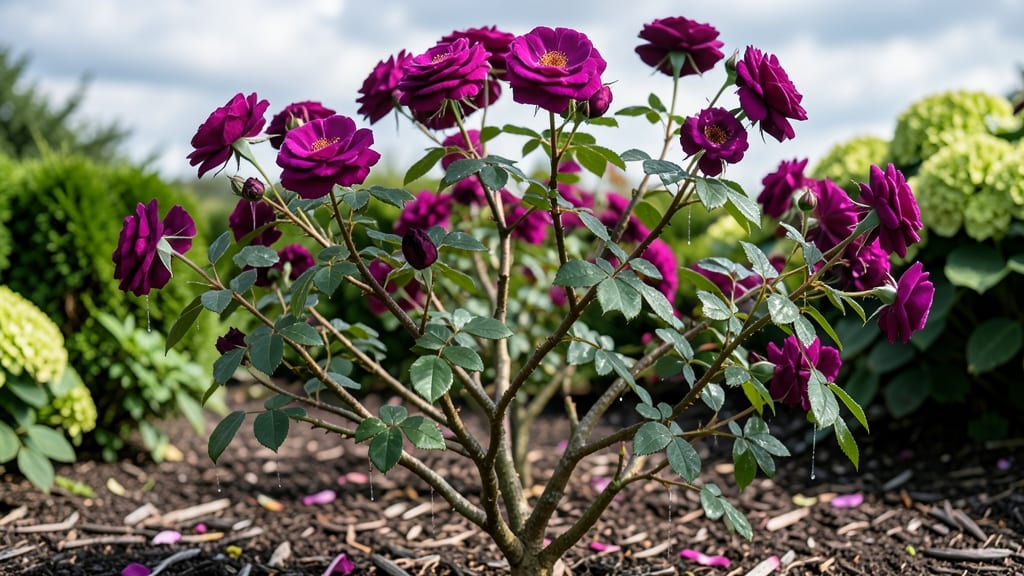
That first flush of purple rose blooms in late spring feels like magic—until you realize how easily it can disappear without the right pruning. 🌹 I’ve spent years watching these fragrant canopies transform from tangled messes into showstopping shrubs, and the secret lies in timing more than technique.
Most gardeners prune too late, missing the perfect window when the plant is just waking up but before pests arrive. The right variety makes all the difference: look for ‘Mister Lincoln’ for deep magenta blooms or ‘Purple Dream’ for velvety petals with a hint of spice.
Plant them where they’ll get 6+ hours of sun daily, and amend the soil with compost—purple roses hate soggy roots but love rich, well-draining earth. Water deeply once a week (more in summer), and you’ll see those first buds form by late April.
When you prune at the right moment—just as the forsythia blooms—you’ll encourage a second flush of blooms by midsummer. The key is cutting back one-third of the oldest stems to open the center, while leaving younger growth to fuel new blooms.
Skip this, and you’ll end up with a bush full of leaves and no flowers. This method works for any purple rose, from climbing varieties to compact shrubs. The payoff? A garden centerpiece that smells like a spring morning and blooms longer than store-bought roses.
Here’s how to make it happen—without the guesswork.
📚 In This Guide
- What you need
- Instructions
- Tips and common mistakes
- Wrapping up and next steps
What you need
- ● Pruning shears: Sharp, bypass-style shears (for clean cuts) or anvil-style for thicker branches (2-4 pairs, depending on shrub size).
- ● Loppers: 1 pair (for branches ½–1.5 inches thick).
- ● Pruning saw: 1 (for branches >1.5 inches thick).
- ● Disinfectant: 70% isopropyl alcohol or bleach solution (1 part bleach to 9 parts water) to sterilize tools between cuts.
- ● Gloves: Heavy-duty, cut-resistant gloves (1 pair) to protect hands from thorns and sap.
- ○ Pruning sealant (optional but helpful): Pruning wax or tree paint (for large cuts >½ inch in diameter).
- ● Trash bags or bucket: 1–2 (for collecting pruned branches).
- ● Notebook & pen: 1 (to jot down notes on cuts or observations).
- ● Extension pole: 1 (for high branches, 6–10 feet long).
- ● Hand saw: 1 (for stubborn, thick stems).
- ● Garden kneeler: 1 (for comfort if pruning near the ground).
- ● Spray bottle with water: 1 (to mist tools and prevent sap buildup).
- ● Compost bin or mulch: Access to (for repurposing pruned branches).
- ● Weather check: Prune on a dry, overcast day (avoid rain or direct sun).
- ● Tool sharpening: Ensure blades are razor-sharp for clean cuts.
- ● Safety first: Wear long sleeves/pants and closed-toe shoes to avoid thorns.
- ● Shrub assessment: Inspect the plant for dead, diseased, or crossing branches before starting.
Step-by-step guide to reviving your purple rose shrub
Here's how to coax back that fragrant, lush canopy—timing and technique matter most.
✂️ Step 1: Time Your Pruning for Maximum Blooms
Prune your purple rose shrub in early spring, right after the last frost but before new growth begins. This timing ensures you cut back just as the plant prepares to burst into life. Avoid pruning in fall or winter—you'll remove buds that would have bloomed next season. Late summer pruning is only for shaping, not reviving.
Look for swollen buds along the stems—these are your signal that the plant is waking up. If you see fresh green growth at the tips, it's too late; you've missed the ideal window. I like to prune on a dry, overcast day to reduce stress on the plant. This gives the cuts time to heal before the sun intensifies.
🌿 Step 2: Cut Back to the Right Spots for Healthy Growth
Start by removing dead, diseased, or crossing branches first—these compete with healthy growth and invite pests. Cut these all the way back to the main stem or outward-facing buds. For overall revival, reduce the shrub's height by one-third to open up the center and improve airflow. This prevents fungal issues and encourages bushier growth.
Make your cuts at a 45-degree angle, about ¼ inch above an outward-facing bud. This angle helps water run off the cut instead of pooling, which reduces rot risk. Avoid cutting directly above a bud—you'll leave a stub that never heals properly. If a branch is too small to see buds clearly, cut it back to a larger branch or the main stem.
☀️ Step 3: Shape for Sunlight and Airflow
After pruning, step back and visualize how sunlight will reach the center of the shrub. Purple roses thrive in full sun (6-8 hours daily), but dense foliage can block light from the interior. Remove any branches that cast shade over the center or grow inward. Your goal is a rounded, open shape that lets air circulate freely.
Pay special attention to the outermost canes—these are often the oldest and may need thinning to make room for younger, more productive growth. If you see bare stems with no leaves or buds, these are done producing and can be cut back to the base. This might seem drastic, but it redirects the plant's energy to healthier branches.
💧 Step 4: Feed and Water for a Strong Recovery
Within a week of pruning, apply a balanced, slow-release fertilizer (10-10-10 ratio) to give your rose the nutrients it needs to bounce back. Water deeply right after fertilizing to help the granules reach the roots. Purple roses are drought-tolerant once established, but revival pruning stresses the plant, so keep the soil evenly moist for the first 4-6 weeks—not soggy, just consistently damp.
Watch for new growth within 2-3 weeks—this is your confirmation that the pruning worked. If you see only sparse, weak shoots, the plant may need a second round of pruning in late spring to encourage more vigorous regrowth. Avoid heavy pruning again until next year, though—your shrub needs time to recover and build energy for another blooming season.
⏰ Step 5: Monitor and Adjust Through the Season
Check your rose shrub weekly for signs of stress, like yellowing leaves or wilting flowers. These could signal overwatering, underwatering, or pests. Purple roses are prone to black spot fungus, so remove any infected leaves immediately and treat with a copper fungicide if needed. Healthy leaves should be deep purple-green and firm to the touch.
By mid-summer, your shrub should be bursting with new canes and buds. If it's still sparse, consider a light top dressing of compost around the base to boost soil health. Mulch with 2-3 inches of organic mulch to retain moisture and regulate soil temperature. This final step keeps your revival on track for a stunning fall display.
Tips & tricks for reviving your purple rose shrub
Here's what nobody tells you about pruning that'll make all the difference in your rose's revival.
Timing is Everything: The early spring window is critical—aim for right after the last frost when you see those swollen buds but before fresh green growth appears. I've missed this window twice and ended up with sparse blooms. Check your local frost dates and mark your calendar! If you're unsure, prune when forsythia bushes bloom nearby—they're a reliable indicator.
Pruning Angle Matters: That 45-degree angle isn't just for looks—it's a water management system. The sloped cut directs rainwater away from the wound, preventing rot that can kill new growth. Use clean, sharp pruners and make your cuts just above the bud where you want new growth to emerge. If your cuts look jagged or torn, you're using dull tools—time for a sharpening.
Post-Pruning Care: The first 4-6 weeks after pruning are make-or-break for your rose's recovery. I can't stress enough how important consistent moisture is during this period. Use a rain gauge or moisture meter to check soil dampness—you want it to feel like a wrung-out sponge, not a dripping wet washcloth. Mulch with 2-3 inches of organic material immediately after pruning to lock in moisture and protect roots from temperature swings.
Visual Growth Check: After those 2-3 weeks, watch for new shoots emerging from the buds you left behind. Healthy growth should be vibrant green and firm to the touch. If you see only sparse, weak shoots, don't panic—your rose might just need a little more time. Consider applying a seaweed-based fertilizer at this stage for an extra boost of nutrients without burning the plant.
Pro Tips for Purple Rose Shrub
- Here's what nobody tells you about pruning that'll make all the difference in your rose's revival.
- Timing is Everything: The early spring window is critical—aim for right after the last frost when you see those swollen buds but before fresh green growth appears.
- Pruning Angle Matters: That 45-degree angle isn't just for looks—it's a water management system.
Frequently asked questions
Got questions about your purple rose shrub? You’re not alone! Here are answers to the most common concerns—from pruning puzzles to care tips—to keep your fragrant beauty thriving.
When is the best time to prune a purple rose shrub?
The ideal time is late winter or early spring (just before new growth starts). Avoid pruning in fall—it can stimulate tender growth that won’t survive winter. For light shaping, you can also prune in summer, but keep it minimal to avoid stressing the plant.
How much should I cut back my purple rose shrub?
Remove 1/3 of the oldest canes to encourage new growth, and trim back any dead, diseased, or crossing branches. For hybrid teas or floribundas, cut just above a bud facing outward to maintain an open shape. Never cut into old wood—it won’t regrow!
Why aren’t my purple roses blooming as much as they used to?
Over-pruning, poor nutrition, or lack of sunlight (they need 6+ hours daily) are common culprits. Feed with a rose-specific fertilizer in spring, and prune after blooming to promote next year’s flowers. Check for pests like aphids or black spot too!
Can I grow a purple rose shrub in a container?
Choose a large pot (18"+ diameter) with drainage holes and a well-draining potting mix. Dwarf varieties like ‘The Fairy’ thrive in containers. Just water regularly (containers dry out fast) and fertilize monthly during growing season.
What pests or diseases should I watch for?
Keep an eye out for aphids, spider mites, and black spot fungus. Treat aphids with a soapy water spray, mites with neem oil, and black spot by removing infected leaves and applying fungicide. Prune for airflow to prevent future issues!
Wrapping up and next steps
Transforming your purple rose shrub into a fragrant, lush canopy is all about timing and care! Pruning at the right moments—like late winter or early spring—ensures vibrant blooms and healthy growth. With the right tools, techniques, and patience, you’ll enjoy a stunning, aromatic display year after year.
Ready to give your shrub the love it deserves? Roll up your sleeves and get pruning! 🌸✂️ Start by reviewing your notes, gathering your tools, and scheduling that first trim—your purple rose will thank you with a burst of beauty!