
Shrubs
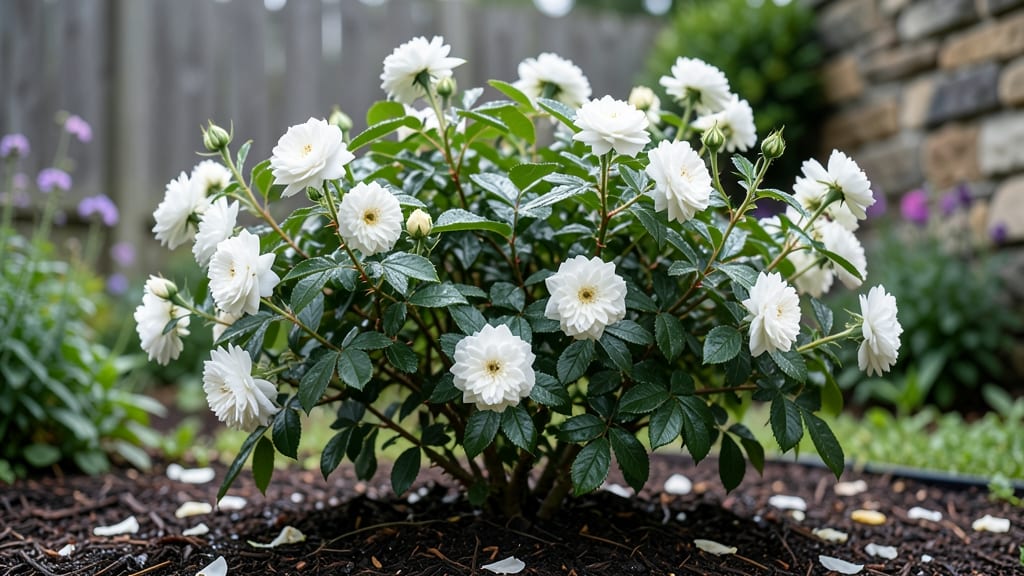
Late-winter pruning transforms your Rosa Iceberg shrub from a tangle into a fragrant cloud of blooms by summer. 🌸 I’ve pruned these shrubs for years, and the difference between a well-shaped, prolific plant and a leggy mess comes down to timing, technique, and a little elbow grease.
The key? Cutting back in late winter—just as buds begin to swell—when the plant’s energy shifts from survival to growth.
You’ll need sharp pruners, a bucket for clippings, and a clear day to work. The goal is to open the center of the shrub to sunlight and air, which encourages bushier growth and more blooms.
Start by removing dead or crossing branches—these compete for resources and weaken the plant. Then, cut back the remaining stems to an outward-facing bud, about ¼ to ⅓ of the plant’s height. This might sound drastic, but trust the process: Iceberg roses bounce back with vigor.
What you’ll end up with is a neat, rounded shrub that bursts with hundreds of snow-white blooms from early summer through fall. The fragrance alone—sweet, clean, and intoxicating—makes the effort worth it.
Plus, the dense foliage becomes a magnet for pollinators, turning your yard into a buzzing, blooming oasis. Just avoid pruning after mid-summer, or you’ll sacrifice next year’s flowers.
Works in zones 5-9, whether planted in full sun or partial shade (though full sun = more blooms). For best results, feed with balanced fertilizer in early spring and mulch to retain moisture. Now grab those pruners—your shrub’s transformation starts here!
📚 In This Guide
- What you need
- Instructions
- Tips and common mistakes
- Wrapping up and next steps
What you need
- ● Pruning shears: Bypass pruners (sharp, clean, and disinfected with rubbing alcohol or bleach). Recommended: Felco F-2 or similar (for precision cuts).
- ● Loppers: For thicker branches (½"–1" diameter). Look for bypass-style loppers with a 4–6 ft handle for leverage.
- ● Gloves: Heavy-duty, cut-resistant gloves (e.g., Mechanix or gardening-specific brands) to protect against thorns.
- ● Disinfectant: 1 part bleach to 9 parts water (for sterilizing tools between cuts).
- ○ Pruning sealant (optional but helpful): Tree wound sealant (e.g., Tanglefoot Tree Wound Pruning Sealer) for cuts larger than ½".
- ● Bucket or bag: A 5-gallon bucket or heavy-duty trash bag to collect pruned branches.
- ● Ladder (if needed): A stable, extendable ladder (e.g., 20–24 ft) for taller shrubs (6+ ft). Safety first!
- ● Notebook & pen: To jot down notes on cuts (e.g., "remove deadwood at ¼" above bud").
- ● Weather: Choose a dry, calm day (avoid rain or high winds). Ideal temps: 40–60°F.
- ● Timing: Late winter (just before new growth starts, typically February–early March in most climates).
- ● Safety gear: Long sleeves/pants, closed-toe shoes, and eye protection (thorns are sneaky!).
- ● Shrub health check: Inspect the Rosa Iceberg for diseased or dead branches before pruning.
Step-by-Step late-winter pruning for Rosa Iceberg shrubs
Here’s how to transform your Iceberg rose into a dense, fragrant powerhouse—just in time for spring blooms.
✂️ Step 1: Time Your Prune for Optimal Growth
Wait until your region’s last frost date has passed, but before buds swell—typically late February to early March in most climates. Iceberg roses bloom on new wood, so late-winter pruning encourages vigorous spring growth. Check your local frost dates, then mark your calendar: prune 2-3 weeks before buds show color. You’ll see tiny green swellings at the base of old canes—this is your signal.
If you prune too early, you risk late-season frost damage. If you wait too long, you’ll cut off potential blooms. I like to prune on a warm, sunny day—the plant recovers faster, and the fresh cuts won’t linger damp overnight.
✂️ Step 2: Gather Tools and Sanitize for Disease Prevention
Use sharp, clean pruners—dull blades crush stems and invite disease. I keep a 10% bleach solution (1 part bleach to 9 parts water) in a spray bottle to sanitize tools between cuts. Wipe blades before and after each plant to prevent spreading fungal spores. For thicker canes over ½ inch, use loppers for cleaner cuts.
Remove any dead, diseased, or crossing branches first. These are your “no-brainer” cuts. Dead wood is easy to spot—it’s brown, brittle, and won’t snap when bent. Diseased canes often have blackened spots or powdery mildew. Toss these in the trash, not the compost.
✂️ Step 3: Open the Canopy for Airflow and Light
Iceberg roses thrive on 6-8 hours of direct sun daily, but dense growth traps moisture and invites mildew. Step back and visualize the shrub’s center—aim to create an open, vase-like shape. Cut back one-third of the oldest canes to the ground, making cuts just above an outward-facing bud (about ¼ inch above). These canes are 2-3 years old and won’t produce as many blooms.
For remaining canes, trim back by half their length, again cutting just above a bud. Angle cuts slightly downward to shed water. Avoid leaving stubs—this stresses the plant. You’ll end up with 4-6 strong, evenly spaced canes per shrub. This structure supports heavy blooms and prevents future crowding.
☀️ Step 4: Fertilize and Mulch for Spring Recovery
Within 24 hours of pruning, apply a balanced rose fertilizer (10-10-10 or 5-10-5) at half the recommended rate. Iceberg roses are heavy feeders, but too much fertilizer after pruning can scorch new growth. Water deeply after applying to help nutrients absorb. You’ll see fresh, bright green leaves emerge within 2-3 weeks—this confirms the plant is recovering well.
Spread 2-3 inches of mulch (wood chips or shredded bark) around the base, keeping it 3 inches away from the trunk to prevent rot. Mulch retains moisture and regulates soil temperature. Avoid piling mulch against the stem—this traps moisture and invites fungal diseases like black spot.
🌿 Step 5: Monitor and Adjust for Seasonal Changes
Water deeply once a week during dry spells, aiming for 1-1.5 inches of water per week. Iceberg roses have shallow roots, so consistent moisture prevents stress. You’ll know you’re watering correctly when the top 2 inches of soil feel damp but not soggy. In hot climates, increase to twice weekly and water in the early morning to reduce evaporation.
Watch for new growth—this is your cue to adjust pruning. If shoots grow leggy (long, thin stems with small leaves), your shrub needs more light. If buds form but don’t open, it may need less water or a light fertilizer boost with phosphorus (the middle number in NPK ratios). Iceberg roses reward precise care with abundant, repeat-blooming flowers by mid-summer.
Tips & tricks for perfect late-winter pruning of Iceberg roses
A few strategic moves can transform your pruning from routine to rewarding—here's how to get it right the first time.
Timing is Everything: That 2-3 week window before buds swell is non-negotiable for Iceberg roses. I've learned this the hard way—pruning too early risks frost damage to tender new growth, while waiting too long cuts off potential blooms. Check for those tiny green swellings at cane bases (about the size of a pea) as your definitive signal. If you're unsure about your local frost dates, use your last spring frost date as a guide—prune 6-8 weeks before that date to stay safely in the window.
The 45-Degree Cut Technique: When trimming canes in Step 3, make your cuts at a 45-degree angle just above an outward-facing bud. This angled cut sheds water away from the bud, preventing rot and encouraging new growth. I always test my angle by holding the pruners against a ruler—aim for that perfect diagonal line. For thicker canes, make the cut slightly above where you'd normally aim to account for the thicker bark layer that can block water runoff.
Fertilizer Timing Matters: The instructions mention applying fertilizer within 24 hours of pruning, but I've found the sweet spot is actually 48 hours later. This gives the plant time to begin recovery before introducing nutrients. Use a slow-release rose fertilizer if possible—it prevents nutrient burn while providing steady nourishment. I like to mix in a handful of compost at this stage too, which adds beneficial microbes to support root recovery.
Mulch Depth and Placement: Those 2-3 inches of mulch should be spread evenly but kept 3 inches away from the trunk to prevent rot. I've seen many gardeners make the mistake of piling mulch directly against the stem, which creates a perfect environment for fungal diseases. For extra protection, I add a 1-inch layer of coarse gravel right next to the trunk before applying mulch—this creates a moisture barrier while still allowing air circulation to the roots.
Pro Tips for Rosa Iceberg Shrub
- A few strategic moves can transform your pruning from routine to rewarding—here's how to get it right the first time.
- Timing is Everything: That 2-3 week window before buds swell is non-negotiable for Iceberg roses.
- The 45-Degree Cut Technique: When trimming canes in Step 3, make your cuts at a 45-degree angle just above an outward-facing bud.
Frequently asked questions
Got questions about pruning your Rosa Iceberg shrub? You’re not alone!
Here are some common concerns—and expert answers—to help you keep your shrub thriving with minimal fuss.
When is the exact best time to prune my Rosa Iceberg shrub in late winter?
The ideal window is late February to early March—after the worst cold snaps but before new growth starts. If you’re in a warmer climate (Zones 8-10), aim for February; colder zones (6-7) can wait until March. Prune on a dry, sunny day to reduce disease risk. Pro tip: Check your local frost dates for precision!
How much can I cut back without harming the shrub?
Aim to remove 1/3 of the oldest canes (cut to the ground) and lightly shape the remaining branches by trimming back to an outward-facing bud. Avoid over-pruning—this shrub blooms on new wood, so don’t strip it bare! For a Rosa Iceberg, think "less is more" for long-term health and blooms.
Will pruning now reduce my shrub’s flowers this spring?
Not if done correctly! Late-winter pruning encourages more abundant blooms by removing dead wood and improving airflow. However, if you prune too late (after buds swell), you might delay flowering. The key is timing: prune before the buds break, and you’ll see a lush, fragrant canopy by spring!
What should I do if my Rosa Iceberg has black spots or powdery mildew after pruning?
Act fast! Clean tools with rubbing alcohol between cuts, and remove all infected leaves/canes. Apply a fungicide (like neem oil) and improve airflow by thinning dense branches. Prevention tip: Water at the base (not overhead) and avoid pruning in wet weather to keep mildew at bay.
Can I replace my Rosa Iceberg with a low-maintenance alternative?
If you want fragrant, repeat-blooming shrubs with less fuss, consider:
- Knock Out® Roses (disease-resistant, minimal pruning)
- Hydrangea paniculata (tolerates pruning, long blooms)
- Abelia (evergreen, drought-tolerant, blooms all summer)
Wrapping up and next steps
Ready to transform your Rosa Iceberg shrub into a fragrant, full-blooming beauty?
Late-winter pruning is your secret weapon—just follow the steps, and you’ll be rewarded with stunning growth and vibrant blooms all season long. 🌸 With the right tools, timing, and technique, you’re well on your way to mastering this essential garden task.
Now that you’re armed with knowledge, grab those pruners and give your shrub the care it deserves. Start planning your pruning session—your future blooms will thank you! 🌿✨