
Shrubs
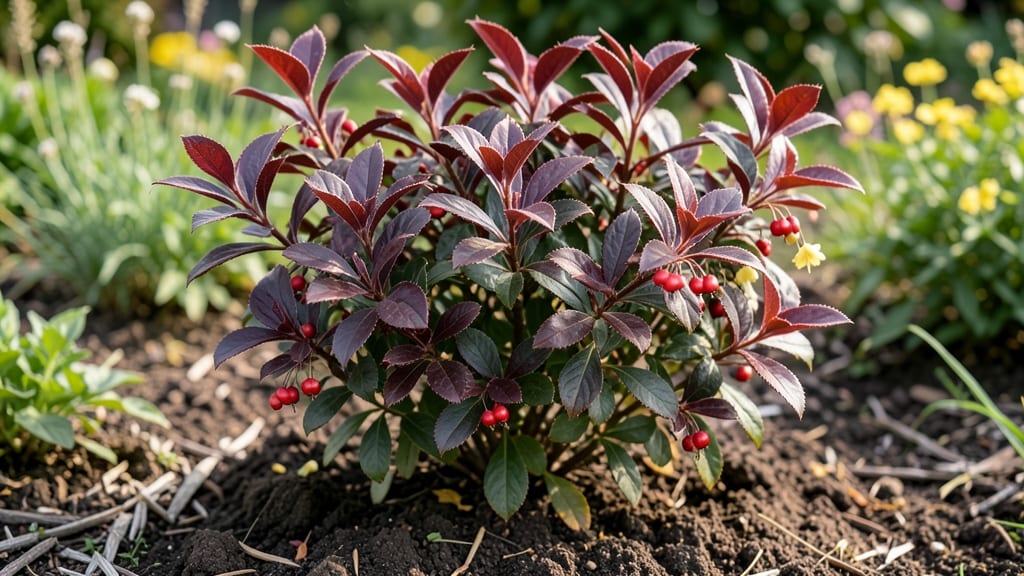
Royal Burgundy Compact barberry shrubs create a stunning, thornless privacy screen that grows 3 feet tall and wide—perfect for tight spaces. 🌿 I planted mine last spring, and within a year, it transformed my backyard with its rich burgundy foliage and four-season interest.
The key lies in its adaptability and low-maintenance nature, making it ideal for both busy gardeners and design-focused landscapes.
This shrub thrives in full sun to partial shade and tolerates most soil types, though well-draining soil prevents root rot. Unlike traditional barberries, this compact variety stays neatly contained, eliminating the need for aggressive pruning.
Just a light trim after flowering keeps it tidy, and its glossy, deep purple leaves add year-round color—even in winter.
What sets it apart is its pest and disease resistance, so you won’t waste time battling aphids or fungal issues. The berries attract birds, adding another layer of garden life.
By year three, you’ll have a lush, dense screen that blocks noise and wind while requiring minimal upkeep—ideal for modern landscapes.
Whether you’re lining a fence, softening a corner, or creating a low-maintenance hedge, this shrub delivers. Plant in early spring or fall, water deeply the first season, and watch it flourish with almost no effort. Here’s how to get the best results from day one.
📚 In This Guide
- What you need
- Instructions
- Tips and common mistakes
- Wrapping up and next steps
What you need
- ● Royal Burgundy Compact Barberry plants – 3–5 plants per 6-foot section (spaced 3–4 feet apart for optimal growth). Choose 1-gallon containers for best root establishment.
- ● Well-draining soil – Mix equal parts garden soil, compost, and coarse sand (or use native soil amended with peat moss if your area is clay-heavy).
- ● Organic mulch – 2–3 inches of shredded bark or pine needles to retain moisture and suppress weeds.
- ● Balanced fertilizer – 10-10-10 or 20-20-20 (apply at half-strength during planting and again in early spring).
- ● Pruning shears – Bypass pruners (sharp, 6–8 inch blades) for shaping and maintenance.
- ● Gloves & long sleeves – Barberries have soft thorns (though "compact," they’re still prickly!).
- ● Watering can or hose with adjustable nozzle – For deep, 1-inch weekly watering (more if droughty).
- ○ Stakes (optional but helpful) – 4–6 foot bamboo stakes + soft plant ties to support young plants in windy areas.
- ● Soil pH tester – Ideal range: 6.0–7.5 (barberries tolerate slight acidity).
- ● Slow-release fertilizer spikes – For low-maintenance nutrient delivery.
- ● Deer repellent spray – If local wildlife is a concern (barberries are deer-resistant but not foolproof!).
- ● String or twine – To mark planting lines for a neat, straight hedge.
- ● Post-hole digger – For deeper planting holes (12–18 inches wide/deep) in heavy clay.
Step-by-Step guide to planting royal Burgundy Compact barberry for fast privacy
Here's how to establish a lush, thornless screen that matures in just three years—my go-to for low-maintenance privacy.
🌱 Step 1: Select and Prepare the Planting Site
Royal Burgundy Compact thrives in full sun to partial shade (minimum 4 hours of direct light daily) and tolerates a wide range of soil types, but drainage is critical. Avoid low spots where water pools—this shrub hates soggy roots. Test your soil by digging a 6-inch hole; if water doesn't drain within 4 hours, amend with 2-3 inches of compost or create a raised bed.
Mark your planting locations 4-6 feet apart in rows (for 4 plants). This spacing allows branches to fill in quickly while maintaining airflow to prevent fungal diseases. I like to sketch a simple grid first—it ensures even spacing and prevents overcrowding as the shrubs mature. For a 6-foot-tall screen, space rows 6 feet apart.
🪴 Step 2: Dig and Amend the Planting Holes
For each plant, dig a hole twice as wide as the root ball but no deeper. The top of the root ball should sit 1 inch above ground level—this prevents stem rot from buried soil. Loosen the sides of the hole with a shovel or your hands to encourage root spread into the surrounding soil.
Mix the removed soil with 1 part compost to 3 parts native soil (about 1 gallon of compost per hole). This improves drainage and provides nutrients without overwhelming the young roots. If your soil is particularly heavy clay, add ½ cup of perlite or coarse sand per hole to break up compaction.
☀️ Step 3: Plant and Water Thoroughly
Gently remove the barberry from its container and tease the roots outward if they're circling. Place the plant in the hole, backfill with amended soil, and press firmly to eliminate air pockets. Water deeply until the soil 2 inches below the surface feels moist—this settles the roots into place. You'll see the soil surface darken slightly as it absorbs water.
Mulch around the base with 2-3 inches of shredded bark or pine needles, keeping it 3 inches away from the stem to prevent rot. This mulch layer conserves moisture and regulates soil temperature. Avoid organic mulches like wood chips if your area has deer—they'll nibble the young shrubs before they establish.
💧 Step 4: Establish Watering and Maintenance Routine
Water deeply once a week for the first 2 months, providing 1-2 gallons per plant to encourage deep root growth. After that, water only when the top 2 inches of soil feel dry to the touch. Overwatering is the #1 killer of young barberries—yellowing leaves signal you're watering too much.
Fertilize lightly in early spring with a 10-10-10 balanced fertilizer (about ¼ cup per plant). Royal Burgundy Compact is low-maintenance but responds well to this single feeding. Prune only to shape in late winter—never cut into old wood, as it won't regrow. You'll see new growth emerge within 3-4 weeks of planting, signaling successful establishment.
✂️ Step 5: Monitor and Shape for Optimal Growth
Check plants monthly for signs of stress: curled leaves indicate too much sun, while yellowing suggests overwatering. Adjust your care based on what you observe—this shrub is forgiving but communicates its needs clearly. By year 2, you'll notice branches filling in; this is when you can start light shaping with hand pruners.
For a dense screen, prune back 1/3 of the oldest stems each year in late winter. This encourages new growth from the base and maintains the compact form. By year 3, your 4-plant row will form a nearly continuous 6-foot-tall barrier—thornless, deer-resistant, and ready for your privacy needs.
Tips & tricks for perfect royal Burgundy Compact barberry planting
These simple strategies will help you establish a thriving, deer-resistant privacy screen that delivers on its three-year promise.
Site Selection Insight: When testing drainage in Step 1, go beyond the initial 6-inch hole test. Dig a second 12-inch hole nearby to check deeper soil layers—this reveals hidden water retention issues that could affect root health. I've seen plants fail in seemingly well-drained areas because of underground clay layers that only show up deeper.
Root Ball Preparation: In Step 2, if your barberry arrives with heavily circling roots, don't just tease them outward—cut through the tightest circles with clean pruners before planting. This prevents girdling as the roots expand. The goal is to create a loose, open root system that can spread into the surrounding soil immediately.
Watering Precision: For the critical 2-inch moisture check in Step 3, use a moisture meter or your finger to verify soil dampness at exactly that depth. Surface moisture can be misleading—you want the soil to feel uniformly moist 2 inches down, not just at the surface. This ensures roots establish properly from the start.
Mulch Strategy: When applying the 2-3 inches of mulch in Step 3, create a slight mound around the base rather than piling it directly against the stem. This creates a natural water catchment basin that directs moisture toward the roots while preventing stem rot. The 3-inch stem clearance mentioned is crucial—don't compromise on this.
Pro Tips for Royal Burgundy Compact Barberry Shrub
- These simple strategies will help you establish a thriving, deer-resistant privacy screen that delivers on its three-year promise.
- Site Selection Insight: When testing drainage in Step 1, go beyond the initial 6-inch hole test.
- Root Ball Preparation: In Step 2, if your barberry arrives with heavily circling roots, don't just tease them outward—cut through the tightest circles with clean pruners before planting.
Frequently asked questions
How fast does the Royal Burgundy Compact Barberry grow?
The "compact" in its name is no joke—this shrub grows 12–18 inches per year under ideal conditions. With proper care, you can achieve a 3-foot-tall privacy screen in just 3 years! Plant it in spring or early fall for the best head start. Pro tip: Space plants 3–4 feet apart for a dense hedge.
Is Royal Burgundy Compact Barberry truly thornless?
Yes! Unlike traditional barberries, this variety is completely thornless, making it pet- and kid-friendly. Its glossy, burgundy foliage adds year-round color without the prickly surprises. Just be mindful of deer—they love it—so consider protective netting if they’re a nuisance in your area.
What’s the best way to prevent powdery mildew on my barberry?
Powdery mildew can appear in humid or shaded conditions. To prevent it:
- Space plants 3–4 feet apart for airflow.
- Avoid overhead watering—use drip irrigation or water at the base.
- Prune in early spring to improve circulation.
- Apply neem oil if you spot white powder (follow label instructions).
Most issues resolve with proactive care!
Can I grow Royal Burgundy Compact Barberry in full shade?
While it tolerates partial shade (4–6 hours of sun daily), it thrives best in full sun (6+ hours). In deep shade, growth slows, and foliage may lose its vibrant burgundy hue. If your yard is shady, choose a sunnier spot or consider alternatives like Dwarf Fothergilla for shade-loving privacy.
When and how should I prune my barberry for the best shape?
Prune twice a year for the neatest look:
- Early spring (March–April): Trim back last year’s growth by ⅓ to encourage bushiness.
- Late summer (August–September): Lightly shape to maintain density and remove any leggy stems.
Use clean, sharp shears and sterilize them with rubbing alcohol between cuts to prevent disease. Never prune in fall—it invites winter damage!
Are there any deer-resistant alternatives if deer love my barberry?
If deer are decimating your plants, try these deer-resistant shrubs:
- Dwarf Ninebark (Physocarpus opulifolius ‘Little Devil’)
- Boxwood (Buxus spp.)
- Abelia (Abelia x grandiflora)
- Oakleaf Hydrangea (Hydrangea quercifolia)
While no plant is 100% deer-proof, these are less appealing. For extra protection, wrap young plants in deer repellent spray or install a temporary fence.
Wrapping up and next steps
The Royal Burgundy Compact Barberry is a game-changer for anyone seeking a fast-growing, low-maintenance, and thornless privacy screen—without the hassle of invasive roots or messy upkeep.
With its stunning burgundy foliage, drought tolerance, and ability to reach maturity in just three years, this shrub is perfect for transforming your yard into a lush, serene retreat. 🌿
Ready to elevate your outdoor space? Start by selecting the right location, gathering your tools, and planting your first shrub this weekend. Your dream privacy screen is just a few steps away!