
Flowers
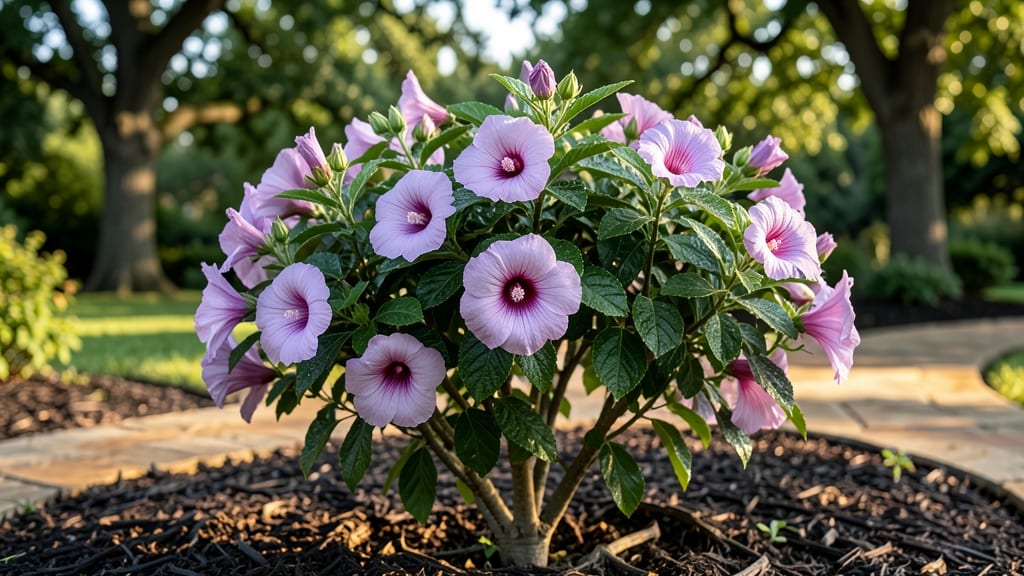
Growing shrub althea (Hibiscus syriacus) means three seasons of fragrant blooms with zero thorns to ruin your gardening gloves. ✨ I planted mine last spring, and by summer it was covered in trumpet-shaped flowers—now it’s the star of my backyard, attracting hummingbirds and bees like a magnet.
The secret to that kind of success? Starting with the right location and soil prep, which I’ll walk you through step by step.
This hardy shrub thrives in full sun to partial shade and tolerates almost any soil type, though it rewards you best with well-draining, slightly alkaline conditions. Spacing matters too—give it 5-6 feet of room to spread, and avoid planting too close to foundations or sidewalks.
Watering is simple: deep soaks once a week after establishment, but never let it sit in soggy soil. The real magic happens when you prune it right—cut back old wood in late winter to encourage fresh growth and more blooms.
By midsummer, you’ll be rewarded with clusters of fragrant flowers in shades of pink, purple, or white, and the plant keeps producing until fall. The best part? It’s nearly pest-free and handles drought like a champ once established.
Even my black thumb couldn’t kill this one—it just keeps coming back bigger and more beautiful every year. Let’s get yours thriving too!
Whether you’re planting from bare roots or a container, this shrub adapts to almost any climate zone (5-9) and handles urban pollution better than most.
The key is patience—it takes a year or two to really fill out, but once it does, you’ll have a fragrant, thornless canopy that works as a privacy screen, specimen plant, or even a pollinator powerhouse. Ready to grow yours?
📚 In This Guide
- What you need
- Instructions
- Tips and common mistakes
- Wrapping up and next steps
What you need
- ● Shrub Althea Plants: 1–3 nursery-grown plants (3–4 ft tall, blooming varieties like ‘Diana’ or ‘Hamabo’ for best fragrance)
- ● OR 50–100 seeds (slower to mature, ~2–3 years to bloom)
- ● OR 3–5 healthy cuttings (4–6" long, semi-hardened) from an existing shrub
- ● Soil: Well-draining potting mix (60% peat/compost, 30% perlite, 10% sand) OR native soil amended with 2–3 inches of compost
- ● pH 6.0–7.5 (test kit recommended for precision)
- ● Fertilizer: Balanced granular fertilizer (10-10-10 or 20-20-20), 1 tbsp per plant
- ● Slow-release organic option (e.g., bone meal or worm castings)
- ● Watering Supplies: Hose with adjustable nozzle OR watering can (1–2 gallons capacity)
- ○ Drip irrigation kit (optional, for consistent moisture)
- ● Planting: Garden trowel or transplant spade
- ● Gloves (gardening or work gloves)
- ● Measuring tape (for spacing, 3–5 ft between plants)
- ● Pruning: Bypass pruners (sharp, sterilized)
- ● Loppers (for thicker branches, ½"–1" diameter)
- ○ Hand saw (for stubborn stems, optional)
- ○ Support (Optional): Stakes or trellis (4–6 ft tall, for climbing varieties like ‘Blue Chiffon’)
- ● Twine or plant ties (if staking)
- ● Safety: Sunscreen (if working in full sun)
- ● Bug spray (for pesky insects during planting)
- ● Full sun location (6+ hours of direct sunlight daily)
- ● Hardiness zone 5–9 (althaea thrives in temperate climates)
- ● Patience! Shrubs from seed take 2–3 years to bloom; nursery plants flower the first year.
Step-by-Step instructions for growing shrub althea flowers
Here's how to cultivate these fragrant, thornless beauties that bloom in spring, summer, and fall.
🌱 Step 1: Choose the Perfect Planting Site
Shrub althea thrives in full sun to partial shade, with at least 4-6 hours of direct sunlight daily. I always pick a spot with morning sun and afternoon shade to prevent leaf scorch in hot climates. The soil should drain well—althea hates soggy roots, so avoid low-lying areas where water pools.
Test your soil's drainage by digging a 12-inch hole and filling it with water. If it drains completely within 2 hours, the site is perfect. Amend heavy clay with 2-3 inches of compost mixed into the top 6 inches of soil to improve aeration. This ensures roots grow strong and healthy.
🪴 Step 2: Plant at the Right Depth and Spacing
Dig a hole twice as wide as the althea's root ball but only as deep as the container it came in. Planting too deep suffocates the roots, while too shallow leaves them exposed. Gently loosen the root ball if it looks compacted, then place the shrub in the hole so the top of the root ball sits 1 inch below soil level.
Backfill with native soil, tamping lightly every 2 inches to eliminate air pockets. Space plants 4-6 feet apart for mature size—this prevents overcrowding and ensures good airflow, which reduces fungal diseases. Water deeply right after planting to settle the soil around the roots.
☀️ Step 3: Water and Mulch for Optimal Growth
Water newly planted althea deeply once a week for the first 2 months, ensuring the soil stays moist but not waterlogged. You'll know it's right when the top 2 inches of soil feel damp to the touch. After establishment, althea becomes drought-tolerant, but consistent moisture encourages lush foliage and abundant blooms.
Apply a 2-3 inch layer of mulch around the base, keeping it 3 inches away from the trunk to prevent rot. Use organic mulch like wood chips or shredded bark, which slowly breaks down and feeds the soil. Replenish mulch annually to maintain moisture and suppress weeds—althea hates competition.
✂️ Step 4: Prune for Shape and Seasonal Blooms
Prune althea in early spring before new growth begins. Remove any dead, damaged, or crossing branches first, then shape the shrub by cutting back overgrown stems to 1/3 of their length. This encourages bushier growth and more flowers. Use clean, sharp pruners to make cuts at a 45-degree angle just above a leaf node.
After flowering, trim back spent blooms by 1/2 their length to promote a second flush of flowers in late summer. Avoid heavy pruning in fall—althea needs its foliage to harden off for winter. This light pruning keeps the shrub compact, fragrant, and blooming for 3 seasons.
🌿 Step 5: Fertilize and Protect for Long-Term Health
Feed althea in early spring with a balanced, slow-release fertilizer (10-10-10 ratio). Sprinkle 1/2 cup per plant around the drip line, then water deeply to activate the granules. Avoid high-nitrogen fertilizers—they promote leafy growth at the expense of flowers. Repeat in mid-summer for a second bloom cycle.
Watch for pests like aphids or spider mites, which love tender new growth. Spray infested areas with neem oil or insecticidal soap at the first sign of damage. For extra protection, apply a light dusting of diatomaceous earth around the base to deter crawling insects. With proper care, your althea will reward you with fragrant blooms and a thornless canopy for years.
Tips & tricks for perfect shrub althea flower growth
Here’s what I’ve learned after years of growing these fragrant beauties—simple tricks to keep your althea thriving and blooming.
Site Selection Matters: In Step 1, when choosing your planting site, pay special attention to afternoon shade in hot climates. I’ve seen althea leaves scorch when exposed to intense afternoon sun, even with the recommended 4-6 hours of morning light. If your area gets brutal afternoon heat, consider a spot with dappled shade from nearby trees or a structure.
Root Ball Prep: Before planting, give the root ball a good soak for 10-15 minutes in a bucket of water. This helps prevent transplant shock, especially during dry spells. In Step 2, when loosening the root ball, be gentle—you’re not trying to break it apart, just free up any compacted roots that might restrict growth.
Mulching Strategy: The 2-3 inch layer of mulch in Step 3 is non-negotiable, but here’s the trick: refresh it every spring before blooming season. I use a mix of wood chips and shredded bark, which breaks down slowly and adds organic matter to the soil. Keep that mulch 3 inches away from the trunk to prevent rot—this is where many gardeners go wrong.
Pruning Precision: When pruning in Step 4, focus on creating an open center. This improves airflow and sunlight penetration, which encourages more blooms. I make my cuts at a 45-degree angle just above a leaf node—this helps water run off the cut and prevents disease. And remember, those spent blooms in late summer? Trim them back by half to trigger that second flush of flowers.
Pro Tips for Shrub Althea Flower
- Here’s what I’ve learned after years of growing these fragrant beauties—simple tricks to keep your althea thriving and blooming.
- Site Selection Matters: In Step 1, when choosing your planting site, pay special attention to afternoon shade in hot climates.
- Root Ball Prep: Before planting, give the root ball a good soak for 10-15 minutes in a bucket of water.
Frequently asked questions
Got questions about growing and caring for your shrub althea (Hibiscus syriacus)? Here are some of the most common ones—plus expert answers to help you cultivate a thriving, fragrant thornless beauty!
How fast does shrub althea grow, and how big will it get?
Shrub althea grows at a moderate pace, typically adding 12–24 inches per year. With proper care, it can reach 8–15 feet tall and wide—though dwarf varieties stay around 4–6 feet. Prune annually to control size and encourage bushier growth. Pro tip: Plant it where it has room to spread, as transplanting mature shrubs is tricky!
When is the best time to plant shrub althea?
The ideal planting window is early spring or fall, when soil temps are cool (60–70°F). Avoid extreme heat or frost, as these stress young roots. If planting in summer, water deeply daily for the first 2 weeks to help it establish. Bonus: Fall planting gives roots time to settle before winter dormancy.
Why aren’t my shrub althea flowers opening, or they’re dropping early?
Several factors can cause this:
- Too much shade: Needs 6+ hours of sun daily for blooms.
- Over-fertilizing: Too much nitrogen = leafy growth, fewer flowers. Use a balanced 10-10-10 fertilizer instead.
- Stress from transplant shock: Wait until next season for blooms if recently planted.
- Pests/disease: Check for aphids, spider mites, or powdery mildew.
Can shrub althea grow in containers, and what’s the best pot size?
Yes! Shrub althea thrives in large containers (at least 18–24 inches deep and wide) with drainage holes. Use a well-draining potting mix and repot every 2–3 years to refresh nutrients. Dwarf varieties adapt best to containers. Watch for: Root-bound plants may struggle to bloom—prune roots gently if needed.
Are shrub althea flowers deer- or rabbit-resistant?
While not completely deer-proof, shrub althea is less appealing than tender perennials. Deer may nibble young shoots or flowers, but mature shrubs are often ignored. For extra protection:
- Apply deer repellent sprays (like rotten egg scent).
- Plant near deer-deterrent companions like Russian sage or lavender.
- Use physical barriers (chicken wire) for seedlings.
Wrapping up and next steps
Growing shrub althea (Hibiscus syriacus) is a rewarding journey that brings fragrant blooms and lush foliage to your garden with minimal fuss. With the right location, soil prep, and care, you’ll enjoy its stunning flowers for three seasons—and even attract pollinators while keeping your space thorn-free! 🌸
Ready to transform your outdoor space? Start by planting your althea shrub this spring or fall, then watch it thrive with just a little love. Next up: Share your blooming progress with fellow gardeners or explore complementary plants to create a stunning, low-maintenance landscape!