
Container Gardens
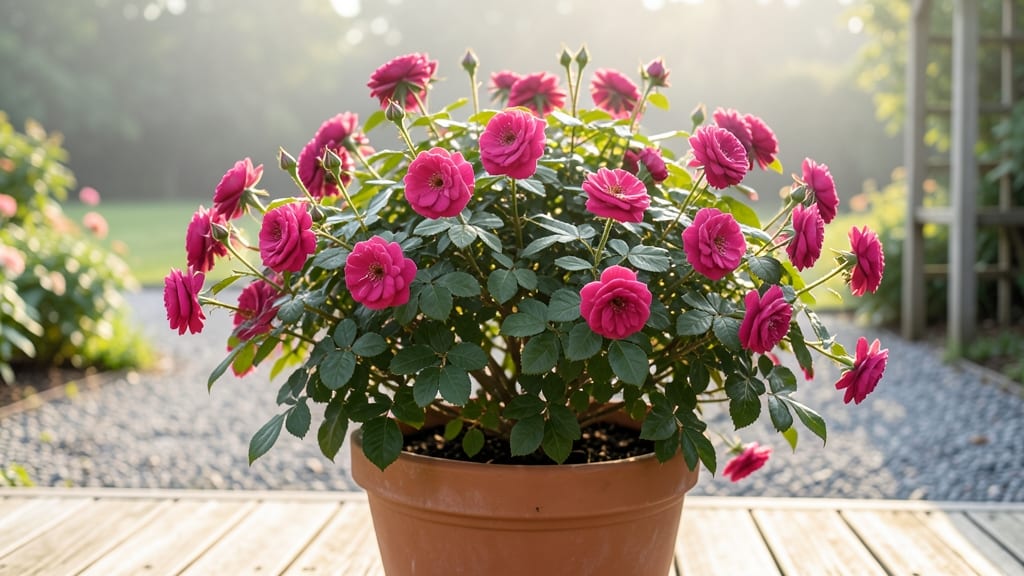
Growing shrub roses in containers unlocks fragrant beauty without the thorny commitment of a yard. 🌹 Last summer, I transformed my tiny balcony into a fragrant retreat by planting three Knock Out roses in large pots—now they’re the envy of the neighborhood.
The key? Choosing the right container and soil mix to keep roots happy and blooms abundant.
You’ll need containers at least 18-24 inches wide (deeper is better for root growth), with drainage holes to prevent soggy roots. A well-draining potting mix—half potting soil, half perlite or compost—keeps moisture balanced while encouraging strong growth.
Feed them every 4-6 weeks with a balanced rose fertilizer during growing season, and reduce feeding in winter.
With 6+ hours of sunlight daily, your roses will reward you with continuous blooms from spring to frost. Prune in early spring to shape the plant and remove dead wood, then lightly trim after each flush of flowers to encourage bushier growth.
The result? A lush, fragrant display that thrives even in small spaces.
Watch for root-bound issues (when roots circle the pot) and pests like aphids—container roses need regular checks. Divide crowded roots every 2-3 years to keep plants healthy. This method works for patios, balconies, or even sunny windowsills, proving you don’t need a garden to grow roses.
📚 In This Guide
- What you need
- Instructions
- Tips and common mistakes
- Wrapping up and next steps
What you need
- ● Container: At least 15–20 gallons (18–24" diameter/wide) with drainage holes. Terracotta, fiberglass, or plastic work well—just ensure it’s sturdy! 💡 Pro tip: Elevate containers slightly for better drainage.
- ● Shrub Rose: Choose thornless varieties like ‘Knock Out’ or ‘Dr. Huey’ for low-maintenance blooms. Buy from a reputable nursery (bare-root or potted).
- ● Potting Mix: 50% high-quality potting soil + 50% perlite or sand for aeration. Avoid garden soil—it compacts and drains poorly!
- ● Fertilizer: Slow-release rose-specific granules (10-10-10 or 12-12-12) or organic compost (like worm castings).
- ● Mulch: 2–3 inches of bark or shredded leaves to retain moisture and regulate temperature.
- ● Gloves & Pruners: Heavy-duty gardening gloves (roses have some thorns!) and sterilized pruners for shaping.
- ● Drainage Layer: 1–2 inches of gravel or broken pottery at the container’s bottom.
- ● Watering Can or Hose: With a gentle spray nozzle to avoid displacing soil.
- ○ Stakes or Trellis (Optional): For taller varieties, use 3–4 ft bamboo stakes or a small trellis.
- ○ Rose Food (Optional): Liquid fertilizer like fish emulsion for mid-season boosts.
Step-by-Step instructions for growing shrub roses in containers
Let’s turn your patio or balcony into a fragrant rose garden—no yard required.
🪴 Step 1: Choose the Right Containers and Drainage
Pick containers at least 18-24 inches deep with drainage holes—shrub roses need room for roots to spread. I like fabric grow bags because they prevent root circling, but heavy ceramic pots work too. If your pot lacks drainage, drill 2-3 extra holes near the bottom to avoid soggy roots.
Place a 2-inch layer of gravel or broken pottery at the bottom before adding soil. This creates space for water to drain freely and prevents clogging. If you skip this, roots will suffocate when water pools at the bottom.
🌱 Step 2: Plant Bare-Root Shrub Roses Correctly
Soak bare-root shrub roses in lukewarm water for 1-2 hours before planting to revive the roots. While they soak, fill your container ⅓ full with high-quality potting mix (never garden soil—it compacts too much). Mix in slow-release rose fertilizer to give them a nutrient boost right away.
Remove the rose from its packaging and gently spread the roots outward. Plant it so the graft union (the swollen bump near the base) sits 1-2 inches below the soil line. This ensures strong regrowth. Backfill with soil, pressing lightly to remove air pockets but not compacting too tightly.
☀️ Step 3: Water Deeply and Provide Full Sun
Water the newly planted rose deeply until water runs out the drainage holes. Shrub roses love 6-8 hours of direct sun daily, so place your container in the sunniest spot you have. If your space gets afternoon shade, a south-facing window or grow light will help.
Keep the soil evenly moist but not soggy for the first 2-3 weeks. Stick your finger 1 inch deep—if it feels dry, water again. Overwatering now can drown tender new roots, so let the top inch dry slightly between waterings.
✂️ Step 4: Prune and Fertilize for Bushy Growth
Once the rose has 3-4 healthy leaves and new growth appears, trim back ⅓ of the longest stems to encourage branching. Use clean, sharp pruners and cut just above a bud facing outward to promote airflow. This prevents leggy growth and creates a fuller shrub.
Feed your shrub rose with balanced liquid fertilizer every 4-6 weeks during the growing season (spring through fall). I switch to low-nitrogen, high-phosphorus fertilizer when buds form to boost flowering. Stop fertilizing in late summer to let the plant harden off for winter.
⏰ Step 5: Winter Care for Container Roses
Before the first frost, move your container to a protected spot (like a garage or under an eave) where temps stay above 20°F. Wrap the pot in burlap or frost cloth to shield it from freezing winds. If you can’t move it, mound extra mulch around the base to insulate roots.
Reduce watering in winter—only water when the soil feels bone dry to the touch. In early spring, prune back any dead or weak stems and repot if roots are circling. With proper care, your container shrub rose will bloom beautifully for years.
Tips & tricks for thriving container shrub roses
Growing fragrant shrub roses in containers is totally doable—here’s how to avoid the most common pitfalls and keep your plants happy for years.
Drainage is Non-Negotiable: That 2-inch gravel layer in Step 1 isn't just a suggestion—it's your insurance against root rot. If you're using a decorative pot without drainage, add a saucer underneath and empty it after watering. I've seen too many container roses fail because people skipped this step and ended up with soggy roots. The gravel creates an air pocket that prevents waterlogging while still allowing excess moisture to escape.
The Soaking Secret: Those 1-2 hours of soaking bare-root roses in lukewarm water might seem like overkill, but trust me—it makes all the difference. Cold water shocks the roots, while warm water revives them gently. After soaking, you'll notice the roots look plump and flexible rather than shriveled. If you're in a hurry, you can reduce this to 30 minutes, but don't skip it entirely—dry roots struggle to establish themselves.
Sunlight Strategy: The 6-8 hours of direct sun mentioned in Step 3 is ideal, but here's the thing about container roses: they're more forgiving than you think. If your space only gets 4-5 hours of direct sun, supplement with a grow light for 2-3 hours in the evening. I've grown thriving container roses on east-facing balconies by adding LED grow lights—just position them 6-12 inches above the plant. The key is consistency; roses hate inconsistent light conditions.
Winter Prep Matters: That 20°F minimum temperature in Step 5 is crucial, but here's what nobody tells you: container roses in pots lose heat much faster than in-ground plants. If you're in a zone with cold snaps below 20°F, consider adding a second layer of insulation—wrap the pot in bubble wrap before adding the burlap. I've had roses survive -10°F winters with this extra protection. The bubble wrap creates an insulating air pocket that makes all the difference in extreme cold.
Pro Tips for Shrub Roses In Containers
- Growing fragrant shrub roses in containers is totally doable—here’s how to avoid the most common pitfalls and keep yo...
- Drainage is Non-Negotiable: That 2-inch gravel layer in Step 1 isn't just a suggestion—it's your insurance against ro...
- The Soaking Secret: Those 1-2 hours of soaking bare-root roses in lukewarm water might seem like overkill, but trust ...
Frequently asked questions
Got questions about growing shrub roses in containers? You’re not alone—these beauties are full of surprises! Below, we tackle the most common concerns to help you cultivate thriving, fragrant roses without the fuss.
What’s the best container size for shrub roses?
Shrub roses need at least 15–20 gallons of soil to thrive. Opt for containers 18–24 inches deep and wide—bigger is better! Shallow pots (like window boxes) may stunt growth. Pro tip: Add drainage holes and use lightweight potting mix to prevent root rot.
When is the best time to plant shrub roses in containers?
Plant in early spring or fall when temperatures are mild (50–70°F). Avoid extreme heat or cold, which stress roots. If buying bare-root roses, soak them overnight before planting. Bonus: Container-grown roses can be moved indoors in winter (with proper care!).
How often should I water containerized shrub roses?
Containers dry out fast—check soil moisture daily in summer! Water deeply when the top 1–2 inches feel dry. Avoid soggy soil: Let excess water drain, and use a moisture meter for precision. Mulch helps retain moisture and regulate temps.
Why are my container shrub roses’ leaves turning yellow?
Yellow leaves often signal overwatering, poor drainage, or nutrient deficiency. Check for:
- Root rot: Ensure pots have drainage holes and aren’t sitting in saucers of water.
- Nutrients: Feed with balanced rose fertilizer every 4–6 weeks.
- Pests: Inspect for aphids or spider mites (spray with neem oil if needed).
Can I grow shrub roses in containers year-round?
With the right setup, yes! Move pots to a sunny indoor spot (near a south-facing window) in winter. Use grow lights if natural light is limited. Reduce watering in dormancy (fall/winter) and fertilize sparingly. Pro move: Prune lightly indoors to encourage spring blooms!
Wrapping up and next steps
Growing shrub roses in containers is a rewarding way to bring fragrant, low-maintenance beauty to patios, balconies, or small yards—no thorns or sprawling roots required! 🌸 With the right variety, soil, and care, you’ll enjoy vibrant blooms and head-turning charm year after year.
Whether you’re a beginner or a seasoned gardener, these versatile plants prove that big impact doesn’t need big space.
Ready to dive in? Start by choosing your favorite shrub rose (like Knock Out® or Dr. Huey) and grab your container—then watch your small space transform! 🌱 Happy planting!