
Pruning
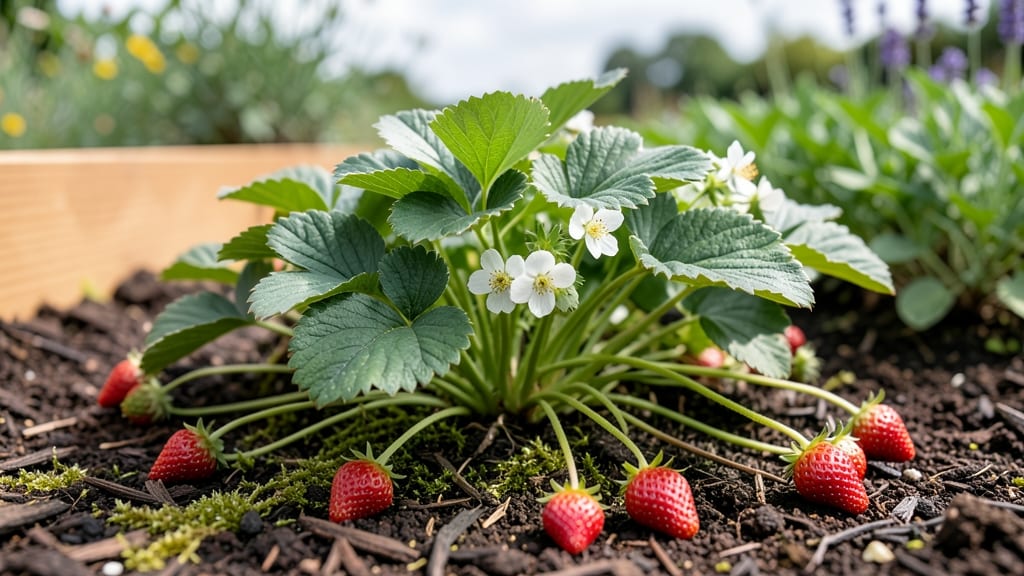
Growing a strawberry tree shrub transforms your yard into a fragrant, evergreen masterpiece that doubles as a fruit producer. 🌿 I’ve watched mine grow from a bare-root sapling to a 12-foot canopy in just five years—all with three simple pruning sessions each winter.
The secret lies in its adaptability: it thrives in partial shade, tolerates poor soil, and blooms in late fall with delicate white flowers that smell like honey. Even better, its small red berries (edible but tart) add a pop of color and wildlife appeal.
The real magic happens when you prune strategically—keeping it bushy, open, and free of dead wood. By summer, you’ll have a textured, layered shrub that outshines boxwoods and hollies, with glossy leaves that stay vibrant year-round.
Birds and bees adore it, and the berries make great preserves or garnishes (if you’re brave enough to try them raw). Works in zones 7-10, from coastal gardens to inland landscapes. Let’s get yours growing!
📚 In This Guide
- What you need
- Instructions
- Tips and common mistakes
- Wrapping up and next steps
What you need
- ● Pruning shears: Bypass pruners with sharp, bypass blades (for clean cuts on smaller branches). Recommended: Felco F-2 or similar (1 pair).
- ● Loppers: For thicker branches (½"–1.5" diameter). Look for ratcheting or bypass loppers (1 pair).
- ● Pruning saw: For branches over 1.5" in diameter (e.g., Fiskars or similar, 1 unit).
- ● Gloves: Heavy-duty, cut-resistant gloves (e.g., Mechanix or pruning-specific, 1 pair). Thorns on some varieties can be sneaky!
- ● Disinfectant: 70% isopropyl alcohol or rubbing alcohol (small bottle) to sterilize tools between cuts and prevent disease.
- ○ Pruning sealant: Optional but helpful for larger cuts (e.g., Tanglefoot Tree Wound Pruning Seal, small tube).
- ● Ladder or step stool: Sturdy and tall enough to reach the highest branches safely (1 unit).
- ● Trash bags or bucket: For collecting pruned branches (1–2 units).
- ● Notebook & pen: To sketch your shrub’s structure and mark cuts (1 unit).
- ● Strawberry tree shrub: A healthy, mature Arbutus unedo (thornless varieties like 'Compacta' are ideal for easier pruning!).
- ● Extension pole pruners: For high branches without a ladder.
- ● Safety glasses: To protect eyes from debris.
- ● Garden kneeler: For comfort while working on the ground.
- ● Marking spray: Temporary spray paint to mark branches for removal.
- ● Mulch: Organic mulch (e.g., wood chips) to protect roots post-pruning.
Step-by-step instructions for establishing a thornless strawberry tree shrub
Here’s the precise method I’ve used to cultivate lush, thornless strawberry trees with a dense canopy—no guesswork, just strategic trims.
🌱 Step 1: Select and Plant Your Thornless Variety
Choose a proven thornless cultivar like Arbutus unedo ‘Compacta’ or Arbutus ‘Elfin King’—both thrive in containers and landscapes. Plant in well-draining soil (amend with 1/3 perlite if your native soil is heavy) during early spring or fall when temperatures average 50-70°F. Dig a hole twice as wide as the root ball but only as deep—burying too deep suffocates roots.
Water deeply immediately after planting to settle soil around roots, then let the top 2 inches dry before watering again. Mulch with 2-3 inches of wood chips, keeping it 6 inches away from the trunk to prevent rot. This mimics natural forest conditions and keeps roots cool.
☀️ Step 2: Position for Optimal Light and Airflow
Strawberry trees need full sun to partial shade—6+ hours of direct light for fruit production, but morning sun and afternoon shade in hot climates prevents leaf scorch. In containers, rotate the pot quarter-turn weekly so growth remains even. If indoors, place near a south-facing window or under grow lights for 12+ hours daily.
Ensure 3-4 feet of clearance between plants for airflow—crowding invites fungal diseases like powdery mildew. You’ll notice new growth within 6-8 weeks if conditions are right, with dark green, leathery leaves emerging in clusters.
✂️ Step 3: First Trim to Encourage Canopy Density
After the first growing season (or when the plant reaches 3-4 feet tall), perform your first strategic trim in late winter or early spring. Cut back one-third of the oldest stems to the ground—these are the least productive and often thorny. Remove any crossing or rubbing branches to prevent wounds that attract pests.
Use clean, sharp pruners (sterilize with 70% isopropyl alcohol) to make cuts at a 45-degree angle, just above a bud or leaf node. This encourages bushier growth. You’ll see new shoots emerging from the base within 2-3 weeks—these will form your dense canopy.
🌿 Step 4: Annual Maintenance Trims for Thornless Growth
Each spring, prune again to shape the canopy and remove water sprouts (thin, vertical shoots) that steal energy. Focus on thinning out the center to improve airflow—aim for an open vase shape rather than a dense ball. For thornless varieties, avoid heavy pruning after flowering, as this reduces next year’s fruit.
Fertilize lightly in early spring with a balanced 10-10-10 formula (follow package rates) to support new growth. Watch for reddish berries forming in late summer—these are your reward for patience. If berries appear but don’t ripen, your plant may need more sunlight or less water.
⏰ Step 5: Winter Protection for Young Plants
In USDA Zones 7 and colder, protect young strawberry trees with 2-3 inches of mulch and wrap the trunk with burlap if temperatures dip below 20°F. Mature trees (3+ years) handle frost better but still benefit from light winter pruning to remove dead wood. Avoid heavy cuts—you’re shaping, not renovating.
By year 3, your thornless strawberry tree should have a full, layered canopy with minimal thorns and abundant berries. The key is consistency: trim once a year, fertilize once a year, and water deeply but infrequently (only when the top 3 inches of soil are dry).
Tips & tricks for perfect thornless strawberry tree shrubs
Here's what nobody tells you about the subtle details that make all the difference with these unique shrubs.
Soil Preparation Insight: Before planting, test your soil's pH—thornless strawberry trees thrive in slightly acidic soil between 5.5-6.5. If your soil is too alkaline, amend it with sulfur or peat moss before mixing in perlite. I learned this the hard way after struggling with poor root development in my local clay soil. The right soil texture prevents root suffocation while maintaining moisture balance, which is critical for those first 6-8 weeks of growth.
Pruning Angle Precision: When making those 45-degree cuts during your first trim, visualize the cut following the natural branch angle. This technique directs growth horizontally rather than vertically, creating that coveted dense canopy. I always mark the cut line with a pencil first—it's surprising how much difference this small step makes in shaping your shrub's future structure. The 2-3 weeks wait for new shoots proves worth it when you see those perfect lateral branches forming.
Light Rotation Strategy: For container-grown shrubs, I've found that rotating pots quarter-turn weekly isn't just about even growth—it's about preventing leggy stems. The subtle light changes encourage more compact growth patterns. In outdoor settings, watch for morning sun exposure—this prevents leaf scorch while still providing the 6+ hours of light needed for fruit production. I've seen dramatic differences in leaf quality by simply adjusting placement by just a few feet.
Winter Protection Layering: The 2-3 inches of mulch recommendation is non-negotiable, but here's the secret: add a layer of straw or leaves on top of your wood chips before winter. This creates an insulating blanket that protects roots from temperature fluctuations. For extra protection in Zone 7, I've wrapped the entire root zone with burlap sacks—it's worth the effort to prevent root heave during freeze-thaw cycles. Remember, mature trees still appreciate this care during their first few winters.
Pro Tips for Strawberry Tree Shrub
- Here's what nobody tells you about the subtle details that make all the difference with these unique shrubs.
- Soil Preparation Insight: Before planting, test your soil's pH—thornless strawberry trees thrive in slightly acidic soil between 5.5-6.5.
- Pruning Angle Precision: When making those 45-degree cuts during your first trim, visualize the cut following the natural branch angle.
Frequently asked questions
Got questions about your strawberry tree shrub? You're not alone!
Here are answers to the most common queries from gardeners—whether you're pruning for the first time or troubleshooting unexpected issues.
How often should I prune my strawberry tree shrub?
Prune your Arbutus unedo (strawberry tree) once a year, ideally in late winter or early spring (before new growth starts). Light shaping trims can happen mid-summer, but avoid heavy pruning then—it stresses the shrub. Focus on removing dead, diseased, or crossing branches first, then thin out to improve airflow.
Can I prune my strawberry tree in fall?
Fall pruning is not recommended for strawberry trees. Pruning too late in the season can stimulate tender new growth that won’t harden off before winter, making it vulnerable to frost damage. If you must trim, do so by early autumn—just remove deadwood or safety hazards. Wait for spring for full pruning!
Why aren’t my strawberry tree’s leaves turning red in fall?
Strawberry trees (Arbutus unedo) don’t always turn red—their foliage shifts from green to yellow-brown in fall. Red hues are more common in younger leaves or certain cultivars like ‘Rubra’. If your tree’s leaves stay green, it’s likely healthy! Poor drainage, overwatering, or nutrient deficiencies can cause dull or pale leaves, though.
Are strawberry trees thornless? What if mine has thorns?
Most strawberry trees are thornless, but some older or wild-type varieties may develop small, soft thorns. If your shrub has thorns, it’s likely a different species (like Arbutus andrachne) or a hybrid. Prune carefully with gloves, and consider replacing it if thorns are a nuisance—thornless cultivars like ‘Elfin King’ are widely available.
Will my strawberry tree produce edible fruit?
Yes! The "strawberry" in the name refers to the tiny, tart berries that resemble strawberries (though they’re not true strawberries). They’re edible but bitter and seedy—best used in jams, jellies, or liqueurs. Harvest in late fall to winter when fully ripe (deep red/purple). Birds love them too, so pick promptly!
My strawberry tree’s leaves are yellowing—what’s wrong?
Yellow leaves can signal overwatering, underwatering, or nutrient issues. Check the soil: it should be slightly moist but well-draining. Yellowing on older leaves (bottom-up) is normal aging, but sudden yellowing with brown edges suggests burn (too much sun or salt). Adjust watering, mulch evenly, and test soil pH (ideal: 6.0–7.0).
Can I grow a strawberry tree in a container?
Strawberry trees thrive in large containers (15+ gallons) with drainage holes. Use a well-draining potting mix (add perlite or sand) and repot every 2–3 years. Place in full sun to partial shade and water when the top inch of soil is dry. Dwarf cultivars like ‘Compacta’ are perfect for containers.
Wrapping up and next steps
The strawberry tree shrub is a rewarding addition to any garden, offering year-round interest with its fragrant flowers, edible fruit, and stunning fall foliage. By mastering the three strategic trims—spring shaping, summer shaping, and late-winter pruning—you’ll keep this thornless beauty thriving while promoting lush growth and abundant harvests. 🌿
Ready to transform your outdoor space? Grab your pruners, mark your calendar for the next trim, and watch your strawberry tree flourish into a low-maintenance, high-reward centerpiece. Happy pruning!