
Pruning
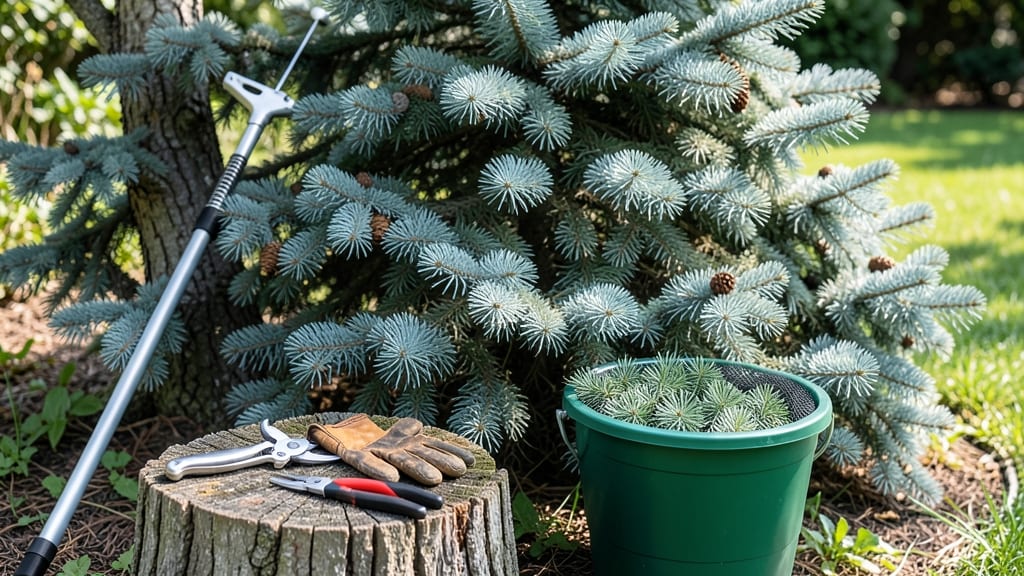
Late-winter is your chance to rescue the trimming blue spruce shrubs from tangled growth and woody mess. ✂️ I've trimmed mine every February for five years, and the difference in density and health is night-and-day—fewer thorns, more vibrant blue needles, and branches that don't look like a bird's nest.
The secret isn't aggressive cutting—it's strategic thinning and shaping. You'll need sharp bypass pruners, a sturdy ladder, and a clear day to avoid stressing the tree. Start by removing dead branches first, then thin out crowded interior growth to let light reach the center.
This keeps the tree healthy and prevents those sharp thorns from becoming a hazard.
What you'll end up with is a blue spruce that looks like it belongs in a Christmas card—full, symmetrical, and thriving. The needles stay a rich, vibrant blue all season, and the tree's natural shape becomes more defined each year.
Plus, you'll spend less time dealing with tangled branches and more time admiring your perfectly shaped evergreen.
Works for both young saplings and mature trees, though the approach scales with size. Whether you're dealing with a small shrub or a towering specimen, the same principles apply. Let's get those branches looking their best!
📚 In This Guide
- What you need
- Instructions
- Tips and common mistakes
- Wrapping up and next steps
What you need
- ● Pruning shears or hand pruners – Opt for bypass pruners (not anvil-style) for clean cuts. Choose sharp, high-quality tools with 4- to 6-inch blades for precision.
- ● Loppers – For thicker branches (½-inch to 1½-inch diameter), get bypass loppers with 8- to 10-inch handles for leverage.
- ● Pruning saw – For branches thicker than 1½ inches, a curved-tooth pruning saw with a 10- to 12-inch blade works best.
- ● Extension pole pruners – If your spruce is tall (over 6 feet), a 10- to 12-foot telescopic pole with sharp blades saves time and effort.
- ● Gloves – Wear thick, cut-resistant gloves (like mechanics’ gloves) to protect against sharp needles and thorns.
- ○ Ladder (optional but helpful) – A stable, 6- to 8-foot step ladder with non-slip feet for taller shrubs (always prioritize safety!).
- ● Disinfectant (70% isopropyl alcohol or bleach solution) – Clean tools between cuts to prevent fungal diseases.
- ● Trash bags or bucket – For collecting clippings (a 5-gallon bucket or heavy-duty bags work well).
- ● Hose or water spray bottle – Keeps tools clean and prevents sap buildup.
- ● Check the weather: Trim on a dry, overcast day to avoid stressing the shrub with direct sunlight.
- ● Sharpen your tools: Dull blades tear branches, causing ragged cuts that heal poorly.
- ● Work in layers: Start with dead or overgrown branches first, then shape the rest.
Step-by-Step guide for trimming blue spruce shrubs
Late winter’s the perfect time to shape these evergreens—here’s how to do it right.
🌿 Step 1: Gather Tools and Inspect the Shrub
Start with clean, sharp tools to avoid tearing branches. I always use bypass pruning shears for small branches and a pruning saw for thicker growth. Wear gloves—blue spruce needles are sharp, and you’ll thank me later. Before cutting, walk around the shrub to spot uneven growth, dead branches, and areas where sunlight struggles to reach the center.
Look for brown or brittle branches—these are dead and should be removed first. Healthy branches have green needles all the way to the tip. If you see thorny clusters, these are old growth that can be thinned out to encourage softer new growth. Sketch a rough shape in your mind—blue spruce naturally grow in a conical form, so aim to maintain that silhouette.
✂️ Step 2: Remove Dead and Overcrowded Branches
Begin by cutting out dead or diseased branches at their base. These are easy to spot—they’re brown, dry, and often crunchy when touched. Next, tackle overcrowded branches growing inward. These compete for sunlight and weaken the shrub’s structure. I like to start at the outer edges and work my way inward, removing branches that block light from reaching the center.
For thick branches, make a clean cut just above a bud or side branch to encourage new growth. Avoid leaving stubs—these can rot or attract pests. If a branch is too thick for shears, use the pruning saw and make the cut at a 45-degree angle to shed water away from the wound. Step back occasionally to check your progress—you’re shaping the shrub, not just hacking at it.
🌱 Step 3: Thin Out Dense Areas for Airflow
Blue spruce can get thick and dense, especially in the center. To improve airflow and reduce disease risk, thin out 10-20% of the foliage by selectively removing smaller branches. Focus on the inner third of the shrub where light struggles to penetrate. You’ll know you’re doing it right when you can see light green needles peeking through the denser areas.
Use your shears to snip small branches back to a side shoot or bud. Avoid cutting into old wood—blue spruce doesn’t regenerate well from severe cuts. If you’re unsure whether a branch is dead or just dormant, wait until spring to make the call. For now, prioritize thinning over aggressive shaping. The goal is to open up the shrub so air circulates and new growth thrives.
☀️ Step 4: Shape the Outer Form Gradually
Now it’s time to refine the shrub’s shape. Blue spruce grow best when their natural conical form is preserved. Use your shears to trim the outer edges evenly, cutting just beyond the tips of the branches to encourage a fuller look. Avoid cutting into the older, woody growth—this can harm the shrub and leave unsightly wounds.
For a more refined look, I like to step back every few cuts to check the overall shape. If one side looks uneven, trim slightly more from the denser side to balance it out. Remember, blue spruce grow slowly, so light shaping is better than aggressive pruning. You’re not trying to turn it into a topiary—just maintain its natural beauty while keeping it healthy and thorn-free.
🪴 Step 5: Clean Up and Monitor Recovery
After trimming, rake up any fallen needles and branches to keep the area tidy. Dispose of diseased or dead material immediately to prevent spreading pathogens. Give the shrub a light watering if the ground is dry, but avoid overwatering—blue spruce prefer well-draining soil and don’t like soggy roots.
Over the next few weeks, watch for new growth at the tips of the branches you trimmed. This is a good sign the shrub is responding well. If you see yellowing needles, it might be a sign of stress—reduce watering and avoid further pruning until spring. Blue spruce are hardy, but they need time to recover, especially after a heavy trim. With proper care, your shrub will reward you with dense, vibrant growth all season long.
Tips & tricks for perfectly trimmed blue spruce shrubs
Late-winter shaping transforms your blue spruce from overgrown to showstopping—here's how to avoid common pitfalls and elevate your results.
Tool Prep: Sharpen your bypass pruning shears before starting—dull blades tear branches instead of making clean cuts. I test mine on a scrap piece of wood first to ensure they glide smoothly. For branches thicker than your wrist, the pruning saw's 45-degree angle isn't just for aesthetics—it creates a natural water-shedding surface that prevents rot at the cut site. Don't skip this detail!
Visual Cues for Healthy Growth: When inspecting branches in Step 1, look for "candle wax" green needles—the vibrant color indicates healthy sap flow. Dull gray-green needles often mean drought stress, while yellowing at branch tips suggests overwatering. I've learned to trust my eyes more than the calendar—if your shrub looks stressed in late winter, delay pruning until spring when new growth can recover faster.
Thinning Strategy: The 10-20% thinning target in Step 3 might sound vague, but here's how to translate it: Remove every other branch in dense clusters until you can see sunlight filtering through the center. Think "airy" not "bare"—you're creating a lace-like structure that allows air circulation while maintaining the shrub's density. This prevents that "lollipop" look where only the top stays green.
Recovery Monitoring: That "new growth" you watch for in Step 5 should appear within 3-4 weeks if conditions are right. If you're not seeing buds by late spring, your cuts may have been too severe. Blue spruce respond best to gradual shaping—remember, you're sculpting a living organism, not a topiary. I've found that shrubs trimmed in late winter actually show more vigorous spring growth than those pruned in summer.
Pro Tips for Trimming Blue Spruce Shrubs
- Late-winter shaping transforms your blue spruce from overgrown to showstopping—here's how to avoid common pitfalls and elevate your results.
- Tool Prep: Sharpen your bypass pruning shears before starting—dull blades tear branches instead of making clean cuts.
- Visual Cues for Healthy Growth: When inspecting branches in Step 1, look for "candle wax" green needles—the vibrant color indicates healthy sap flow.
Frequently asked questions
Got questions about trimming your blue spruce shrubs?
You’re not alone! Here are answers to the most common concerns—from timing to tools—to help you achieve that lush, thorn-free look without stress.
When is the best time to trim blue spruce shrubs?
Late winter (just before new growth starts) is ideal—typically February to early March in most climates. This timing promotes dense, healthy growth while avoiding winter stress. Never prune in fall; it can leave your shrub vulnerable to cold damage.
Can I trim blue spruce shrubs in summer?
While you can trim in summer, it’s not recommended. Pruning during active growth (spring/summer) can stress the shrub, leading to sparse or uneven regrowth. If you must, do it lightly and avoid cutting into old wood—stick to shaping new growth only.
How do I avoid over-trimming and harming my blue spruce?
Never remove more than 25% of the foliage in one season. Focus on thinning out dense branches from the inside first to improve airflow. Avoid "shearing" (cutting all branches uniformly)—this can create a "broomstick" effect and weaken the shrub.
What if my blue spruce looks sparse after trimming?
Sparse growth often signals over-pruning or poor health. If you’ve trimmed too much, stop pruning for a year and focus on care: water deeply, mulch well, and fertilize with slow-release evergreen fertilizer. If pests or disease are suspected, inspect for signs like needle drop or sawdust-like frass.
Can I use hedge trimmers on blue spruce shrubs?
Hedge trimmers work for light shaping, but they’re not ideal for blue spruce. Their sharp blades can tear needles, leaving unsightly "fuzz." For thicker branches, use hand pruners or loppers instead. Save trimmers for smaller, ornamental spruces or as a final touch after hand-pruning.
Should I trim dead branches year-round, or wait for late winter?
Remove dead or diseased branches anytime—they drain nutrients and invite pests. However, avoid heavy pruning outside late winter. If you spot dead branches in summer, just snip them off and dispose of them (don’t compost!).
Wrapping up and next steps
Trimming your blue spruce shrubs in late winter isn’t just about tidying up—it’s your secret weapon for lush, healthy growth all season long. 🌿 With the right tools, timing, and techniques, you’ll banish those pesky thorns and encourage dense foliage that turns heads.
Now that you’re armed with expert tips and answers to common questions, there’s no better time to roll up your sleeves and give your spruces the TLC they deserve.
Ready to see the difference? Grab your pruners and schedule your trimming session before spring arrives—your shrubs (and your neighbors!) will thank you. Happy pruning! ✂️