
Pruning
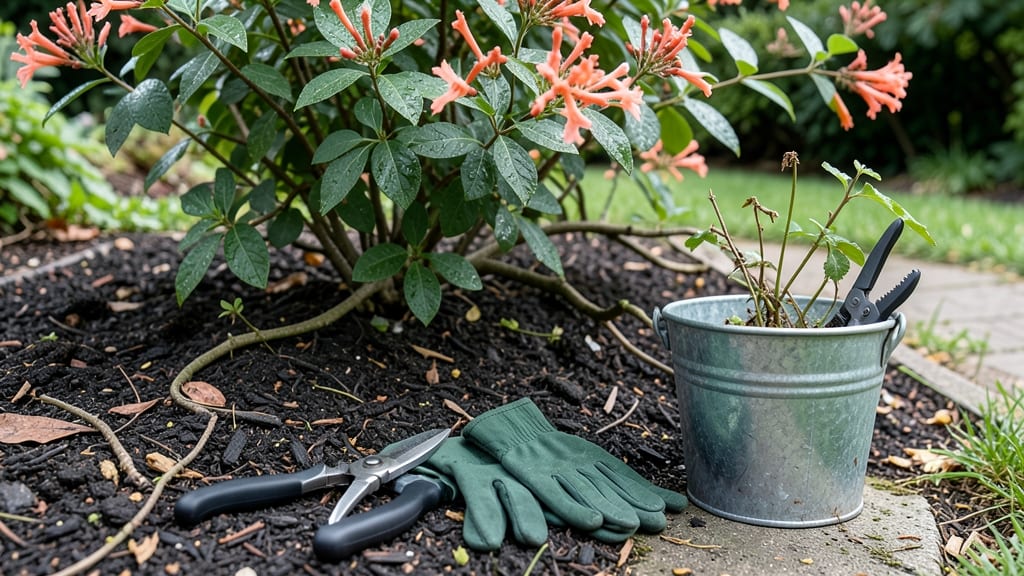
Late-winter trimming transforms honeysuckle from tangled mess to lush, fragrant beauty. ✂️ I’ve learned that cutting back these shrubs in February—before new growth starts—sets the stage for healthier blooms and stronger stems all season.
The key is timing: prune too early and you risk frost damage; wait too long and you sacrifice spring’s vibrant flowers.
You’ll need just three tools: sharp bypass pruners for clean cuts, loppers for thicker branches, and gloves to protect from thorns. Start by removing dead or crossing branches first—these compete for energy and weaken the plant.
Then shape the shrub by cutting back one-third of the oldest stems to encourage fresh growth from the base.
By late spring, you’ll see dense foliage and more abundant blooms than ever before. The shrub will look fuller, with fewer leggy stems, and those signature tubular flowers will appear earlier. Regular trimming also prevents disease by improving airflow through the center.
Pro tip: Save those cuttings! Root them in moist soil for new honeysuckle plants. And remember—never prune after mid-summer, as it removes next year’s flower buds. With this method, your honeysuckle will thrive for decades.
📚 In This Guide
- What you need
- Instructions
- Tips and common mistakes
- Wrapping up and next steps
What you need
- ● Pruning shears or bypass pruners: Sharp, bypass-style shears (not anvil-type) for clean cuts. Choose 5-inch blades for medium branches.
- ● Loppers: Bypass loppers with a 20-24 inch handle for thicker stems (up to 2 inches in diameter).
- ● Pruning saw: A curved-tooth saw for branches thicker than 2 inches.
- ● Gloves: Heavy-duty, gardening gloves with cut-resistant palms to protect from thorns.
- ● Disinfectant (70% isopropyl alcohol or bleach solution): To sterilize tools between cuts and prevent disease spread.
- ● Heavy-duty trash bags or bucket: For collecting pruned branches (aim for at least 5-gallon capacity).
- ● Ladder (if needed): A stable, extendable ladder (8-12 feet) for reaching taller shrubs. Safety first!
- ● Hand pruners (for small trims): Anvil-style for delicate, small branches (not ideal for thick stems).
- ● Knee pads: For comfort if you’ll be kneeling or crouching for extended periods.
- ● Hose or bucket of water: To rinse tools and hands post-pruning.
- ● Sharpener: A file or sharpening stone to maintain tool edges between uses.
- ● Pruning sealant: For large cuts (over ½ inch) to prevent disease entry (e.g., tree wound dressing).
Step-by-step guide for trimming honeysuckle shrubs
Late winter's the perfect time to shape honeysuckle for a lush, flowering spring—here's how I do it.
✂️ Step 1: Gather Tools and Assess the Shrub
Start with sharp, clean pruning shears and a sturdy pruning saw for thicker stems. I always disinfect my tools with rubbing alcohol first—this prevents spreading disease between cuts. Next, examine the shrub's structure: identify dead or crossing branches, as well as any that grow inward toward the center. These are your first targets for removal.
Look for branches that haven't produced flowers in the past year—they're likely overgrown and can be cut back to encourage new growth. Honeysuckle responds well to pruning, so don't hesitate to be bold. The goal is to open up the center of the shrub to improve airflow and sunlight penetration, which both boost flowering.
✂️ Step 2: Remove Dead, Diseased, or Weak Growth
Begin by cutting out any dead, diseased, or damaged branches completely down to the base. These branches won't contribute to the shrub's health and can harbor pests or diseases. Next, remove any branches that are crossing or rubbing against others. This prevents future damage and creates a more open, airy structure.
For weak or leggy growth, cut back to a strong lateral branch or bud. You'll see these as small bumps along the stem—cutting just above them encourages new growth in the right direction. Avoid leaving stubs; always make clean cuts at a 45-degree angle about ¼ inch above a bud. This ensures the wound heals properly and new growth emerges in the desired direction.
✂️ Step 3: Thin Out Overcrowded Areas
Honeysuckle shrubs can become dense over time, which reduces flowering and increases disease risk. Focus on thinning out the center of the shrub first, removing about ⅓ of the oldest wood. This opens up the plant and allows light to reach the inner branches, stimulating more blooms.
Work your way outward, removing any branches that are growing toward the center of the shrub. Cut these back to a strong lateral branch or bud. You'll notice the shrub's natural shape start to emerge as you thin. Avoid over-pruning—never remove more than ⅓ of the shrub's total growth in one season, or you risk stressing the plant.
✂️ Step 4: Shape the Shrub for Balance and Form
Now it's time to refine the shrub's shape. Step back and visualize the ideal form—whether that's a rounded bush, a more formal hedge, or a natural, open structure. Start by cutting back any branches that are growing outward or upward too aggressively. These can be trimmed to encourage a more compact, balanced shape.
For a rounded shrub, aim to create a dome-like shape by cutting branches that stick out too far. Use your hand as a guide: if a branch extends beyond your outstretched palm when viewed from the front, it's likely too long. Cut back to a bud or lateral branch that will help maintain the desired shape. Remember, honeysuckle grows quickly, so a little shaping now will keep it looking tidy all season.
✂️ Step 5: Clean Up and Monitor for New Growth
After pruning, gather all the clippings and dispose of them properly. If you notice any signs of disease on the branches, bag and discard them to prevent spreading. Once the shrub is pruned, give it a light watering to help it recover from the stress of pruning. This is especially important if the winter has been particularly dry.
Over the next few weeks, keep an eye out for new growth emerging from the buds you've left behind. This is a sign that your pruning was successful. If you notice any new branches growing in the wrong direction, you can lightly trim them as they grow to encourage the shrub to fill out more evenly. With proper care, your honeysuckle will reward you with abundant blooms come spring.
Tips & tricks for perfect honeysuckle shrub trimming
Late-winter pruning transforms honeysuckle into a flowering powerhouse—here's how to maximize results without stressing the plant.
The Right Time Matters: Late winter, just before buds swell but before new growth begins, is ideal. In colder climates, wait until the last frost has passed to avoid damaging tender new shoots. I've learned the hard way that pruning too early can expose the plant to late-season cold snaps, while waiting too long means you'll be cutting back next year's blooms. Aim for that sweet spot when the shrub is still dormant but the ground has thawed.
Tool Prep is Non-Negotiable: Beyond just having sharp tools, I've found that wiping down blades with rubbing alcohol between cuts prevents disease spread. For stubborn branches, a pruning saw with a fine-toothed blade works better than shears—it reduces tearing and gives you cleaner cuts. Pro tip: Keep a small bucket of soapy water nearby to clean tools periodically, especially if you notice sap or plant residue building up.
Bud Selection Secrets: When cutting back branches, always target the outward-facing buds. These will grow away from the center, creating a fuller shrub. Look for buds that are plump and positioned at a 45-degree angle—they'll produce stronger new growth. I've noticed that buds on the underside of branches often produce weaker growth, so I avoid cutting back to those unless absolutely necessary.
Post-Pruning Recovery: After trimming, give your honeysuckle a deep watering to help it recover from the stress. In dry climates, I've found that adding a 2-inch layer of mulch around the base helps retain moisture and regulates soil temperature. This is particularly important if you've done heavy pruning—think of it as giving your shrub a cozy blanket to heal under.
Pro Tips for Trimming Honeysuckle Shrub
- Late-winter pruning transforms honeysuckle into a flowering powerhouse—here's how to maximize results without stressing the plant.
- The Right Time Matters: Late winter, just before buds swell but before new growth begins, is ideal.
- Tool Prep is Non-Negotiable: Beyond just having sharp tools, I've found that wiping down blades with rubbing alcohol between cuts prevents disease spread.
Frequently asked questions
Got questions about trimming honeysuckle shrubs? You’re not alone! Here are some of the most common concerns—and their answers—to help you tackle the job with confidence.
When is the absolute best time to trim honeysuckle?
The ideal window is late winter to early spring (just before new growth starts). For most honeysuckle varieties, this means February to March in temperate zones. If you’re in a warmer climate, aim for late winter (e.g., January–February). Avoid pruning in fall—it can stimulate tender new growth that won’t survive winter.
How much can I cut back without harming the shrub?
You can safely trim up to one-third of the shrub’s height in a single session, but avoid drastic cuts. For mature honeysuckle, focus on shaping and removing dead/diseased wood. If the shrub looks leggy, thin out crowded branches to improve airflow. Never remove more than 25% in one year—this can stress the plant.
Will trimming honeysuckle affect bees or wildlife?
Honeysuckle is a pollinator magnet, especially when in bloom (spring/summer). If you prune in late winter, you’ll avoid disrupting bees. However, avoid heavy cuts during active bloom (spring). For wildlife, leave some seed pods or berries if possible—they provide food for birds.
What if my honeysuckle keeps growing back in the same spot?
Persistent regrowth often means roots or suckers are still active. Dig out any remaining root fragments if the shrub is invasive in your area. For stubborn stumps, apply a vinegar-based herbicide (like 20% acetic acid) directly to the cut stump. Mulch heavily to suppress new shoots—just don’t smother the base!
Can I use the trimmings for anything?
Dried honeysuckle flowers
make fragrant potpourri or tea (edible varieties only). Chopped stems can be composted, and thick branches work great as natural trellises for climbing plants. Pro tip: Tie bundles of fresh trimmings and hang them upside down to dry for crafts!
Wrapping up and next steps
Trimming your honeysuckle shrubs in late winter isn’t just about tidying up—it’s your secret weapon for lush, vibrant growth all season long! 🌿 By following the right steps, you’ll encourage healthier blooms, better airflow, and a more manageable shrub.
Now that you’re armed with the when, how, and why, there’s no better time to grab those pruners and get to work.
Ready to transform your garden? Start with one section at a time, observe how your honeysuckle responds, and adjust as needed. Before you know it, you’ll have a thriving, picture-perfect shrub that’s the envy of the neighborhood! 🌸