
Plants
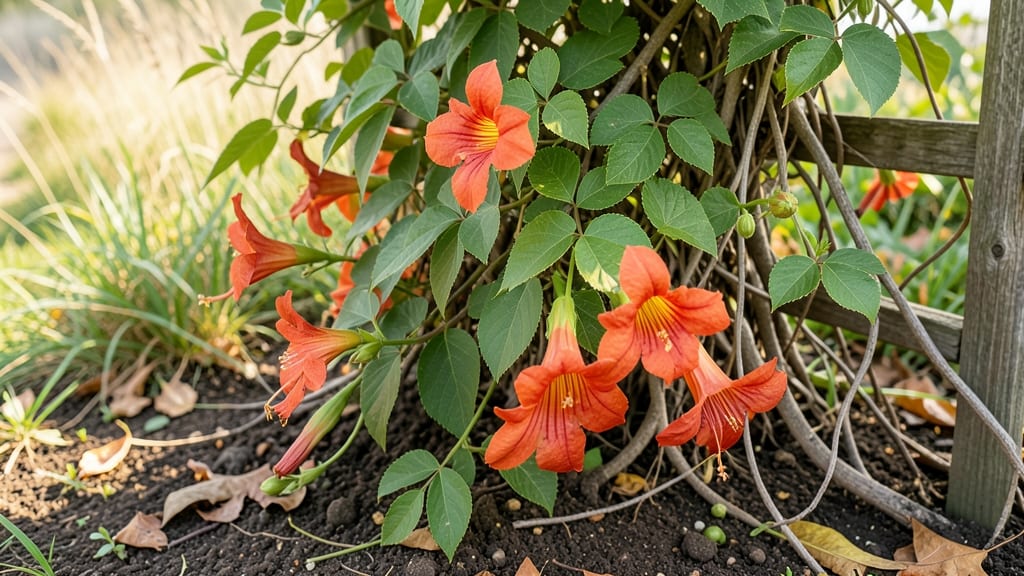
Planting trumpet vine shrub (Campsis radicans) turns your bare fence into a lush privacy screen in just 3 years. 🌿 I’ve watched mine go from a single vine to a 20-foot wall of trumpet-shaped blooms—all with minimal effort.
The secret? Fast growth, hardy roots, and a love for sunlight that makes it practically foolproof for the right spot.
This vigorous climber thrives in zones 4-9, where it handles heat, humidity, and even drought once established. Start with a young plant or seedling near a sturdy trellis, fence, or arbor—it’ll latch on with aerial roots and take off.
Well-draining soil and 6+ hours of sun daily are non-negotiable, but beyond that, it’s low-maintenance. No fussy fertilizing or constant watering required.
By year two, you’ll see 10-foot vines with clusters of fiery red-orange flowers that hummingbirds can’t resist. Prune in late winter to shape it and remove dead growth, but otherwise, let it grow wild. The foliage turns golden in fall, adding seasonal interest without extra work.
Perfect for urban yards, rural borders, or even container growing on patios (with a strong support). Just be warned—this vine spreads aggressively, so plant it where it can roam freely. Ready to transform your space with minimal effort? Let’s get those roots in the ground.
📚 In This Guide
- What you need
- Instructions
- Tips and common mistakes
- Wrapping up and next steps
What you need
- ● Trumpet Vine Shrub: 1-3 Campsis radicans plants (choose from seeds, cuttings, or nursery-bought saplings for fastest results).
- ● Seedlings: 6-12 months old (for quicker growth).
- ● Cuttings: 4-6-inch semi-hardwood cuttings (taken in late spring/early summer).
- ● Soil: Well-draining loamy soil (pH 6.0-7.0).
- ● 1-2 yards of compost or aged manure (to enrich soil).
- ○ Optional: Sand or perlite (for improving drainage in clay-heavy soil).
- ● Fertilizer: Balanced 10-10-10 fertilizer (1 lb per plant).
- ● Slow-release organic fertilizer (like 5-5-5 or composted cow manure).
- ● Digging Tools: 1 shovel (for planting holes).
- ● 1 garden trowel (for transplanting seedlings).
- ● 1 pruning shears (for trimming or harvesting cuttings).
- ○ Support Structures (Optional but Recommended): 1-2 trellises, arbors, or fences (8-10 ft tall for climbing vines).
- ● Metal or wooden stakes (for young plants until established).
- ● Watering Supplies: 1 hose with adjustable nozzle or watering can.
- ● Mulch (2-3 inches of wood chips or straw to retain moisture).
- ○ Safety Gear (Optional): Garden gloves (to protect hands from thorns).
- ● Knee pads (for comfort during planting).
- ● A sunny location with at least 6-8 hours of direct sunlight daily.
- ● Space for the vine to spread: 15-20 feet wide and 20-30 feet tall (or along a trellis/fence).
- ● Access to a water source (trumpet vines love consistent moisture but hate soggy roots).
- ● Patience for fast growth—these vines can climb 10+ feet per year! 🚀
Step-by-step guide to planting a trumpet vine privacy screen
Here's how to establish a lush, fast-growing privacy screen that will thrive in just three years.
🌱 Step 1: Choose the Perfect Planting Location
Trumpet vines need full sun—at least 6-8 hours daily—to grow aggressively and develop their signature vibrant blooms. I always check the sun exposure of my site for at least 24 hours before planting, using a simple observation method: mark the sunniest and shadiest spots with stakes. The ideal location should be near a sturdy trellis, fence, or pergola, as trumpet vines can grow 20-30 feet per year if given the right support.
Soil drainage is critical—these vines hate soggy roots. If your soil feels compacted or holds water after a rain, amend it with 3-4 inches of compost mixed into the top 12 inches of soil. You'll know you've done it right when the soil crumbles easily between your fingers when damp, rather than sticking together in clumps.
🌿 Step 2: Plant at the Right Time and Depth
Plant your trumpet vine in early spring, after the last frost date in your zone, when soil temperatures reach 60°F or warmer. Dig a hole twice as wide as the root ball but only as deep—planting too deep can suffocate the roots. Gently loosen the roots if they're circling the root ball, then place the vine in the hole so the top of the root ball sits 1 inch below soil level. This slight burial helps stabilize the plant and encourages root growth.
Backfill with native soil mixed with compost or well-rotted manure to give the vine a nutrient boost. Water deeply immediately after planting to eliminate air pockets and help the soil settle around the roots. You'll see the soil surface sink slightly as it absorbs water—this is normal and indicates proper settling.
☀️ Step 3: Install Support Structures Early
Trumpet vines need strong support from day one. Install your trellis, fence, or pergola before planting—these vines grow so quickly that waiting even a few weeks will leave you scrambling to provide adequate support. I use a 6-foot tall metal trellis for each plant, spaced 8-10 feet apart to allow for lateral growth. The vines will twine naturally, but you can gently tie young shoots to the structure with soft plant ties to encourage upward growth.
Watch for the first tendrils to appear within 4-6 weeks after planting. These look like thin, curly shoots that will wrap around any support. If you notice the vine growing too leggy or sprawling, prune back the longest stems by one-third to encourage bushier growth. This is especially important in the first year to establish a strong framework.
💧 Step 4: Water and Fertilize for Rapid Growth
Water newly planted trumpet vines deeply 2-3 times per week for the first month, ensuring the soil is moist 6 inches down. You'll know you're watering correctly when the soil feels damp like a wrung-out sponge—neither bone-dry nor soggy. After the first month, reduce to once a week, but increase frequency during drought or extreme heat. Mature vines are drought-tolerant once established, but young plants need consistent moisture.
Fertilize in early spring with a balanced 10-10-10 fertilizer or a slow-release granular formula. Apply ½ cup per plant and water it in thoroughly. Avoid high-nitrogen fertilizers, which promote leafy growth at the expense of flowers. You'll see the fastest growth when the vine produces abundant blooms—this is your cue that it's thriving.
✂️ Step 5: Prune for Health and Shape
Prune trumpet vines in late winter or early spring, before new growth begins. Remove any dead, diseased, or crossing branches first—these can harbor pests or diseases. Then, cut back the previous year's growth by one-third to encourage vigorous new growth. This is also the time to shape the vine along your trellis or fence. You'll notice new shoots emerging from the base and along the stems within 2-3 weeks of pruning.
During the growing season, prune to control size and shape. Pinch back the tips of new growth to encourage bushier growth, and remove any suckers growing at the base of the plant. Deadhead spent blooms to redirect the plant's energy into new growth rather than seed production. This keeps the vine looking tidy and promotes continuous flowering throughout the season.
Tips & tricks for fast-growing trumpet vine privacy screens
Here's what nobody tells you about maximizing your trumpet vine's explosive growth potential in just three years.
Sunlight Strategy: While the instructions emphasize full sun, I've found that trumpet vines actually thrive with 6-8 hours of direct sunlight plus 2-3 hours of bright indirect light. The key is consistency—partial shade can stunt growth dramatically. If your site gets afternoon shade, position the trellis to maximize morning sun exposure, which is more critical for photosynthesis. You'll notice the difference in just a few weeks when comparing vines in full sun versus those with even slight shade.
Soil Prep Secret: The instructions recommend amending with compost, but I take it further by adding a handful of mycorrhizal fungi to the planting hole. These beneficial fungi form symbiotic relationships with roots, dramatically improving nutrient and water uptake. You can find them in garden centers as powder or granules—just mix them into the soil when backfilling. This simple step can accelerate root development by up to 30% in the first growing season.
Support System Hack: While metal trellises work well, I've had the best success with wooden lattice panels for privacy screens. These provide more surface area for the vines to cling to, creating a denser screen faster. Install them vertically with 12-inch spacing between panels to allow for lateral growth. The vines will naturally fill in the gaps within a single growing season, creating that lush privacy barrier you're after.
Watering Wisdom: The instructions mention checking soil moisture 6 inches down, but I use a simple tool to make this easier: a wooden dowel. Push it into the soil after watering—if it comes out clean, you've watered enough. If it comes out damp, water more. This method is more reliable than finger testing, especially in heavy clay soils. You'll quickly develop a feel for when the soil is properly moist without overwatering, which can lead to root rot.
Pro Tips for Trumpet Vine Shrub
- Here's what nobody tells you about maximizing your trumpet vine's explosive growth potential in just three years.
- Sunlight Strategy: While the instructions emphasize full sun, I've found that trumpet vines actually thrive with 6-8 ...
- Soil Prep Secret: The instructions recommend amending with compost, but I take it further by adding a handful of myco...
Frequently asked questions
How fast does a trumpet vine shrub really grow in 3 years?
A healthy trumpet vine shrub (Campsis radicans) can grow 10–15 feet per year under ideal conditions—think full sun, well-draining soil, and consistent moisture. With proper care, it can easily reach 20–30 feet tall in just three years, making it one of the fastest-growing privacy screens!
When is the best time to plant trumpet vine shrubs?
Plant your trumpet vine in early spring or fall for the best results. This gives the roots time to establish before extreme summer heat or winter frost. Avoid planting in late summer, as the heat can stress young plants. Pro tip: Water deeply after planting to reduce shock!
Can trumpet vine shrubs grow in partial shade?
While trumpet vines thrive in full sun, they can tolerate partial shade (4–6 hours of sunlight daily). However, expect slower growth and fewer flowers in shadier spots. If your yard has limited sun, choose a sunnier location or opt for a shade-tolerant alternative like clematis or jasmine.
Are trumpet vine shrubs invasive? Should I be worried?
Yes, trumpet vines are considered invasive in many U.S. states (e.g., California, Florida, and the Southeast). They spread aggressively via air-layering and seeds, potentially overtaking gardens or nearby properties. Solution: Plant in containers or use root barriers to contain growth. Always check local regulations before planting!
What pests or diseases should I watch for with trumpet vine shrubs?
Common issues include:
- Aphids or spider mites: Spray with neem oil or insecticidal soap.
- Powdery mildew: Improve airflow and avoid overhead watering.
- Canker diseases: Prune infected branches and sterilize tools with rubbing alcohol.
Most problems are preventable with regular pruning and proper spacing (10–15 feet apart).
How and when should I prune my trumpet vine shrub?
Prune in late winter or early spring before new growth starts. Remove:
- Dead or crossing branches to improve airflow.
- Overly long vines to encourage bushier growth.
- Seeds heads to reduce spread (if containment is a concern).
Never prune in fall, as it can stimulate tender new growth vulnerable to frost.
Wrapping up and next steps
The trumpet vine shrub is a stunning, fast-growing solution for instant privacy and beauty in your garden—no waiting years to enjoy its vibrant blooms! With the right care, you’ll have a lush, eye-catching screen in just three years, transforming your outdoor space effortlessly. 🌿✨
Ready to get started? Grab your tools, pick a sunny spot, and plant your first trumpet vine today! Whether you’re a gardening pro or a beginner, this resilient shrub makes it easy to create a breathtaking, low-maintenance haven. Happy planting! 🌸