
Pruning
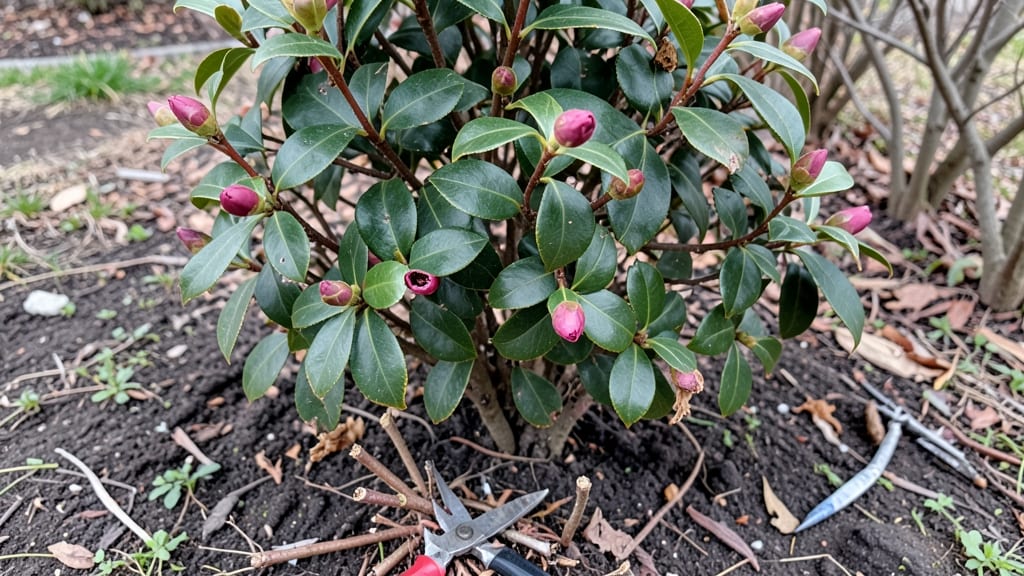
To prune a camellia shrub, wait until right after blooming in late spring or early summer. This timing prevents winter dieback and ensures next year's flowers form properly. Always use sterilized tools and trim gently to preserve the plant's natural shape.
Camellias bloom on old wood, meaning last year's growth holds this year's flowers.
Pruning too early can cut off next season's buds, while late cuts expose tender growth to frost damage. 🌿 I’ve found that pruning after blooms fade—when new growth is about 4-6 inches long—gives the plant time to recover before winter.
Over-pruning stresses camellias, so focus on removing only dead or crossing branches while maintaining an open center for airflow.
For best results, sterilize your shears with rubbing alcohol between cuts to prevent disease spread. After pruning, water deeply to help the plant recover, and avoid heavy fertilizing until new growth appears in spring. This approach keeps your camellia thriving for years.
💡 In This Article
- Camellia Pruning Timing and Growth Science
- Step-by-Step Camellia Pruning Guide for Beginners
Camellia pruning timing and growth science
Here's what's actually happening inside your camellia during its growth cycle: these shrubs bloom on old wood, meaning last year's branches hold this year's flower buds. When you prune at the wrong time, you risk cutting off next season's blooms before they even form.
The ideal window—late spring to early summer—aligns with when new growth emerges, giving the plant time to recover and set buds for next year's flowers before winter dormancy sets in.
The key factor is dormancy periods. Camellias enter dormancy in late fall, when temperatures drop below 50°F. Pruning during dormancy (fall/winter) creates fresh cuts that can't heal properly before spring, leading to winter dieback—a condition where new growth blackens and dies from frost exposure.
What most people don't realize is that camellias also need time to harden off after blooming, a process that takes about 6-8 weeks of warm weather to prepare for winter.
This works because late spring/early summer pruning coincides with the plant's natural recovery phase. After blooming, camellias redirect energy from flower production to leaf and stem growth. Cutting back at this stage removes only spent blooms and minor shaping, while preserving the framework needed for next year's flowers.
The new growth you see after pruning will become next year's blooming wood—so think of pruning as investing in next season's display.
Consider these biological realities when choosing your pruning window:
- Flower bud formation: Begins in late summer but requires 60-90 days of warm temperatures to mature
- Growth cycle: New shoots emerge in late spring, reaching 4-6 inches by summer
- Frost sensitivity: New growth below 32°F can suffer permanent damage
The science behind this involves auxin hormones, which regulate growth and flowering. Pruning stimulates auxin production at the cut points, promoting new growth—but only if done when the plant has energy reserves.
Fall/winter cuts force the plant to expend energy healing wounds during its dormant period, when it should be conserving resources. This is why you'll often see camellias with dead branches after winter pruning—they simply couldn't recover from the stress.
What most gardeners overlook is how pruning affects the root system. When you prune in late spring, the roots have already established connections for next year's growth.
Cutting in fall or winter forces the plant to develop new roots during its dormant phase, when soil temperatures are too cool for optimal root growth. The result? A stressed plant with reduced flowering potential the following season.
Think of your camellia's growth cycle like a three-act play: Act 1 (winter dormancy), Act 2 (spring/summer growth and flowering), Act 3 (fall bud formation). Pruning at the wrong act cuts the story short—literally removing the potential for next year's performance. 🌸