
Shrubs
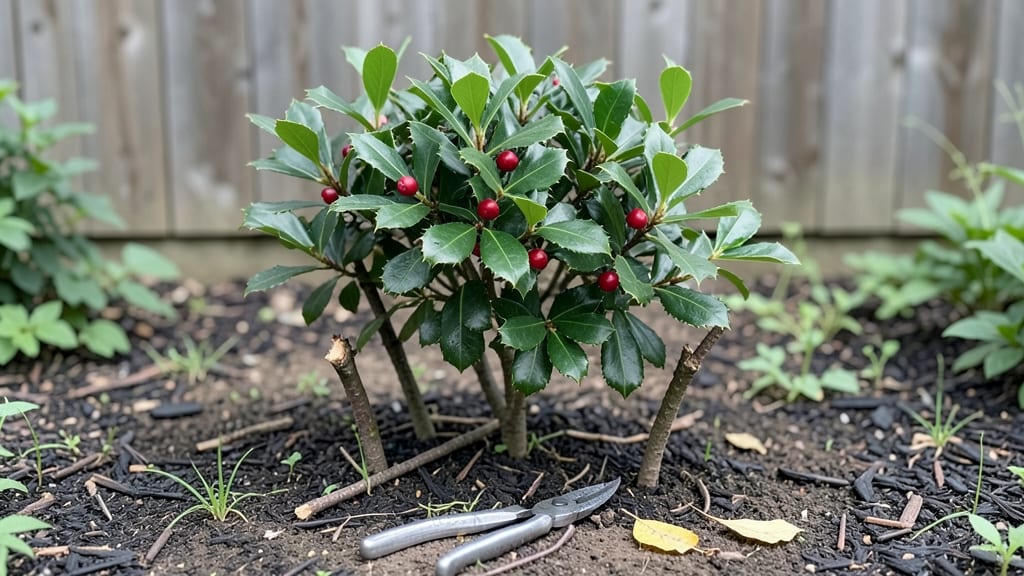
Pruning holly shrubs at the best time—late winter—is the secret to keeping those glossy leaves and bright berries thriving 🌿.
Miss this window, and you risk stunting growth or even stripping next year’s berries. I’ve watched holly shrubs recover from early pruning, but the struggle is real—especially when you’re left with sparse foliage by summer.
Here’s the deal: late winter (February to early March) is when holly shrubs are dormant, making it the perfect time to shape them without stress. Whether you’ve got flowering or non-flowering varieties, this guide breaks down the exact steps and timing to keep your holly healthy year-round.
You’ll learn how to spot the ideal moment, avoid common mistakes, and even adjust for your climate—because not every region’s winter is the same. Let’s get those shears ready!
Why late winter is the Optimal Time to Prune Holly Shrubs
Pruning your holly shrubs at the wrong time can trigger stress, disease, or even reduce next year's berry production. But timing it right—specifically in late winter—unlocks science-backed benefits that boost growth and health. This dormant season window minimizes stress while maximizing spring recovery.
When you prune holly during late winter (just before bud break), you're tapping into the plant's natural energy conservation phase. Holly shrubs store nutrients in their roots during winter, and pruning at this time redirects that energy toward new growth rather than wasted repair efforts.
This is why professional horticulturists recommend it.
The disease prevention factor is another critical reason. Wet spring conditions create perfect breeding grounds for fungal infections like powdery mildew. Pruning in late winter removes dead or diseased branches before pathogens spread, giving your holly a cleaner start to the growing season.
Climate plays a key role in timing adjustments. In cold climates (USDA Zones 3-6), aim for pruning between mid-February and early March—after the worst winter chill but before buds swell.
In mild climates (Zones 7-9), you can extend this window until late March or early April, as bud break occurs later.
Here’s why late winter pruning works so well for holly shrubs:
| Factor | Late Winter Benefit | Scientific Reason |
|---|---|---|
| Dormancy | Minimizes stress on plant | Plant’s metabolic rate is lowest, reducing wound response energy loss |
| Disease Risk | Lowest fungal/bacterial activity | Pathogens thrive in spring moisture; dormant season cuts heal faster |
| Energy Redirection | Boosts spring growth | Root-stored nutrients shift to new shoots instead of repairing old wounds |
| Berry Production | Preserves next year’s flowers | Avoids cutting flower buds that form in late summer/fall |
| Shape Control | Easier to maintain form | Dormant branches are rigid, making precise cuts simpler |
One common misconception is that late winter pruning will remove next year’s berries. However, holly berries develop from female flowers that bloom in late spring/early summer—long after your late winter pruning. The key is to avoid cutting into flower buds, which form in late summer/fall on new growth.
For flowering holly varieties like Ilex × 'Nellie R. Stevens', late winter pruning is ideal because it doesn’t interfere with the spring flowering cycle. Non-flowering varieties (like Ilex glabra 'Strongbox') can handle more aggressive pruning since they don’t rely on seasonal blooms for propagation.
Regional adjustments matter. In southern climates, where winters are mild, holly shrubs may start budding as early as February. Wait until you see 10-15% of buds swelling before pruning to avoid stressing the plant.
In northern climates, you can prune as late as mid-April in some cases, but always check for bud swell first.
Pro tip: Use sharp, sterilized pruners to make clean cuts at a 45-degree angle just above a bud or branch collar. This reduces healing time and prevents disease entry points. After pruning, apply a balanced fertilizer (like 10-10-10) to support new growth.
Remember, the goal is to shape without sacrificing—remove no more than 25% of the plant’s total volume in any single pruning session. Over-pruning can lead to sunburned foliage or reduced berry production, even in late winter.
By pruning holly in late winter, you’re giving your shrubs a head start on the growing season while protecting their long-term health. The results? Thicker foliage, more berries, and a neater shape that lasts all year.
Step-by-step late winter pruning guide for holly shrubs
Late winter is the perfect time to prune holly shrubs because they’re dormant yet before new growth begins. This timing prevents stress and promotes healthier spring regrowth.
Whether you have dwarf varieties or towering standard hollies, the process is similar—just scaled to size. Always prune on a dry, frost-free day to minimize disease risk.
Before you start, gather your tools: bypass pruners for clean cuts, loppers for thicker branches, thick gloves (holly thorns are sharp!), and disinfectant to sterilize tools between cuts. Safety first—thorn protection is non-negotiable. For large hollies, consider a pruning saw for stubborn branches.
Step-by-Step Pruning Process
- Step 1: Remove dead or diseased wood first—cut back to healthy green tissue or the main stem. This prevents pests from spreading.
- Step 2: Thin out overcrowded branches to improve airflow. Aim for 1/3 of the shrub’s volume—never remove more than this in one session.
- Step 3: Shape the outer canopy by trimming sparse or leggy growth. Use a hand lens to spot hidden buds if unsure.
- Step 4: For dwarf hollies, focus on light shaping—avoid heavy cuts to maintain their compact form. Standard hollies can handle bolder pruning.
- Step 5: Clean up fallen debris and sterilize tools with rubbing alcohol. Dispose of diseased branches in the trash, not compost.
Pro tip: Male and female hollies require different approaches. Female hollies (the ones with berries) need gentler pruning—never cut into last year’s growth, as this removes berry-producing buds. Male hollies, which provide pollen, can be pruned more aggressively since they lack fruit.
After pruning, water deeply to help the shrub recover. Apply a 2-inch layer of mulch around the base (but keep it away from the trunk) to retain moisture and regulate soil temperature. This is especially important if your late winter is unusually warm or dry.
Watch for new growth in 4-6 weeks—this confirms successful pruning. If you see yellowing leaves or stunted buds, you may have pruned too late or too aggressively. Adjust your approach next year based on the shrub’s response.
With proper timing and technique, your holly will reward you with denser foliage, brighter berries, and years of trouble-free growth. Happy pruning! ✂️🌿