
Pruning
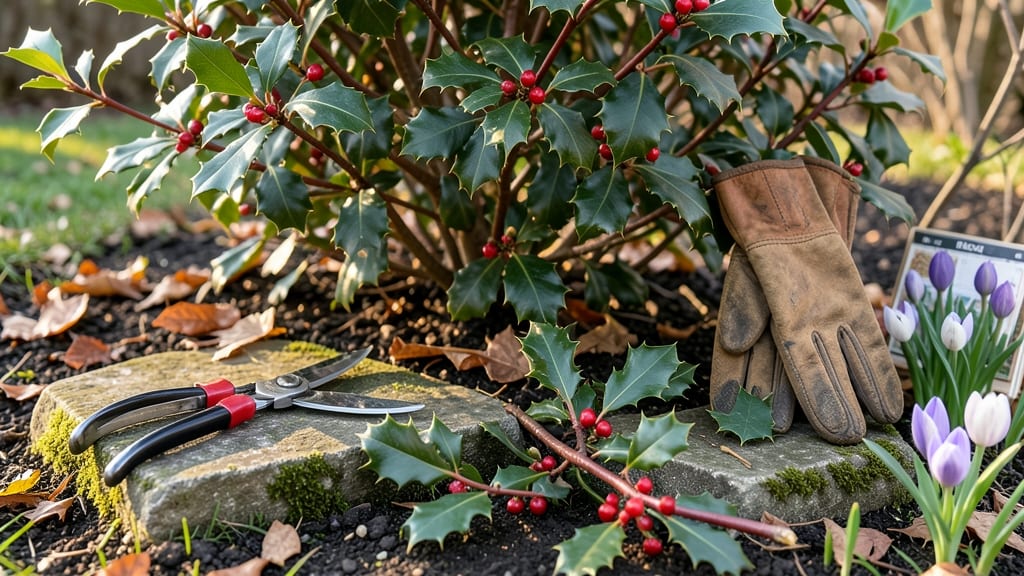
The best time to trim holly shrubs is in late winter, when they’re most cooperative before spring growth takes over. 🌿 I used to wait until summer, but that meant sacrificing next year's berries and letting the shrubs get leggy.
The secret lies in timing it right: after the coldest months but before buds swell, typically in February or March for most regions.
You'll need sharp bypass pruners and a clear vision for your holly's shape—whether you want a formal hedge or a natural, layered look. The key is to cut just outside the bud, at a 45-degree angle, to encourage new growth.
Holly responds well to pruning, but avoid heavy cuts that remove more than one-third of the plant at once. Mild climates can trim slightly later, but never after flowering if you want berries.
What you'll end up with is a holly that bursts with vibrant green foliage and abundant red berries—exactly what makes these shrubs so special. Proper late-winter pruning also prevents disease by improving airflow, and the fresh cuts encourage stronger growth when spring arrives.
The results are noticeable within a season, with fuller branches and fewer bare spots.
For regions with harsh winters, wait until late winter when the ground isn't frozen, and always prune after the worst cold snaps. Common mistakes include cutting into old wood (which won't regrow) or pruning too late in spring, which can stress the plant.
With the right timing, your holly will thrive for years, becoming the standout shrub in your landscape.
📚 In This Guide
- What you need
- Instructions
- Tips and common mistakes
- Wrapping up and next steps
What you need
- ● Bypass pruning shears – Sharp, clean shears (4-6" blades) for precise cuts on smaller branches.
- ● Loppers – For thicker branches (1.5-2" diameter), with long handles for leverage.
- ● Hand pruners – A backup pair (3-4" blades) for detail work or if your shears get dull.
- ● Garden gloves – Heavy-duty, cut-resistant gloves (size medium/large) to protect your hands from thorns.
- ○ Extension pole saw (optional) – If your holly is tall (6+ feet), a 3-4 ft. pole saw with a curved blade saves time.
- ● Disinfectant (70% isopropyl alcohol or pruning sealant) – Clean tools between cuts to prevent disease.
- ● Trash bags or bucket – For collecting clippings (2-3 large bags or a 5-gallon bucket).
- ● Ladder or step stool – If your holly is over 6 feet tall, use a sturdy, non-slip ladder.
- ● Safety glasses – Protect your eyes from flying debris or sap.
- ● Clear, dry day – Avoid trimming after rain or in extreme heat/cold.
- ○ Thermometer (optional) – Ideal temps: 50–70°F (10–21°C) for comfortable work.
Step-by-Step guide to trimming holly shrubs for optimal growth
Timing matters most with holly—late winter is your golden window for pruning.
⏰ Step 1: Wait for the Right Seasonal Cues
Prune holly shrubs in late winter, specifically between mid-February and early March in most climates. This timing ensures you cut before new growth begins but after the worst winter cold passes. Look for dormant branches with no buds swelling—this confirms the plant is still resting but ready to wake.
I know it seems counterintuitive to prune in winter, but holly responds best when you shape it while it's dormant. If you prune too early, you risk exposing tender new growth to late frosts. If you wait too long, you'll encourage rampant spring growth that may not harden off properly before summer heat arrives.
✂️ Step 2: Assess and Plan Your Cuts
Examine the shrub for dead, crossing, or rubbing branches—these are your first targets. Holly can handle a 25-30% reduction in size without stress, but never remove more than that in one season. I like to sketch a rough outline of my cuts on paper first to visualize the final shape.
Focus on opening up the center of the shrub to improve airflow and sunlight penetration. Holly produces berries on old wood, so avoid cutting back into last year's growth unless you're removing truly dead wood. Look for branches that are brown and brittle—these won't recover and should be pruned at the base.
☀️ Step 3: Make Clean, Strategic Cuts
Use sharp, clean pruners to make cuts at a 45-degree angle just above a bud or lateral branch. This encourages new growth in the right direction. For larger branches, cut back to a strong lateral branch that's growing outward rather than inward.
Never leave stubs—cutting too close to the trunk can damage the plant. Aim for a smooth cut that leaves about 1/4 inch of growth above the bud. If you're shaping for berry production, avoid heavy pruning on female plants (the ones that bear berries), as they fruit on old wood.
🌿 Step 4: Clean Up and Monitor Recovery
Remove all pruned branches and dispose of them properly—never leave cuttings on the ground, as they can harbor disease. After pruning, give the shrub a light watering to help it recover, especially if the winter was particularly dry.
Watch for new growth in 4-6 weeks—this is your signal that the pruning was successful. Holly typically responds well to late winter pruning, but if you notice excessive leaf drop or slow regrowth, you may have pruned too aggressively. In that case, the plant will recover, but future pruning should be lighter.
🌱 Step 5: Maintain Through the Growing Season
After pruning, holly needs consistent care to support new growth. Mulch around the base with 2-3 inches of organic mulch to retain moisture and regulate soil temperature. Avoid heavy fertilization right after pruning—holly prefers leaner soil and too much nitrogen can encourage weak, leggy growth.
Keep an eye out for pests like spider mites or scale, which are more likely to attack stressed plants. A light application of horticultural oil in early spring can prevent issues before they start. By summer, your holly should be fuller and healthier than ever, with better berry production if it's a fruiting variety.
Tips & tricks for perfect late winter holly pruning
Late winter pruning transforms holly shrubs from scraggly to stunning—but timing and technique make all the difference. Here's how to elevate your results.
Seasonal Timing Secret: The mid-February to early March window is non-negotiable for most regions. I've learned this the hard way—pruning too early risks frost damage to new growth, while waiting too long stresses the plant before summer. Check for dormant branches with no bud swelling as your green light. For warmer climates, aim for late January to early February instead.
Visual Cues for Healthy Cuts: When making those 45-degree angle cuts in Step 3, look for the "bud triangle"—the V-shaped area where the bud meets the branch. Cut just above this, leaving that 1/4-inch growth stub. This ensures new shoots grow outward rather than inward. For thicker branches, make your cut at the branch collar where it meets the trunk to prevent damage.
Stress Reduction Strategy: Never exceed that 25-30% size reduction rule in Step 2. I once pruned a holly by 40% and it took two years to fully recover. Focus on removing only dead, crossing, or inward-growing branches first. The center opening you create improves airflow and sunlight penetration, which actually boosts berry production on female plants—just don't go overboard on the old wood.
Recovery Monitoring: Those 4-6 weeks of watching for new growth are your best indicator of success. If you see sparse, weak growth, you may have pruned too aggressively. In that case, next year's pruning should be minimal—just remove any dead wood. For healthy growth, you'll notice vibrant new leaves forming along the branches you cut back.
Pro Tips for Best Time To Trim Holly Shrubs
- Late winter pruning transforms holly shrubs from scraggly to stunning—but timing and technique make all the difference.
- Seasonal Timing Secret: The mid-February to early March window is non-negotiable for most regions.
- Visual Cues for Healthy Cuts: When making those 45-degree angle cuts in Step 3, look for the "bud triangle"—the V-shaped area where the bud meets the branch.
Frequently asked questions
Got questions about trimming your holly shrubs? You’re not alone! Here are some of the most common concerns—plus quick, expert-backed answers to keep your holly thriving.
When is the absolute latest I can trim holly shrubs without hurting them?
While late winter (February–March) is ideal, you can trim holly shrubs up until early spring (just before new growth starts, around April). Avoid pruning after mid-spring—this can stress the plant and reduce flowering or berry production. If you miss the window, wait until next winter!
Can I trim holly shrubs in winter if they’re still dormant?
Yes! Trimming dormant holly shrubs in late winter (when temps are above freezing) is perfect—it’s easier to see the plant’s structure, and they won’t bleed sap. Just avoid hard freezes (below 20°F/-7°C) to prevent damage. A light dusting of snow? No problem! Clear it off first.
Will trimming holly shrubs affect next year’s berries?
Not if you do it right! Holly shrubs produce berries on old wood, so focus on removing dead, diseased, or overcrowded branches—never cut back into last year’s growth. Prune lightly to maintain shape, and you’ll still get those festive red berries. Pro tip: Male and female holly plants need both to produce berries!
How much can I trim holly shrubs without killing them?
Holly shrubs are tough but not invincible! Never remove more than 25–30% of the plant at once. For mature shrubs, aim for selective pruning—cut back to just above a leaf bud or lateral branch. Over-trimming can shock the plant, so take it slow. Think of it like a haircut: shape, don’t shear!
What if my holly shrubs look leggy after trimming?
Leggy growth happens when holly shrubs get too much sun or aren’t pruned regularly. To fix it:
- Trim back overly long branches to encourage bushier growth.
- Fertilize lightly in early spring with balanced, slow-release fertilizer.
- Ensure they get partial shade (especially in hot climates).
Wrapping up and next steps
Trimming your holly shrubs in late winter—just before new growth begins—is the secret to keeping them lush, healthy, and full of those signature bright berries. 🌿 By following the right techniques and timing, you’ll encourage stronger branches, better shape, and even more vibrant blooms come spring.
Now that you’re armed with the best practices, there’s no time like the present to grab your pruners and give your holly the care it deserves!
Next step: Mark your calendar for February or early March (depending on your climate) and take action before the growing season kicks off. Your holly will thank you with years of stunning, well-manicured beauty!