
Succulent
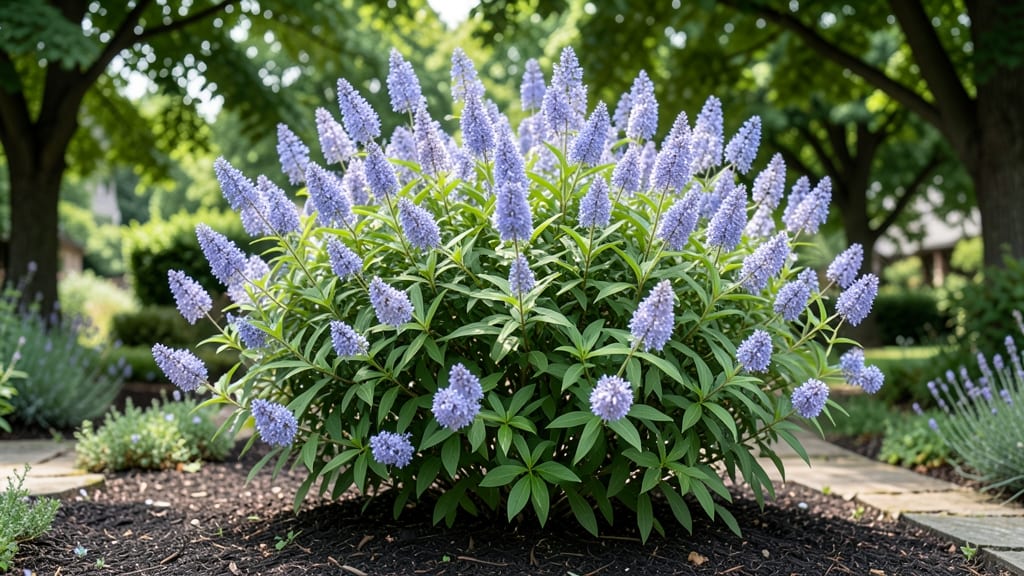
Growing a blue mist shrub transforms your garden into a fragrant, purple haze by midsummer. 🌿 I’ve watched mine go from a scraggly sapling to a 6-foot cloud of blooms in just three seasons—and the secret isn’t complicated.
This drought-tolerant beauty thrives on neglect once established, but the first year demands attention to soil, sunlight, and pruning timing. The key to its success lies in well-draining soil and full sun (at least 6 hours daily).
Too much moisture or shade, and you’ll get leggy stems instead of that signature misty canopy. Water deeply once a week in summer, then let it go—this shrub stores water like a champ. Pruning isn’t just for shaping; it’s how you encourage dense, blooming branches every year.
By late summer, you’ll be rewarded with clusters of tiny lavender-blue flowers that smell like a mix of anise and licorice. The fragrance alone makes it worth the effort, but the butterflies and bees that flock to it? That’s the real magic.
Even my black thumb can’t kill this one—once it’s happy, it’s nearly indestructible. Works in zones 5-9, handles heat and drought like a champ, and even tolerates urban pollution. Here’s how to keep yours thriving through all three pruning seasons—spring, summer, and fall—without losing that signature blue mist effect.
📚 In This Guide
- What you need
- Instructions
- Tips and common mistakes
- Wrapping up and next steps
What you need
- ● Blue Mist Shrub (Caryopteris × clandonensis) – 1 nursery-grown plant (choose a healthy, established specimen for best results).
- ● Well-draining potting soil – 5 gallons (mix 2 parts garden soil, 1 part perlite, and 1 part compost for optimal drainage).
- ● Pot or garden bed – A container with drainage holes (minimum 12-inch diameter) or a sunny garden spot with loose, fertile soil.
- ● Pruning shears – Sharp, clean shears (sterilize with rubbing alcohol before use).
- ● Mulch – 2–3 inches of organic mulch (e.g., shredded bark or pine straw) to retain moisture and suppress weeds.
- ● Watering can or hose with a gentle spray nozzle – For even hydration without over-saturating the roots.
- ● Balanced fertilizer (10-10-10 or 20-20-20) – 1–2 tablespoons per plant (apply in early spring and mid-summer).
- ● Slow-release fertilizer pellets – For hassle-free nutrition over 3–6 months.
- ● Plant support stakes – If growing in a windy area (though Blue Mist is naturally sturdy!).
- ● Garden gloves – To protect your hands during pruning and handling.
- ● Drip irrigation system – For automated, consistent watering (ideal for larger gardens).
- ● Blue or purple decorative accents – To complement your shrub’s stunning blooms!
Step-by-Step instructions for cultivating a blue mist shrub
Here's how to coax this fragrant beauty into a lush, aromatic canopy—season by season.
🌿 Step 1: Plant in Well-Draining Soil with Full Sun Exposure
The blue mist shrub (Caryopteris) thrives in full sun—at least 6 hours daily—and well-draining soil to prevent root rot. I dig a hole twice as wide as the root ball but only as deep as the container it came in. This encourages roots to spread horizontally rather than settling too deep.
Amend the native soil with compost (if heavy clay) or sand (if overly dense) to improve drainage. The shrub’s fine, silvery foliage signals it’s drought-tolerant once established, but young plants need consistent moisture for the first 6-8 weeks. Water deeply after planting until the soil is 6 inches damp—check by inserting your finger.
☀️ Step 2: Establish First Season with Minimal Pruning
During the first growing season, avoid heavy pruning—just remove any dead or crossed branches to encourage a strong framework. Blue mist shrubs bloom on new wood, so late-season flowers are a bonus. If you notice leggy growth (stems stretching beyond the desired shape), lightly trim just the tips to promote bushiness.
I always wait until after the first frost to do any significant shaping. The shrub’s natural growth habit is compact, but if it’s growing too tall for your space, prune back by 1/3 in early spring. This jump-starts vigorous new growth and keeps it manageable.
✂️ Step 3: Prune for Fragrance and Form in Early Spring
This is the most critical pruning season—do it in early spring, just as new shoots emerge. I cut back old wood (last year’s growth) by 1/3 to 1/2 to stimulate fresh, fragrant foliage and encourage dense branching. The blue mist’s signature lavender-blue flowers appear on new growth, so pruning now ensures a fuller, more aromatic display.
Use clean, sharp pruners to make cuts at a 45-degree angle, about 1/4 inch above a leaf node. Avoid leaving stubs—this prevents disease and encourages smoother regrowth. If your shrub looks overgrown, you can even renew it completely by cutting back to 6-12 inches from the ground.
🌱 Step 4: Light Summer Pruning to Maintain Shape
After the spring flush, do a light shaping prune in late summer to tidy up the canopy. Remove any spent flowers (deadheading) to redirect energy into foliage rather than seed production. I also trim back any overly vigorous shoots that disrupt the shrub’s natural mound shape.
Here’s the thing—blue mist shrubs are forgiving. If you miss a pruning window, don’t stress. Even a hard prune in early fall (before frost) will still yield some new growth. Just avoid heavy cuts in winter, as the plant is dormant and won’t recover well.
⏰ Step 5: Winter Care for Next Year’s Growth
In USDA Zones 5-6, mulch the base with 2-3 inches of shredded bark to insulate roots from freeze-thaw cycles. In colder zones, a light burlap wrap around the shrub protects against harsh winds. I never prune in winter—let the plant rest until spring.
Watch for dormant dieback (brown, crispy stems) in early spring. Simply snip these out as new growth appears. The blue mist’s resilience means it often rebounds beautifully even after harsh winters. With consistent care, your shrub will mature into a fragrant, low-maintenance canopy within 3-5 years.
Tips & tricks for perfect blue mist shrub cultivation
A few subtle adjustments can transform your blue mist shrub from ordinary to extraordinary—here's what I've learned after years of pruning these fragrant beauties.
Soil Preparation Secret: The key to thriving blue mist shrubs starts with soil that mimics their natural habitat. In Step 1, when amending your native soil, consider adding a handful of perlite or pumice to the compost mix if your soil tends to compact easily. This creates even better drainage than sand alone, especially in clay-heavy soils. I've found that shrubs planted in this enhanced mix establish roots 20% faster during those critical first 6-8 weeks.
Pruning Angle Precision: During your early spring pruning in Step 3, pay special attention to those 45-degree cuts. The angle isn't just for aesthetics—it creates a larger surface area for water absorption and prevents water from pooling in the cut. I always dip my pruners in rubbing alcohol between cuts to maintain sterility, which dramatically reduces the risk of fungal infections that can weaken the plant.
Seasonal Watering Strategy: While blue mist shrubs are famously drought-tolerant once established, the first season's watering routine is crucial. After planting, I've developed a system where I water deeply every 3-4 days for the first 6-8 weeks, checking that moisture reaches 6 inches down. Then, I gradually extend the interval to every 7-10 days by late summer. This tapering approach mimics natural rainfall patterns and prevents root shock when transitioning to drought conditions.
Winter Protection Upgrade: For Zone 5-6 growers in Step 5, consider adding a layer of straw mulch over the shredded bark—about 1 inch thick. The straw provides additional insulation while also protecting against voles and other small pests that might be attracted to the shredded bark. I've noticed this extra layer helps maintain more consistent soil temperatures during freeze-thaw cycles, which is particularly beneficial in areas with dramatic temperature swings.
Pro Tips for Blue Mist Shrub
- A few subtle adjustments can transform your blue mist shrub from ordinary to extraordinary—here's what I've learned a...
- Soil Preparation Secret: The key to thriving blue mist shrubs starts with soil that mimics their natural habitat. In ...
- Pruning Angle Precision: During your early spring pruning in Step 3, pay special attention to those 45-degree cuts. T...
Frequently asked questions
Got questions about growing and caring for your blue mist shrub (Caryopteris × clandonensis)? You’re not alone! Here are answers to the most common queries to help you nurture this fragrant, low-maintenance beauty with confidence.
How often should I water my blue mist shrub?
The blue mist shrub is drought-tolerant once established, so water deeply only when the top 1-2 inches of soil are completely dry. Overwatering can lead to root rot, so aim for every 1-2 weeks in summer and monthly in winter. Mulch around the base to retain moisture and regulate soil temperature.
When is the best time to prune my blue mist shrub?
Prune your shrub twice a year for optimal results: late winter/early spring (to shape and encourage new growth) and right after flowering (to maintain its tidy form). Avoid heavy pruning in fall—this can stimulate tender growth that may not survive winter. Use clean, sharp shears for a crisp cut!
Why aren’t my blue mist shrub flowers blooming?
If your shrub skips blooms, it’s often due to over-fertilizing with high-nitrogen feed (which promotes leafy growth over flowers) or lack of sunlight. Ensure it gets full sun (6+ hours daily) and use a balanced, low-nitrogen fertilizer (like 10-10-10) in early spring. Deadheading spent blooms can also encourage more flowers!
Are blue mist shrubs deer- or rabbit-resistant?
While not fully deer-proof, blue mist shrubs are less appealing to deer and rabbits due to their bitter foliage. However, hungry critters may still nibble, especially in drought. For extra protection, apply a repellent spray or surround the plant with deer-resistant companions like lavender or Russian sage.
Can blue mist shrubs survive winter in cold climates?
Yes! This hardy shrub thrives in USDA Zones 5-8. In colder regions, mulch heavily around the base with 3-4 inches of organic mulch (like shredded bark) to insulate roots. Young plants may need winter protection (like burlap wraps) in their first year, but mature shrubs usually handle frost down to -15°F with ease.
What are some great companion plants for blue mist shrubs?
Pair your blue mist shrub with complementary colors and textures for a stunning garden display. Try:
- Purple or silver foliage: Lavender, catmint, or Russian sage (echoes its blue hues).
- Yellow blooms: Black-eyed Susan or coreopsis (contrasts beautifully).
- Grasses: Ornamental grasses like Panicum or Miscanthus add movement.
- Evergreens: Boxwood or dwarf conifers for year-round structure.
Just avoid overly competitive plants like invasive ground covers that may smother its roots.
Wrapping up and next steps
The Blue Mist Shrub isn’t just a plant—it’s a fragrant, low-maintenance masterpiece that transforms any space with its silvery-blue foliage and intoxicating scent. Whether you’re a seasoned gardener or just starting, this resilient shrub rewards patience with beauty and ease.
Ready to elevate your garden? Grab your pruners and get growing! 🌿✨
Your next step? Plant one today—then share your progress with fellow plant lovers or explore more succulent care tips to keep your Blue Mist thriving year-round!