
Shrubs
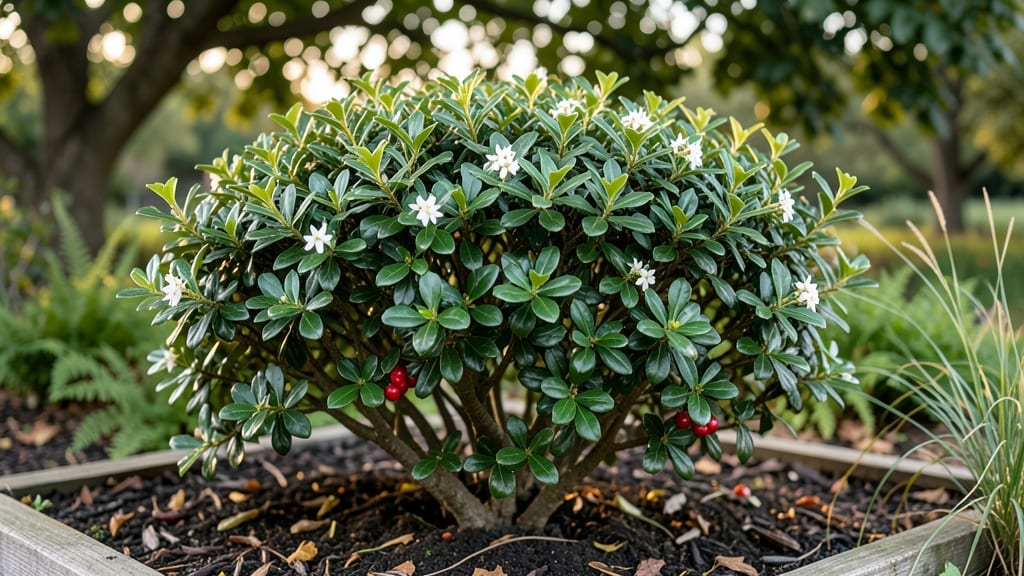
Boxwood holly shrubs deliver fast-growing evergreen privacy with striking red berries that last all winter. ✨ These two shrubs—boxwood's lush foliage and holly's bold color—work together to create a year-round landscape focal point that's easier to grow than you'd think.
Boxwood thrives in partial shade with well-draining soil, while holly needs full sun to produce its signature berries. Both tolerate pruning well, making them perfect for shaping hedges, borders, or privacy screens. The key difference? Boxwood stays green all year, while holly's berries add dramatic winter interest.
By mid-summer, you'll see dense growth that blocks views while adding texture and color. Boxwood grows 12-24 inches per year, while holly reaches 18-36 inches—fast enough to create a living screen within 3-5 years with proper care.
Pair them with azaleas or rhododendrons for layered color, or use them alone for a clean, structured look. Their low-maintenance nature makes them ideal for busy gardeners who still want high-impact results.
📚 In This Guide
- What you need
- Instructions
- Tips and common mistakes
- Wrapping up and next steps
What you need
- ● Boxwood holly shrubs – 3 to 5 plants (depending on desired coverage; spacing ~3–5 ft apart for mature size)
- ● High-quality potting soil or native soil mix – 1–2 bags (enriched with compost or organic matter)
- ● Mulch (pine straw, shredded bark, or cypress mulch) – 2–3 cubic feet (to retain moisture and suppress weeds)
- ● Organic slow-release fertilizer – 1 bag (10–20 lb, 10–10–10 or similar NPK ratio)
- ● Watering can or hose with a gentle spray nozzle – For deep, even watering
- ● Garden trowel or shovel – For digging planting holes
- ● Pruning shears – To trim dead foliage or shape shrubs
- ● Measuring tape or ruler – To ensure proper spacing (3–5 ft apart)
- ○ Gloves (optional but recommended) – For protection while handling soil and plants
- ○ Wheelbarrow (optional) – For hauling soil or mulch
- ● Sunlight access – Partial shade to full sun (6+ hours of sunlight daily for best growth)
- ● Well-draining soil – Amend heavy clay soil with compost to improve aeration
- ● Proper spacing – Account for mature shrub size (boxwood holly can reach 6–10 ft tall)
- ● Water source nearby – Ensure easy access for consistent watering
How to plant and maintain boxwood holly shrubs for fast privacy
Here's how I create lush, evergreen privacy screens that grow quickly and stay vibrant year-round.
🌱 Step 1: Choose and Prepare the Planting Site
Boxwood Holly thrives in partial shade to full sun, but for fastest growth, select a spot with morning sun and afternoon shade. The soil should be well-draining—these shrubs hate soggy roots. I always test drainage by digging a hole and filling it with water; if it drains in under an hour, the site is perfect.
Amend heavy clay soil with 2-3 inches of compost mixed into the top 12 inches of soil. This improves aeration and nutrient availability. The ideal pH range is 5.0-7.0, so if your soil tests acidic, add a handful of lime to the planting hole. Space plants 3-5 feet apart for a dense hedge—closer spacing encourages faster fill-in.
🪴 Step 2: Plant Shrubs at the Right Depth and Spacing
Dig holes twice as wide as the root ball but only as deep. The top of the root ball should sit 1 inch above ground level—burying too deep suffocates roots. Gently remove the shrub from its container and tease apart any circling roots with your fingers. This prevents root girdling as the plant grows.
Place the shrub in the hole and backfill with native soil, tamping lightly every 2 inches to eliminate air pockets. Water deeply immediately after planting to settle the soil and eliminate gaps. I always add a 2-inch layer of mulch around the base, keeping it 3 inches away from the stem to prevent rot. Mulch retains moisture and regulates soil temperature.
☀️ Step 3: Water and Fertilize for Fast Growth
Water newly planted shrubs deeply every 2-3 days for the first 2 weeks, then taper to once weekly once established. You'll know they're getting enough water when the top 2 inches of soil feel dry to the touch. Overwatering causes root rot, while underwatering leads to wilting and leaf drop.
Apply a balanced, slow-release fertilizer (10-10-10 or similar) at planting time, then again in early spring and mid-summer. I use a granular fertilizer spread evenly over the root zone, followed by a light watering to activate it. Avoid high-nitrogen fertilizers—they promote leafy growth at the expense of root development, which slows maturity.
✂️ Step 4: Prune Strategically for Density and Shape
Prune boxwood holly twice yearly: once in late winter (just before new growth starts) and again in early summer after flowering. Use sharp, clean pruners to make cuts at a 45-degree angle just above a leaf node. This encourages bushier growth and prevents unsightly stubs.
For a fast-growing hedge, I shear lightly in spring to maintain shape, then let the shrubs fill in naturally. Avoid heavy pruning—never remove more than one-third of the plant's foliage in a single session. If you see yellowing leaves, it's often a sign of over-pruning or nutrient deficiency. Prune back to healthy green growth, and the shrub will recover quickly.
🌿 Step 5: Monitor and Maintain Year-Round Health
Check shrubs monthly for signs of pests like boxwood leaf miners or spider mites. Early detection is key—treat infestations with neem oil or insecticidal soap as soon as you spot webbing or discolored leaves. I also inspect for fungal diseases like boxwood blight, which causes dark spots on leaves. Remove affected foliage immediately and apply a fungicide if needed.
In late fall, apply a 3-inch layer of mulch to insulate roots and retain moisture. Boxwood Holly is cold-hardy, but mulch helps protect young plants from temperature fluctuations. Fertilize lightly in early spring with a low-nitrogen, high-phosphorus formula to encourage strong root growth before the growing season. With consistent care, these shrubs will fill in quickly and provide year-round privacy.
Tips & tricks for perfect boxwood holly privacy screens
Here's what nobody tells you about creating a lush, fast-growing hedge that actually stays vibrant year after year.
Soil Preparation Secret: The 2-3 inches of compost mixed into the top 12 inches of soil isn't just about nutrients—it's about creating the perfect air-to-soil ratio. I've found that adding a handful of perlite to the compost mix helps prevent compaction, which is especially important in clay-heavy soils. This small adjustment can double your root growth in the first season by improving oxygen flow to the roots.
Planting Depth Technique: That 1-inch above ground level rule isn't just about aesthetics—it's about survival. When you bury roots too deep, you're essentially suffocating them. I always make a small reference mark on the root ball with a pencil before planting to ensure perfect positioning. This becomes even more critical in heavier soils where drainage is already a concern.
Watering Wisdom: The "top 2 inches of soil should feel dry" guideline is your best friend, but timing matters too. I water in the early morning so the foliage has all day to dry, preventing fungal issues. For the first two weeks, I actually water every other day in hot climates—this helps establish strong root systems faster than the standard 2-3 day schedule.
Fertilizer Timing: That mid-summer feeding isn't just about summer growth—it's about preparing for winter. I've seen shrubs that received their summer fertilizer too late struggle with winter dieback. Aim to fertilize by early July at the latest. For a real growth boost, I mix in a slow-release organic fertilizer with my regular feeding—this gives roots a steady nutrient supply without the risk of over-fertilization.
Pro Tips for Boxwood Holly Shrubs
- Here's what nobody tells you about creating a lush, fast-growing hedge that actually stays vibrant year after year.
- Soil Preparation Secret: The 2-3 inches of compost mixed into the top 12 inches of soil isn't just about nutrients—it's about creating the perfect air-to-soil ratio.
- Planting Depth Technique: That 1-inch above ground level rule isn't just about aesthetics—it's about survival.
Frequently asked questions
Got questions about boxwood holly shrubs?
You’re not alone! Whether you’re a first-time gardener or a seasoned landscaper, these evergreen beauties can spark curiosity. Below, we’ve rounded up the most common questions—and answers—to help you grow a lush, low-maintenance privacy screen with ease.
How fast do boxwood holly shrubs grow?
Boxwood holly shrubs grow at a moderate pace, typically adding 12–24 inches per year under ideal conditions. With proper care (sunlight, water, and soil), you can expect a dense, 6-foot-tall hedge in about 3–5 years. Patience pays off—these shrubs thrive when given time to establish strong roots!
When is the best time to plant boxwood holly shrubs?
The ideal planting window is early spring or fall (4–6 weeks before frost). Avoid extreme heat or cold, as young shrubs need time to acclimate. If you must plant in summer, water deeply and mulch to retain moisture. Pro tip: Morning sunlight helps prevent transplant shock!
Are boxwood holly shrubs deer-resistant?
While not completely deer-proof, boxwood holly shrubs are more resistant than pure boxwoods due to their holly-like leaves. Deer may nibble if other food is scarce. To deter them, try repellents, fencing, or companion plants like lavender or rosemary. A little extra protection goes a long way!
How do I keep boxwood holly shrubs looking neat year-round?
Regular pruning (2–3 times a year) keeps these shrubs tidy and encourages bushier growth. Trim just above a leaf bud in late spring or early fall, and avoid cutting into old wood. For a polished look, shape with hedge shears and mulch annually to retain moisture and suppress weeds. Bonus: Prune after flowering for a cleaner appearance!
What are some alternatives to boxwood holly shrubs?
If boxwood holly isn’t your style, consider these low-maintenance evergreen alternatives:
- Dwarf English Holly – Spiky leaves, great for hedges.
- Inkberry Holly – Dark foliage, drought-tolerant.
- Emerald Green Arborvitae – Fast-growing, soft texture.
- Dwarf Yew – Compact, deer-resistant.
Why are my boxwood holly shrubs turning brown?
Brown edges or leaves usually signal overwatering, underwatering, or fungal issues. Check soil moisture (it should be evenly damp but not soggy). Improve drainage if needed, and avoid wetting foliage during watering. If spots appear, treat with neem oil or fungicide. Mulch properly to regulate soil temperature and retain moisture.
Wrapping up and next steps
Boxwood holly shrubs are the ultimate low-maintenance, high-impact solution for adding year-round privacy and charm to your landscape. With their glossy leaves, vibrant berries, and fast-growing nature, they’re perfect for hedges, borders, or even container gardening—plus, their resilience makes them a dream for busy gardeners! 🌿
Ready to transform your outdoor space? Start by selecting the right variety for your climate, then plant with confidence using the tips we’ve shared.
Whether you’re a seasoned gardener or just beginning, these shrubs will reward you with beauty and ease for years to come. Grab your gloves and get growing! 🌱