
Shrubs
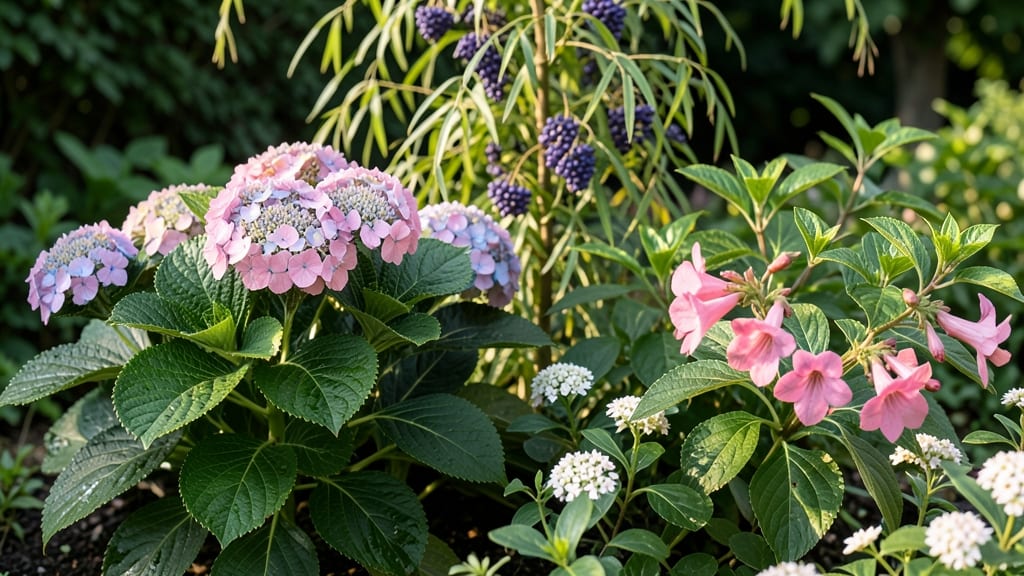
Your garden could look like a living painting all year long—colorful perennial shrubs are the secret weapon for drama without the seasonal replanting. 🌿 I’ve designed entire borders with just a handful of these workhorses, and the results are stunning: deep purples in spring, fiery reds in fall, and evergreen structure year-round.
No dead zones, no boring green patches—just layered color that shifts with the seasons.
The magic happens with smart placement: pair Hydrangea paniculata (cone-shaped blooms in pink, white, or green) with Cotinus ‘Royal Purple’ (smoky foliage that glows in sunset light) for a mix of texture and hue.
Add Weigela florida for trumpet-shaped blooms that attract hummingbirds, and suddenly your garden has movement and color. These shrubs thrive in full sun to partial shade, so they fit almost anywhere—foundation plantings, mixed borders, or even as standalone statement pieces.
What you’ll get is a garden that feels alive in every season. The purple-black foliage of Smokebush contrasts beautifully with the chartreuse of Dwarf Fothergilla, while Spirea ‘Goldflame’ adds golden highlights that catch the light.
Even in winter, the exfoliating bark of Cornus sericea adds texture, and the berry clusters of Viburnum bodnantense provide winter interest. It’s like having a four-season palette without the upkeep.
Best part? These shrubs grow steadily but aren’t aggressive—no need for constant pruning or staking. Just plant them where they’ll get the light they love, water them in the first year, and let them do their thing.
For small spaces, opt for compact varieties like Abelia ‘Kaleidoscope’; for bold impact, go big with Cleyera ‘Conference’. The possibilities are endless, and your neighbors will wonder how you keep it looking so effortlessly fabulous.
📚 In This Guide
- What you need
- Instructions
- Tips and common mistakes
- Wrapping up and next steps
What you need
- ● Perennial shrubs: Choose 3–5 varieties (e.g., Hydrangea macrophylla, Weigela florida, Abelia grandiflora, or Spiraea japonica). Buy 1–2 plants per type (3–10 gallon pots for mature plants).
- ● High-quality potting mix: 10–20 gallons (depending on plant size). Opt for a well-draining blend with compost.
- ● Mulch: 2–3 bags (shredded bark or pine straw) to retain moisture and suppress weeds.
- ● Organic fertilizer: 5–10 lbs of balanced (10-10-10) or slow-release granular fertilizer.
- ● Pruning shears: Bypass-style, sharp, and sanitized (for shaping and maintenance).
- ● Garden gloves: A pair to protect your hands from thorns or rough foliage.
- ● Trowel or spade: For digging holes (size depends on root ball—aim for 2–3x wider than the container).
- ● Watering can or hose with nozzle: A gentle spray setting to avoid damaging delicate roots.
- ● Measuring tape or ruler: To ensure proper spacing (check plant tags for guidelines).
- ○ Stakes (optional): 4–6 wooden or bamboo stakes + twine for support if planting tall shrubs.
- ○ Garden kneeler/pad (optional): For comfort during planting.
- ● Sunlight assessment: Confirm your garden’s light conditions (full sun, partial shade, or full shade) to match shrub needs.
- ○ Soil test (optional but helpful): A DIY kit (~$20) to check pH and nutrient levels (ideal range: 5.5–6.5 for most perennials).
- ● Water source nearby: Ensure easy access for the first 2–3 weeks post-planting.
- ● Patience: Perennials thrive with time—avoid over-pruning or fertilizing in their first year!
Step-by-step guide to planting colorful perennial shrubs
Here’s my no-fuss approach to planting perennials that deliver bold color season after season.
🌱 Step 1: Choose the Right Location for Year-Round Interest
Perennial shrubs thrive when planted in spots that match their natural light needs—most need 6+ hours of sun daily, though some varieties tolerate partial shade. I always scout the area at different times of day to spot sun patterns; what looks sunny in summer might be shaded in winter. Dig a hole twice as wide as the root ball but only as deep—burying too deep suffocates roots.
Amend the native soil with 2-3 inches of compost mixed into the bottom of the hole. This boosts drainage and nutrient availability without overwhelming the plant. Test the soil pH if possible—most perennials prefer 6.0-7.0, but some like hydrangeas thrive in acidic soil. If you’re unsure, a simple home test kit works fine.
🪴 Step 2: Plant with Care to Avoid Transplant Shock
Gently remove the shrub from its container, loosening any circling roots with your fingers. If the roots are tightly bound, score the root ball with a knife to encourage outward growth. Place the plant in the hole so the top of the root ball sits 1 inch above ground level—this prevents rot during heavy rains.
Backfill with native soil mixed with compost, tamping lightly as you go to eliminate air pockets. Water deeply right after planting to settle the soil and encourage root contact. I always add a 2-inch layer of mulch around the base, keeping it 3 inches away from the stem to prevent moisture buildup that causes rot.
☀️ Step 3: Water and Maintain for Strong First-Year Growth
Water newly planted shrubs every 2-3 days for the first two weeks, then taper to once a week once established. You’ll know it’s time to water when the top inch of soil feels dry—stick your finger in to check. Overwatering is the fastest way to kill perennials, so resist the urge to drown them.
Fertilize lightly in early spring with a balanced 10-10-10 formula to encourage leafy growth, then switch to a low-nitrogen, high-phosphorus blend in late summer to support root development. Prune dead or crossing branches in late winter to shape the shrub and improve airflow—this prevents disease and keeps the plant looking tidy.
✂️ Step 4: Prune Strategically for Season-Long Color
Timing matters with pruning. For spring-blooming shrubs like lilacs, prune immediately after flowering to avoid cutting off next year’s buds. Summer-bloomers like hydrangeas can be pruned in late winter or early spring. Always use clean, sharp shears to make cuts at a 45-degree angle just above a bud or branch junction.
Remove no more than 1/3 of the plant’s foliage in a single pruning session—this ensures the shrub retains enough leaves to photosynthesize. I like to prune in stages: first to remove dead wood, then to shape, and finally to encourage new growth. This gradual approach keeps the plant healthy and vibrant without shocking it.
🌿 Step 5: Monitor and Adjust for Long-Term Success
Watch for signs of stress like yellowing leaves, stunted growth, or pest damage. Yellow leaves often mean overwatering or poor drainage, while brown edges signal underwatering or too much sun. Adjust your care routine accordingly—move the plant if needed or adjust watering frequency.
Divide overcrowded shrubs every 3-5 years to maintain vigor. Dig up the plant in early spring, separate the root clumps with a sharp knife, and replant the strongest sections. This rejuvenates the plant and gives you extra shrubs for other areas of your garden. With minimal effort, your perennials will reward you with years of effortless color.
Tips & tricks for perfect perennial shrubs planting
These gardening game-changers will help your perennials thrive with minimal effort.
Location Scout Like a Pro: I can’t stress enough how critical this step is—visit your potential planting spot at different times of day to observe light patterns. Morning sun might be blocked by trees in the afternoon, creating unexpected shade. For sun-loving varieties, aim for the southern exposure where they’ll get that crucial 6+ hours of direct sunlight daily. A simple trick: Use a white garden flag or stake to mark areas that get full sun versus partial shade over a week.
Root Ball Prep That Makes All the Difference: When scoring tightly bound roots in Step 2, make 2-3 vertical cuts around the root ball with a sharp knife—this encourages roots to spread outward instead of circling. I’ve seen plants with roots that look like a pretzel struggle to establish, while scored roots take off like rockets. And remember, that 1-inch elevation above ground level is non-negotiable—it’s the difference between a thriving shrub and one that rots from the bottom up.
Watering Wisdom for First-Year Survival: The every 2-3 days rule in those first two weeks is your best defense against transplant shock. I like to set a timer reminder on my phone for the first week to avoid skipping days. Pro tip: Water deeply each time—aim for 1-1.5 inches of water per week—rather than giving shallow drinks that only wet the surface. This encourages roots to grow downward where they’ll find stability.
Pruning Secrets for Season-Long Blooms: That 45-degree angle cut isn’t just aesthetic—it helps water run off the branch instead of pooling where it can cause rot. For spring bloomers, I mark the branches that flowered with a bit of tape right after they bloom, so I know exactly what to avoid cutting next year. And when you’re pruning, take a minute to examine each cut—healthy tissue should be green, while brown or mushy areas need to come off immediately.
Pro Tips for Colorful Perennial Shrubs
- These gardening game-changers will help your perennials thrive with minimal effort.
- Location Scout Like a Pro: I can’t stress enough how critical this step is—visit your potential planting spot at different times of day to observe light patterns.
- Root Ball Prep That Makes All the Difference: When scoring tightly bound roots in Step 2, make 2-3 vertical cuts around the root ball with a sharp knife—this encourages roots to spread outward instead of circling.
Frequently asked questions
Got questions about keeping your garden vibrant with colorful perennial shrubs? You’re not alone! Here are some of the most common queries—and their easy answers—to help you garden with confidence.
What’s the best time of year to plant colorful perennial shrubs?
Plant them in early spring or fall when temperatures are mild. This gives roots time to establish before extreme heat or cold. Avoid planting in summer—young shrubs can struggle with drought stress. If you’re in a warmer climate, fall is ideal!
How much water do these shrubs really need?
Most colorful perennials thrive on moderate watering—about 1 inch per week, including rainfall. Newly planted shrubs need consistent moisture for the first few weeks. Once established, they’re drought-tolerant, but mulch helps retain moisture and reduce weeds.
Do I need to prune my perennial shrubs, and if so, when?
Pruning depends on the type, but late winter or early spring (before new growth starts) is best for most. Deadhead faded blooms to encourage more flowers. Avoid heavy pruning in fall—it can leave shrubs vulnerable to cold. Always use clean, sharp tools to prevent disease.
What pests or diseases should I watch for in colorful perennial shrubs?
Common issues include aphids, spider mites, or powdery mildew. Keep plants healthy with good airflow, proper watering, and occasional inspections. Neem oil or insecticidal soap can treat pests, while fungicides help with mildew. Most perennials are tough—just act fast if you spot problems!
Are there low-maintenance alternatives to high-color perennials?
Try butterfly bush (Buddleia), abelia, or weigela—they’re hardy, drought-resistant, and burst with color. Hydrangeas and spirea are also great choices. Pick varieties labeled "low-maintenance" or "self-cleaning" for even less fuss!
Wrapping up and next steps
Transforming your garden into a vibrant, low-maintenance haven is easier than you think! 🌸 Colorful perennial shrubs bring year-round beauty with minimal effort—just plant, water, and enjoy the show. Whether you’re drawn to bold blooms, lush foliage, or seasonal contrasts, these shrubs deliver drama without the fuss.
Ready to elevate your outdoor space? Start small with one or two varieties, then expand as you discover what thrives in your climate. Your garden’s next masterpiece is just a shovel’s throw away!