
Pests
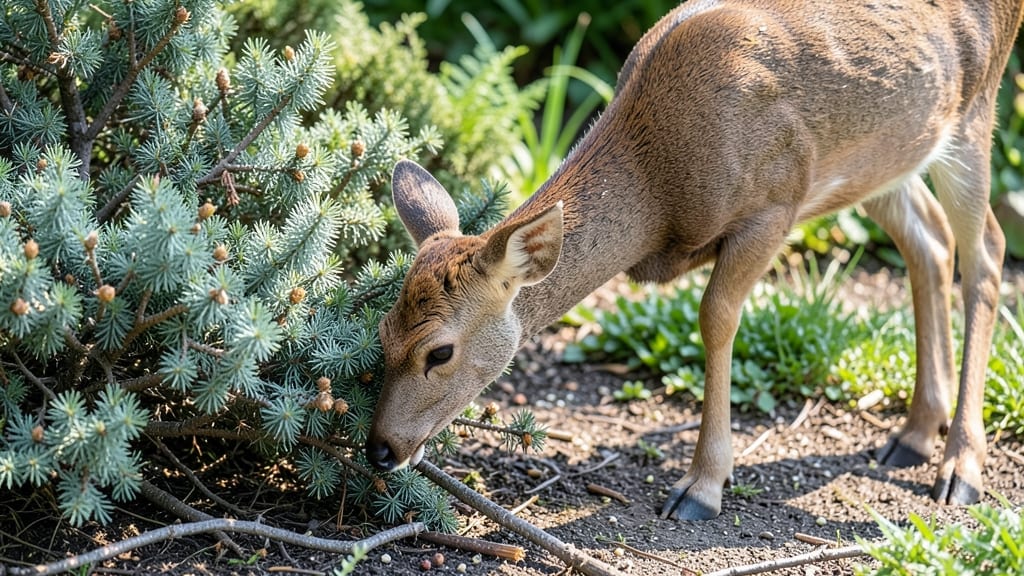
Juniper shrubs are occasionally eaten by deer, though they rank lower on the menu than tender plants like clover or fresh shoots. The shrubs' sharp needles and bitter compounds make them a last-resort food source, especially during food shortages in winter.
Deer typically avoid juniper unless other greenery is scarce, as the shrubs contain natural deterrents like terpenes that create a bitter taste. 🌲 In harsh winters or droughts, however, hungry deer may strip branches bare, leaving behind telltale jagged edges.
This behavior explains why landowners in rural areas often notice damage during late fall or early spring when food is limited.
Understanding this pattern helps gardeners take proactive steps—like installing temporary fencing or planting deer-resistant alternatives nearby—to protect their juniper shrubs from becoming a seasonal buffet.
💡 In This Article
- Why Deer Target Juniper Shrubs in Specific Conditions
- Protecting Juniper Shrubs from Deer Damage
Why deer target juniper shrubs in specific conditions
Here's what's actually happening when deer nibble on juniper shrubs: their decision-making hinges on a complex balance between nutritional needs and plant defenses. Juniper shrubs contain terpenes—volatile organic compounds that create a bitter, almost medicinal aroma and taste.
These compounds act as a natural deterrent, similar to how mint's strong flavor repels insects. However, deer aren't completely deterred; they'll consume juniper when their digestive systems are desperate for fiber and minimal nutrition during food scarcity.
The key factor is seasonal stress. In late fall and winter, when deer's primary food sources—like clover and young shoots—are covered by snow or frozen, juniper becomes a last-resort option. Studies show deer will browse juniper up to 30% more during these periods compared to summer months.
The shrubs' needle-like foliage (0.5-1.5 inches long) provides some roughage, but lacks the protein and sugars found in preferred plants. 🌲 This creates a nutritional trade-off: deer consume juniper not for pleasure, but for survival.
What most people don't realize is how juniper's defensive compounds change with environmental stress. Drought conditions cause juniper shrubs to produce even higher concentrations of terpenes (up to 20% more than normal), making them less palatable.
Yet paradoxically, this same stress forces deer to rely more heavily on them when other options dry up completely. The shrubs' waxy coating also makes them less appealing in wet conditions, but during dry winters, their moisture content drops to 40-50%—still better than nothing for thirsty deer.
Comparing juniper to palatable alternatives reveals why deer avoid it when possible. A single leaf of white clover contains 25% protein, while juniper needles average just 5-10% protein. The difference is staggering: deer must consume 5-10 times more juniper to meet the same protein requirements.
This explains why you'll often see deer selectively browse the younger, softer growth at the tips of juniper branches—it's their compromise between necessity and preference.
Regional variations add another layer. In northern climates where winters last 4-6 months, deer may strip juniper branches completely, while in milder southern regions, they might only nibble lightly.
The snow depth also matters: shallow snow (6 inches) exposes more ground vegetation, reducing juniper consumption, while deeper snow forces deer to target taller shrubs. This seasonal pattern explains why damage spikes in January-February across most deer habitats.
The science behind this involves deer's digestive efficiency. Juniper's high fiber content (30-40% dry matter) requires more energy to process, which is why deer prefer softer plants when available. Their rumen bacteria struggle to break down juniper's complex compounds, leading to 10-15% lower energy absorption compared to clover.
This inefficiency makes juniper a "high-cost, low-reward" food source—unless starvation forces the choice.
For landowners, recognizing these patterns helps predict when juniper is most vulnerable. The critical window is typically December through March, when food sources are most limited. Understanding these botanical and environmental triggers allows for targeted protection strategies during high-risk periods. 💫