
Flowers
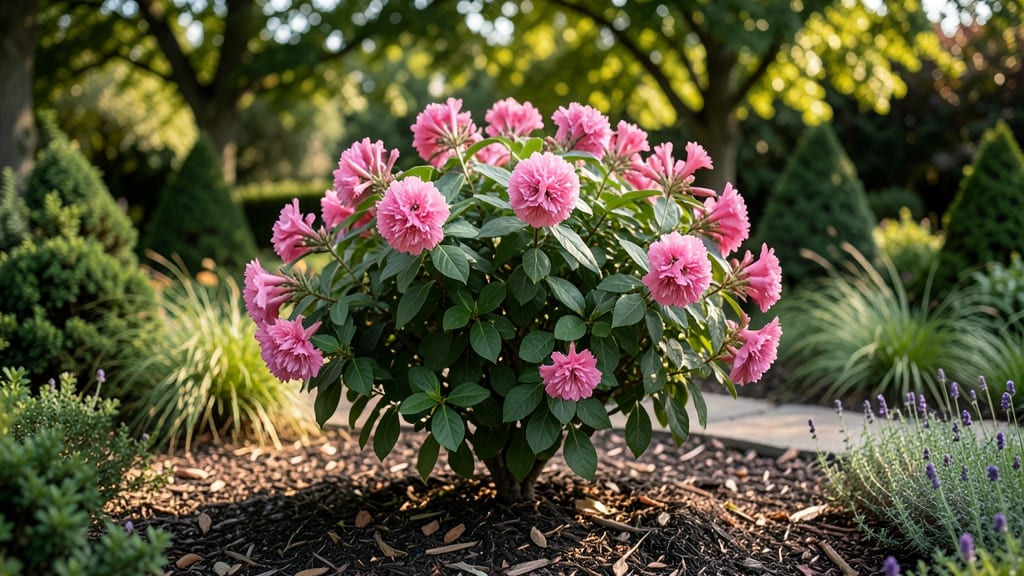
An evergreen shrub with pink flowers turns your yard into a year-round showstopper. 🌸 These fragrant plants—like Daphne odora and Pieris japonica—create living privacy screens that thrive for decades, with blooms that last from early spring through winter’s quiet months.
The magic happens when you layer them with other evergreens: start with a 6-foot-tall backdrop like Rhododendron 'Pink Eleganza', then add shorter varieties like Abelia 'Kaleidoscope' for texture. Their glossy leaves provide structure, while the pink flowers add color that pops against deep green or silver foliage.
By year three, you’ll have a lush, fragrant hedge that hums with pollinators and smells like spring—even in winter. The best part? These shrubs handle everything from formal hedges to wild, natural borders, and they’re tough enough for coastal climates or snowy winters.
For a foolproof design, mix three types: a tall backbone, mid-height filler, and low-growing accent. Prune lightly after blooming to keep them dense, and watch your garden transform from ordinary to extraordinary.
📚 In This Guide
- What you need
- Instructions
- Tips and common mistakes
- Wrapping up and next steps
What you need
- ● Evergreen shrubs with pink flowers: 3–5 plants per linear foot (e.g., Abelia × grandiflora, Pieris japonica, or Camellia sasanqua). Choose disease-resistant varieties for longevity.
- ● High-quality potting soil: 1–2 cubic yards (mix with compost for drainage). Opt for a blend labeled for acid-loving plants if applicable.
- ● Organic mulch: 2–3 inches of pine bark or shredded leaves to retain moisture and suppress weeds.
- ● Slow-release fertilizer: 10-10-10 or 12-4-8 formula (1–2 lbs per plant). Avoid high-nitrogen blends to prevent leggy growth.
- ● Watering can or hose with a gentle spray nozzle: For deep, even watering (1–2 gallons per plant initially).
- ● Garden trowel or spade: For digging holes (1.5x wider than the root ball).
- ● Measuring tape: To space plants 3–6 feet apart (check tag guidelines).
- ● Pruning shears: Sharp, sterilized shears (for trimming dead branches or shaping).
- ● Garden gloves: Heavy-duty for protection (some shrubs have thorns!).
- ○ Stakes & twine (optional): For young plants in windy areas.
- ● Sunlight assessment: Confirm your site gets 6+ hours of sun/day (adjust for shade-tolerant varieties).
- ● Soil test: Check pH (most pink-blooming evergreens prefer 5.0–6.5). Amend clay soil with sand or peat moss if needed.
- ● Local climate zone: Verify hardiness (e.g., USDA Zones 7–9 for Abelia).
- ● Water source nearby: Shrubs need 1–2 inches of water weekly (more in extreme heat).
How to design a fragrant pink-flowering evergreen privacy screen
Here's how to create a lush, fragrant screen that blooms pink and stays green year-round.
🌱 Step 1: Select the Right Evergreen Varieties for Pink Blooms
For a fragrant pink privacy screen, I recommend Abelia 'Kaleidoscope' and Pieris japonica 'Little Heath'—both bloom pink, stay evergreen, and thrive in partial shade. 'Kaleidoscope' produces tubular pink flowers in late spring, while 'Little Heath' offers delicate pink bell-shaped blooms in early spring. These varieties grow 3-5 feet tall and 4-6 feet wide, creating a dense screen when planted 4-6 feet apart.
Check your USDA hardiness zone—both varieties thrive in zones 5-9, though 'Little Heath' prefers cooler climates. If your zone is 10 or warmer, consider Abelia 'Francis Mason' for heat tolerance and fragrant pink blooms. Always choose 1-year-old container-grown plants for best establishment.
🪴 Step 2: Prepare the Planting Site for Long-Term Health
Choose a location with morning sun and afternoon shade—this prevents leaf scorch while ensuring enough light for flowering. Test your soil's pH; evergreen shrubs prefer slightly acidic conditions (5.5-6.5). Amend heavy clay soil with 2-3 inches of compost mixed into the top 12 inches of soil to improve drainage.
Dig planting holes twice as wide as the root ball but only as deep as the container. This encourages roots to spread horizontally rather than settling too deeply. Space holes 4-6 feet apart for a dense screen that fills in within 3 years. Water each hole deeply before planting to settle the soil.
☀️ Step 3: Plant and Mulch for Year-Round Growth
Remove the plant from its container and loosen the roots if they're circling. Place the shrub in the hole so the top of the root ball sits 1 inch above soil level—this prevents rot as the soil settles. Backfill with native soil, pressing gently to eliminate air pockets. Water immediately after planting to help roots establish contact with the soil.
Apply 3 inches of mulch (pine bark or shredded leaves) around each plant, keeping it 6 inches away from the stem to prevent rot. Mulch retains moisture and regulates soil temperature, which is critical for evergreens. Water deeply once a week for the first month, then reduce to every 10-14 days once established, depending on rainfall.
✂️ Step 4: Prune for Shape and Encourage Blooms
Prune immediately after flowering in late spring or early summer to shape the shrub and promote next year's blooms. Use clean, sharp pruners to make cuts just above a leaf node at a 45-degree angle. Remove no more than one-third of the plant's growth in a single season—this prevents stress and maintains vigor.
For a dense screen, focus on thinning out crowded branches from the center rather than shearing. Evergreens like Abelia and Pieris respond well to light pruning—avoid heavy cuts that expose old wood. Fertilize lightly in early spring with a balanced 10-10-10 formula to support new growth and flowering.
🌿 Step 5: Maintain for Fragrance and Color Year After Year
Monitor for pests like lace bugs or spider mites, which can defoliate evergreens. Spray affected areas with neem oil or introduce beneficial insects like ladybugs for natural control. Evergreens need consistent moisture—water deeply when the top 2 inches of soil feel dry, especially during hot, dry spells in summer.
In late winter, apply a slow-release fertilizer to replenish nutrients lost over the growing season. This ensures vibrant pink blooms and lush foliage the following spring. With proper care, your fragrant pink privacy screen will reach full maturity and provide year-round color and fragrance within 3 years.
Tips & tricks for perfect fragrant pink evergreen privacy screens
Here’s how to ensure your fragrant pink evergreen screen thrives and blooms beautifully year after year.
Variety Selection Matters: When choosing between Abelia 'Kaleidoscope' and Pieris japonica 'Little Heath', consider your climate. 'Kaleidoscope' handles heat better in zones 10+, while 'Little Heath' excels in cooler zones 5-7. Mixing both creates a layered screen with staggered blooming seasons—spring for 'Little Heath' and late spring for 'Kaleidoscope'. This ensures continuous color and fragrance from early to late spring.
Soil Preparation is Non-Negotiable: The 5.5-6.5 pH range is critical for evergreen health, but don't stop at testing. If your soil is heavy clay, mix in 2-3 inches of compost down to 12 inches deep—this improves drainage while retaining moisture. For sandy soils, add a bit of peat moss to help hold nutrients. Evergreens hate soggy roots but also can't tolerate drought, so aim for that perfect middle ground.
Planting Depth Determines Success: Placing the root ball so its top sits 1 inch above soil level prevents rot by allowing water to drain away from the stem. This small adjustment makes all the difference in preventing fungal issues that can kill young plants. After backfilling, press gently around the edges to eliminate air pockets—this ensures immediate root contact with soil for faster establishment.
Pruning Timing is Everything: Prune immediately after flowering in late spring or early summer to encourage next year's blooms. Cut just above a leaf node at a 45-degree angle to promote healing and new growth. Never remove more than one-third of the plant in a single season—this rule prevents stress and maintains the shrub's natural shape. For a dense screen, focus on thinning crowded center branches rather than shearing.
Pro Tips for Evergreen Shrub With Pink Flowers
- Here’s how to ensure your fragrant pink evergreen screen thrives and blooms beautifully year after year.
- Variety Selection Matters: When choosing between Abelia 'Kaleidoscope' and Pieris japonica 'Little Heath', consider y...
- Soil Preparation is Non-Negotiable: The 5.5-6.5 pH range is critical for evergreen health, but don't stop at testing....
Frequently asked questions
Got questions about growing and caring for your evergreen shrub with pink flowers? You’re not alone! Here are some of the most common queries—plus quick, expert-backed answers to help you create a stunning, fragrant privacy screen in no time.
How fast do evergreen shrubs with pink flowers grow?
Most evergreen shrubs with pink blooms, like Abelia × grandiflora or Pieris japonica, grow 12–24 inches per year under ideal conditions. With proper care (sunlight, water, and soil), you can achieve a lush 6-foot-tall privacy screen in 3–5 years. Patience pays off—these beauties reward consistency!
Do these shrubs need full sun to thrive?
While 6+ hours of sunlight daily is ideal for vibrant pink blooms, many evergreen shrubs tolerate partial shade (3–6 hours of sun). Varieties like Andromeda polifolia (bog rosemary) even prefer dappled shade. Just avoid deep shade—it can reduce flowering and weaken growth over time.
Why aren’t my pink flowers blooming this year?
Pink flowers might skip a year due to over-fertilizing (too much nitrogen), poor sunlight, or recent transplant shock. Try this: Prune lightly in early spring to encourage new growth, reduce fertilizer, and ensure well-draining soil. Also, check for pests like spider mites—they can stress plants!
What’s a low-maintenance alternative with pink flowers?
If you want zero-fuss evergreens with pink blooms, consider:
- Dwarf Fothergilla (‘Mount Airy’): Fragrant spring flowers, 3–5 ft tall, thrives in shade.
- Leucothoe fontanesiana (‘Rainbow’): Pinkish-red new growth, 6–8 ft tall, drought-tolerant.
- Ilex glabra (‘Shamrock’): Evergreen holly with pink spring blooms, 3–5 ft tall.
How cold-hardy are these shrubs?
Most evergreen shrubs with pink flowers are zoned 5–9, meaning they survive winters down to -15°F to -20°F. Exceptions:
Shrub
Cold Hardiness
Pieris japonica (Andromeda)
Zones 6–9 (-10°F)
Abelia × grandiflora
Zones 6–9 (-15°F)
Viburnum bodnantense (‘Dawn’)
Zones 6–8 (-20°F)
Wrapping up and next steps
Transforming your space with an evergreen shrub with pink flowers isn’t just about beauty—it’s about creating a fragrant, low-maintenance privacy screen that thrives for years! 🌸 From choosing the right variety like Daphne odora or Pieris japonica to mastering pruning and soil prep, you now have all the tools to succeed.
The key? Patience and consistency—your lush, blooming hedge will reward you with vibrant color and sweet scents in just three seasons.
Ready to get started? Pick your favorite pink-blooming shrub, gather your supplies, and roll up your sleeves! Plant this weekend, and in no time, you’ll be enjoying a privacy oasis that’s as stunning as it is fragrant. Happy gardening! 🌿✨