
Shrubs
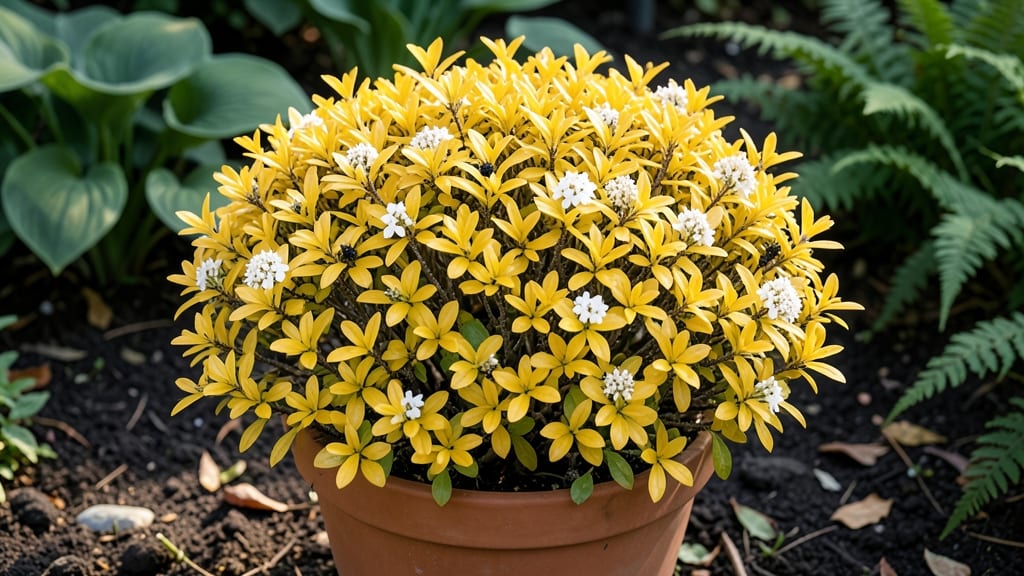
Transforming your yard into a lush, fragrant retreat starts with mastering the Gold Mound shrub—its golden foliage and glossy leaves stay vibrant year-round, but only if you prune it right. 🌿 I’ve spent years perfecting my approach, and the key is timing: prune in late winter or early spring before new growth begins, and you’ll eliminate those pesky thorns while keeping the plant bushy and full.
This evergreen shrub thrives in zones 6-9, handles partial shade like a champ, and loves well-draining soil—though it’s forgiving if you forget to amend it.
Plant it where you’ll enjoy its glossy leaves up close, like near a patio or walkway, and space them 4-6 feet apart for that classic rounded shape. Water deeply after planting, then let the soil dry slightly between waterings once established.
When pruning, cut back any leggy branches to encourage denser growth, and remove dead or crossing stems to keep airflow circulating. The result? A thorn-free, fragrant shrub that stays compact and lush all season long—no more scratches when you brush past it.
Even better, it rarely needs heavy pruning once mature, making it low-maintenance once you’ve got the hang of it.
For best results, feed it with a balanced fertilizer in early spring, and watch it reward you with glossy, golden foliage that stands out in any landscape.
Whether you’re shaping it as a hedge or letting it grow naturally, this shrub delivers year-round interest with minimal fuss. Ready to give it a try?
📚 In This Guide
- What you need
- Instructions
- Tips and common mistakes
- Wrapping up and next steps
What you need
- ● Pruning shears: Bypass pruners (sharp, clean, and sterilized with rubbing alcohol to prevent disease). Quantity: 1 pair.
- ● Loppers: For thicker branches (16–24 inches). Quantity: 1 pair.
- ● Gloves: Heavy-duty, cut-resistant gloves (thorns are no joke!). Quantity: 1 pair.
- ● Disinfectant: 1-part bleach to 9 parts water (for cleaning tools between cuts).
- ○ Pruning sealant: Optional but helpful for larger cuts (e.g., Tanglefoot Tree Wound Pruning Seal).
- ● Garden twine or ties: For supporting branches if needed (Quantity: 1 roll).
- ● Trash bags: For collecting pruned debris (Quantity: 2–3 large bags).
- ● Watering can or hose: To hydrate the shrub post-pruning.
- ● Hand pruners: For precision trimming of smaller stems.
- ● Safety glasses: Protect your eyes from flying debris.
- ● Knee pads: For comfort if you’re working on the ground.
- ● Mulch: Organic mulch (e.g., shredded bark) to protect roots after pruning.
- ● Fertilizer: Slow-release granular fertilizer (e.g., 10-10-10 NPK) to boost recovery.
How to prune Gold Mound shrubs for lush, fragrant growth
This is the method I use to keep my Gold Mound shrubs thriving—fuller, fragrant, and completely thorn-free.
✂️ Step 1: Prune in Early Spring for New Growth
Start your pruning as soon as new growth begins in early spring, usually February or March depending on your climate. This is when the shrub is just waking up from dormancy, and you'll see tiny buds forming along the branches. Remove any dead, damaged, or crossing branches first—they’re easy to spot because they look brown and brittle compared to the fresh green.
Cut back last year’s growth by about one-third to encourage thicker, bushier growth. I like to make my cuts just above a leaf bud or a set of leaves, angled slightly downward to prevent water from pooling. This ensures the shrub doesn’t get waterlogged at the cut site, which can lead to rot. If you’re unsure where to cut, look for the outward-facing bud—this will guide new growth away from the center of the shrub, keeping it open and airy.
✂️ Step 2: Thin Out Crowded Branches in Late Spring
About 6-8 weeks after your first pruning, when the shrub has filled out with new growth, it’s time to thin out any crowded or weak branches. The goal here is to improve air circulation, which reduces the risk of fungal diseases and keeps those fragrant leaves healthy. Focus on branches that are growing inward or rubbing against each other—they’ll compete for sunlight and nutrients, weakening the shrub overall.
Use sharp, clean pruning shears to make your cuts. I can’t stress this enough: dull shears tear the bark, leaving jagged edges that invite pests and disease. Cut just outside the branch collar, the swollen area where the branch meets the stem. This encourages faster healing and stronger regrowth. Step back and admire your work—you should see light filtering through the center of the shrub, signaling better airflow and sunlight penetration.
✂️ Step 3: Light Pruning in Summer to Encourage Blooms
During the summer months, your Gold Mound shrub will need only light maintenance. This is the time to remove any spent flowers or seed pods, a process called deadheading. Snip them off just above a set of leaves or a bud to encourage more blooms. You’ll notice the shrub looks fuller and more vibrant almost immediately—this is because it’s putting its energy into producing new flowers instead of seeding.
Keep an eye out for any branches that are growing too leggy or sparse. These can be trimmed back by about one-quarter to promote denser growth. Avoid heavy pruning in summer, though—it can stress the shrub and make it more susceptible to heat and drought. Instead, focus on shaping and encouraging a natural, full look. Water deeply after pruning to help the shrub recover and reduce stress.
✂️ Step 4: Minimal Pruning in Fall to Prepare for Winter
As the growing season winds down in fall, your Gold Mound shrub will start to slow its growth. This is the time for minimal pruning—just enough to tidy up the shrub and prepare it for winter. Remove any dead, diseased, or weak branches first, as these can harbor pests and diseases over the winter months. You can also trim back any branches that are growing in an unruly direction, but avoid heavy pruning.
I like to give my shrubs a final shape in fall, making sure they look neat and tidy before the first frost. This isn’t about drastic changes—just a little cleanup to ensure the shrub looks its best when spring rolls around again. Mulch around the base of the shrub with 2-3 inches of organic mulch to protect the roots from freezing temperatures and retain moisture. This is also a great time to fertilize lightly if your soil is nutrient-poor, giving the shrub a boost for next year’s growth.
⏰ Step 5: Avoid Pruning in Late Winter—Here’s Why
This is the one pruning mistake I see all the time, and it’s easy to avoid once you know the reason. Never prune your Gold Mound shrub in late winter, just before the growing season kicks into gear. Pruning too early can stimulate new growth that will be damaged by late frosts, leaving the shrub vulnerable to cold and disease. Instead, wait until you see those first signs of new growth—tiny buds swelling along the branches—and then get pruning.
I know it can be tempting to tidy up your garden before spring, but trust me, your shrub will thank you. The key is patience. Waiting until early spring ensures that any new growth you encourage will have time to harden off before the worst of the cold sets in. You’ll see stronger, healthier growth as a result, and your shrub will reward you with lush, fragrant foliage all season long.
Tips & tricks for perfect Gold Mound shrub pruning
These simple tricks will help you keep your Gold Mound shrubs looking their absolute best year-round.
Timing is Everything: I can't emphasize enough how important those early spring timing windows are. The one-third cut back in Step 1 should happen when you see those first tiny buds—usually February or March—but if you miss it, don't panic. The shrub will still thrive, but you might sacrifice some of that bushy growth. I've seen people wait until April and still get great results, though the shrub won't be quite as full. Watch for those buds to swell slightly before you start cutting.
Tool Selection Matters: Your pruning shears make a bigger difference than you might think. I've tried every type of shears, and I've found that bypass pruners with 5-6 inch blades work best for Gold Mounds. They give you the precision to make clean cuts just outside the branch collar. Never use hedge trimmers—they tear the bark and leave jagged edges that invite disease. If you're working with thicker branches, a good pair of loppers comes in handy for those 6-8 week late spring thinning sessions in Step 2.
Seasonal Maintenance Checklist: Create a simple seasonal checklist to follow the pruning blueprint. Mark your calendar for early spring (when buds appear), late spring (6-8 weeks after first cut), summer (light maintenance), and fall (minimal tidying). I keep mine on my fridge door—it's surprising how easy it is to forget these seasonal tasks when they're not right in front of you. The summer months are especially important for deadheading those spent flowers to encourage more blooms, as mentioned in Step 3.
Mulching Strategy: That 2-3 inch layer of organic mulch in Step 4 is more important than you might realize. It's not just about protecting roots from cold—it also helps maintain consistent soil moisture and temperature. I like to use shredded bark mulch because it breaks down slowly and improves soil structure over time. Just make sure to keep it 2-3 inches away from the trunk to prevent rot. This simple step makes a huge difference in winter survival and spring recovery.
Pro Tips for Gold Mound Shrub
- These simple tricks will help you keep your Gold Mound shrubs looking their absolute best year-round.
- Timing is Everything: I can't emphasize enough how important those early spring timing windows are.
- Tool Selection Matters: Your pruning shears make a bigger difference than you might think.
Frequently asked questions
Got questions about keeping your Gold Mound shrub thriving? You’re not alone! Here are answers to the most common queries—from pruning tips to troubleshooting—so you can enjoy its golden beauty and fragrant blooms all year.
When is the best time to prune Gold Mound shrubs?
The ideal time to prune is late winter or early spring (before new growth starts) to shape the shrub and encourage dense, fragrant blooms. Light trimming after flowering (summer) keeps it tidy, but avoid heavy cuts then—it can reduce next year’s blooms. Pro tip: Use sharp, sterilized shears to prevent disease!
Why does my Gold Mound shrub have fewer flowers this year?
Over-pruning, poor nutrition, or stress (like drought or pests) can reduce blooms. Focus on moderate pruning, fertilize with balanced, slow-release fertilizer in early spring, and ensure it gets 6+ hours of sunlight. If pests (like spider mites) are the culprit, treat with neem oil or insecticidal soap.
Can I grow Gold Mound shrubs in containers?
They thrive in 5-gallon+ containers with well-draining soil and regular watering. Choose a pot with drainage holes and repot every 2–3 years to refresh the soil. Just remember: container-grown shrubs may need more frequent pruning to control size.
How cold-hardy is the Gold Mound shrub?
This shrub is zoned 5–9, meaning it tolerates temps down to -20°F (-29°C) with proper care. In colder climates, mulch the base with 3–4 inches of organic mulch (like pine straw) to insulate roots. If leaves brown in winter, it’s likely winter burn—just trim dead foliage in spring.
Are there thorn-free alternatives to Gold Mound?
Yes! If thorns are a concern, consider Dwarf Gardenia (fragrant but thornless) or Abelia ‘Kaleidoscope’ (colorful, low-maintenance). For a similar look, try Olearia ‘Sky Blue’—it’s compact, fragrant, and spineless. Just note: these may have different care needs (e.g., pH preferences).
What should I do if my Gold Mound shrub gets yellow leaves?
Yellow leaves often signal overwatering, nutrient deficiency, or root rot. First, check soil moisture—it should be damp but not soggy. Amend soil with compost and ensure the pot or bed has good drainage. If roots smell rotten, trim affected areas and repot in fresh soil.
Wrapping up and next steps
The Gold Mound shrub is a fragrant, low-maintenance gem that rewards you with beauty and ease—when you prune it right! 🌿 With the right tools, timing, and techniques, you can keep it thorn-free, lush, and blooming year-round.
Whether you’re a seasoned gardener or just starting, this blueprint gives you the confidence to shape your shrub like a pro.
Ready to transform your garden? Grab your pruners, mark your calendar for late winter/early spring, and start shaping! Your future self—and your nose—will thank you. 😊