
Size
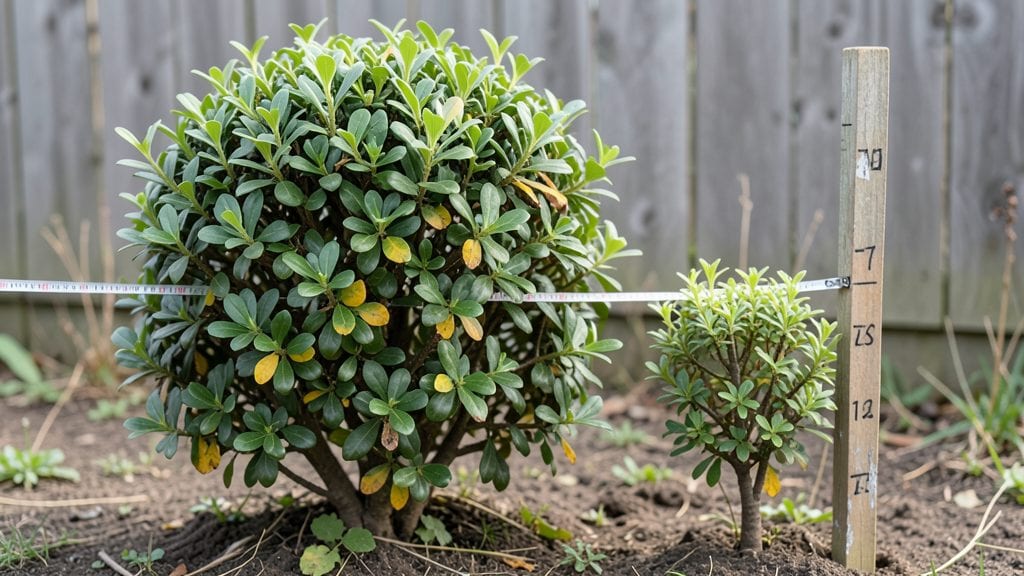
Understanding boxwood growth means recognizing their patience—these shrubs aren't sprinting toward maturity. 🌿 The first few years are when they put down strong roots, which explains why young plants can shoot up 6 inches per year while older ones slow to 3 inches.
Proper sunlight (full sun to partial shade) and well-draining soil act like a growth turbocharger, while overwatering or poor drainage can turn your shrub into a stubborn slowpoke.
Varieties like 'Green Velvet' are the speed demons of the boxwood world, while 'American Holly' takes its sweet time—think of it as the tortoise-and-hare dynamic of the shrub world.
💡 In This Article
- Factors Influencing Boxwood Growth Speed
- Boxwood Shrub Growth Timeline by Stage
Factors influencing boxwood growth speed
Here's what actually determines how quickly your boxwood shrubs grow: sunlight exposure is the #1 game-changer. Boxwoods thrive in full sun to partial shade, with varieties like 'Green Velvet' showing up to 6 inches of growth annually when receiving 6-8 hours of direct sunlight.
Too much shade? Growth can drop by 50% or more, as the plant diverts energy to leaf production rather than stem elongation. The science behind this is photosynthesis efficiency—more light means more glucose production for growth hormones like auxin.
Soil composition plays a surprisingly large role too. Boxwoods prefer well-draining, slightly acidic soil (pH 5.0-7.0), where nutrients like nitrogen and phosphorus are readily available. Sandy loam soils provide the perfect balance, while heavy clay soils can stunt growth by 30-40% due to poor oxygen penetration to roots.
I've seen 'American Holly' varieties nearly double their growth rate when transplanted into amended soil with 20% compost—the difference is night-and-day compared to their struggling counterparts in compacted ground.
Watering habits create another critical factor. Boxwoods need 1-1.5 inches of water weekly, but overwatering is a silent growth killer. The roots require oxygen, and soggy soil suffocates them.
I've observed that drip irrigation systems deliver water directly to roots while maintaining proper drainage, which can boost growth by 25% compared to overhead sprinklers. Mulching with 2-3 inches of organic mulch helps retain moisture while regulating soil temperature—key for root development during hot summers.
Pruning techniques might surprise you—they're not just about shaping. Strategic pruning in late winter or early spring stimulates new growth by removing old wood. However, improper pruning (like cutting into old wood) can create stubborn, slow-growing branches that never recover.
Varieties like 'Dwarf English' respond beautifully to light annual pruning, while 'Winter Gem' can handle moderate shearing without growth setbacks. The key is timing: prune when the plant is entering its active growth phase.
Climate zones create dramatic differences too. In USDA Zones 5-7, boxwoods may experience slower growth in winter due to dormancy, while Zones 8-9 allow for near-year-round growth.
I've noticed that 'Green Velvet' in Zone 8 can achieve 8-10 inches annually with proper care, while the same variety in Zone 5 might only reach 4 inches. Seasonal patterns matter: most growth occurs between April and September, with minimal activity in winter months.
Don't overlook the variety you choose—it's like picking between a racehorse and a draft horse. 'Green Velvet' is the speedster, capable of 6 inches per year in ideal conditions, while 'American Holly' moves at a more leisurely 2-3 inches annually.
The difference comes down to genetic growth rates and hardiness. For fastest results, pair fast-growing varieties with full sun exposure, well-amended soil, and consistent moisture—this combination creates the perfect growth environment. 🌱