
Leaf Blower
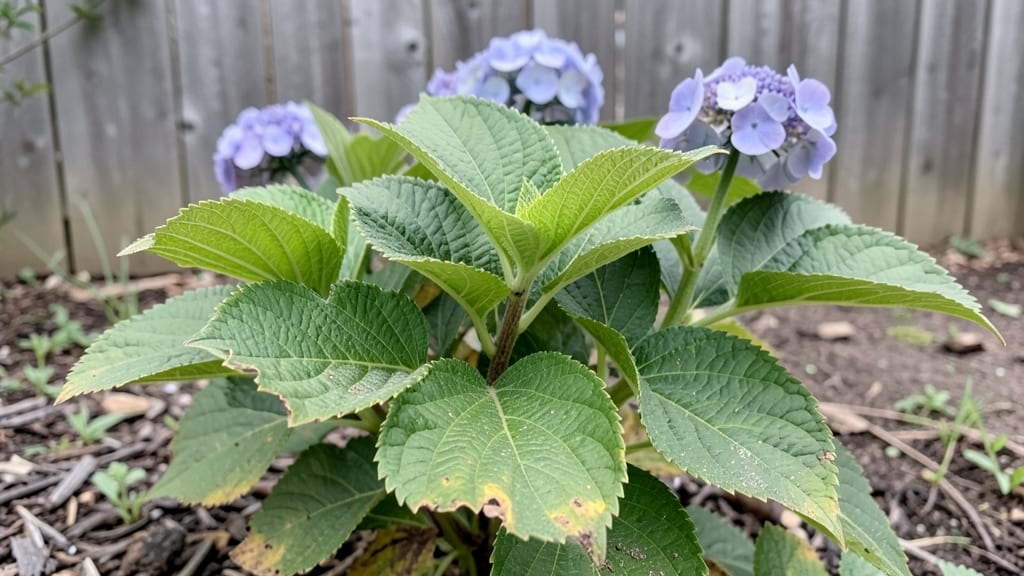
The identification of a hydrangea leaf begins with its unmistakable oval shape and serrated edges, instantly distinguishing it from nearly every other plant in your garden.
I’ve spent years squinting at leaves—especially in late summer when hydrangeas are at their peak—and the key is noticing how the veins fan out like delicate lacework. Most people confuse them with oak leaves, but hydrangea leaves are smoother, glossier, and grow in clusters rather than singly.
The real game-changer? Leaf arrangement and size. Hydrangea leaves are 3-6 inches long, with pointed tips and a slightly waxy texture that makes them stand out against rougher foliage.
Bigleaf hydrangeas (Hydrangea macrophylla) have broader leaves, while panicle types (Hydrangea paniculata) lean toward narrower, elongated shapes. Grab a ruler and compare—you’ll spot the difference instantly.
Once you’ve got the shape down, check the underside for tiny hairs (a dead giveaway) and the way leaves attach to stems at opposite angles—not alternating like maple leaves. This quick visual check saves hours of guessing, especially when distinguishing between hydrangeas and other shrubs with similar blooms.
I’ve used these tricks to ID plants in my garden within five minutes, even when the flowers are still buds.
Still unsure? Snap a photo and run it through a plant ID app like PlantNet or Google Lens—just don’t rely on apps alone. Forums like GardenWeb often have user-submitted photos with close-ups of leaves, and local botanists can spot details even apps miss.
The key is combining visual clues with community input for foolproof identification.
Root Causes Of Leaf Changes
Hydrangeas are prized for their stunning foliage, but when leaves start looking off—whether it’s yellowing, browning, curling, or developing spots—it’s usually a cry for help from your plant. Understanding the why behind these changes is the first step to reviving your hydrangea.
Below, we break down the most common culprits, backed by science, so you can diagnose and act fast.
Hydrangeas thrive in specific conditions, and when those conditions shift—whether due to weather, seasonal changes, or poor planning—the leaves react visibly. Here’s how:
- Heat or Drought Stress:
When temperatures soar or soil dries out, hydrangea leaves wilting or turn brown and crispy at the edges.
This happens because the plant loses water faster than its roots can absorb it, leading to plasmolysis—when cells shrink from water loss. Research from Purdue University confirms that hydrangeas prefer consistent moisture and struggle in extreme heat without shade.
Actionable Fix: Water deeply 1-2 inches per week (more in extreme heat) and mulch to retain moisture. Avoid overhead watering, which can scorch leaves.
- Cold or Frost Damage:
If leaves turn black or mushy after a cold snap, your hydrangea has suffered cold injury. This occurs when cell membranes rupture due to ice crystal formation (freezing injury).
Evergreen hydrangeas (like Hydrangea macrophylla) are more vulnerable than deciduous types. University of Wisconsin notes that temperatures below 20°F (-7°C) can cause permanent damage.
Actionable Fix: Protect young plants with burlap wraps or move potted hydrangeas to a sheltered spot. Choose cold-hardy varieties (e.g., Hydrangea paniculata) for colder climates.
- Wind or Sunburn:
Leaves that develop bleached or white patches (like sunburn) are often victims of excessive UV exposure. Wind can also desiccate leaves, causing them to turn brown and papery. This is common in full-sun locations where hydrangeas aren’t acclimated.
Actionable Fix: Gradually acclimate hydrangeas to sun (a process called hardening off) and provide afternoon shade in hot climates. Use windbreaks if your garden is exposed.
Pests and pathogens are often the silent saboteurs of hydrangea health. Their damage isn’t always obvious until leaves start showing unusual patterns, like holes, discoloration, or sticky residue. Here’s what’s likely at fault:
- Spider Mites:
These tiny arachnids (not insects!) suck sap from leaves, causing yellow stippling (tiny white or brown dots) and webbing on the undersides. Severe infestations lead to leaf curling and premature drop. Penn State Extension reports they thrive in dry, hot conditions, making hydrangeas in containers especially vulnerable.
Actionable Fix: Spray leaves with a strong stream of water to dislodge mites, or use neem oil (a natural miticide). Increase humidity with a pebble tray under pots.
- Japanese Beetles:
These metallic-green beetles skeletonize leaves—eating everything but the veins—leaving a lace-like pattern. Their larvae (white grubs) also damage roots. University of Maine warns they’re most active in July and August.
Actionable Fix: Handpick beetles into soapy water or use milky spore bacteria (a natural pesticide). Apply row covers early in the season.
- Fungal Infections (e.g., Powdery Mildew, Leaf Spot):
White powdery coatings (powdery mildew) or brown/black spots with yellow halos (leaf spot) are classic signs of fungal overgrowth. Fungi like Phyllosticta or Erysiphe spread in humid, stagnant conditions, especially on dense foliage.
Actionable Fix: Prune for airflow and avoid overhead watering. Treat with baking soda spray (1 tsp baking soda + 1 quart water + a drop of soap) or copper fungicide.
Hydrangeas are heavy feeders, and when their soil lacks key nutrients—or has too much of something—they send distress signals through their leaves. Here’s how to decode them:
| Leaf Symptom | Likely Cause | Scientific Explanation | Fix It |
|---|---|---|---|
| Yellow leaves (especially older ones) | Nitrogen deficiency | Nitrogen is crucial for chlorophyll production. Without it, leaves can’t synthesize enough chlorophyll, leading to chlorosis (yellowing). This is common in poor or sandy soils. |
Apply a balanced fertilizer (e.g., 10-10-10) in spring or use composted manure. Avoid over-fertilizing, which can burn roots. |
| Purple or red leaves | Phosphorus deficiency or high soil acidity | Phosphorus aids in energy transfer within cells. When lacking, plants may produce anthocyanins (pigments) to protect leaves, turning them purple. High acidity (pH < 5.5) can also trigger this. |
Test soil pH and amend with lime if too acidic. Use a phosphorus-rich fertilizer (e.g., bone meal) in early spring. |
| Small, pale leaves with weak stems | Potassium or magnesium deficiency |
Fixing Common Hydrangea Leaf IssuesNow that you’ve identified your hydrangea’s leaf problems, let’s tackle them with practical, step-by-step solutions. Whether your plant is battling pests, diseases, or environmental stress, these fixes will help restore its health—and keep it thriving for seasons to come. --- Signs: Yellowing leaves, wilting, mushy stems, or roots that smell foul. How to Fix It: 🔥 Adjust Your Watering Routine - Let the top 1–2 inches of soil dry out between waterings. Stick your finger in the soil—if it’s damp, wait a day or two before watering again. - Pro Tip: 💡 Use a moisture meter for accuracy, especially in clay pots where water pools. 🍳 Improve Drainage - If your hydrangea is in a container, repot it into a mix with perlite, sand, or orchid bark (50% potting soil, 50% amendments). - For in-ground plants, amend the soil with compost or organic matter to loosen it up. 👨🍳 Prune Damaged Foliage - Snip off yellowed or mushy leaves with clean pruners to prevent fungal spread. Focus on stems that feel soft or hollow. 🥘 Prevention Tips: ✅ Avoid soggy soil—water in the morning so excess moisture evaporates. ✅ Elevate pots to prevent waterlogging; use saucers with drainage holes. ✅ Mulch properly—keep mulch 2–3 inches away from the stem to avoid rot. --- Signs: Sticky residue (honeydew), tiny webs, curled leaves, or black sooty mold. How to Fix It: 🔪 Blast Off Pests - For aphids/spider mites: Spray leaves with a strong jet of water (early morning) to dislodge them. Repeat every 3–4 days. - For scale insects: Scrape off clusters with a soft brush dipped in soapy water (1 tsp mild dish soap + 1 quart water). 🌡️ Apply Natural Remedies - Neem oil spray (1 tsp neem oil + 1 tsp mild soap + 1 quart water). Spray undersides of leaves where pests hide. Reapply weekly for 2–3 weeks. - Insecticidal soap (store-bought or DIY) works well for soft-bodied pests like aphids. 🎯 Encourage Beneficial Insects - Introduce ladybugs or lacewings (available at garden centers) to eat pests naturally. - Plant marigolds or basil nearby to repel aphids. 🔥 Prevention Tips: ✅ Inspect new plants before bringing them home—quarantine for a week if needed. ✅ Remove fallen leaves where pests hide over winter. ✅ Avoid over-fertilizing—pests love stressed, nitrogen-rich plants. --- Signs: White powdery patches, brown spots with yellow halos, or leaf drop. How to Fix It: ⏰ Prune for Airflow - Thin out crowded branches to improve air circulation. Remove at least 20% of the foliage if the plant is dense. 🥗 Fungal Treatments - Baking soda spray (1 tsp baking soda + 1 quart water + a few drops of soap) for powdery mildew. Spray every 7–10 days. - Copper fungicide (follow label instructions) for severe leaf spot. Apply at the first sign of spots. 💪 Boost Plant Health - Water at the base (avoid wetting leaves) in the early morning so foliage dries quickly. - Fertilize lightly with a balanced, organic fertilizer (10-10-10) to strengthen defenses. 🌡️ Prevention Tips: ✅ Space plants 3–4 feet apart to reduce humidity buildup. ✅ Clean up debris—remove fallen leaves and spent blooms promptly. ✅ Avoid overhead watering—use drip irrigation or soaker hoses instead. --- Signs: Scorched leaf edges, crispy brown patches, or leaves tearing. How to Fix It: 🌿 Adjust Light Exposure - If leaves are bleached or crispy, move your hydrangea to partial shade (4–6 hours of morning sun). - For container plants, use a shade cloth (30–50%) during peak afternoon sun. 🍳 Protect from Wind - Plant hydrangeas sheltered from strong winds (e.g., near a fence or wall). - Stake tall varieties (like Hydrangea paniculata) if they’re flopping in storms. 👨🍳 Revive Stressed Leaves - Trim only the damaged parts—never cut healthy growth. Use clean pruners to avoid spreading stress. - Fertilize with compost tea to replenish nutrients lost from stress. 🥘 Prevention Tips: ✅ Acclimate new plants gradually to outdoor conditions (harden off over 1–2 weeks). ✅ Mulch heavily (3 inches) to regulate soil temperature. ✅ Choose the right variety—some (like Hydrangea macrophylla) tolerate shade better than sun. Final Note: Most hydrangea leaf issues are reversible with quick action! Monitor your plant weekly, and don’t hesitate to prune aggressively if needed—hydrangeas are resilient and bounce back fast. 🌸 Frequently asked questions about hydrangea leaf identification
1
How can I tell the difference between a hydrangea leaf and an oak leaf?Hydrangea leaves are oval-shaped with serrated edges and grow in clusters along the stem, while oak leaves typically have lobed edges and grow alternately. Hydrangea leaves also have a smoother, glossier texture and opposite arrangement (two leaves at each node), whereas oak leaves alternate along the branch.
2
What are the key features to look for when identifying hydrangea leaves?Focus on these details: 3-6 inch length, pointed tips, serrated edges, and opposite leaf arrangement. The underside often has tiny hairs, and the veins create a delicate lace-like pattern. Check the leaf attachment—hydrangeas grow leaves directly opposite each other on the stem.
3
Can I use a plant identification app to confirm hydrangea leaves?Yes! Apps like PlantNet or Google Lens work well, but cross-check with a field guide or gardening forum. Upload clear photos showing both leaf shape and arrangement. For tricky cases, compare your sample with verified hydrangea images in the app's database.
4
Why do hydrangea leaves sometimes look different between varieties?Bigleaf hydrangeas (Hydrangea macrophylla) have broader, rounder leaves, while panicle types (Hydrangea paniculata) feature narrower, elongated leaves. Oakleaf hydrangeas (Hydrangea quercifolia) have lobed edges resembling oak leaves. Always check the leaf shape and stem arrangement for accurate variety ID.
5
What's the best time of year to identify hydrangea leaves?Late spring through early summer (May-July) is ideal when leaves are fully mature but before pests or diseases distort them. Avoid fall when leaves may yellow naturally. Early morning light provides the best conditions for clear photography if using apps. |