
Shrubs
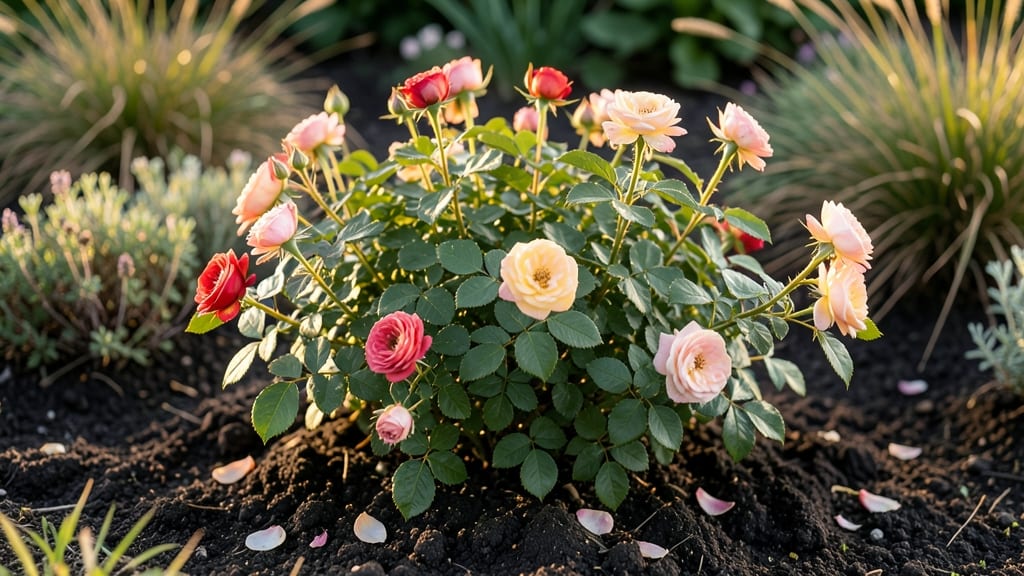
Low-growing rose shrubs create lush, fragrant borders without the thorns or upkeep of traditional roses. 🌹 I've used them to soften property lines and add seasonal color to my front yard—no pruning nightmares, just reliable blooms from spring to frost.
These compact varieties thrive in tight spaces where most roses would sprawl, making them perfect for modern landscapes.
The secret to their success lies in the right placement: group them in clusters of three to five plants, spaced 18-24 inches apart, along fences, walkways, or as living dividers.
Pair them with ornamental grasses like Carex or Miscanthus for texture contrast, or tuck them between lavender and catmint for a low-maintenance, pollinator-friendly border. Their glossy foliage stays attractive even when not in bloom.
What you'll love most is their year-round interest: fragrant blooms in spring/summer, fiery fall foliage, and even winter structure when pruned cleanly. The right varieties—like 'The Fairy,' 'Playboy,' or 'Knock Out'—stay under 3 feet tall while producing 12-inch blooms, creating a dense, fragrant hedge that hummingbirds adore.
No deadheading required for most modern types.
Works beautifully in sunny or partially shaded spots, making them adaptable to tricky garden areas. For maximum impact, plant in odd-numbered groupings and layer with spring bulbs like daffodils or alliums for early color. The fragrance alone makes them worth growing—no thorns, no fuss, just reliable beauty.
📚 In This Guide
- What you need
- Instructions
- Tips and common mistakes
- Wrapping up and next steps
What you need
- ● Low-growing rose shrubs: Choose disease-resistant varieties like 'Flower Carpet', 'The Fairy', or 'Playboy' (3–5 plants per 10 ft of space, depending on desired density).
- ● Well-draining soil: 5–10 bags of compost or peat moss (mix 1 part compost to 2 parts native soil).
- ● Organic mulch: 2–3 bags of pine bark nuggets or shredded cedar (3–4 inches deep).
- ● Fertilizer: 1 bag of slow-release rose fertilizer (10-10-10 or 12-12-17 NPK ratio).
- ● Pruning tools: 1 pair bypass pruners (for clean cuts).
- ● 1 pruning saw (for thicker stems, if needed).
- ● Watering supplies: 1 hose with adjustable nozzle (or drip irrigation kit for efficiency).
- ● 5–10 watering globes (to keep roots consistently moist).
- ● Rose food spikes (for seasonal nutrient boosts).
- ● Copper fungicide (preventative treatment for powdery mildew).
- ● Garden stakes or trellis (to support climbing varieties if mixed in).
- ● Garden gloves (to protect hands from thorns—even low-growing roses have a few!).
- ● Soil pH test kit (ideal range: 6.0–6.5; amend with lime or sulfur if needed).
Step-by-step instructions for planting low-growing rose shrubs
Here's how to establish fragrant, thorn-free rose hedges that thrive year after year.
🌱 Step 1: Choose the Right Varieties and Planting Time
Select disease-resistant, low-growing varieties like 'Knock Out' roses or 'Playboy' shrub roses, which grow 3-4 feet tall and stay compact. These varieties bloom repeatedly and require minimal pruning. Plant in early spring or fall, when soil temperatures are 50-60°F—this gives roots time to establish before extreme heat or cold.
I always check my local frost dates before planting. The goal is to have 6-8 weeks of warm soil before the first expected frost. If planting in containers, choose 5-gallon pots with well-draining soil to prevent root rot. Avoid planting when daytime temperatures exceed 85°F, as stress can delay root establishment.
🪴 Step 2: Prepare the Planting Site for Optimal Growth
Choose a location with full sun (6-8 hours daily)—low-growing roses need bright light to produce abundant blooms. Amend the soil with 2-3 inches of compost mixed into the top 12 inches of soil to improve drainage and fertility. Roses hate soggy roots, so if your soil drains poorly, create a raised bed or plant on a slight mound.
Dig holes twice as wide as the root ball but only as deep as the container. Loosen the roots gently if they're circling the pot—this encourages outward growth. I always water the root ball thoroughly before planting to reduce transplant shock. Space plants 3-4 feet apart in rows for a dense, fragrant hedge.
☀️ Step 3: Plant and Water for Strong Establishment
Place the rose in the hole so the graft union (the swollen bump near the base) sits 2 inches above soil level. This prevents soil from covering the graft and encourages strong growth. Backfill with native soil, pressing gently to remove air pockets but not compacting too firmly.
Water deeply immediately after planting—about 1 gallon per plant—to settle the soil and eliminate air gaps. Mulch with 2-3 inches of organic mulch (like shredded bark) to retain moisture and suppress weeds. Keep the soil evenly moist (not soggy) for the first 4-6 weeks, then taper watering to 1-2 times per week once established.
✂️ Step 4: Prune for Shape and Encourage Blooms
Prune newly planted roses lightly—just enough to remove dead or damaged wood. Wait until spring to do any major shaping. For low-growing varieties, aim for a rounded, bushy form by cutting back one-third of the oldest canes each year. This promotes airflow and reduces disease risk.
Deadhead spent blooms regularly to encourage continuous flowering. I pinch back new growth to 3-4 leaves to stimulate branching. Avoid heavy pruning in the first year—let the plant focus on root development. Once established, prune in late winter (before buds swell) to shape the hedge and remove weak growth.
🌿 Step 5: Maintain for Year-Round Fragrance and Health
Fertilize twice a year—once in early spring with a balanced rose fertilizer (10-10-10) and again after the first flush of blooms in late spring. Water deeply at the base (avoid wetting foliage) to prevent fungal diseases like black spot. Monitor for pests like aphids or spider mites and treat early with neem oil or insecticidal soap.
In fall, apply a 2-3 inch layer of mulch to insulate roots and protect against winter chill. Prune again in late winter to remove dead wood and shape the hedge. With consistent care, your low-growing roses will provide fragrant privacy with minimal upkeep—no thorns, no fuss.
Tips & tricks for perfect low-growing rose shrubs
Creating a fragrant, low-maintenance rose hedge starts with these essential insights that'll help you avoid common pitfalls and maximize your roses' potential.
Timing is Everything: When planting in fall, aim for at least 6-8 weeks before your first frost date. This gives roots time to establish before winter dormancy. In spring, plant as soon as soil temperatures reach 50-60°F—warmer soils encourage faster root growth. Use a soil thermometer if you're unsure; roots struggle to develop when soil stays below 50°F for extended periods.
Soil Preparation Secret: The 2-3 inches of compost mixed into the top 12 inches of soil isn't just about nutrients—it's about creating the perfect air-soil balance. For heavy clay soils, consider adding 1 part perlite or coarse sand to 3 parts compost to improve drainage. I've seen roses fail spectacularly in soggy soil, so don't skip this step if your yard tends to stay damp after rain.
Graft Union Protection: That 2-inch elevation of the graft union above soil level is non-negotiable. If you bury it, the plant may revert to the rootstock's characteristics (often producing thorns and weaker blooms). After planting, I like to mark the graft union with a small flag or paint dot to monitor soil settling—if it disappears below ground, add soil back immediately.
Watering Wisdom: The 1 gallon per plant immediately after planting should be your first of 3 deep waterings that week. After that, maintain even moisture (not soggy) by watering at the base in the morning. I've learned the hard way that afternoon watering can lead to fungal issues—roses need to dry out slightly between waterings to prevent black spot.
Pro Tips for Low Growing Rose Shrubs
- Creating a fragrant, low-maintenance rose hedge starts with these essential insights that'll help you avoid common pitfalls and maximize your roses' potential.
- Timing is Everything: When planting in fall, aim for at least 6-8 weeks before your first frost date.
- Soil Preparation Secret: The 2-3 inches of compost mixed into the top 12 inches of soil isn't just about nutrients—it's about creating the perfect air-soil balance.
Frequently asked questions
Got questions about adding low-growing rose shrubs to your landscape? You’re not alone! Here are answers to the most common queries to help you grow with confidence.
What’s the best time of year to plant low-growing rose shrubs?
Plant them in early spring or fall when temperatures are mild (50–70°F). This gives roots time to establish before extreme heat or cold. Avoid planting in summer—heat stress can stunt growth, and winter planting may leave them vulnerable to frost damage. Pro tip: Water deeply after planting to reduce transplant shock!
Do low-growing roses need full sun, or can they tolerate shade?
Most thrive in full sun (6+ hours daily), but some varieties (like Rosa ‘The Fairy’) tolerate partial shade (4–6 hours). If growing in shade, expect fewer blooms but lush foliage. South-facing spots with morning sun work best for balance. Watch for: Leggy growth or sparse flowers if light is insufficient.
How do I keep low-growing roses from spreading into lawns or garden beds?
Use root barriers (buried plastic or metal) to contain suckers, or plant in containers with drainage holes. Prune aggressively in early spring to shape growth and remove unwanted stems. For ground covers, try ‘Flower Carpet’ roses—they stay compact (12–18” tall) with minimal spread. Bonus: Mulch with wood chips to suppress weeds naturally!
What pests or diseases should I watch for in low-growing roses?
Common issues include:
- Aphids: Squirt off with soapy water or attract ladybugs.
- Black spot: Fungus causing dark spots? Prune infected leaves and apply neem oil.
- Powdery mildew: Improve airflow and avoid overhead watering.
Can I grow low-growing roses in containers, and what’s the best soil mix?
Use 10–15-gallon containers with drainage holes and a mix of:
- 50% potting soil
- 30% perlite or sand (for aeration)
- 20% compost (for nutrients)
Wrapping up and next steps
Low-growing rose shrubs are the perfect blend of beauty, fragrance, and low-maintenance charm—ideal for adding year-round privacy without the hassle of thorns or towering heights.
Whether you’re looking to soften a fence, brighten a border, or create a fragrant retreat, these versatile shrubs deliver color, scent, and structure with minimal effort. 🌸
Ready to transform your space? Start by choosing the right variety for your climate and soil, then get planting! With a little care, you’ll enjoy lush, fragrant blooms for seasons to come—and maybe even a few compliments from neighbors. 🌿
- Next step: Pick your favorite low-growing rose and explore planting tips to kickstart your garden project!