
Pruning
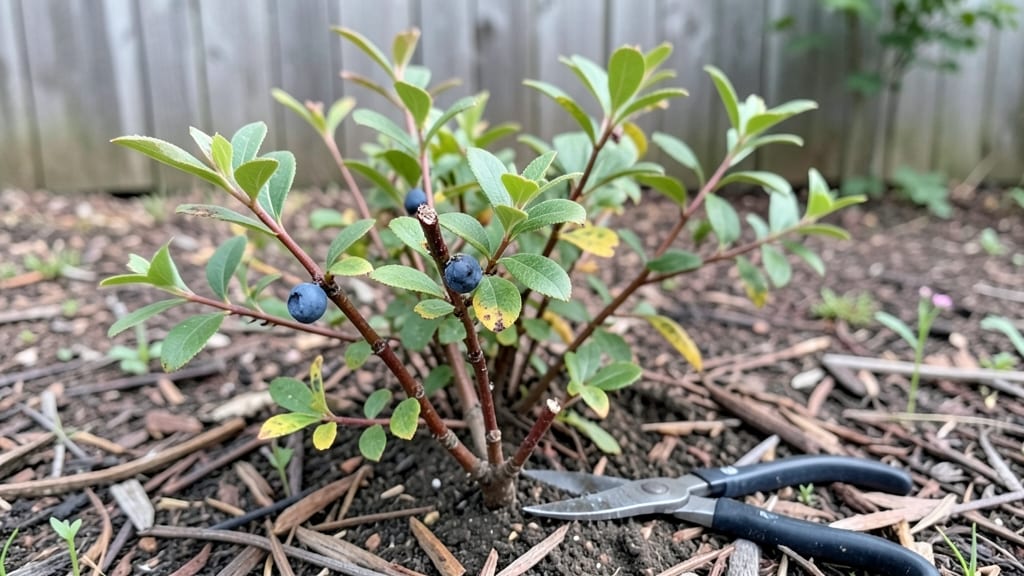
Pruning blueberry shrubs transforms a tangled mess into a fruit-bearing powerhouse—just four strategic cuts can double your harvest next year. 🌿 I learned this the hard way after my bushes turned into unruly thickets, but now they produce bushels of berries with minimal effort.
The key is timing and technique, not brute force.
You only need three tools: sharp pruning shears, gloves, and a bucket for clippings. The real work happens in late winter or early spring before buds swell, though light pruning after harvest keeps plants manageable.
Most people overcut, but blueberries reward precision—focus on removing dead wood and shaping the shrub to let sunlight reach the center.
After pruning, you’ll see new growth emerge within weeks, with fruit production peaking in just two seasons. The plants stay compact, disease-resistant, and easier to harvest. Plus, your neighbors will ask how you got such perfect bushes—no secret, just smart cuts.
Works for all blueberry varieties, from lowbush to highbush, and adapts to containers or ground plantings. Here’s how to make it foolproof the first time—no guesswork, just results.
📚 In This Guide
- What you need
- Instructions
- Tips and common mistakes
- Wrapping up and next steps
What you need
- ● Pruning shears: Bypass pruners (sharp, clean blades) for small branches; loppers (18–24" long) for thicker stems (1/2"–1" diameter). Quantity: 1 of each.
- ● Hand pruners: Anvil-style (for precision cuts on tiny branches). Quantity: 1 pair.
- ● Saw: Pruning saw (for branches >1" thick). Quantity: 1.
- ● Disinfectant: 70% isopropyl alcohol or bleach solution (1 part bleach to 9 parts water) to sterilize tools between cuts. Quantity: Small spray bottle or wipe.
- ● Gloves: Heavy-duty gardening gloves (cut-resistant for thorns). Quantity: 1 pair.
- ● Rake: Leaf rake (for clearing debris post-pruning). Quantity: 1.
- ● Trash bags: Heavy-duty (for hauling pruned branches). Quantity: 2–3.
- ● Pruning sealant: Tree wound dressing (for large cuts >1" diameter; not required for blueberries but can help prevent pests).
- ● Hose or water sprayer: To rinse tools and shrubs after pruning.
- ● Notebook & pen: To jot down notes on shrub growth patterns for future reference.
- ● Safety glasses: If dealing with brittle, overgrown branches.
- ● Know your blueberry variety (highbush vs. lowbush) and age—pruning needs vary!
- ● Check the weather: Prune on a dry, calm day (avoid wind or rain within 24 hours).
- ● Gather a bucket of water to clean tools mid-pruning (keeps cuts sanitized).
Step-by-step instructions for pruning blueberry shrubs
Here's the straightforward approach I use every year to keep my blueberries thriving—no complicated techniques, just four clear cuts.
✂️ Step 1: Remove Dead or Diseased Wood First
Start by scanning your shrubs for any branches that look completely brown, brittle, or hollow—these won’t produce fruit and can harbor pests. Use sharp pruning shears to cut these out at the base, making clean cuts at a 45-degree angle about ¼ inch above a healthy bud or lateral branch. This prevents water from pooling and causing rot.
I always do this in late winter or early spring before new growth begins. The reason is simple: removing dead wood first lets you focus on the healthy structure without distraction. If you see any cankers or fungal growth, sterilize your shears with rubbing alcohol between cuts to prevent spreading disease.
✂️ Step 2: Thin Out Overcrowded Branches
Next, identify branches that are rubbing against each other or growing inward toward the center of the shrub. These compete for sunlight and air circulation, which weakens fruit production. Select the thinner, smaller branches and cut them back to the main stem or a lateral branch, again at a 45-degree angle. Aim to open up the center so light can reach all parts of the shrub.
I like to step back occasionally and visualize the shrub’s shape—you want an open vase-like form with branches spaced 6-12 inches apart. This ensures good airflow and makes future pruning easier. If you’re unsure which branch to keep, choose the one with the most vigorous growth and strongest buds.
✂️ Step 3: Prune Last Year’s Fruitwood
Blueberries produce fruit on one-year-old wood, so after harvest, focus on cutting back these older branches by ⅓ to ½ their length. This encourages new growth while maintaining the shrub’s structure. Look for branches that are 1-2 years old—they’ll be thicker and may have smaller leaves compared to newer growth.
Here’s the thing—don’t overdo it. You’re not trying to drastically reduce the size of the shrub; you’re just shaping it to promote healthy new branches. Cut just above an outward-facing bud to encourage growth in the right direction. If a branch is completely woody with no leaves, it’s likely past its prime and can be removed entirely.
✂️ Step 4: Lightly Shape and Renew Older Wood
For mature shrubs, especially those over 5 years old, you’ll need to rejuvenate them by removing some of the oldest, largest branches. These are usually the thickest and may have fewer berries. Cut these back to 6-12 inches from the ground, which stimulates new growth from the base. This step keeps your shrub productive and prevents it from becoming too woody.
I do this in stages over a few years if needed—never remove more than ⅓ of the shrub’s total branches in one year. After pruning, give the shrubs a good drink of water to help them recover. You’ll notice new, vigorous shoots emerging from the base within a few weeks, which is a sign you’ve done it right.
Tips & tricks for pruning blueberry shrubs
These simple yet game-changing strategies will help you maintain your blueberry shrubs like a seasoned horticulturist without the complexity.
Timing is Everything: The late winter or early spring window is critical because it's when your shrubs are still dormant but just beginning to stir. Pruning at this time prevents stressing the plant during active growth periods. If you miss this window, avoid pruning during summer heat—it can shock the plant and reduce fruit production next year.
Tool Prep Matters: Sterilizing your pruning shears with rubbing alcohol between cuts is non-negotiable, especially when dealing with diseased wood. I keep a small bottle of 70% isopropyl alcohol in my gardening toolbox for this purpose. Sharp tools make cleaner cuts that heal faster, so take a moment to sharpen your shears before starting—it makes all the difference in the world.
Visualization Technique: Step back frequently to visualize your shrub's shape as you work. Imagine an open vase form with branches spaced 6-12 inches apart. This spacing ensures proper airflow and sunlight penetration throughout the shrub. I like to sketch a rough diagram before starting to guide my cuts—it's like following a blueprint for your plant's health.
Rejuvenation Strategy: For mature shrubs over 5 years old, I recommend a gradual rejuvenation approach over 2-3 years rather than drastic cuts all at once. Remove no more than ⅓ of the total branches in any single year to avoid shocking the plant. This staged approach stimulates vigorous new growth from the base while maintaining productivity.
Pro Tips for Pruning Blueberry Shrubs
- These simple yet game-changing strategies will help you maintain your blueberry shrubs like a seasoned horticulturist without the complexity.
- Timing is Everything: The late winter or early spring window is critical because it's when your shrubs are still dormant but just beginning to stir.
- Tool Prep Matters: Sterilizing your pruning shears with rubbing alcohol between cuts is non-negotiable, especially when dealing with diseased wood.
Frequently asked questions
Got questions about keeping your blueberry shrubs thriving with the right cuts? Here are some of the most common concerns—plus clear, actionable answers to keep your bushes happy and productive.
When is the best time to prune blueberry bushes?
The ideal window is late winter or early spring (before buds swell), but you can also prune lightly after harvest. Avoid pruning in fall—it exposes cuts to winter pests and diseases. For Southern growers, prune in winter when the plant is dormant.
How often should I prune blueberry shrubs?
Young bushes (under 3 years old) need minimal pruning—just remove dead or crossing branches. Mature bushes (3+ years) should be pruned annually in late winter to maintain shape and encourage new growth. Over-pruning weakens the plant, so aim for 10-20% of the plant’s volume per year.
What if I skip pruning my blueberry bushes?
Skipping pruning won’t kill your bushes, but you’ll likely see smaller berries, fewer fruits, and a crowded center that blocks sunlight. Without pruning, old wood accumulates, reducing air circulation and increasing disease risk. Think of it like a haircut—neglect leads to chaos!
Can I prune blueberries at any time of year?
While late winter/early spring is best, you can do light maintenance year-round. Remove dead or diseased branches immediately to prevent spread. Avoid heavy pruning in summer or fall, as it stresses the plant and invites pests. If you must prune in summer, do so early in the morning to reduce water loss.
What if my blueberry bush looks over-pruned?
Don’t panic! If you’ve trimmed too much, focus on revitalizing the center by cutting back only the oldest canes (those thicker than a pencil). Water deeply and fertilize with acidic, organic matter (like peat moss or pine needles) to help recovery. New growth should appear within 2-4 weeks.
Wrapping up and next steps
Pruning your blueberry shrubs doesn’t have to be intimidating—just four simple cuts can keep them thriving year after year! 🌱 By understanding when, how, and why to prune, you’ll encourage bigger harvests, healthier growth, and fewer pests.
Whether you’re a seasoned gardener or just starting out, these steps make maintenance effortless and rewarding.
Now that you’re armed with the knowledge, grab those pruners and give your bushes the care they deserve. Next up? Monitor their progress and adjust as needed—your blueberry patch will thank you with juicy, delicious berries for years to come! 🍇