
Shrubs
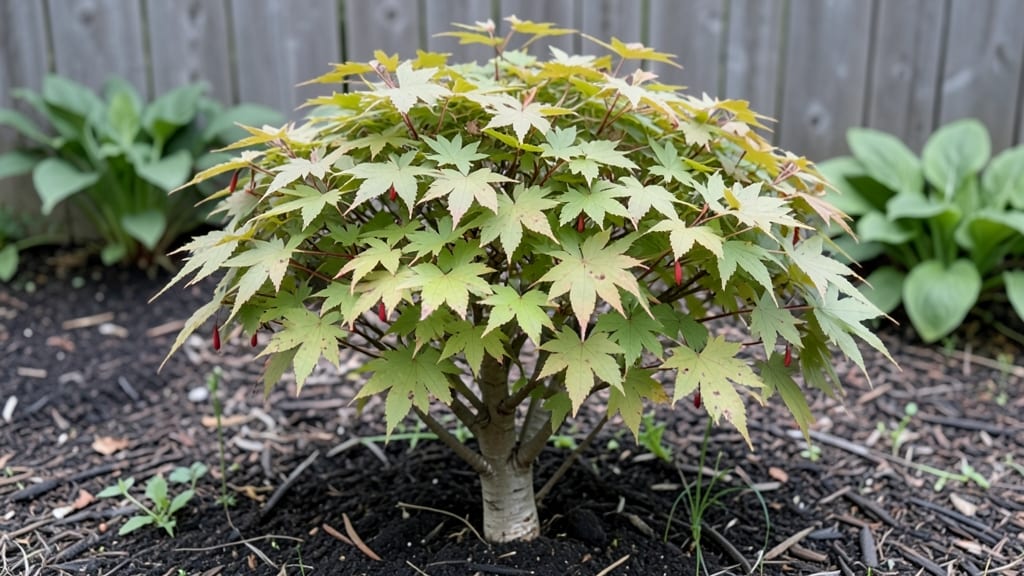
Shrub maple-like leaves bring that signature maple charm to your yard without the tree-sized commitment. 🌿 I’ll never forget the first time I spotted a Cotinus shrub with its delicate, maple-shaped foliage—it transformed a dull corner into a lush focal point overnight.
These shrubs deliver year-round structure, seasonal color shifts, and that coveted "wow" factor with minimal upkeep.
The real magic happens when you pair them right. Smoke bush (Cotinus) thrives in full sun and handles drought once established, while katsura tree (Cercidophyllum) offers fragrant spring blooms and golden fall foliage.
Both work as privacy screens, borders, or standalone statement plants—no formal pruning required. Just give them well-draining soil and a spot where their leaves can dance in the breeze.
What you end up with is a garden that feels like a curated art gallery. Imagine the deep reds of autumn foliage contrasting with evergreen neighbors, or the soft pinkish-purple haze of smoke bush blooms in summer.
These shrubs age beautifully, too—their bark and texture add winter interest when most plants have gone dormant.
Perfect for small spaces, urban yards, or as accents in larger landscapes. Whether you’re filling a shady corner or brightening a sunny border, these maple-like shrubs deliver natural beauty with zero fuss. Let’s get planting!
Understanding Leaf Shape Shifts
If your shrubs are suddenly sprouting leaves that resemble those of a shrub maple—lobed, serrated, or elongated—it’s not just a coincidence. Several environmental, genetic, and cultural factors can trigger this transformation.
Below, we break down the most common reasons why your shrubs might be developing maple-like foliage, along with clear explanations and actionable insights.
Some shrubs naturally produce leaves that resemble maple foliage due to their genetic makeup. While not all shrubs will mimic Acer species (true maples), certain cultivars or hybrid varieties are bred to exhibit lobed, serrated, or palmate leaf structures for ornamental appeal.
- Examples of shrubs with maple-like leaves:
- Japanese maple shrubs (Acer palmatum) – While technically trees, dwarf varieties are often pruned as shrubs.
- Amelanchier (Serviceberry) – Some cultivars have slightly lobed leaves.
- Viburnum species (e.g., Viburnum dentatum) – Can develop serrated edges resembling young maple leaves.
- Hydrangea paniculata (e.g., 'Limelight') – Some varieties have deeply veined, lobed-like foliage.
- What to do? If you intentionally planted a shrub for its maple-like appearance, embrace it! If not, research the species’ natural leaf shape before purchasing to avoid surprises.
Stress—whether from poor soil, extreme weather, or improper watering—can alter leaf development, sometimes causing them to deepen lobes, curl edges, or take on a more jagged appearance.
Key Stressors & Their Effects:
| Cause | Leaf Reaction | Solution |
|---|---|---|
| Nitrogen deficiency | Smaller, darker green, or lobed leaves | Apply balanced fertilizer (e.g., 10-10-10) or compost. |
| Iron chlorosis | Yellowing between veins (lobes may appear more pronounced) | Add chelated iron or adjust soil pH (aim for 6.0–7.0). |
| Drought stress | Thicker, leathery, or serrated edges | Deep watering 1–2x per week (check soil moisture 2" below surface). |
| Overwatering | Yellowing, curled, or distorted lobes | Improve drainage with organic matter (e.g., perlite, bark mulch). |
| Temperature extremes | Stunted growth, lobed or irregular shapes | Use mulch in winter; provide afternoon shade in hot climates. |
💡 Pro Tip: If your shrub’s leaves are smaller and more lobed than usual, it may be a sign of root-bound conditions (e.g., overcrowded roots in a pot). Repot or prune roots if needed.
Aggressive pruning—especially in late winter or early spring—can stimulate abnormal leaf growth, including more pronounced lobes or serrations. This happens because:
- Cutting back too hard forces the plant to produce new, less mature leaves that may resemble juvenile growth patterns (e.g., maple-like shapes).
- Shearing (topiary-style pruning) can encourage denser, smaller leaves with exaggerated features.
- How to avoid it:
- Prune
- Use sharp, clean tools to avoid tearing leaves.
- Avoid over-shearing—stick to 1/3 of the plant’s height max per year.
🔥 Warning: If you’re pruning for bushier growth, be mindful that some shrubs (like ornamental cherries or viburnums) may develop more lobed or serrated leaves as a stress response.
Certain pathogens and insects can distort leaf development, leading to maple-like serrations or lobing as a defensive or growth-altered response.
Common Culprits:
- Leaf miners (e.g., Phytomyza spp.) – Larvae burrow into leaves, causing irregular, jagged edges that mimic serrations.
- Japanese beetles – Chew on leaf margins, creating notched, maple-like shapes.
- Fungal infections (e.g., Septoria leaf spot) – Can cause dark spots and distorted growth, sometimes with lobed patterns.
- Viral infections (e.g., Tomato mosaic virus in some ornamentals) – May lead to stunted, malformed leaves.
- What to do?
- Apply neem oil or insecticidal soap for pests.
- Remove severely infected leaves and treat with fungicide if needed.
🎯 Prevention Tip: Mulch around the base to reduce fungal spores and attract beneficial insects (like ladybugs) to control pests.
If your shrub is not a true maple but produces maple-like leaves, it may have cross-pollinated with a nearby species or is a natural hybrid.
- How it happens:
- Seed-grown shrubs (not grafted) may develop unpredictable traits, including leaf shape.
- If you
While maple-like leaves can be a desirable trait for aesthetic appeal, they’re often a sign that your shrub is either: ✅ Genetically predisposed (great for design!) ⚠️ Under stress (needs care adjustments) ❌ Infected or over-pruned (requires intervention)
By identifying the root cause, you can either embrace the change or correct the issue to keep your shrub thriving—with or without those lobed leaves!
How to Fix Leaf Issues Naturally
Transforming your shrub into a lush, leafy privacy screen with maple-like foliage starts with addressing common problems—whether it’s yellowing, sparse growth, or pest damage. Below are practical, step-by-step solutions tailored to the root cause, plus prevention tips to keep your shrub thriving year-round.
Cause: Overwatering, nutrient deficiency, or fungal infections (like powdery mildew).
How to Fix It: ✅ 💧 Adjust Watering Habits
- Shrubs with maple-like leaves (e.g., Acer palmatum or Stachyurus species) prefer moderate moisture—never soggy soil.
- Test the soil: Stick your finger 2 inches deep; if damp, wait before watering again.
- Drainage check: Amend heavy clay soil with compost or perlite to prevent root rot.
✅ 🌱 Boost Nutrients with a Balanced Fertilizer
- Use a slow-release, organic fertilizer (like 10-10-10) in early spring and mid-summer.
- Yellow leaves? Add iron supplements (chelated iron) if chlorosis (yellowing between veins) appears.
- Brown edges? Your shrub may need magnesium—sprinkle Epsom salt (1 tbsp per gallon of water) monthly.
✅ 🍄 Treat Fungal Infections
- Powdery mildew? Spray leaves with a baking soda mix (1 tsp baking soda + 1 quart water + a drop of dish soap) every 7–10 days until gone.
- Prevent recurrence: Improve airflow by pruning dense branches and avoiding overhead watering.
💡 Prevention Tip: > 🌡️ Mulch wisely! Apply 2–3 inches of organic mulch (wood chips or shredded bark) to retain moisture without suffocating roots. Keep mulch 6 inches away from the trunk.
Cause: Over-pruning, poor sunlight, or root-bound conditions.
How to Fix It: 🔪 🌿 Prune Strategically
- When? Prune in late winter or early spring (before new growth starts).
- How? Cut back 1/3 of the oldest stems to the ground to stimulate fresh growth.
- Avoid "heading back" (cutting into old wood)—this can reduce flowering and leaf production.
🌞 🌞 Optimize Sunlight Exposure
- Most maple-like shrubs thrive in partial shade (4–6 hours of sun).
- Too much sun? Yellow leaves or scorching? Move to a morning sun, afternoon shade spot.
- Too little sun? Thin out nearby trees/shrubs to allow dappled light.
🌱 🌱 Repot or Divide (If Potted)
- If your shrub is root-bound, gently loosen roots and replant in a larger container with fresh potting mix.
- Bare-root shrubs? Soak roots in water for 1 hour before planting to reduce transplant shock.
✨ Pro Tip: > 🎯 Feed young shrubs! Use a high-nitrogen fertilizer (like 20-10-10) in spring to encourage leafy, lush growth—then switch to balanced fertilizer once established.
Cause: Aphids, spider mites, or scale insects sucking sap from leaves.
How to Fix It: 🐞 🦋 Manual Removal (Early Stages)
- Blast off pests with a strong spray of water (early morning or evening).
- Handpick large infestations—drop pests into soapy water.
🌿 🌿 Natural Pest Deterrents
- Neem oil spray (1 tbsp neem oil + 1 quart water + drop of soap) every 5–7 days until pests vanish.
- Introduce beneficial insects: Ladybugs and lacewings devour aphids—buy them online or attract them with native plants like dill or fennel.
🚫 🚫 Avoid Overusing Chemicals
- Systemic pesticides (like imidacloprid) can harm pollinators and disrupt soil microbes.
- Alternative: Insecticidal soap (mix 2 tbsp castile soap + 1 quart water) for spot treatments.
💡 Prevention Tip: > 🌡️ Stress-free shrubs resist pests! Keep soil consistently moist (not dry or waterlogged) and prune regularly to improve airflow—pests love stagnant, crowded plants.
Cause: Freeze damage, windburn, or extreme heat stress.
How to Fix It: 🌡️ 🔥 Shield from Heat & Wind
- Summer scorching? Provide afternoon shade with a lightweight shade cloth (30–50% coverage).
- Winter winds? Wrap young shrubs in burlap or use a windbreak (like a fence or evergreen barrier).
💧 💧 Deep Water Before Freezes
- Water thoroughly 1–2 days before the first frost—hydrated roots survive better.
- Mulch heavily (4–6 inches) with straw or leaves to insulate roots.
🌱 🌱 Choose Cold-Hardy Varieties
- If your area has brutal winters, opt for hardy maple-like shrubs like:
- Stachyurus praecox (Japanese spikemoss)
- Acer captivum (snakebark maple, dwarf varieties)
✨ Pro Tip: > 🎯 Avoid pruning in late fall! New growth is more vulnerable to winter damage—wait until early spring to trim.
Final Thought: With the right care, your maple-like shrub will reward you with vibrant, year-round foliage—no yellowing, pests, or sparse branches in sight! Start with one fix at a time, monitor progress, and adjust as needed. 🌿✨
Frequently asked questions
What are the best shrubs with maple-like leaves for small gardens?
For compact spaces, try Japanese spikemoss (Stachyurus praecox)—it grows just 4-6 feet tall and has delicate, maple-like foliage. Dwarf snakebark maple (Acer captivum 'Little Princess') is another great choice, reaching only 6-8 feet while delivering vibrant fall colors. Both thrive in partial shade and add texture without overwhelming small yards.
How do I care for shrubs with lobed leaves to keep them healthy?
Most maple-like shrubs prefer well-draining soil and moderate moisture—never soggy roots. Use a balanced fertilizer (10-10-10) in spring, and mulch with 2-3 inches of organic matter to retain moisture. Prune in late winter to shape without sacrificing next year's growth.
Can I grow these shrubs in containers?
Yes! Many maple-like shrubs adapt well to containers, including dwarf Japanese maples (Acer palmatum 'Crimson Queen') and smoke bush (Cotinus coggygria). Use a large pot (18+ inches deep) with drainage holes and a mix of potting soil and perlite. Repot every 2-3 years to refresh nutrients. Place in partial shade for best results.
Why do some shrubs develop maple-like leaves when they're not true maples?
This often happens due to genetic traits in certain shrubs like serviceberry (Amelanchier) or viburnum (Viburnum dentatum), which naturally produce slightly lobed leaves. Stress from poor soil, drought, or over-pruning can also exaggerate leaf shapes. If you love the look, embrace it—it might be a unique hybrid!
What's the best way to pair these shrubs with other plants?
Combine maple-like shrubs with evergreens (like boxwood) for year-round structure, or plant near hostas or ferns for a lush, woodland feel. For contrast, add colorful perennials like heucheras or coral bells (Heuchera) to highlight their foliage. Avoid overpowering neighbors—give them 3-4 feet of space for airflow.