
Flowers
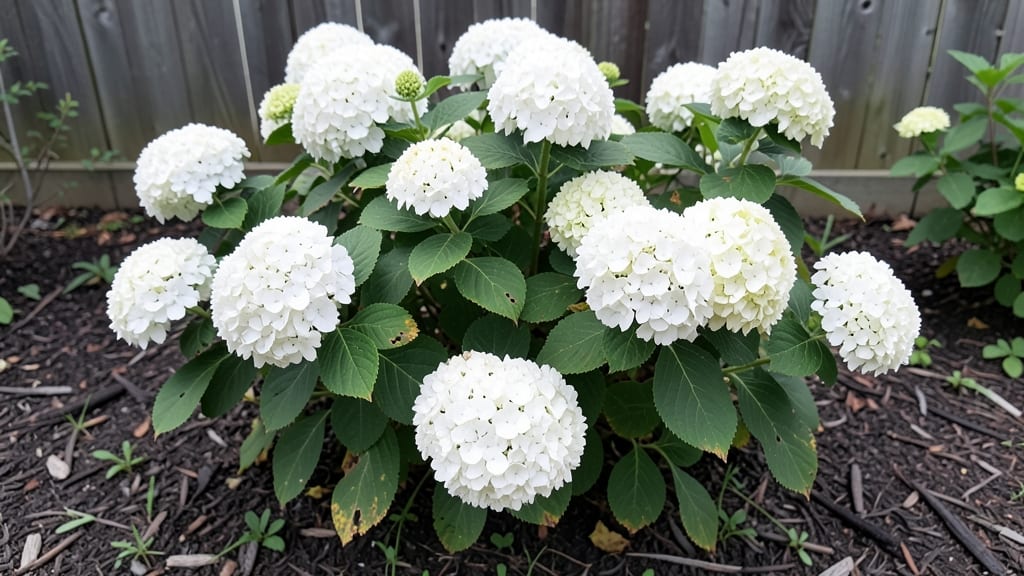
This shrub with white balls of flowers, Hydrangea arborescens, turned my shady corner into a dreamy display—fragrant, low-maintenance, and perfect for cutting. 🌿 The moment I spotted them in a nursery, I knew they’d be the star of my garden.
These shrubs don’t just look like cotton puffs; they smell like summer too, with a delicate sweetness that lingers in the air.
What makes them ideal for garden design is their versatility. Plant them as a hedge for soft, rounded edges or as a focal point near patios where you can brush past the blooms.
They thrive in partial shade, making them perfect for spots other shrubs avoid. Pair them with ferns for texture or hostas for contrast—their white flowers pop against deep greens and purples.
You’ll love how they perform all season: lush foliage in spring, ball-shaped blooms from midsummer to fall, and even winter interest with some varieties keeping their skeleton structure.
The best part? They attract bees and butterflies, turning your garden into a living cocktail party. Here’s how to make them the centerpiece of your landscape.
Works in borders, containers, or as a standalone specimen—just give them room to grow. Whether you’re designing a cottage garden or a modern landscape, these shrubs bring effortless elegance. Let’s get your garden smelling like a floral bouquet all season long.
Why Flowers Stay Small Or Skip Blooming
If your shrub with white pom-pom flowers isn’t living up to its potential—producing tiny blooms or skipping them entirely—there’s usually a clear reason behind it. Understanding these causes helps you take action before next season. Let’s break down the science and what you can do about it.
When shrubs grow too close together, they compete for nutrients, water, and sunlight. This competition triggers a survival response: the plant diverts energy to root expansion instead of flowering. Roots become dense and tangled, stunting above-ground growth.
Why it happens:
- Limited space: Shrubs planted too near each other (or in small containers) can’t spread roots freely.
- Soil depletion: Overused soil lacks the nitrogen and phosphorus needed for bloom production.
- Fungal competition: Crowded roots create humid conditions, encouraging root rot or pathogenic fungi that weaken the plant.
Actionable fix: 🔥 Prune aggressively—cut back 25–30% of foliage to reduce demand while roots recover. 🍳 Repot or transplant if in containers; space shrubs 3–5 feet apart in gardens. 🌡️ Test soil—add compost or slow-release fertilizer (like 10-10-10) to replenish nutrients.
Most shrubs with white ball-shaped flowers (like Viburnum or Hydrangea) need 6+ hours of direct sunlight daily to bloom. Too little light means the plant conserves energy for survival, not reproduction.
Why it happens:
- Shade from trees/buildings: Even partial shade (3–6 hours of light) can reduce flowering by 50%.
- North-facing gardens: These areas receive the least sunlight, especially in cooler climates.
- Overly dense foliage: Tall plants or weeds block light from reaching lower branches.
Actionable fix: 👨🍳 Move or prune—relocate the shrub to a sunnier spot or thin surrounding plants. ⏰ Use reflective surfaces (like white gravel or mirrors) to bounce extra light onto the shrub. 🎯 Choose low-light tolerant varieties (e.g., Viburnum dentatum) if relocating isn’t an option.
Flowering is a water-intensive process. Too little or too much water disrupts the plant’s ability to produce blooms, as it prioritizes root health over floral development.
Why it happens:
- Underwatering: Dry soil triggers drought stress, causing buds to drop before opening.
- Overwatering: Soggy roots suffocate the plant, preventing nutrient uptake needed for blooms.
- Inconsistent moisture: Alternating between drought and flood confuses the plant’s growth cycle.
Actionable fix: 💡 Check soil moisture—stick your finger 2 inches deep; water when dry. ✨ Improve drainage—add perlite or sand to heavy clay soil; use raised beds if needed. 🌡️ Water deeply but less often—aim for 1–1.5 inches per week (including rainfall).
Flowers are energy factories, and they need the right mix of nutrients to thrive. Too much or too little of key elements (like nitrogen, phosphorus, or potassium) can halt bloom production.
Why it happens:
| Nutrient Issue | Symptoms | Cause |
|---|---|---|
| Too much nitrogen | Leafy growth, no flowers; weak stems | Over-fertilizing with lawn fertilizer or manure. |
| Low phosphorus | Purple-tinged leaves; small, sparse blooms | Poor soil or leaching from frequent watering. |
| Potassium deficiency | Yellow leaf edges; buds fail to open | Excessive pruning or old, depleted soil. |
Actionable fix: 🔥 Test soil—use a home kit or send a sample to a lab for precise readings. 🍳 Feed smartly—use a balanced bloom booster (like 5-10-10) in early spring. 🌡️ Avoid high-nitrogen fertilizers (like lawn food); opt for phosphorus-rich options for flowering shrubs.
Most of these issues are reversible with the right adjustments. Start with one or two fixes (like pruning and sunlight checks) and monitor progress over 2–3 weeks. Your shrub’s white floral balls will thank you!
Revive Your Blooming Shrub
If your shrub with those charming white flower balls isn’t thriving, don’t fret! With a few targeted fixes, you can bring it back to its fragrant, blooming best. Below, we’ve mapped common issues to simple solutions—plus prevention tips to keep your shrub healthy for seasons to come. Let’s get growing!
Too much love (in the form of water) can suffocate roots and invite fungal diseases. If your shrub’s leaves are yellowing or wilting despite moist soil, it’s likely overwatered.
💦 Fix It:
- 🔥 Stop watering immediately for 3–5 days to let the soil dry out.
- 👨🍳 Check drainage: Ensure pots have drainage holes or amend garden soil with perlite/sand (1:3 ratio) to improve airflow.
- 🥘 Water deeply but less often: Water only when the top 2 inches of soil are dry. Stick your finger in—if it’s damp, wait!
- ⏰ Morning watering: Water early in the day so excess moisture evaporates, reducing fungal risks.
💡 Prevention Tips:
- Use a moisture meter to track soil dryness.
- Group plants with similar water needs together for efficient care.
- Mulch around the base (2–3 inches) to retain moisture without over-saturating roots.
Crispy edges, wilting stems, or flower buds that refuse to open? Your shrub might be parched. Many shrubs with white floral clusters (like mock orange or viburnum) need consistent moisture, especially in heatwaves.
💦 Fix It:
- 🍳 Give it a thorough drink: Water slowly at the base until it seeps into the soil 6–8 inches deep.
- 🌿 Mulch generously: Spread 2–3 inches of organic mulch (like shredded bark) to lock in moisture.
- 🔥 Adjust your schedule: Water every 2–3 days in summer; reduce to once a week in cooler months.
- 🥗 Self-watering hack: Bury a terra-cotta pot near the roots, fill it with water, and let it wick moisture to the plant.
💡 Prevention Tips:
- Monitor weather forecasts—adjust watering during heatwaves or droughts.
- Use drip irrigation for slow, steady hydration.
- Group thirsty shrubs together in a "hydrozone" for easier maintenance.
White, black, or brown spots? Powdery mildew, leaf spot, or root rot could be the culprits. These often strike when humidity is high (like in a crowded garden or after rain) and airflow is poor.
🧼 Fix It:
- 🔪 Prune infected leaves/stems with clean shears, sterilized with rubbing alcohol.
- 🌡️ Improve airflow: Space plants 3–5 feet apart or thin dense foliage to let air circulate.
- 🍳 Treat with fungicide: Spray neem oil (1 tbsp per quart of water) or a copper-based fungicide every 7–10 days for 3 weeks.
- 🥘 Adjust watering habits: Water at the base, not overhead, to keep leaves dry.
💡 Prevention Tips:
- ✨ Space plants strategically: Avoid planting in low-lying areas where water pools.
- 🌿 Choose resistant varieties: Opt for disease-resistant cultivars like Viburnum bodnantense (a fragrant white-flowered shrub).
- 🔥 Clean up debris: Remove fallen leaves or spent blooms to reduce fungal spores.
If your shrub’s leaves look bleached, crispy, or sunken, it might be getting too much direct sunlight—especially if it’s accustomed to partial shade.
🌿 Fix It:
- 👨🍳 Move it to partial shade: Gradually acclimate it by shifting it to a spot with 4–6 hours of morning sun (or dappled shade).
- 🥘 Provide shade cloth: Use 30–50% shade fabric in peak afternoon sun (1–4 PM).
- 💦 Increase water frequency: Heat-stressed plants need more moisture. Water 2x daily during extreme heat.
- 🌡️ Misting hack: Lightly mist leaves in the early morning to cool them down (avoid evening misting to prevent fungal growth).
💡 Prevention Tips:
- 📊 Know your shrub’s needs: Research whether your variety prefers sun or shade (e.g., Philadelphus thrives in full sun, while Weigela tolerates partial shade).
- 🌱 Plant in the right spot: Observe the sun patterns in your yard before planting.
- 🔥 Mulch heavily: A 3-inch mulch layer keeps roots cooler in summer.
Lackluster blooms or leaves that look pale green or yellow? Your shrub might be hungry for nutrients, especially nitrogen, phosphorus, or micronutrients like iron.
🍽️ Fix It:
- 🔥 Test your soil: Use a DIY soil test kit (available at garden centers) to identify deficiencies.
- 🌿 Feed it right:
- 🥗 For nitrogen (green leaves): Apply a balanced fertilizer (10-10-10) in early spring.
- 🍎 For phosphorus (blooms): Use a bloom booster (5-10-10) when buds form.
- 💪 For iron/chlorosis (yellowing): Sprinkle iron chelate granules around the base or use a foliar spray.
- 🥘 Compost top-dressing: Spread 1–2 inches of compost around the shrub (but keep it 2 inches away from the stem).
💡 Prevention Tips:
- 🌱 Feed annually: Fertilize in early spring before new growth starts.
- 🔥 Avoid over-fertilizing: Too much can burn roots—follow package instructions.
- 🌿 Rotate nutrients: Alternate between organic (compost, worm castings) and synthetic fertilizers for balanced health.
With these fixes, your shrub should bounce back with lush foliage and those coveted white flower balls in no time. Remember: consistency is key—whether it’s water, sunlight, or nutrients, your shrub will thank you with vibrant blooms and fragrant charm!
Frequently asked questions
What are the most popular shrubs with white ball-shaped flowers?
The top choices include Hydrangea arborescens (smooth hydrangea), Viburnum opulus (crane's-bill), and Buddleia davidii (butterfly bush). These varieties thrive in different conditions—hydrangeas prefer partial shade, while viburnums handle full sun. Each offers unique fragrance and seasonal interest!
Can these shrubs grow in containers?
Many white-flowering shrubs like Hydrangea arborescens grow beautifully in 15-20 gallon containers with proper drainage. Use well-draining potting mix and repot every 2-3 years. Just ensure they get 6+ hours of sunlight daily for best blooming results.
How do I make my white-flowering shrub bloom more?
Boost blooms by pruning in late winter to remove dead wood, fertilizing with phosphorus-rich food (like 5-10-10) in early spring, and ensuring 6+ hours of sunlight. Deadheading spent blooms also encourages new growth. Most varieties bloom on new wood, so avoid heavy pruning after flowering.
Are these shrubs deer-resistant?
Some varieties like Hydrangea arborescens are moderately deer-resistant, but Viburnum opulus and Buddleia are often browsed by deer. For extra protection, apply deer repellent sprays or plant them near deer-resistant companions like boxwood or barberry.
When is the best time to plant these shrubs?
Plant in early spring or fall when temperatures are mild. This gives roots time to establish before extreme heat or cold. For container plants, water thoroughly before transplanting and mulch heavily to retain moisture. Avoid planting during summer heatwaves or winter freezes.