
Shrubs
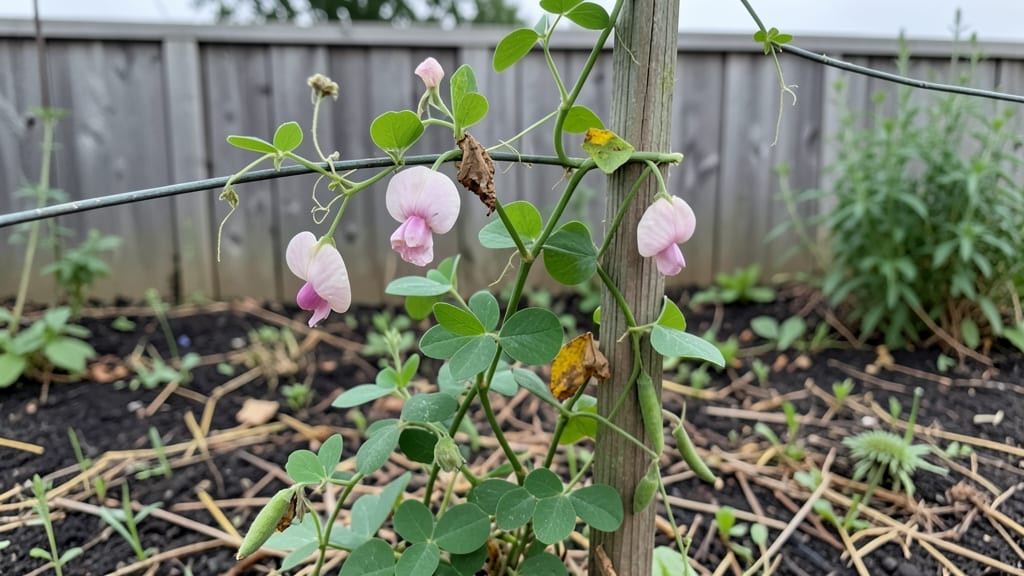
Your sweet pea shrub turning yellow isn’t just a cosmetic issue—it’s a cry for help from your plant. 🌱 I’ve seen this happen when the soil pH gets thrown off balance, and the fix is simpler than you’d think.
The key is understanding whether it’s too alkaline, nutrient-starved, or struggling with something more serious like disease.
Most yellowing starts with the lower leaves, a classic sign of overwatering or poor drainage. But if the yellow spreads with white powdery spots, you’re dealing with powdery mildew—a fungal party that thrives in damp conditions.
I’ve saved my own sweet peas by adjusting watering, improving airflow, and even a light dose of neem oil when needed.
Once you identify the root cause, the fix is straightforward: balance the soil acidity, trim affected growth, and keep an eye on watering habits. Within weeks, you’ll see fresh green foliage returning—proof that your shrub isn’t dying, just asking for a little attention.
This method works for both sweet pea shrubs and vines, and the same principles apply to other acid-loving plants like hydrangeas or azaleas. Let’s get your shrub back to its vibrant best!
Root Causes Of Yellowing Foliage
When your sweet pea shrub starts showing yellow leaves, it’s often a cry for help from the plant itself. Understanding the why behind the color shift is the first step to restoring its vibrant green.
Below, we break down the most common reasons—each with a clear scientific explanation and actionable insights to address them.
Sweet pea shrubs (like Lathyrus odoratus or ornamental varieties) thrive in well-draining soil. When roots sit in soggy conditions, they struggle to absorb oxygen, leading to chlorosis—the yellowing of leaves due to disrupted chlorophyll production.
Overwatering also promotes root rot, where fungal pathogens like Phytophthora attack weakened roots, cutting off nutrient flow.
Key signs:
- Yellowing starts at the bottom of the plant.
- Soil feels damp even days after watering.
- Leaves may appear wilted or mushy.
Fix it:
- ✅ Test your soil: Stick your finger 2 inches deep—if it’s wet, wait to water. Aim for 1 inch of water per week (adjust for rain).
- ✅ Improve drainage: Amend heavy clay soil with perlite or coarse sand (20-30% mix). For container plants, ensure pots have drainage holes and use a well-draining potting mix (like a 50/50 blend of peat moss and perlite).
- ✅ Repot if needed: If roots are circling or rotting, trim affected areas with sterilized scissors and repot in fresh soil.
Yellowing leaves can signal a lack of micronutrients, particularly iron (Fe) or nitrogen (N). Iron is crucial for chlorophyll synthesis, while nitrogen fuels leaf growth. In alkaline soils (pH >7.0), iron becomes unavailable to plants, even if present in the soil—a condition called lime-induced chlorosis.
Key signs:
- Yellowing appears on new growth first (interveinal chlorosis).
- Veins remain green while leaf tissue turns yellow.
- Stunted growth or weak stems.
Fix it:
- ✅ Test soil pH: Use a home test kit or send a sample to a lab. Ideal pH for sweet peas: 6.0–7.0.
- ✅ Add chelated iron: Apply a liquid iron supplement (like Iron Chelate) every 2–4 weeks during growing season. Follow label rates.
- ✅ Boost nitrogen: Use a balanced fertilizer (10-10-10) or compost in spring. Avoid over-fertilizing, which can burn roots.
- ✅ Acidify soil (if pH is high): Mix in sulfur or peat moss to lower pH gradually (takes months).
Sweet pea shrubs often yellow when exposed to intense, direct sunlight after being acclimated to shade or during heatwaves. UV radiation can scorch leaves, while transpiration stress (excessive water loss) disrupts nutrient uptake. Additionally, windburn or salt spray (near coastal areas) can cause yellowing and browning.
Key signs:
- Yellowing or white/brown patches on upper leaves (sun-exposed side).
- Leaves may feel crispy or dry to the touch.
- New growth appears bleached or stunted.
Fix it:
- ✅ Provide afternoon shade: Use light shade cloth (30-50%) or relocate the plant to a spot with morning sun + afternoon shade.
- ✅ Mulch to retain moisture: Apply 2–3 inches of organic mulch (straw, wood chips) to reduce soil temperature and evaporation.
- ✅ Wind protection: Plant near a hedge or fence to block harsh winds. For coastal areas, use windbreaks or choose salt-tolerant varieties.
- ✅ Hydrate deeply: Water early in the morning to reduce evaporation. Avoid wetting leaves to prevent fungal issues.
Sap-sucking pests like aphids, spider mites, or whiteflies drain nutrients, causing leaves to yellow and curl. Meanwhile, fungal diseases such as powdery mildew or rust block sunlight and clog stomata, leading to chlorosis. Root-knot nematodes also attack roots, reducing water and nutrient absorption.
Key signs:
- Sticky residue (honeydew) on leaves (aphids).
- Fine webbing on undersides (spider mites).
- White or orange spots on leaves (fungal rust).
- Wilting despite moist soil (nematodes).
Fix it:
- ✅ Inspect leaves: Use a magnifying glass to spot pests. Blast off aphids with a strong stream of water or apply neem oil (1 tbsp per gallon of water).
- ✅ Treat fungal issues: Spray with copper fungicide or baking soda mix (1 tsp baking soda + 1 quart water + few drops of soap).
- ✅ Improve soil health: Add beneficial nematodes or compost to combat root pests. Rotate crops if growing in garden beds.
- ✅ Prune affected areas: Remove and dispose of heavily infested leaves to prevent spread.
Pro Tip: 💡 When in doubt, rule out the basics first! Check soil moisture, pH, and drainage before jumping to conclusions. A simple soil test kit ($10–$20) can save hours of guesswork.
Revive Your Shrub’s Vibrancy
Your sweet pea shrub’s yellowing leaves are a cry for help—but don’t panic! With the right care, you can restore its lush green beauty and prevent future stress.
Below, we’ve mapped out practical fixes for the most common causes of yellowing, along with pro tips to keep your shrub thriving. Let’s get to work!
Signs: Yellowing leaves (especially lower ones), soggy soil, or wilting despite damp conditions.
How to Fix It: 🔥 Step 1: Check the Soil
- Stick your finger 2 inches deep into the soil. If it’s soggy or smells like rot, your shrub is drowning. Sweet peas prefer well-draining soil—never let them sit in waterlogged conditions.
🍳 Step 2: Improve Drainage - If your shrub is in a pot, add perlite or sand to the soil mix (20-30% of the total volume).
For in-ground shrubs, amend the soil with compost or coarse sand to loosen it up. - Consider raising the plant by adding a layer of gravel or rocks beneath the root zone if drainage is chronically poor.
👨🍳 Step 3: Adjust Watering Habits - Water only when the top inch of soil is dry (test with your finger!). Sweet peas hate "wet feet"—once a week is usually enough, unless it’s scorching hot. - Water deeply but infrequently to encourage strong root growth.
A slow drip or soaker hose works best to avoid surface puddling.
🥘 Step 4: Repot (If Needed)
- If the roots are circling or mushy, repot into fresh, well-draining soil and trim any black or squishy roots with sterilized scissors.
Prevention Tips: ✨ Use pots with drainage holes—no exceptions! ✨ Mulch around the base (2-3 inches of organic mulch) to regulate moisture and prevent soil compaction. ✨ Avoid watering at night—fungus thrives in damp, dark conditions.
Signs: Crispy yellow edges, dry soil, or leaves that feel papery to the touch.
How to Fix It: 🔥 Step 1: Hydrate Immediately
- Give the shrub a deep watering until water runs out the drainage holes (for potted plants). For in-ground shrubs, water until the soil 12 inches down is moist.
🍳 Step 2: Mulch Like a Pro
- Spread 2-3 inches of mulch (wood chips, straw, or shredded bark) around the base to lock in moisture and protect roots from heat.
👨🍳 Step 3: Shield from Scorching Sun
- If your shrub is in a hot, sunny spot, provide afternoon shade (use a sheer curtain or move it to partial shade temporarily).
- Mist the leaves in the early morning to boost humidity (but avoid evening misting—it promotes fungus).
🥘 Step 4: Fertilize for Recovery
- Feed with a balanced, water-soluble fertilizer (10-10-10) diluted to half strength. This gives the shrub energy to bounce back.
Prevention Tips: 💡 Water deeply 2-3 times a week in summer, rather than daily shallow watering. 🌡️ Monitor soil moisture—stick a moisture meter in the ground for accuracy. 🎯 Group plants together to create a microclimate that retains moisture.
Signs: Yellowing leaves with green veins (a classic sign of iron deficiency from alkaline soil) or stunted growth.
How to Fix It: 🔥 Step 1: Test Your Soil
- Grab a soil pH test kit (available at garden centers) or send a sample to a local extension office. Sweet peas thrive in slightly acidic to neutral soil (pH 6.0–7.0).
🍳 Step 2: Acidify the Soil (If Needed) - For alkaline soil (pH >7.0): - Mix elemental sulfur (1 lb per 100 sq ft) into the top 6 inches of soil.
It takes 2–3 months to lower pH. - Use peat moss or pine needles as mulch to gradually acidify the soil. - For acidic soil (pH <6.0): - Add lime (calcium carbonate) to raise pH slowly. Follow package instructions for dosage.
👨🍳 Step 3: Feed with Chelated Iron
- If yellowing persists, the shrub may need iron. Use a chelated iron supplement (like Iron Chelate) every 2–4 weeks until leaves green up.
🥘 Step 4: Flush the Soil (For Potted Plants)
- If the shrub is in a pot, leach excess salts by watering thoroughly until water runs out the bottom for 10–15 minutes.
Prevention Tips: ✨ Test soil every 1–2 years—pH changes over time! ✨ Plant sweet peas in raised beds if your native soil is consistently alkaline. ✨ Avoid over-fertilizing with lime or sulfur—small, gradual adjustments work best.
Signs: Yellowing leaves with holes, spots, or sticky residue, or powdery white growth.
How to Fix It: 🔥 Step 1: Identify the Culprit
- Aphids/Spider Mites: Tiny bugs, webbing, or sticky sap.
- Fungal Issues (Powdery Mildew): White powdery coating on leaves.
- Root Rot: Mushy stems, yellowing from the bottom up.
🍳 Step 2: Treat Pests - For aphids/mites: - Spray with neem oil solution (1 tsp neem oil + 1 tsp mild soap per quart of water).
Reapply every 5–7 days. - Introduce ladybugs (natural predators) to your garden. - For fungal diseases: - Remove all infected leaves and destroy them (don’t compost!). - Spray with baking soda solution (1 tsp baking soda + 1 quart water + a drop of dish soap).
👨🍳 Step 3: Boost Plant Immunity
- Water at the base (not overhead) to prevent fungal spores from splashing onto leaves.
- Prune for airflow—trim back dense growth to improve circulation.
🥘 Step 4: Prevent Future Infestations
- Rotate crops if growing sweet peas annually.
- Sterilize pruners with rubbing alcohol between cuts to avoid spreading disease.
Prevention Tips: 💡 Inspect leaves weekly—catch pests early! 🔥 Avoid wetting foliage when watering. 🎯 Plant resistant varieties (like ‘Cupid’ or ‘Blue Moon’) if pests are recurrent.
Final Pro Tip: 🌟 Patience is key! Yellowing leaves may take 2–4 weeks to recover, depending on the cause. Stick with your treatment plan, and your sweet pea shrub will be back to its vibrant self in no time.
Frequently asked questions
Why do the lower leaves turn yellow first?
Lower leaves yellow first because they’re oldest and most vulnerable to nutrient deficiencies or poor drainage. When roots struggle (from overwatering or compacted soil), they can’t deliver nutrients upward efficiently. This is your shrub’s way of saying, "Help me fix the roots first!"
Is it safe to prune yellow leaves?
Yes, but only after identifying the cause. Remove yellowed leaves from pests or disease immediately to prevent spread. For nutrient issues, wait until new growth appears—pruning too early can stress the plant further. Always use sterilized shears to avoid introducing pathogens.
How often should I check soil pH for acid-loving shrubs?
Test soil pH every 1–2 years or when you notice yellowing with green veins (iron deficiency). Sweet peas prefer 6.0–7.0 pH. Use a $10 test kit or send a sample to your local extension office for precise results. Adjust gradually—sudden pH changes shock roots.
Can I use coffee grounds to fix yellowing?
Coffee grounds can lower soil pH slightly (great for acid-loving plants), but they’re not a magic fix. Mix 1 part grounds to 3 parts soil as mulch, but monitor pH—too much acid can harm roots. For faster results, combine with chelated iron and proper drainage fixes.
Will my shrub recover if I act now?
With the right care, most shrubs bounce back in 2–4 weeks. Focus on the root cause (drainage, nutrients, pests) and give it consistent care. Severe cases (like root rot) may need repotting, but early action prevents permanent damage. Patience and consistency win every time!