
Pruning
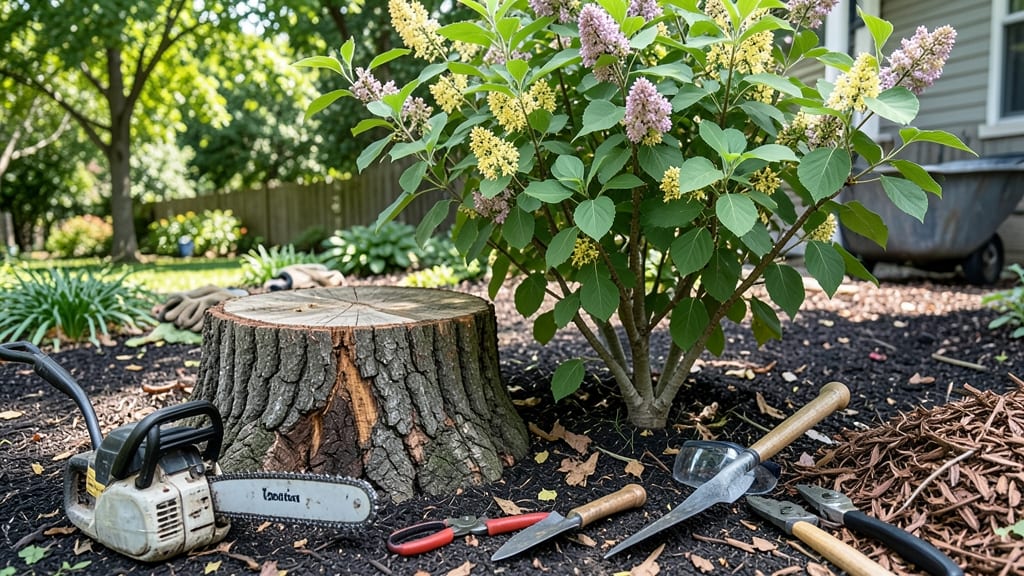
Tree shrub removal feels like a big job—but it doesn’t have to be. ✂️ I’ve learned the hard way that skipping safety steps can turn a simple cleanup into a messy (or dangerous) headache. The right tools, a clear plan, and a few precautions mean you’ll finish faster and keep your yard looking clean, not chaotic.
Start with the basics: sharp pruners for small branches, a sturdy saw for thicker stems, and heavy-duty gloves to protect your hands. If the shrub is near power lines or buried utilities, stop and call a professional—no shortcuts here.
Most jobs under 10 feet tall can be handled solo, but bigger trees need help (or a chainsaw rental).
You’ll end up with a stump-free yard in under an hour if you use the right method—whether that’s digging, grinding, or smothering with cardboard.
The key is working in stages: cut branches first, then tackle the trunk, and always dispose of debris properly (compost smaller branches, haul larger wood to a landfill).
Pro tip: Mark your work area with stakes to avoid damaging nearby plants, and water the soil before digging to make removal easier. If the stump keeps sprouting, a vinegar-and-salt treatment kills regrowth fast. For anything over 15 feet or with rotten wood, hire an arborist—safety always wins.
📚 In This Guide
- What you need
- Instructions
- Tips and common mistakes
- Wrapping up and next steps
What you need
- ● Pruning shears: Bypass pruners (7–10 inch blades) for clean cuts on small branches.
- ● Lopping shears: 18–24 inch for thicker branches (1–2 inches in diameter).
- ● Pruning saw: Curved-tooth (for wood) or straight-tooth (for green wood), 16–24 inch blade.
- ● Pole saw: Extendable (8–12 ft) for high branches.
- ● Work gloves: Heavy-duty, cut-resistant (e.g., Mechanix or Coosha).
- ● Safety glasses: ANSI-rated to protect from debris.
- ○ Hard hat: Optional but recommended for overhead work.
- ● Ladder: Sturdy, non-slip (e.g., aluminum extension ladder, 12–20 ft).
- ● Tarps or drop cloths: 10x12 ft to protect landscaping from debris.
- ● Rope or lanyard: For securing tools or stabilizing branches.
- ● Tree wound dressing: Pruning sealant (controversial but useful for large cuts).
- ● Disposable bags: Heavy-duty contractor bags (30–50 gallon) for debris.
- ● Wheelbarrow: For hauling large amounts of cuttings.
- ● First-aid kit: Basic with bandages and antiseptic.
- ● Check weather conditions: Avoid windy or rainy days.
- ● Review local regulations: Some areas require permits for large removals.
- ● Notify neighbors if branches may fall onto their property.
- ● Wear closed-toe shoes and long sleeves/pants to prevent scratches.
Step-by-step guide for safe tree and shrub removal
Here's how I tackle removal projects without leaving a mess or risking injury.
✂️ Step 1: Assess and Plan the Removal
Start by examining the tree or shrub from all sides. Look for signs of disease, dead branches, or structural weaknesses—these influence how you'll approach the job. Measure the plant's height and spread to determine if it's manageable solo or requires help. I always sketch a rough outline of the area where roots and debris will land to avoid damaging nearby plants or structures.
Check for power lines, buried utilities, or underground pipes. If you're unsure, call 811 at least 48 hours before digging—this is non-negotiable. For large trees, I recommend hiring a professional arborist, especially if the trunk measures over 6 inches in diameter. Smaller shrubs and young trees under 12 feet tall are fair game for DIY removal.
🪴 Step 2: Gather the Right Tools and Safety Gear
You’ll need a pruning saw for branches under 3 inches thick, a chain saw for larger limbs (if comfortable using one), and a shovel or matchet for roots. Don’t skip the heavy-duty gloves, safety goggles, and ear protection—splinters, flying debris, and noise are real hazards. A wheelbarrow or tarps will make cleanup faster, and a sturdy rope helps lower heavy branches.
For chemical-free removal, grab a pruning sealer (optional but reduces sap oozing) and a hose for rinsing tools afterward. If the plant is diseased, add disinfectant spray to sterilize tools between cuts. I like to keep a first-aid kit nearby—you never know when a branch might snap unpredictably.
🌿 Step 3: Cut Branches Strategically for Safe Removal
Begin by removing smaller branches first, working from the top down. Cut just outside the branch collar (the swollen area where the branch meets the trunk) at a 45-degree angle to prevent tears. For larger branches, make an undercut first to control the direction of the fall—this prevents the branch from ripping bark as it drops. Always look up before cutting to avoid accidental contact with the blade.
If the tree is tall, use a three-point cut for branches over 4 inches thick: make a notch on the underside, then a horizontal cut above it. The branch will break cleanly at the notch, letting you lower it safely. For shrubs, shear or prune branches back to healthy buds or the main stem. Never leave stubs—they invite disease and pests.
💧 Step 4: Dig Out the Roots (or Smother Them)
For small shrubs, use a shovel or mattock to dig around the base, working 6-12 inches deep to loosen roots. For stubborn roots, a root saw or pry bar helps. I like to wiggle the plant gently as I dig to break up resistance. If the roots are too thick to remove, consider smothering the stump: cover it with 6-12 inches of mulch or a black plastic sheet for 3-6 months to starve it out.
For trees, avoid digging out the entire root ball unless it’s small. Instead, cut the stump 1-2 inches below ground level with a chainsaw, then apply stump removal powder or fill the hole with water to speed decay. If the stump is large, hire a professional to grind it down—DIY grinding is dangerous and messy.
⏰ Step 5: Clean Up and Prevent Regrowth
Remove all debris from the area, including leaves, twigs, and roots. Bag and dispose of diseased plant material separately to avoid spreading pathogens. Rake the soil surface to check for remaining root fragments—even small pieces can sprout. For aggressive regrowth (like brambles or bamboo), treat the area with vinegar or herbicide as a last resort.
Once the site is clear, amend the soil with compost or mulch to improve its condition for new plantings. I always water the area lightly afterward to settle the soil and encourage any remaining roots to decompose faster. If you’re replanting, wait 2-4 weeks to let the soil recover before adding new plants.
Tips & tricks for safe tree and shrub removal
Here's what I've learned from years of removing trees and shrubs without turning my yard into a disaster zone.
Safety First: The 48-hour rule for calling 811 before digging is non-negotiable—even if you're just removing a small shrub. I've seen too many close calls with underground utilities. Mark the area with spray paint after they've marked your site, so you can see the lines even after dark. For trees over 6 inches in diameter, I always hire a professional arborist—there's no shame in knowing your limits. The extra cost is worth avoiding injuries or property damage.
Tool Selection: Don't underestimate the importance of the right tools. A pruning saw for branches under 3 inches thick is a game-changer—it gives you clean cuts without splintering. For larger branches, I recommend practicing your chainsaw technique on scrap wood first. The rope you use to lower branches should be rated for at least 500 pounds—trust me, branches are heavier than they look. And always carry a small tarp or wheelbarrow to haul debris; you'll thank yourself when your back isn't killing you by the end of the day.
Root Removal Strategy: When digging around shrubs, work in a circular motion 6-12 inches deep, gradually widening your circle. For stubborn roots, I've found that wiggling the plant gently while digging creates leverage that makes removal much easier. The smothering technique with 6-12 inches of mulch or black plastic is my go-to for stumps—I've successfully eliminated stumps this way that would have been impossible to dig out completely. Just be patient; it takes the full 3-6 months to work.
Cleanup Efficiency: After removal, I always use a leaf blower to clear small debris from the area before bagging. This prevents missed root fragments and makes the final cleanup faster. For aggressive regrowers like bamboo, I've had success with a vinegar solution (1 part vinegar to 3 parts water) applied directly to any remaining root pieces. The key is thoroughness—even small root fragments can sprout and become new problems.
Pro Tips for Tree Shrub Removal
- Here's what I've learned from years of removing trees and shrubs without turning my yard into a disaster zone.
- Safety First: The 48-hour rule for calling 811 before digging is non-negotiable—even if you're just removing a small ...
- Tool Selection: Don't underestimate the importance of the right tools. A pruning saw for branches under 3 inches thic...
Frequently asked questions
Got questions about tree and shrub removal?
You’re not alone! Here are answers to the most common concerns—from timing to safety and cost—to help you make informed decisions.
When is the best time of year to remove trees or shrubs?
The ideal timing depends on the plant and your goals. For safety, remove dead or diseased trees anytime—they’re hazards year-round. For ornamental shrubs, late winter to early spring (before new growth) minimizes stress. Avoid removing flowering shrubs in spring if you want blooms that season. Always check local regulations, as some areas restrict removal during nesting seasons (spring/summer).
How much does professional tree/shrub removal cost?
Costs vary widely based on size, species, and location. Small shrubs may cost $100–$300, while large trees can range from $500–$2,500+. Stump grinding adds $100–$400. Get multiple quotes and ask if disposal fees are included. DIY removal saves money but risks damage to property or injury—weigh the risks!
Can I remove a tree/shrub myself, or do I need a pro?
You can tackle small shrubs or non-hazardous trees with the right tools (chainsaw, pruners, gloves). Call a pro if:
- The tree is large, leaning, or near power lines.
- It’s diseased, dead, or has rotten roots.
- You’re unsure about local permits or property boundaries.
What should I do with the leftover wood/stumps after removal?
Options depend on your needs:
- Chipping: Turn wood into mulch for gardens (great for compost!).
- Stump grinding: Removes most of the stump below ground (ideal for replanting).
- Firewood: Season hardwoods (oak, maple) for 6–12 months to avoid rot.
- Donation: Local farms or wildlife habitats may use branches for habitat.
- Landfill: Last resort—check if your town offers bulky waste pickup.
What are the signs a tree/shrub needs immediate removal?
Watch for these red flags:
- Dead branches: No leaves, brittle wood, or hanging like icicles.
- Cracks or splits: Visible deep fissures in the trunk.
- Fungal growth: Conks (shelf fungi) or mushrooms at the base.
- Leaning dangerously: More than 15% lean from vertical.
- Root exposure: Roots lifting pavement or bulging from the ground.
Wrapping up and next steps
Removing trees and shrubs safely doesn’t have to be a daunting task—with the right tools, techniques, and precautions, you can achieve clean cuts and a smoother recovery for your landscape.
Whether you’re tackling a small shrub or a towering tree, prioritize safety, plan ahead, and work methodically to avoid injuries or damage. 🌳✨
Now that you’re armed with knowledge, take the next step: assess your project and gather your supplies before diving in. If the job feels overwhelming, don’t hesitate to call a professional—your safety and peace of mind are worth it!