
Blooming
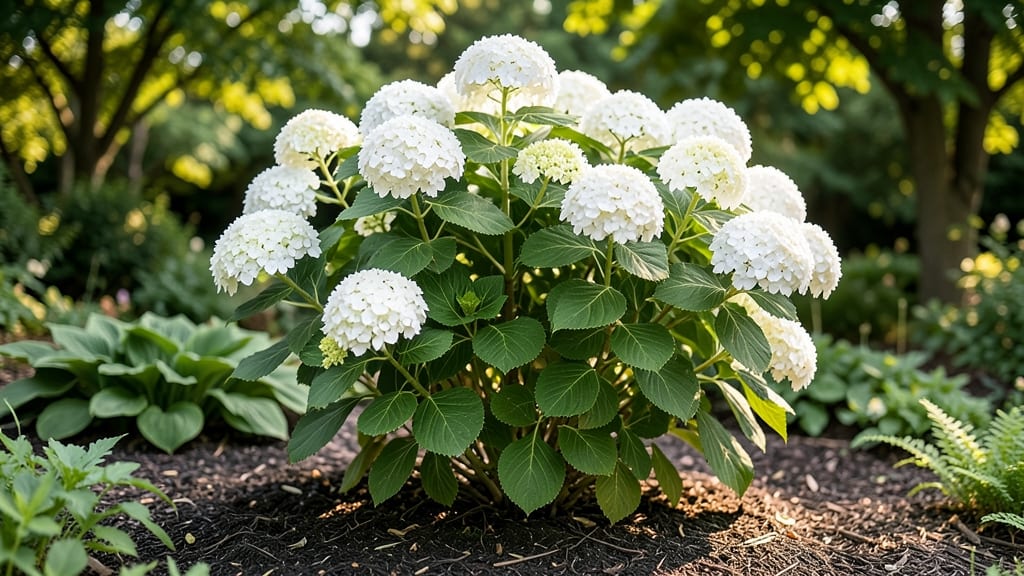
White-blossom shrubs turn spring gardens into dreamy, fragrant canvases—think mock orange’s intoxicating perfume or hydrangea’s cloud-like blooms that catch morning light. ✨ I’ve designed landscapes where these shrubs anchor borders, frame patios, or spill over trellises, creating year-round interest with their silvery foliage and winter structure.
The key? Pairing them with companions that enhance their star power—like lavender for texture or ferns for contrast.
For low-maintenance impact, abelia and lilac thrive in partial sun and handle urban pollution, while hydrangeas love moisture and bloom best with consistent watering. Prune spent blooms in early summer to encourage a second flush, and always plant where their fragrance drifts toward seating areas.
My go-to combo? A mock orange shrub behind a dwarf boxwood hedge—it frames walkways beautifully and fills the air with sweetness when you pass.
What you’ll achieve is a garden that feels like a curated art piece, not just a collection of plants. The white blooms reflect light, making spaces feel brighter, while their scent lingers long after the flowers fade.
Plus, they attract pollinators early in the season, setting the stage for a thriving summer garden. Think of them as the backdrop for your seasonal stars—perennials, annuals, and even climbing roses that weave through their branches.
Adapt this approach to any space: small courtyards, large backyards, or even container gardens on patios. The secret lies in layering height, texture, and bloom time—so while your hydrangeas shine in summer, early-blooming lilacs and late-season abelia keep the show going.
Ready to design a fragrant, visually stunning garden? Let’s get started with the perfect shrub palette.
📚 In This Guide
- What you need
- Instructions
- Tips and common mistakes
- Wrapping up and next steps
What you need
- ● White blossoms: 1 cup fresh (e.g., hawthorn, apple, or cherry blossoms—organic preferred). Pro tip: Use 1.5 cups if petals are extra tiny!
- ● Granulated sugar: 1 cup (packed tightly for consistency). 💡 Brown sugar adds depth, but white keeps it crisp!
- ● Water: 1 cup (distilled or filtered for clarity).
- ● Citrus zest: 1 tsp (lemon or orange—boosts aroma).
- ○ Optional spices: 1 cinnamon stick or 2-3 cloves (for warmth).
- ● Clean glass jar: 1-quart mason jar (sterilized with boiling water).
- ● Fine-mesh strainer: For filtering petals post-infusion.
- ● Wooden spoon: Or a silicone spatula (gentle on glass).
- ○ Cheesecloth or coffee filter: For straining syrup (optional but recommended).
- ● Air-tight container: For storage (amber glass preserves flavor best).
- ● Patience! ⏳ Let the shrub steep for 2–4 weeks in a cool, dark place.
- ● Vanilla bean (split) for depth.
- ● Dried rose petals (½ tsp) for floral complexity.
- ● Honey (¼ cup) to replace sugar (adjust water to ¾ cup).
- ● Label & marker to track infusion dates!
How to plant and care for a white blossom shrub
White-flowering shrubs like mock orange or abelia bring elegant fragrance and structure to any landscape.
🌱 Step 1: Choose the Right Location and Prepare the Soil
Select a spot with full sun to partial shade—most white blossom shrubs thrive in 6 hours of sunlight daily. Avoid low-lying areas where cold air settles, as frost can damage tender blooms. Test your soil for drainage; white blossom shrubs dislike soggy roots.
Amend heavy clay soil with 2-3 inches of compost or sand to improve aeration. If your soil is acidic, add lime to raise the pH slightly—most white-blossoming shrubs prefer a neutral to slightly alkaline environment. Dig a hole twice as wide as the root ball but no deeper than its container.
🪴 Step 2: Plant the Shrub Correctly for Strong Growth
Remove the shrub from its container and loosen any circling roots. Place it in the hole so the top of the root ball sits level with the ground—burying too deep suffocates roots, while planting too high stresses the plant. Backfill with native soil, tamping gently to eliminate air pockets.
Water deeply to settle the soil and encourage root contact. Mulch around the base with 2-3 inches of organic mulch (like shredded bark) to retain moisture and suppress weeds. Keep mulch 3-4 inches away from the trunk to prevent rot. Avoid over-mulching, which can smother stems.
☀️ Step 3: Water and Fertilize for Healthy Blooms
Water 1-2 times per week during the first growing season, ensuring the soil stays evenly moist but not waterlogged. Once established, most white blossom shrubs tolerate moderate drought, but consistent moisture encourages lush foliage and abundant flowers. Check soil moisture by sticking your finger 2 inches deep—water when it feels dry.
Apply a balanced, slow-release fertilizer (10-10-10) in early spring as new growth emerges. Avoid high-nitrogen fertilizers, which promote leafy growth at the expense of flowers. Lightly scratch the granules into the soil around the drip line (the edge of the shrub’s canopy).
✂️ Step 4: Prune for Shape and Encourage More Blooms
Prune immediately after flowering to maintain shape and encourage next year’s blooms. Use clean, sharp pruners to cut back 1/3 of the oldest stems to the ground, stimulating new growth. Thin out crowded branches to improve airflow, which reduces fungal diseases like powdery mildew.
Shape the shrub by removing crossing or dead branches first. For a more formal look, trim outer growth to create a rounded silhouette. Avoid heavy pruning in late summer or fall—this removes next year’s flower buds. If your shrub blooms on new wood (like abelia), you can prune lightly in early spring.
🌿 Step 5: Protect and Maintain Through the Seasons
In winter, apply a 2-3 inch layer of mulch around the base to insulate roots from freezing temperatures. If your region experiences harsh winters, wrap young shrubs in burlap or use a frost blanket to prevent sunscald. Avoid pruning in late fall, as fresh cuts are vulnerable to cold damage.
Monitor for pests like aphids or spider mites, which thrive on stressed shrubs. Spray with neem oil or insecticidal soap if you spot sticky residue (honeydew) or webbing. Most white blossom shrubs are low-maintenance, but regular checks ensure they stay vibrant. With proper care, your shrub will reward you with fragrant blooms for years.
Tips & tricks for perfect white blossom shrub care
Transforming your garden into a fragrant haven starts with these essential insights for nurturing your white blossom shrubs.
Location and Soil Mastery: When selecting your planting spot, prioritize areas with morning sun and afternoon shade—this balances heat exposure while protecting delicate blooms. I’ve found that white blossom shrubs like abelia or mock orange often thrive near east-facing walls, where they receive gentle sunlight without the harsh afternoon heat. For soil prep, mix in composted leaf mold instead of regular compost to mimic their natural forest-floor habitat, which enhances drainage and microbial activity. This step alone can mean the difference between a struggling shrub and one that bursts with fragrance year after year.
Root Health Foundation: The critical moment in planting comes when you position the root ball—never bury the top more than ½ inch below soil level. I learned this the hard way after planting a viburnum too deeply, which led to root rot within months. After backfilling, press the soil firmly around the edges to eliminate air pockets, then create a shallow basin (about 6 inches wide) around the base to direct water straight to the roots during irrigation. This targeted watering method prevents surface evaporation and ensures roots get the moisture they crave.
Pruning Precision: Timing is everything when pruning white blossom shrubs. For varieties like mock orange that bloom on old wood, wait until immediately after flowering to trim—this preserves next year’s buds while maintaining shape. Use a bypass pruner (not anhedging shears) to make clean cuts at a 45-degree angle, just above an outward-facing bud. This technique promotes fuller growth and prevents unsightly stubs. I always remove no more than 1/3 of the oldest stems in any single pruning session to avoid shocking the plant.
Seasonal Protection: Winter care is where many gardeners overlook crucial details. While mulching is standard advice, I’ve found that double-layering—first with 2 inches of straw for insulation, then topped with 1 inch of pine needles—provides superior frost protection. The pine needles release beneficial acids as they decompose, which helps neutralize soil pH over time. For young shrubs in particularly harsh climates, wrap the entire plant in burlap and secure it with twine, creating a cozy cocoon that shields against windburn and temperature swings.
Pro Tips for White Blossom Shrub
- Transforming your garden into a fragrant haven starts with these essential insights for nurturing your white blossom ...
- Location and Soil Mastery: When selecting your planting spot, prioritize areas with morning sun and afternoon shade—t...
- Root Health Foundation: The critical moment in planting comes when you position the root ball—never bury the top more...
Frequently asked questions
Got questions about crafting your own white blossom shrub?
Here are some of the most common ones—and their answers—to help you make the most of this fragrant springtime syrup.
What’s the best type of white blossom to use for shrub?
Stick to white blossoms like hawthorn, apple, pear, or elderflower for the brightest, most aromatic shrub. Avoid dark-colored flowers (like roses or violets), as they can stain the syrup. If you’re unsure, opt for organic, pesticide-free blooms for the cleanest flavor.
How long does it take to make white blossom shrub?
Total time is about 1–2 weeks, but most of that is waiting! The process involves 24 hours for steeping, 1 week for infusion, and a few days for settling. Patience is key—rushing can make the syrup bitter or cloudy. Mark your calendar and let it work its magic!
Can I use white blossom shrub in cocktails?
This shrub is versatile and delicious in cocktails. Try it in a gin spritz (with gin, soda, and a squeeze of lemon), a whiskey sour, or even a sparkling wine cocktail. The floral notes pair beautifully with citrus and herbs like rosemary or thyme. Just dilute it 1:1 with water or juice for balance.
What if my shrub turns cloudy or smells off?
Cloudiness is normal if you didn’t strain it well, but a foul or fermented smell means it’s gone bad. To fix cloudiness, re-strain through a fine-mesh sieve or cheesecloth. If it smells sour or yeasty, toss it—never consume spoiled shrub. Store it properly in a clean, airtight bottle in the fridge to prevent spoilage.
Are there alternatives if I can’t find white blossoms?
Yes! If white blossoms are scarce, try jasmine, chamomile, or lavender for a floral twist. For a fruity shrub, use peach, apricot, or white cherry blossoms. Just adjust the steeping time—delicate flowers (like jasmine) need only 12–18 hours, while hardier blooms can steep longer.
Wrapping up and next steps
Transforming a white blossom shrub into a fragrant springtime syrup is a rewarding way to capture nature’s sweetness and elevate your cocktails or desserts. With just a few simple ingredients and a little patience, you’ve unlocked a versatile, aromatic treasure to brighten any recipe. 🌸
Now that you’re armed with your homemade syrup, let the creativity flow—mix it into cocktails, drizzle over pancakes, or infuse it into baked goods. Experiment with flavors and share your delicious results with friends!