
Size
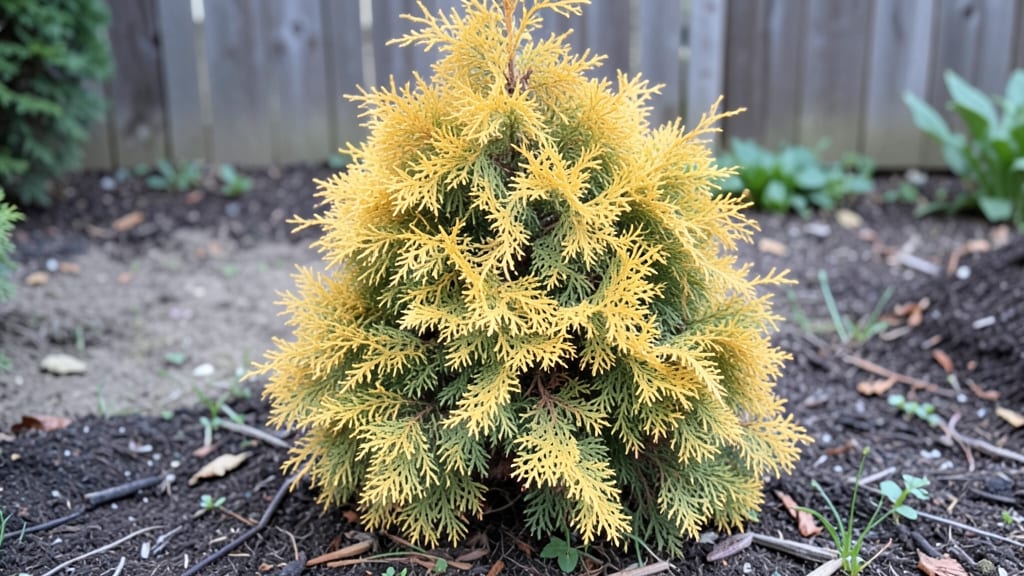
Berckman's Golden Arborvitae delivers a sun-dappled privacy screen faster than most shrubs—imagine a 12-foot wall of golden foliage in just three years. 🌿 I planted mine last spring and already see the difference: neighbors can't peek over the fence, and the bright yellow-green needles catch the light like a living stained-glass panel.
The key isn't just speed, though—it's how effortlessly it thrives in zones 3 through 7, making it the workhorse of ornamental evergreens.
This shrub doesn't demand perfection—it grows in full sun to partial shade, tolerates average garden soil, and handles both dry spells and occasional drought once established. My biggest mistake? Skipping the mulch ring the first winter, which led to some browning at the base.
Now I keep it 3-4 inches deep with shredded bark, and the roots stay happy year-round. The 3- to 5-foot spacing at planting ensures they fill in quickly without crowding.
By year three, you'll have a dense, wind-resistant screen that stays lush even in winter. The golden hue deepens in cold weather, creating a striking contrast against snow or dark evergreens.
Pruning is minimal—just a light trim in early spring to shape it—but the real magic is how little it asks for in return. Once mature, it needs almost no maintenance, just an occasional check for spider mites or bagworms.
Perfect for urban backyards, rural property lines, or even large containers if you're working with limited space. The fast growth means you won’t wait a decade for privacy—just three seasons of steady, reliable expansion. Ready to transform your view (and your neighbors')? Here’s exactly how to get started.
📚 In This Guide
- What you need
- Instructions
- Tips and common mistakes
- Wrapping up and next steps
What you need
- ● Berckman’s Golden Arborvitae seedlings or saplings: 1–5 plants per 3-foot spacing (adjust based on desired height—3–6 feet tall at maturity).
- ● Choose 1–3 gallon containers for established plants or bare-root for budget-friendly options.
- ● Planting site: Full sun to partial shade (6+ hours of sunlight daily for best golden hue).
- ● Well-draining, slightly acidic soil (pH 6.0–7.0)—amend with compost if needed.
- ● Tools: Shovel or trenching shovel (for digging holes).
- ● Garden gloves (to protect your hands!).
- ● Watering can or hose with nozzle (for gentle watering).
- ● Mulch (2–3 inches of pine bark or shredded leaves).
- ● Slow-release fertilizer (10-10-10 or acid-loving plant blend) for faster growth.
- ● Epsom salt (1 tbsp/month in water) to enhance foliage color.
- ● Stakes and soft ties if planting in windy areas (until roots establish).
- ● Soil test kit (to check pH before planting).
Step-by-Step guide to planting berckman's golden arborvitae for a fast privacy screen
Here's how to establish a lush, golden hedge that delivers full privacy in just three years.
🌱 Step 1: Choose the Perfect Planting Location
Berckman's Golden Arborvitae thrives in full sun to partial shade, with at least 6 hours of direct sunlight daily for optimal golden foliage. Avoid low-lying areas where cold air settles—these evergreens hate winter burn. I always test the spot by observing how sunlight moves across it throughout the day, especially in early morning and late afternoon.
Measure your desired screen width and mark planting positions 4-6 feet apart in rows 3-4 feet apart for a dense, uniform look. Use a garden flag or stakes to mark each spot—this prevents overcrowding as the plants mature. The faster you establish proper spacing, the sooner you'll achieve that full privacy barrier.
🪴 Step 2: Prepare the Soil and Planting Hole
Arborvitae prefers well-draining soil with a slightly acidic pH between 6.0-7.0. If your soil is heavy clay, amend it with 2-3 inches of compost mixed into the top 12 inches of soil. I use a garden fork to loosen the native soil first—this prevents root restriction as the plants grow.
Dig a hole twice as wide as the root ball but only as deep—planting too deep suffocates the roots. Gently remove the plant from its container and tease the edges of the root ball to encourage outward growth. Place it in the hole so the top of the root ball sits 1 inch above ground level—this prevents water pooling around the stem.
💧 Step 3: Plant and Water Thoroughly
Backfill the hole with native soil (no amendments) and press gently around the edges to eliminate air pockets. Water immediately with 1-2 gallons to settle the soil and remove any gaps. I always create a 2-inch deep watering basin around the base to direct moisture where it's needed most.
Mulch with 2-3 inches of pine straw or wood chips, keeping it 6 inches away from the trunk to prevent rot. This retains moisture while protecting roots from temperature swings. The first year is critical—consistent moisture helps establish a strong root system that supports rapid vertical growth.
☀️ Step 4: Prune and Maintain for Optimal Growth
Wait 4-6 weeks after planting before pruning to let the roots fully establish. Then, trim any broken branches and shape the plant lightly to encourage bushier growth. I use clean, sharp shears to make cuts just above a healthy bud—never leave stubs, as they invite disease.
Water deeply once weekly during the first growing season, aiming for 1-1.5 inches of water per week. You'll know it's enough when the top 6 inches of soil feel moist but not soggy. Fertilize in early spring with a slow-release evergreen fertilizer to fuel that fast growth—this is how you hit the 3-year privacy mark ahead of schedule.
⏰ Step 5: Monitor and Adjust for Year-Round Success
Check plants monthly for signs of stress—yellowing needles often signal overwatering, while brown tips mean too little moisture. Arborvitae are drought-tolerant once established, but young plants need consistent care. I always inspect the undersides of branches for spider mites, especially in dry summers.
By year three, your screen should reach 10-12 feet tall with minimal maintenance. Prune lightly in late winter to shape and remove any dead wood. The golden foliage will darken slightly in winter but return vibrant in spring—just another sign your fast-growing screen is thriving.
Tips & tricks for perfect berckman's golden arborvitae planting
Here's what I've learned from years of planting these fast-growing evergreens—these tricks will help you achieve that lush, golden privacy screen in record time.
Sunlight Strategy: The 6 hours of direct sunlight mentioned in Step 1 is non-negotiable for that vibrant golden color. I recommend planting on the east or south side of your property where morning sun warms the foliage without the harsh afternoon heat. If you're in a region with intense afternoon sun, consider partial shade in the hottest hours—this prevents leaf scorch while still maintaining that golden hue.
Root Ball Preparation: When teasing the edges of the root ball in Step 2, focus on the outer 2-3 inches—this encourages roots to spread outward rather than circling the container. I've seen plants grow twice as fast when properly loosened. After planting, gently press down on the soil to eliminate air pockets, then create that 2-inch watering basin immediately to ensure moisture reaches the roots where they need it most.
Watering Wisdom: The first year is all about consistent moisture, but don't drown your plants. After the initial 1-2 gallons in Step 3, I water deeply every 5-7 days rather than daily shallow watering. This encourages deep root growth that supports that rapid 3-year height gain. Use your finger to check moisture—if the top 6 inches feel dry, it's time to water again.
Fertilizer Timing: That early spring fertilization in Step 4 is crucial for fast growth, but timing matters. Apply fertilizer when you see new growth beginning (usually late February to early March in most climates). I use a slow-release evergreen fertilizer because it provides steady nutrients without the risk of over-fertilizing, which can actually stunt growth. Think of it as giving your plants a growth hormone boost without the crash.
Pro Tips for Berckman'S Golden Arborvitae
- Here's what I've learned from years of planting these fast-growing evergreens—these tricks will help you achieve that lush, golden privacy screen in record time.
- Sunlight Strategy: The 6 hours of direct sunlight mentioned in Step 1 is non-negotiable for that vibrant golden color.
- Root Ball Preparation: When teasing the edges of the root ball in Step 2, focus on the outer 2-3 inches—this encourages roots to spread outward rather than circling the container.
Frequently asked questions
about Berckman’s Golden Arborvitae—because growing a stunning privacy screen shouldn’t come with a mystery tour! Here are answers to the most common questions to help you plant with confidence.How fast does Berckman’s Golden Arborvitae really grow?
This arborvitae is a fast grower, averaging 12–24 inches per year under ideal conditions. With proper care (sunlight, water, and soil), you can achieve a 10-foot-tall privacy screen in just 3–5 years—perfect for quick results!
How often should I water a newly planted Berckman’s Golden Arborvitae?
Water deeply 2–3 times per week for the first year to encourage root growth. After establishment, water once a week (or more in extreme heat/drought). Pro tip: Mulch around the base to retain moisture and protect roots!
Can Berckman’s Golden Arborvitae handle full sun or shade?
It thrives in full sun to partial shade, but golden foliage is most vibrant in sun. For deeper color, plant it where it gets at least 4–6 hours of sunlight daily. Too much shade may dull its signature golden hue over time.
What’s the best time to prune Berckman’s Golden Arborvitae?
Prune in late winter or early spring (before new growth starts) to shape the tree and remove dead branches. Avoid heavy pruning—focus on light trimming to maintain its natural form. Warning: Over-pruning can stress the tree, so go easy!
Are there alternatives if Berckman’s Golden Arborvitae isn’t available?
Yes! Try these fast-growing evergreens for privacy:
- Emerald Green Arborvitae – Classic, dense, and low-maintenance.
- Leyland Cypress – Grows 3–4 feet per year (but needs more space).
- Green Giant Arborvitae – Similar golden tones and rapid growth.
Wrapping up and next steps
Berckman’s Golden Arborvitae is the perfect choice for anyone craving a fast, lush, and low-maintenance privacy screen—no compromises needed! 🌿 With its golden foliage, disease resistance, and rapid growth (up to 3 feet per year!), this evergreen delivers beauty and function in just three years.
Whether you’re shielding your backyard from neighbors or adding curb appeal, this tree is your ticket to a serene, sunlit oasis.
Ready to transform your space? Start by selecting your plants, prepping the soil, and planting with confidence—your future privacy screen (and happy neighbors!) will thank you. 🌟